 Anacortes Siding
 Fidalgo Island: A Different Kind of Exterior Exposure
Fidalgo Island sits at the edge of the Salish Sea in Skagit County, connected to the mainland by bridge and home to Anacortes, the island's main city and the gateway to the San Juan Islands ferry. Living surrounded by water has real advantages, but it also means the homes here take a different kind of beating than houses fifteen or twenty miles inland. Salt-laden air, wind-driven rain coming off the water, and long stretches of gray, damp weather all work on a house's exterior in ways that inland homeowners rarely have to think about.
We've worked on homes across the island long enough to know that "siding is siding" isn't true here. What holds up on a dry, sheltered lot in the Skagit Valley can fail years early on a shoreline-facing property on Fidalgo Island. That's the reason we're selective about what we install, and it's why this page exists — to walk through what the island's climate actually does to a house, and what we do differently because of it.
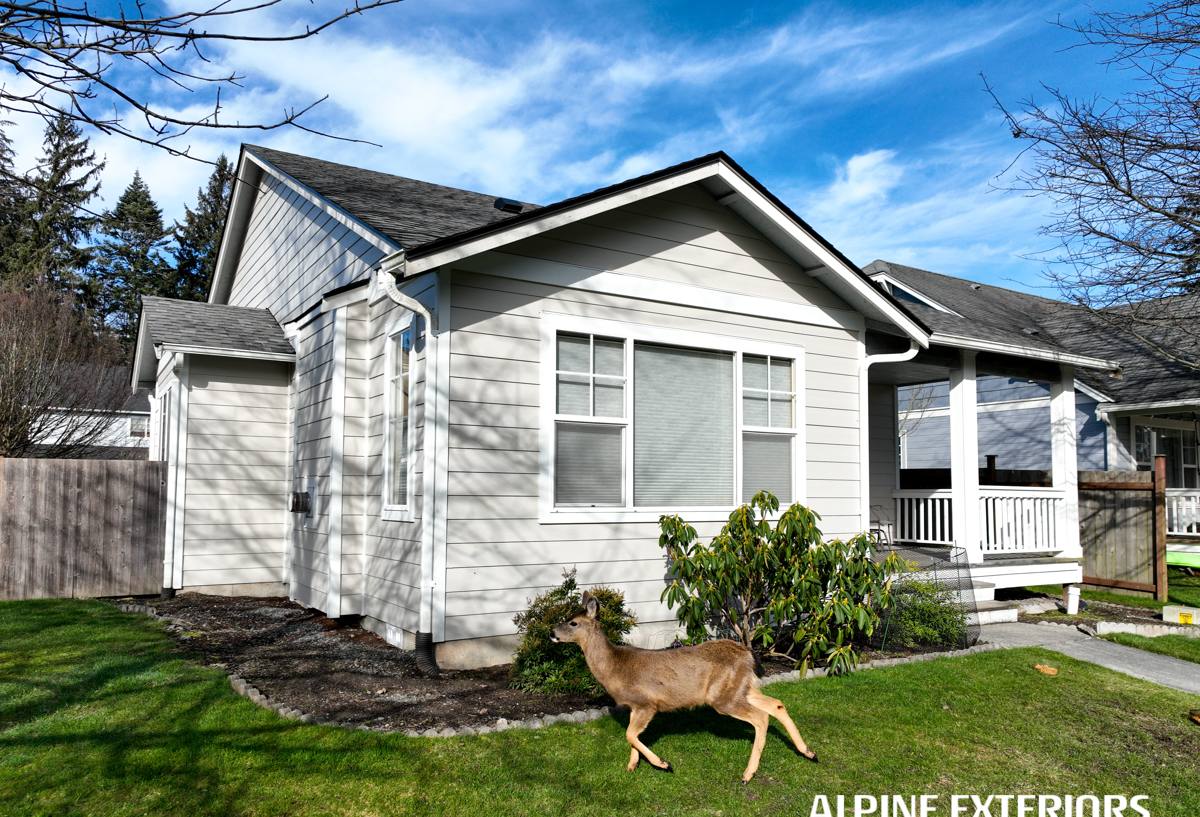
What Salt Air, Rain, and Moss Actually Do to a Home
Salt Air and Corrosion
Airborne salt from the surrounding water doesn't just affect boats and railings. It settles on siding, trim, fasteners, and flashing, and over time it accelerates corrosion in anything metal that isn't rated for a marine environment — nails, screws, hose bibs, light fixtures, and the metal components hidden behind your siding. Homes closer to the water's edge see this fastest, but even properties set back from the shoreline get a steady, low-grade dose of salt exposure carried on the wind.
Wind-Driven Rain
Rain on Fidalgo Island rarely falls straight down. Wind off the water pushes it sideways into walls, and that changes how water behaves at every seam, joint, and penetration on your exterior. A siding system that's merely "water-resistant" on paper can still let moisture work its way behind the cladding when it's being driven horizontally into a wall for hours at a time. This is where installation detail — proper flashing, correct overlaps, sealed penetrations — matters as much as the material itself.
Moss, Algae, and the Long Damp Season
Between the marine humidity and the shade many island lots get from mature evergreens, moss and algae growth is a near-constant issue on north- and west-facing walls, roofs, and decks. Materials that hold moisture at the surface give moss a foothold that's hard to get rid of without damaging the finish underneath. Left unaddressed, that moss holds water against the surface year-round, which is exactly the condition that leads to rot, delamination, or coating failure over time.
Why We Only Install James Hardie Fiber Cement Siding
We don't install vinyl, LP SmartSide, Cemplank, Allura, primed spruce, or cedar siding — not because those products don't have a place somewhere, but because we've made a professional judgment call about what performs on Fidalgo Island specifically, and we'd rather stand behind one system we trust completely than offer several we have reservations about.
Vinyl siding expands and contracts with temperature swings and can warp or crack under the kind of sustained wind exposure island homes see, and its seams give wind-driven rain an easier path inward over time. Wood-based products, including cedar and primed spruce, are organic materials in a climate that stays damp for months at a stretch — they need diligent, ongoing maintenance to resist the rot and moss growth we described above, and a missed year of upkeep can cost you more than the maintenance would have. Engineered wood products like LP SmartSide use a resin-treated wood strand core that's more moisture-resistant than raw wood, but it's still a wood-based product at heart, with edge-sealing and caulking requirements that have to be kept up over the life of the siding.
James Hardie fiber cement is a cement, sand, and cellulose fiber composite. It doesn't rot, it isn't attractive to pests, it doesn't expand and contract the way vinyl or wood does, and it's non-combustible — a meaningful consideration anywhere in the Pacific Northwest given wildfire season. Hardie's ColorPlus factory-applied finish is baked on under controlled conditions rather than field-painted, which gives it better adhesion and UV resistance than a job-site paint job, and it comes with a strong transferable warranty when installed to Hardie's specifications. For a house that's going to sit within a few miles of saltwater for the next thirty years, that combination is why we standardized on it.
Beyond Siding: Roofing, Windows, and Decks for Island Homes
Roofing
Roofs on Fidalgo Island deal with the same moss and wind exposure as siding, plus the added factor of horizontal surfaces that collect standing moisture and debris from nearby trees. We look at ventilation, underlayment, and flashing details as closely as the roofing material itself, since a roof that traps moisture underneath the surface will fail from the inside out regardless of what's on top.
Windows
Older windows on island homes are frequently the weak point in an otherwise solid exterior — failed seals let in drafts and moisture, and single-pane or aging dual-pane units struggle with the temperature swings between a cold, wet night and a sunny afternoon. Replacement windows also play directly into how well your siding performs, since window flashing integration is one of the most common places water intrudes behind a wall.
Decks
Decks take the most direct hit from the island's climate of any part of the house — full sun exposure, standing rain, and salt air all at once, plus the corrosion issue mentioned earlier if fasteners aren't rated for it. We build and repair decks with materials and hardware chosen for that exposure, not generic inland specs.
Comparing Siding Materials for a Fidalgo Island Property
| Material | Moisture/Salt Air Behavior | Maintenance Burden | Longevity in This Climate |
|---|---|---|---|
| Vinyl | Seams allow wind-driven rain intrusion; can warp under sustained wind loads | Low, but limited repair options when damaged | Moderate; UV and wind exposure shorten lifespan |
| Cedar / primed spruce | Organic material vulnerable to moisture, rot, and moss in a damp marine climate | High — regular painting, sealing, and moss treatment | Shortest without diligent, consistent upkeep |
| Engineered wood (LP SmartSide) | Resin-treated but still wood-based; edge sealing is critical near the coast | Moderate — caulking and touch-up maintenance needed | Depends heavily on installation and upkeep |
| James Hardie fiber cement | Non-combustible, dimensionally stable, resists moisture-driven damage | Low — factory finish, occasional washing | Long-term, backed by a transferable warranty when installed to spec |
Why Hiring a Local Crew Matters on the Island
Fidalgo Island isn't uniform — a home a few blocks from the water faces a different wind and salt load than one set back on higher, more sheltered ground, and a shaded, tree-lined lot fights moss differently than an open, sun-exposed one. A crew that works across the mainland Skagit Valley and only occasionally comes out to the island doesn't build up the same feel for those differences that a crew based here does.
Local also means knowing the practical side: how permitting works with the City of Anacortes versus unincorporated Skagit County depending on where your property sits, how weather windows on the island can differ from the mainland forecast, and what it actually looks like to schedule and stage a job on a peninsula with one main road in and out. None of that is complicated, but it's the kind of thing that goes smoother with a crew that does it regularly.
Signs Your Exterior Needs Attention
- Moss or dark streaking on north- or west-facing siding, roofing, or decking that keeps coming back after cleaning
- Soft spots, bubbling, or visible warping in wood or engineered wood siding
- Rust staining around nail heads, hinges, or metal trim pieces
- Peeling or chalking paint on wood siding, especially on the side facing prevailing wind
- Drafts, fogging, or visible seal failure around window frames
- Soft, spongy, or discolored decking boards, particularly near ground contact or fasteners
- Gaps or separation at siding seams, corners, or trim joints where water could enter
What to Expect When You Reach Out
We start with a walk-around of the property to look at how your specific lot is exposed — proximity to water, tree cover, sun and wind direction — because that tells us as much about the right approach as the age or condition of your current siding does. From there we talk through what's actually driving any problems you're seeing, what a James Hardie siding system would look like on your home, and where roofing, window, or deck work might make sense to bundle into the same project.
If you're on Fidalgo Island and dealing with tired siding, a roof that's holding onto moss, aging windows, or a deck that's seen better days, we're happy to come take a look. Reach out for a free, no-pressure estimate — there's a form below to get started.