 Anacortes Siding
 Serving Oak Harbor from Just Across Deception Pass
Oak Harbor sits on Whidbey Island, a short drive across Deception Pass from our home base in Anacortes. It's close enough that we treat it as core service territory, not an afterthought — but it's also its own environment. Homes here sit closer to open water on multiple sides, catch wind that has nowhere to slow down before it hits a wall, and spend a good part of the year under a marine layer that never quite burns off. If you own a home in Oak Harbor, you already know this. What you may not know is how much it matters when you're choosing what to put on the outside of your house.
We're a fiber cement siding contractor that also handles roofing, windows, and decks, and we've built our whole approach around what actually holds up in this part of the Pacific Northwest — not what looks good on a spec sheet in a showroom somewhere else.
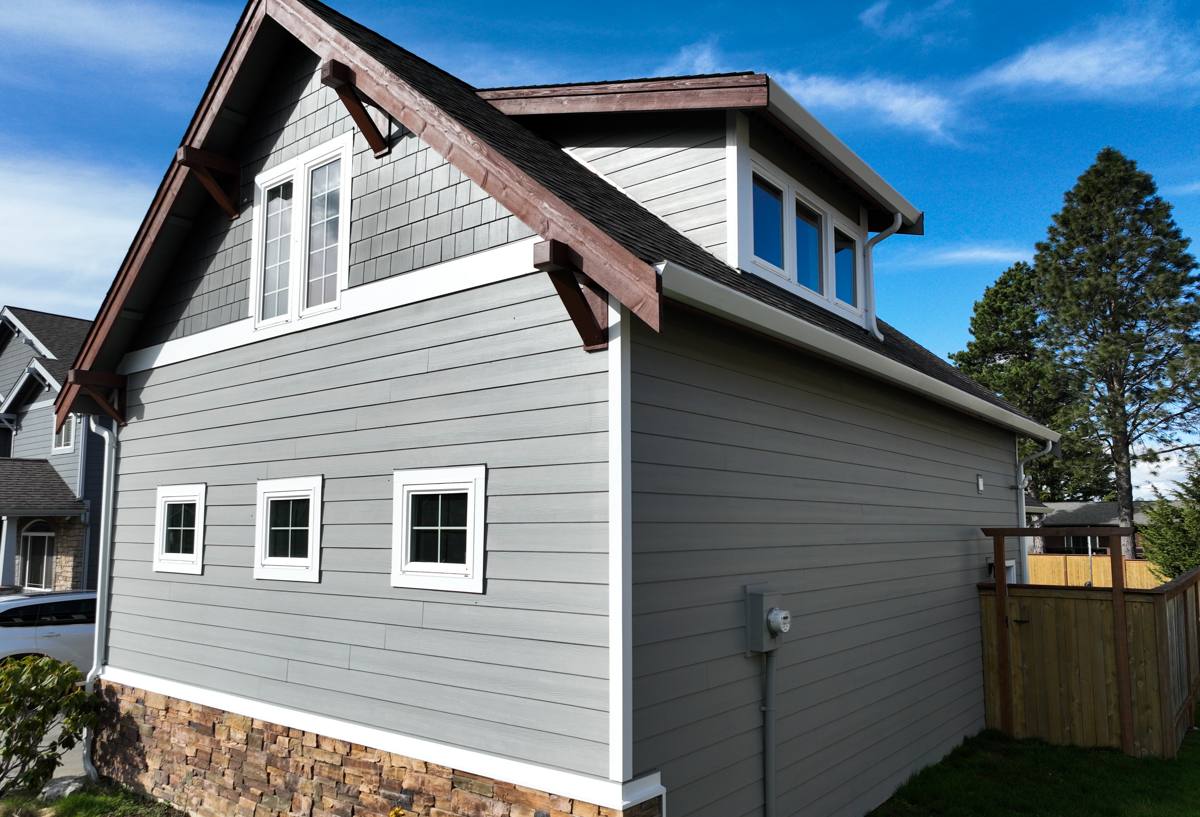
What Oak Harbor's Climate Actually Does to a House
Salt Air and Marine Exposure
Being surrounded by saltwater does more than corrode metal fasteners and hardware faster than an inland home would experience. Salt-laden air also settles into porous or absorptive siding materials, holds moisture against the surface longer, and accelerates the breakdown of paint films and caulking. Over years, that shows up as chalking, fading, and soft spots at the edges of boards and trim.
Driving Rain and Wind-Driven Moisture
Whidbey Island gets weather systems moving through with real wind behind them, and wind-driven rain behaves differently than rain falling straight down. It gets pushed sideways into laps, seams, and butt joints — the exact places where a siding product's water management either works or doesn't. Homes on exposed lots or with south and west-facing walls take the brunt of it.
Moss, Mildew, and a Long Shade Season
Between the tree cover common in this area and the extended stretch of overcast, damp months, moss and mildew get a long runway to establish themselves on north-facing walls, under eaves, and anywhere airflow is limited. On the wrong substrate, that biological growth isn't just cosmetic — it holds moisture against the material and speeds up decay underneath.
Why Fiber Cement Is the Right Answer Here
Fiber cement is cement, sand, and cellulose fiber, engineered and pressed into boards and panels. It doesn't absorb water the way wood-based products do, it doesn't corrode, and it isn't a food source for the organisms that cause rot. That combination matters more in a place like Oak Harbor than almost anywhere else we work, because every one of the stressors above — salt, wind-driven rain, sustained moss and mildew exposure — hits a house at the same time, year after year.
James Hardie, the manufacturer whose products we install, builds specific formulations for different climate zones. The HZ5 line is engineered for the wetter, harsher weather patterns found in the Pacific Northwest, which is the version we specify for Oak Harbor and Anacortes projects. That's not a marketing detail — it's the difference between a product designed for this climate and one designed for a dry, moderate one that happens to be sold nationwide.
Why We Only Install James Hardie
We don't install vinyl siding, LP SmartSide, Cemplank, Allura, or primed spruce and cedar siding, and we get asked why fairly often. The honest answer is that we looked at how each of those products performs over a full ownership cycle in this specific climate, and we didn't like the trade-offs enough to keep installing them and standing behind the results.
| Material | What it does well | Where it struggles here |
|---|---|---|
| Vinyl siding | Low upfront cost, no painting required | Can warp or crack in temperature swings and wind exposure; seams are a weak point for driving rain |
| Wood-based composite (LP SmartSide, similar) | Warmer appearance, easier to cut on site | Wood-based core is more vulnerable to sustained moisture exposure at cut edges and joints if maintenance lapses |
| Primed cedar or spruce | Natural material, traditional look | Requires the most ongoing maintenance — repainting, caulking, moisture monitoring — in a climate that doesn't give you much of a dry season to do it in |
| James Hardie fiber cement | Non-combustible, factory-baked ColorPlus finish, engineered for wet climates, strong transferable warranty | Higher material cost, must be installed to manufacturer spec to perform as designed |
None of those other products are bad in every application — vinyl and wood composite both have legitimate uses depending on budget and climate. We simply concluded that for the salt air, wind-driven rain, and moss exposure common around Oak Harbor and the rest of Skagit County's coastline, fiber cement installed correctly is the option that holds its line, its color, and its integrity the longest with the least maintenance burden on the homeowner.
How We Approach an Oak Harbor Siding Project
Inspection Before Anything Else
Every project starts with a real look at the existing wall assembly — not just the siding, but what's underneath it. On homes with wood-based siding that's been up for decades, we're checking for soft sheathing, compromised flashing, and moisture that's already gotten in around windows and trim. You can't install a new siding system correctly over a wall that's already wet.
Installation to Manufacturer Spec
Fiber cement performs the way it's supposed to only when it's installed the way it's engineered to be installed — correct fastener spacing and type, proper clearances at grade and roof lines, and house wrap and flashing details that actually direct water out and away rather than trapping it. This is where a lot of the real difference between contractors shows up, and it's not something a homeowner can easily verify after the fact just by looking at the finished wall.
Flashing, Caulking, and the Small Details That Matter Most
Given how much wind-driven rain this area sees, the small transition points — window and door trim, corner boards, penetrations for vents and fixtures — get particular attention. These are the spots where water intrusion actually starts on most homes, regardless of what siding material is on the wall.
Beyond Siding: The Rest of the Exterior Takes the Same Beating
Salt air, wind, and sustained moisture don't stop at the siding. Roofing, windows, and decks on an Oak Harbor home face the identical set of conditions, which is why we handle all four as one connected exterior rather than treating siding as an isolated project.
- Roofing — the first line of defense against wind-driven rain and the surface most exposed to salt air and sun
- Windows — a frequent source of moisture intrusion where old flashing or worn seals meet aging siding
- Decks — outdoor structures that see direct exposure to rain, moss growth, and salt air with no siding or overhang to shield them
When we're already on site for a siding project, it's often the right time to address a roof nearing the end of its service life or windows with failed seals, since the trim and flashing work overlaps anyway.
What to Look for When Hiring a Contractor in This Area
Oak Harbor and the surrounding islands see plenty of contractors come through, not all of them local and not all of them familiar with how this climate behaves differently than the drier side of the state. Before hiring anyone for exterior work, it's worth checking a few things directly.
- Washington state contractor license and active liability insurance, verifiable through the state's L&I lookup
- A physical, local presence rather than a phone number routed to an out-of-area call center
- Manufacturer training or certification for the specific siding product being installed
- A written scope of work covering flashing, house wrap, and fastener details — not just "install siding"
- A clear explanation of warranty terms, including what's covered by the manufacturer versus the installer
- Willingness to walk you through why they recommend a specific product for your specific exposure
Cost Factors on an Oak Harbor Siding Project
Every home is different, but the same handful of variables tend to drive the price up or down on projects in this area.
| Factor | Why it matters here |
|---|---|
| Existing wall condition | Homes with hidden moisture damage from years of exposure need sheathing repair before new siding goes on |
| Wind and rain exposure of the site | Waterfront and open lots may warrant additional flashing detail and more conservative product choices |
| Home size and wall complexity | More corners, dormers, and trim details mean more labor and material for correct water management |
| Siding profile and color | Lap width, panel style, and ColorPlus finish options vary in material cost |
| Access and site conditions | Tree cover, tight lots, or difficult staging areas common on island properties can affect labor time |
We provide a real, itemized estimate after walking the property — not a ballpark over the phone — because the variables above genuinely change the number.
Let's Take a Look at Your Home
If you're weighing a siding project in Oak Harbor, or dealing with roofing, window, or deck issues that need attention before another wet season sets in, we'd rather walk the property and give you a straight answer than guess. The estimate is free, there's no pressure attached to it, and you'll get a clear picture of what your home actually needs. Use the form below to get started.