 Anacortes Siding
 Exterior Work Built for the Skagit Valley
Mount Vernon sits in the heart of the Skagit Valley, a few miles inland from the salt water but still very much part of the same weather system that soaks the rest of Skagit County. Homes here deal with a long, wet fall and winter, a valley floor that holds humidity longer than the surrounding hillsides, and enough tree cover in the older neighborhoods to keep north-facing walls and rooflines shaded for much of the year. That combination is hard on siding, roofing, windows, and decks alike, and it's the reason we treat every Mount Vernon project as a full-exterior conversation rather than a single-material fix.
We work throughout Skagit County out of Anacortes, and Mount Vernon is one of the communities we're in regularly. That matters more than it sounds like it should. A crew that shows up once for a bid and never again isn't the same as a crew that knows how a particular street holds moisture, how the valley fog sits on a roof into mid-morning, or which older homes in town were built with materials that are now due for a second look.
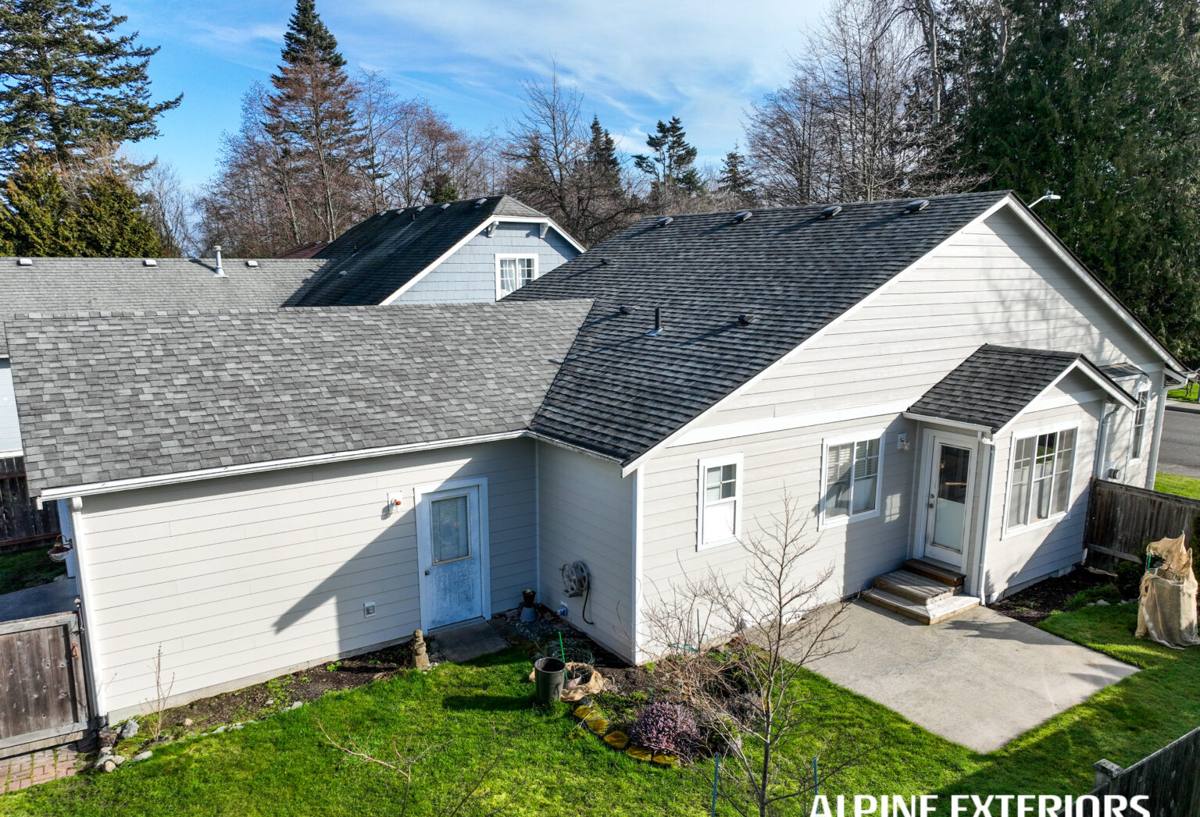
What the Valley Climate Does to a Home's Exterior
Driving Rain and Wind-Driven Moisture
Pacific storms roll through the Skagit Valley with sideways rain more often than most homeowners expect from an "inland" location. Wind-driven moisture doesn't just hit a wall — it works its way behind poorly flashed trim, into end-cuts on siding that weren't sealed, and under roof edges that have lost their seal over time. Over years, that's how rot starts, usually in places you can't see from the ground.
Marine Air Moving Up the Valley
Mount Vernon isn't a beachfront town, but it isn't sealed off from the Salish Sea either. Marine air moves up the valley regularly, carrying moisture and a light salt content that settles on exterior surfaces over time. It's a gentler version of what coastal Anacortes homes deal with directly, but it still accelerates corrosion on fasteners and finishes that aren't rated for it.
A Long Moss Season
Shaded lots, valley humidity, and mild winters add up to a moss season that runs longer here than in drier parts of the state. Moss on a roof holds water against shingles and underlayment. Moss and algae streaking on siding isn't just cosmetic — on the wrong material, it signals moisture sitting on the surface instead of shedding off, which is a maintenance and longevity issue, not just an appearance one.
Why We Only Install James Hardie Fiber Cement Siding
We get asked fairly often why we don't offer vinyl, LP SmartSide, or other fiber cement brands like Cemplank or Allura. It's a fair question, and the honest answer is that after years of exterior work in this climate, James Hardie is the product we're willing to stand behind with a straight answer to every homeowner question.
Non-Combustible and Built for This Climate
James Hardie siding is fiber cement — it doesn't burn, it doesn't feed insects, and it's engineered specifically for the moisture conditions of the Pacific Northwest through Hardie's HZ5 product line. That's not a marketing detail; it's a real difference in how the product handles the freeze-thaw swings and sustained dampness that define a Skagit Valley winter.
ColorPlus Factory Finish
Hardie's ColorPlus finish is baked on at the factory under controlled conditions, which gives it better fade and chip resistance than a field-applied paint job. In a moss-prone, shaded environment where a home's finish is under near-constant moisture exposure, that factory bond matters. Less field painting also means fewer seams in the finish where water can start working its way in.
A Warranty That Transfers
James Hardie backs its siding with a long-term, transferable warranty. If you sell the home, that coverage moves to the next owner — which is a genuine selling point in a valley market where buyers are increasingly asking pointed questions about siding material and moisture history.
None of this means other products are junk. It means that after weighing maintenance burden, moisture behavior, installation sensitivity, and warranty structure, James Hardie is the one we're comfortable putting our name behind on every job. We'd rather turn down a vinyl or LP SmartSide installation than install something we can't fully stand behind ten years later.
Comparing Siding Options for a Skagit Valley Home
| Material | Moisture Performance | Fire Rating | Typical Maintenance |
|---|---|---|---|
| James Hardie Fiber Cement | Engineered for PNW moisture, HZ5 line | Non-combustible | Occasional wash, factory finish holds color |
| Vinyl Siding | Can trap moisture behind panels if not detailed correctly | Combustible, can warp near heat sources | Low, but prone to fading and cracking over time |
| LP SmartSide (engineered wood) | Wood-based core, dependent on sealed edges and coating integrity | Combustible | Requires consistent recoating and edge sealing |
| Cedar or Primed Spruce | Natural material, highest moisture sensitivity | Combustible | Frequent repainting/staining, rot risk in shaded areas |
This table isn't meant to declare every other product a failure — plenty of homes around the country wear vinyl or engineered wood siding just fine in drier climates. In a valley with this much sustained moisture and shade, though, the maintenance and moisture columns are where the real cost difference shows up over a 20- or 30-year window.
Roofing, Windows, and Decks: The Rest of the Exterior
Siding rarely fails in isolation. A roof shedding water improperly, a window that's lost its seal, or a deck holding moisture against the house all put extra load on the siding around them. We handle all four because they're connected systems, not separate line items.
Roofing
In a long moss season, roof maintenance and moss management are part of protecting everything below it. We look at flashing, valleys, and edge details as closely as the field of the roof itself, since that's where most leaks actually start.
Windows
Old or poorly flashed windows are one of the most common points of water intrusion we find behind siding during a tear-off. Replacing windows correctly — with proper flashing integration into the new siding — is often as important as the window unit itself.
Decks
Decks in this climate take a beating from standing water, moss, and freeze-thaw cycling on fasteners. A deck built or rebuilt with the right drainage and material choices holds up far better against a Skagit Valley winter than one that wasn't designed with this weather in mind.
Signs Your Mount Vernon Home May Need Exterior Attention
- Moss or dark streaking building up on siding, trim, or the roofline
- Soft or spongy spots on siding, especially near ground level or under windows
- Paint that's peeling, bubbling, or repeatedly failing in the same spot
- Visible gaps, warping, or separation at siding seams and corner boards
- Rust staining around fasteners or trim edges
- A musty smell in a room along an exterior wall
- Deck boards that stay damp long after rain has stopped
Any one of these on its own might be minor. A few of them together, especially on a north or west-facing wall, are worth a closer look before another wet season sets in.
What Working With a Local Crew Looks Like
We start with an on-site look at the home, not a phone estimate. Siding, roofing, window, and deck problems in the Skagit Valley are rarely visible from the street — most of the real damage is found at flashing points, behind trim, and at ground-level transitions where water lingers longest. From there we walk through what we're seeing, what it means for the timeline of the work, and what options actually make sense for the house in front of us, not a generic package.
Because we're local to the area, we're also available after the job is done. If a question comes up two winters later about how a section of siding is holding up, that's a conversation with the same crew that installed it, not a call center.
Maintenance in a Long Moss Season
Even the best-installed exterior benefits from basic seasonal attention in a climate like this. A soft wash on siding and roofing once moss or algae starts to show, keeping gutters clear so water isn't backing up against fascia and siding, and trimming back vegetation that's keeping a wall in permanent shade all go a long way. James Hardie's factory finish reduces how often repainting is needed, but it doesn't remove the need to keep moisture from sitting against the home in the first place.
Get a Free, No-Pressure Estimate
If you're noticing moss buildup, soft spots, or aging siding, roofing, windows, or a deck on a Mount Vernon property, we're happy to take a look and give you an honest read on what's going on and what your real options are. There's no pressure and no obligation — just a straight assessment from a crew that works in this valley regularly. Use the form below to request a free estimate.