 Anacortes Siding
 What Primed Wood Siding Actually Is
Primed wood siding — often sold as primed spruce, pine, or fir lap and panel siding — is dimensional lumber milled into siding profiles and coated at the factory with a basic primer coat before it ships. The primer is meant to buy you time between installation and your first field coat of paint. It is not a finish. It is not a moisture barrier. It is a base layer that assumes a homeowner or contractor will follow up promptly with quality exterior paint, and will keep repainting on a disciplined schedule for the life of the siding.
On paper, primed wood siding is inexpensive, easy to cut and nail, and gives a traditional lap profile that a lot of homeowners like. Those are real advantages, and we're not going to pretend otherwise. Where it runs into trouble is everything that happens after installation day — and that's the part that matters most on Fidalgo Island.
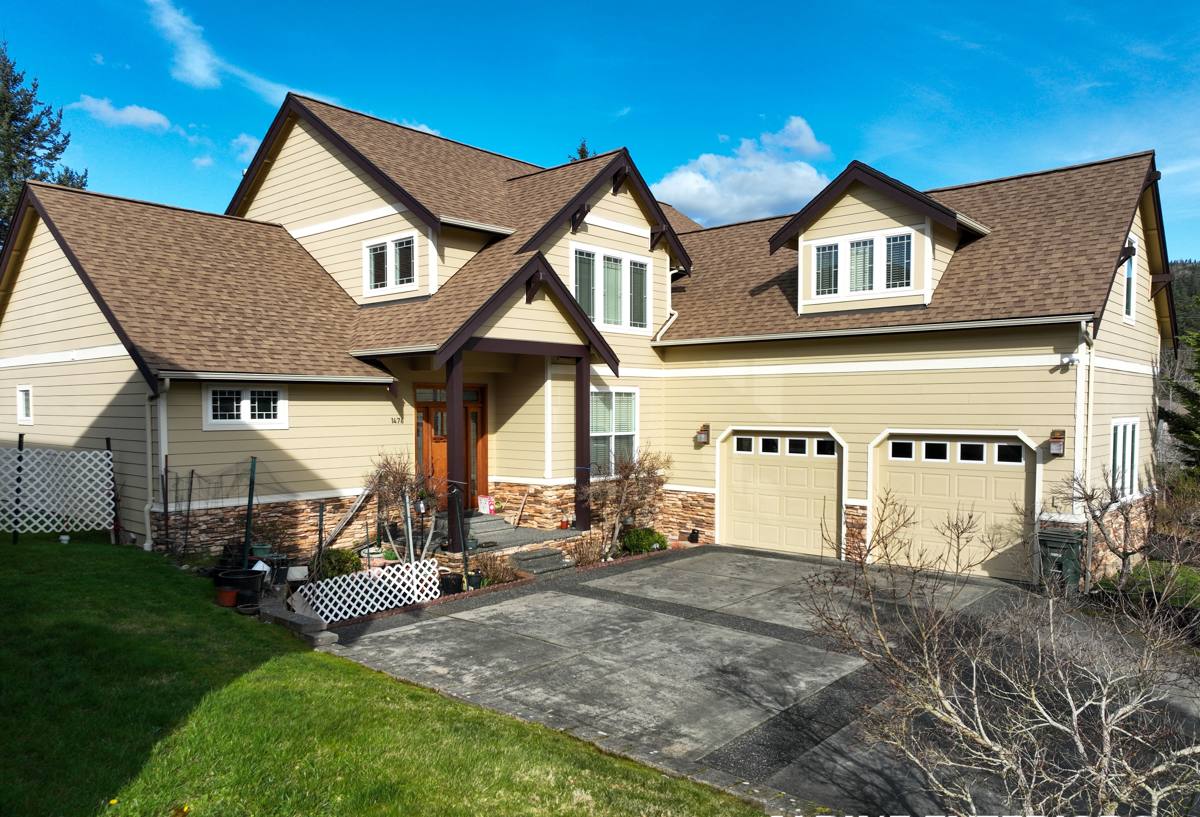
Why Anacortes Is a Hard Climate for Wood Siding
Anacortes sits surrounded by saltwater on three sides, and that matters more for siding than most homeowners realize. Salt air carries fine salt particles that settle on exterior surfaces, hold moisture against the wood, and slowly break down paint film faster than the same paint would fail inland. Combine that with driving rain off the Strait and Rosario Strait during winter storms, and you get wood siding that takes on moisture from two directions: wind-driven rain hitting the face, and salt-laden humidity keeping the surface damp between storms.
Then there's moss. Skagit County's long wet season — routinely stretching from October through May — keeps north-facing and shaded wall sections damp for months at a time. Moss and algae don't just look bad on wood siding; they hold moisture against the surface, and moisture held against primed wood for extended periods is exactly the condition that leads to soft spots, cupping, and paint failure at butt joints and laps.
The Three-Front Problem
Put together, primed wood siding in Anacortes is fighting salt air, driving rain, and moss season all at once — not one or two of these, but all three, on the same wall, in the same year. That's a tougher assignment than the same product faces in a drier inland climate.
Where Primed Wood Siding Gets Into Trouble
The Primer Coat Is a Deadline, Not a Finish
Primer is porous by design — it's meant to grip a topcoat, not shed water indefinitely. If a field coat of quality exterior paint doesn't go on within the manufacturer's recommended window (often 30-90 days, weather permitting), the primer starts to break down under UV exposure and moisture before the house ever gets its real finish. In a wet Anacortes fall or winter, hitting that window can be tight.
End Cuts and Butt Joints Are Vulnerable
Every time a piece of wood siding is cut to fit — corners, window trim, board ends — that cut exposes raw, unprimed wood grain. Unless every single cut end is field-primed and caulked before installation, that's an open door for moisture to wick into the board from the end grain, which is far more absorbent than the face grain. This is a step that's easy to skip under time pressure and easy to miss during a final inspection.
Repainting Is Recurring, Not Optional
Wood siding, primed or otherwise, needs repainting on a cycle — typically every 5-8 years in a marine climate like ours, sometimes sooner on south and west-facing walls that take the most sun and weather. That's not a one-time cost; it's a maintenance line item that repeats for as long as the siding is on the house. Scraping, sanding, priming bare spots, and repainting a full house is real labor, and skipping a cycle accelerates the next round of problems.
Moisture Doesn't Announce Itself
Wood siding failure is often invisible until it isn't. A board can be taking on moisture behind an intact-looking paint film for a season or more before cupping, soft spots, or peeling show up. By the time the visible symptoms appear, the damage is often further along than the surface suggests.
What Primed Wood Siding Does Well
To be fair to the product: primed wood siding is affordable up front, straightforward for a crew to cut and install, and it gives a genuine wood-lap look that some homeowners specifically want, especially on older or historic-style homes around Anacortes where a traditional profile matters to the overall look. If a homeowner is committed to a real maintenance schedule and budgets for repainting every several years, wood siding can serve a house reasonably well. We're not disputing that — we're just not the contractor who installs it, for reasons below.
Cost Factors Over the Life of the Siding
| Factor | Primed Wood Siding | James Hardie Fiber Cement |
|---|---|---|
| Material cost | Lower upfront | Moderate upfront |
| Repainting cycle | Every 5-8 years in marine climate | ColorPlus finish holds color 15+ years before repaint is typically needed |
| Moisture sensitivity | High — end grain, joints, prolonged damp exposure | Low — engineered fiber cement resists moisture-driven rot |
| Combustibility | Combustible | Non-combustible |
| Moss/algae resistance | Low — organic material, holds moisture | Higher — factory finish and material composition resist buildup better |
| Warranty | Typically none beyond paint manufacturer's coating warranty | Manufacturer-backed, transferable product warranty |
The upfront number on wood siding looks attractive. The number that matters is the total cost of ownership over 20-30 years, once you account for repeated repainting, occasional board replacement, and the labor that goes with both.
Why We Standardized on James Hardie Instead
We made a decision as a company to install James Hardie fiber cement siding exclusively, and primed wood siding is one of the products that decision rules out. Hardie's fiber cement is engineered specifically for climates like ours — the HZ5 product line is formulated for the kind of moisture exposure and temperature swings the Pacific Northwest sees, which is directly relevant given the driving rain and humidity Anacortes gets off the water.
The factory-applied ColorPlus finish is baked on under controlled conditions and backed by its own finish warranty, which means we're not relying on a field-applied primer coat and a homeowner's future repainting discipline to keep the house looking right. Fiber cement is also non-combustible, which matters given the wildfire smoke and dry-summer stretches Western Washington has seen more of in recent years, and it simply doesn't feed moss and algae the way organic wood does.
None of this means wood siding is a bad product in the abstract. It means that for a company installing siding on Fidalgo Island homes that face salt air, sustained rain, and a moss season that runs most of the year, we'd rather stand behind a material engineered for exactly those conditions than one that depends on a maintenance schedule holding up perfectly for decades.
Questions to Ask Before Choosing Wood Siding
- Who is responsible for repainting on schedule, and is that written into a maintenance plan?
- Were all field-cut ends primed and sealed during installation, not just the factory-primed faces?
- Is the wall facing south or west, taking direct sun and driving rain, or is it a more sheltered elevation?
- Does the warranty cover the coating only, or the wood substrate itself?
- Has the siding been inspected recently for soft spots, especially near the ground, at corners, and under windows?
- What's the realistic repainting budget over the next 10, 20, and 30 years?
What to Look for If You Already Have Primed Wood Siding
If your Anacortes home already has primed wood siding, the goal is catching problems early rather than waiting for obvious failure. Check north-facing and shaded walls for moss buildup, press gently on areas near the ground and under windows to feel for soft spots, and look closely at butt joints and corner trim for cracked or peeling paint — those are the spots where moisture gets in first. Keeping gutters clear and vegetation trimmed back from walls also reduces how much standing moisture the siding has to deal with, particularly during our wetter months.
Get an Honest Look at Your Siding
Whether you're dealing with aging wood siding now or planning ahead for a replacement, we're happy to come take a look and talk through what we're actually seeing on your walls — no pressure, no hard sell. If you'd like a straightforward assessment and a free estimate on James Hardie fiber cement siding, use the form below to get started.