 Anacortes Siding
 Guemes Island Weather Is Harder on a House Than It Looks
From the mainland, Guemes Island looks like an easy extension of Anacortes — a short ferry ride across Guemes Channel and you're there. But the exterior of a house on the island lives a different life than a house a few miles inland. Homes here sit closer to open water, catch more wind off Rosario Strait and the Salish Sea, and spend more days a year damp than dry. Salt air, driving rain, and a moss season that can stretch from fall through spring all work on a building's exterior in ways that are slow, cumulative, and easy to underestimate until a wall or trim board is already failing.
We work throughout Skagit County, and island and waterfront properties like the ones on Guemes consistently show more exterior wear per year than comparable homes set back from the water. That's not a knock on the island — it's just the physics of building near open saltwater in the Pacific Northwest. The good news is that exterior products and installation methods exist specifically to handle this kind of exposure. Choosing the right ones, and installing them correctly, is most of the battle.
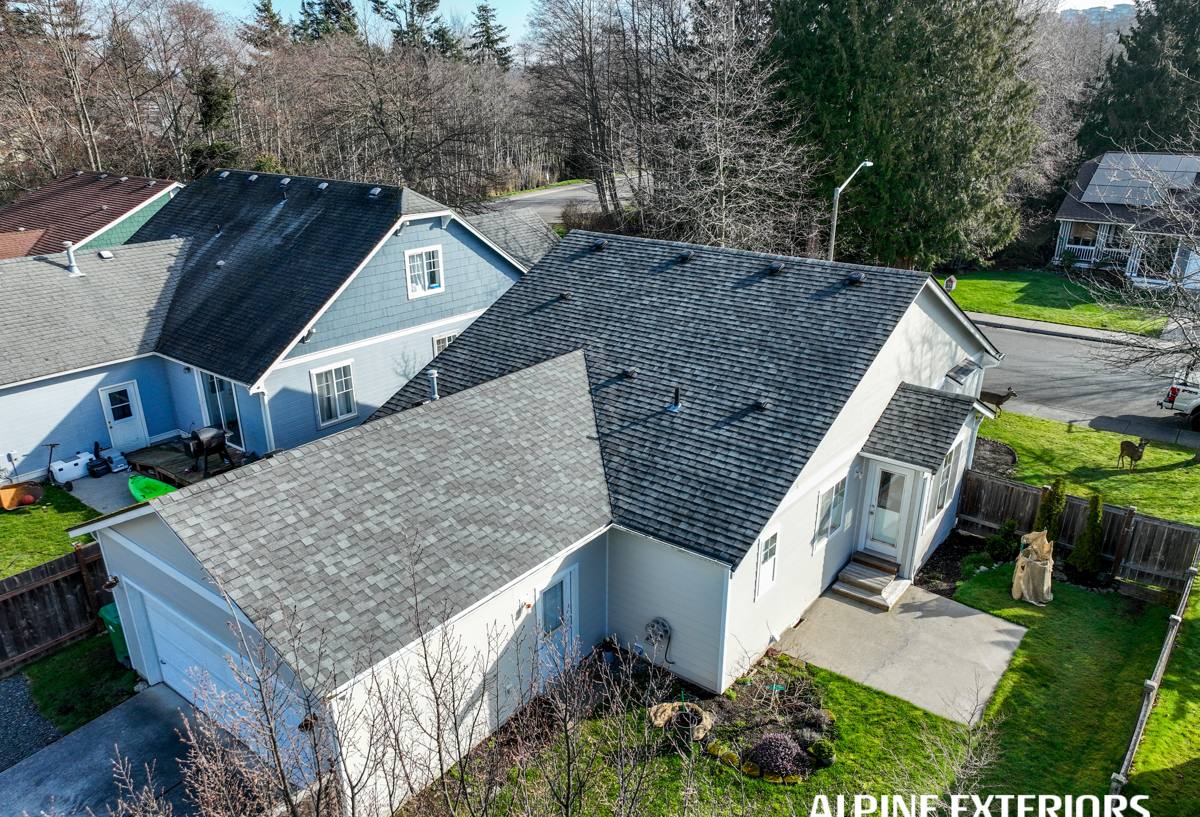
What Salt Air, Wind-Driven Rain, and Moss Actually Do to a House
Salt Air and Metal Fasteners
Salt-laden air accelerates corrosion on anything metal — fasteners, flashing, hose bibs, light fixtures, even some cladding types. On siding specifically, the concern isn't usually the panel itself but the staples, nails, and trim fasteners holding it up. Corroded fasteners lose grip over time, which can lead to loose boards, streaking stains below fastener heads, and eventually water finding its way behind the cladding.
Driving Rain and Wind Exposure
Rain that falls straight down is one problem. Rain that's being pushed sideways by wind off the water is another. Wind-driven rain finds every gap, lap joint, and seam that wouldn't normally see much moisture, which is why flashing details, caulking choices, and lap installation matter more on an exposed island lot than they do on a sheltered inland one.
Moss, Algae, and the Damp Season
Shaded, north-facing walls under fir and cedar canopy stay damp for long stretches of the year. That's ideal growing conditions for moss and algae, which hold moisture against a wall surface even after the weather clears. Over years, that constant damp cycle is what breaks down softer or less water-resistant siding materials, and it's a major reason painted wood trim and some engineered wood products need more frequent maintenance near the water than they do a few miles inland.
Why We Install Only James Hardie Fiber Cement Siding
We get asked fairly often why we don't offer vinyl, LP SmartSide, or other engineered wood siding products, especially since some of them cost less upfront. The honest answer is that we've made a professional call, based on what holds up in this climate over decades rather than years, to install James Hardie fiber cement exclusively.
What the Alternatives Get Right — and Where They Struggle Here
Vinyl siding is inexpensive and low-maintenance in mild conditions, but it's a plastic product that can warp or become brittle with UV and temperature swings, and its seams and J-channels give wind-driven rain more opportunities to find a way behind the cladding. Engineered wood products like LP SmartSide use treated wood strand substrates that perform well when installation and maintenance are kept up exactly to spec, but any breach in the factory coating — a cut edge, a fastener hole, a scuff — exposes wood fiber that can absorb moisture and swell, which is a real risk in a marine environment with a long damp season. Primed wood and cedar are beautiful but need the most ongoing attention: repainting, caulking, and moisture monitoring on a schedule most homeowners underestimate when they first choose the product.
Why Fiber Cement Fits This Climate
James Hardie siding is a non-combustible cement-based board, not a wood or plastic product, so it doesn't rot, swell with moisture, or attract the pests that go after wood-based siding. Its ColorPlus factory finish is baked on under controlled conditions and holds color and integrity against UV and salt air significantly better than field-applied paint. Hardie also engineers regional HZ5 product lines specifically for wetter, harsher climates like ours, which affects the board's moisture and freeze-thaw performance. Combined with a strong transferable warranty, it's the product we're comfortable standing behind on the homes most exposed to what the Salish Sea throws at them.
| Factor | Vinyl | LP SmartSide / Engineered Wood | James Hardie Fiber Cement |
|---|---|---|---|
| Moisture behavior | Can trap moisture at seams | Wood fiber core can swell if coating is breached | Cement-based, does not rot or swell |
| Salt air / UV resistance | Can fade, chalk, become brittle | Coating wears with age and exposure | ColorPlus factory finish holds up well |
| Fire resistance | Combustible | Combustible | Non-combustible |
| Maintenance | Low, but limited repair options | Moderate — coating/caulk upkeep matters | Low, occasional caulk/paint touch-up on trim |
| Typical upfront cost | Lowest | Mid | Higher upfront, stronger long-term value |
More Than Siding: Roofing, Windows, and Decks for Island Exposure
Siding is only one part of an island home's exterior envelope, and the same salt air and driving rain that stress cladding also stress the rest of the building. We handle roofing, windows, and decks alongside siding work because these systems all interact — a roof that's shedding water poorly will overload wall flashing below it, and windows with failing seals let moisture into the same wall cavities that siding is supposed to protect.
Roofing
Roof coverings, flashing, and ventilation take direct wind and rain exposure on a waterfront lot. Attention to underlayment, flashing at penetrations, and proper ventilation matters more here than in a sheltered inland setting, since a marginal roof detail tends to fail sooner near open water.
Windows
Older or poorly sealed windows are a common source of hidden moisture intrusion around the frame, which can affect the siding and sheathing around them long before anyone notices a problem inside. Replacing windows at the same time as siding lets us properly integrate flashing between the two rather than patching around an existing window.
Decks
Outdoor living space on the island often means more exposed decking — full sun in some spots, deep shade and moss in others. Framing, fasteners, and decking material all need to account for that same damp/dry cycle that affects siding.
Working Around the Ferry: How We Handle Island Logistics
Guemes Island is only accessible by ferry, which changes how a project needs to be planned compared to a job in town. Materials, crew, equipment, and dumpsters all have to move on a schedule tied to ferry sailings rather than just a truck driving over. A contractor without experience on the island can end up making extra crossings, running short on materials mid-project, or losing a work day to a missed sailing.
We plan island jobs around that reality from the start — staging materials in advance, scheduling crew days to make the most of time on the island rather than commuting back and forth unnecessarily, and building in realistic timelines instead of promising a mainland schedule on an island job. It's a logistics problem as much as a construction one, and it's worth asking any contractor bidding island work how they plan to handle it.
Managing Moss and Shade on North-Facing Walls
Even with the right siding material, wall orientation and landscaping affect how much maintenance a home needs. North-facing walls shaded by mature trees stay damp longer after rain and are the most likely spots to develop moss or algae growth over time. A few practical habits help regardless of siding type:
- Keep vegetation and tree canopy trimmed back from exterior walls to improve airflow and sun exposure
- Rinse visible moss or algae buildup off siding periodically rather than letting it accumulate for years
- Check that gutters and downspouts are directing water away from the foundation and lower wall areas
- Watch caulking and trim joints on an annual basis, especially on the most wind- and rain-exposed side of the house
- Have flashing and roof-to-wall transitions inspected if you notice staining or a soft spot developing
What to Look for When Hiring a Contractor for Island Work
Not every exterior contractor is set up to do island work well, and it's reasonable to vet that before signing anything. A local crew that regularly works in Skagit County and understands both the climate and the logistics of getting materials and people to the island is going to give you a more realistic bid and a smoother project than a contractor bidding it like any other job in town.
Questions Worth Asking
- Have you completed projects on Guemes Island or similar island/waterfront properties before
- How do you plan material delivery and crew scheduling around the ferry
- What siding, roofing, and window products do you install, and why
- Are you licensed and insured to work in Washington State, and can you provide proof
- What does your warranty cover, and is it backed by the manufacturer or just your own labor
- Will the same crew be on site throughout the project, or is work subcontracted out
What an Exterior Project on Guemes Island Typically Involves
Every home is different, but island projects generally follow a similar arc: an on-site assessment of the current siding, trim, roofing, and window condition; a discussion of scope and product options given the home's exposure; a realistic timeline that accounts for ferry logistics and weather windows; and a project plan that sequences work to minimize the number of separate trips to the island. For homes with several aging systems at once — siding, roof, and windows all original to the house, for example — it often makes sense to plan the work together rather than tackling one system at a time over several years.
If you own a home on Guemes Island and you're noticing worn siding, moss buildup, water staining, or aging trim, we're happy to come take a look. We offer free, no-pressure estimates for siding, roofing, window, and deck work, and we'll give you a straight assessment of what your home actually needs and why — no hard sell, just an honest read on what will hold up out there.