 Anacortes Siding
 Exterior Work Built for Skyline's Waterfront Exposure
Skyline sits on the western edge of Anacortes, close enough to the water that homes here live with a different set of conditions than houses just a few miles inland. Salt-laden air off the Guemes Channel and Rosario Strait moves through the neighborhood on a near-constant basis, driving rain comes in sideways during winter storms, and the tree cover that makes Skyline attractive also means shaded roof and wall sections stay damp long after a storm passes. That combination is exactly what wears down the wrong exterior products fast and is exactly why we build every job around materials and techniques suited to this specific stretch of Skagit County.
We're a local crew — siding, roofing, windows, and decks — and we've watched enough Skyline homes come through decades of Pacific Northwest weather to know which shortcuts show up as problems five years later. This page walks through what that exposure actually does to a house, and how we approach siding, roofing, windows, and decks for homeowners in this area.
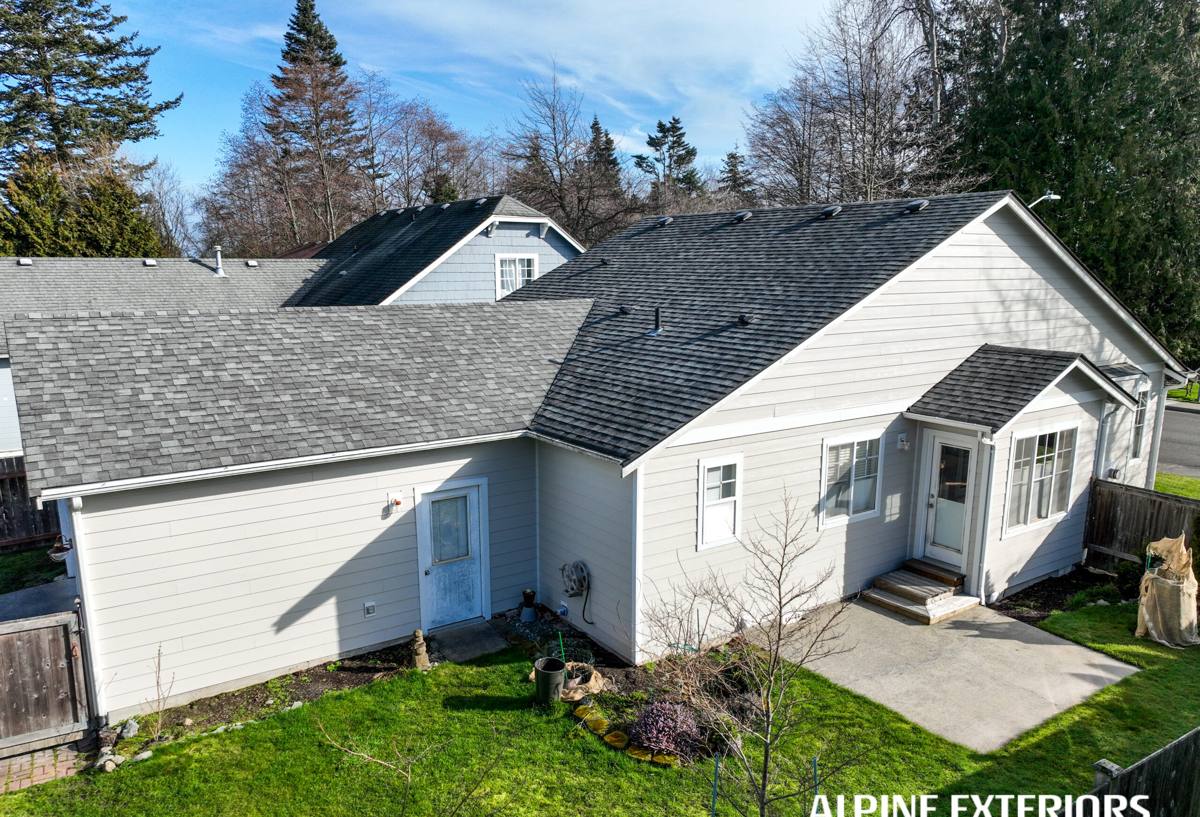
What Salt Air and Moisture Do to a Home Over Time
Salt air isn't just a coastal cliché — it's a real corrosion accelerant. Airborne salt settles on fasteners, flashing, and any exposed metal, and it holds moisture against surfaces longer than plain rainwater would. On siding, that means faster paint and finish breakdown, especially on the west- and south-facing walls that catch the brunt of weather moving in off the water. On roofing, it means galvanized fasteners and lower-grade flashing corrode ahead of schedule, which is often the real cause of a "roof leak" that actually started as a rusted-through nail or a flashing seam that gave up early.
The Moss and Mildew Factor
Anacortes' tree canopy and marine humidity give moss, algae, and mildew everything they need to take hold — shade, moisture, and mild temperatures nearly year-round. Moss on a roof isn't just cosmetic; it holds water against shingles and underlayment, works into seams, and shortens the life of the roofing system. On siding, sustained dampness is what causes wood-based products to swell, delaminate at the edges, or develop soft spots behind paint that still looks fine from the street. Any exterior work in Skyline has to account for moss and mildew as an ongoing condition, not a one-time cleanup.
Driving Rain and Wind-Driven Water
Storms coming off the Strait don't fall straight down — wind pushes rain sideways into wall assemblies, window edges, and any gap in flashing or caulking. That's a wind-and-water-intrusion problem more than a simple "keep the rain out" problem, and it means house wrap details, window flashing, and siding overlaps matter more here than they would in a calmer inland location.
Why We Install Only James Hardie Fiber Cement Siding
We made a deliberate decision to install James Hardie fiber cement exclusively, and we don't install vinyl, LP SmartSide, Cemplank, Allura, primed spruce, or cedar. That's not a marketing position — it's a standard we hold because of what we've seen these products do (or fail to do) in exactly the kind of salt air and sustained moisture Skyline homes face.
- Vinyl can warp, fade, and become brittle under repeated UV and temperature swings, and it offers little protection against wind-driven water getting behind the panels at seams.
- Wood-based products (LP SmartSide, primed spruce, cedar) rely on maintaining an intact protective coating. Once moisture gets past that layer — which happens faster in a moss-prone, marine-humid environment — the wood substrate can swell, rot, or delaminate.
- Other fiber cement brands (Cemplank, Allura) are legitimate materials, but we standardized on one manufacturer so our crews install to one spec, one flashing detail, and one warranty structure, rather than juggling installation requirements across brands.
James Hardie fiber cement is non-combustible, dimensionally stable in wet-dry cycling, and finished with the ColorPlus factory-applied finish, which holds color and resists fading far better than field-applied paint exposed to salt air. Hardie's HZ5 product line in particular is engineered for harsher climate zones, which is a meaningful advantage for a neighborhood sitting this close to open water.
Siding Options for Skyline Homes
| Hardie Product | Common Use | Why It Fits This Area |
|---|---|---|
| HardiePlank lap siding | Most Skyline home exteriors | Classic profile, handles wind-driven rain with correct lap and flashing detail |
| HardieShingle | Accent gables, dormers | Shingle look without the moisture sensitivity of real cedar shingle |
| HardiePanel | Modern or mixed-material facades | Clean vertical lines, pairs well with trim accents |
| HardieTrim | Corners, window and door surrounds | Resists the edge-swelling that plagues wood trim in damp shade |
Roofing for Anacortes' Wet, Shaded Conditions
Roofing in Skyline has to deal with two things at once: the volume of rain the area gets over a typical winter, and the moss growth that shaded, tree-lined lots practically guarantee. We pay close attention to underlayment quality, valley and flashing detail, and ventilation — a roof that can't breathe traps moisture underneath the shingles, which accelerates moss growth and rot at the deck level regardless of which shingle brand sits on top. Proper ice-and-water-shield coverage at eaves and valleys, along with metal flashing that's actually rated for coastal exposure, matters more here than in a drier inland town.
We also look at gutter and downspout capacity as part of any roofing conversation. A roof can be installed correctly and still cause water problems if the drainage system underneath it can't keep up with Skagit County's rain volume.
Windows: Sealing Out Wind-Driven Rain
Because Skyline catches wind-driven rain directly off the water, window installation detail matters as much as the window unit itself. Flashing tape, proper pan flashing at the sill, and correct integration with the house wrap are what actually keep water out during a sideways winter storm — a good window installed with sloppy flashing will leak, and a modest window installed correctly usually won't. We also talk with homeowners about condensation: older single-pane or poorly sealed windows in a humid marine climate tend to fog and sweat, which contributes to the same moisture load that damages siding and trim nearby.
Signs Skyline Homeowners Should Watch For
- Soft or spongy siding, especially on north-facing or shaded walls
- Moss buildup thickening on roof slopes that stay shaded most of the day
- Peeling or bubbling paint that returns quickly after repainting
- Rust streaking below roof fasteners, gutters, or flashing
- Fogging or condensation between window panes
- Soft decking boards or fasteners that have started to rust or back out
Decks: Standing Up to Shade, Moisture, and Salt
Decks in Skyline face the same underlying issue as siding and roofing — sustained dampness from tree cover and marine air. Fastener choice matters a great deal here; standard fasteners corrode faster in salt-influenced air, so we use hardware rated for coastal and treated-lumber exposure. Ledger board flashing, proper drainage under the deck surface, and gaps between boards that allow airflow all reduce how long moisture sits against the structure. Composite decking is worth a look for homeowners who want to reduce the moss, mildew, and refinishing cycle that wood decking demands in this climate, though a well-built and properly maintained wood deck can also perform well here.
Why a Local Crew Matters in Skyline
Anacortes and the surrounding Skagit County waterfront aren't a uniform climate — a house three miles inland can weather very differently than one exposed directly to the Strait. A crew that works this specific area regularly knows which walls take the worst of the wind-driven rain, how much moss pressure to expect under mature tree cover, and which flashing and fastener details actually hold up rather than just meeting a generic code minimum. That local knowledge shows up in the details that aren't visible once a job is finished — the flashing behind the siding, the underlayment under the shingles, the fasteners in the deck framing — which is exactly where problems start when those details are rushed.
What to Expect From an Estimate
Every Skyline property is a little different depending on tree cover, sun exposure, and proximity to the water, so we look at the actual conditions on your home rather than applying a one-size-fits-all recommendation. That includes checking for existing moisture damage, evaluating current flashing and ventilation, and being straightforward about what's worth fixing now versus what can wait.
If you're noticing any of the warning signs above, or you're simply due for an honest look at your siding, roof, windows, or deck, we're happy to come out and take a look. The estimate is free, there's no pressure, and you'll get a straight answer about what your home actually needs.