 Anacortes Siding
 Siding in Burlington & the Surrounding Anacortes Area
Burlington sits in the heart of Skagit County, close enough to the water that homes here deal with a lot of the same weather Anacortes gets: salt-laden air pushing in off Fidalgo Bay and the Sound, long stretches of driving rain through fall and winter, and the kind of persistent shade and dampness that makes moss and algae a year-round concern rather than a seasonal nuisance. Whether your home sits closer to the farmland flats or up toward the tree line, the exterior of your house is doing constant, quiet work to keep that moisture and salt air out. We work throughout the Anacortes area, including Burlington, and we bring the same standard to every job: James Hardie fiber cement siding, installed correctly, with nothing cut out of the process to save time.
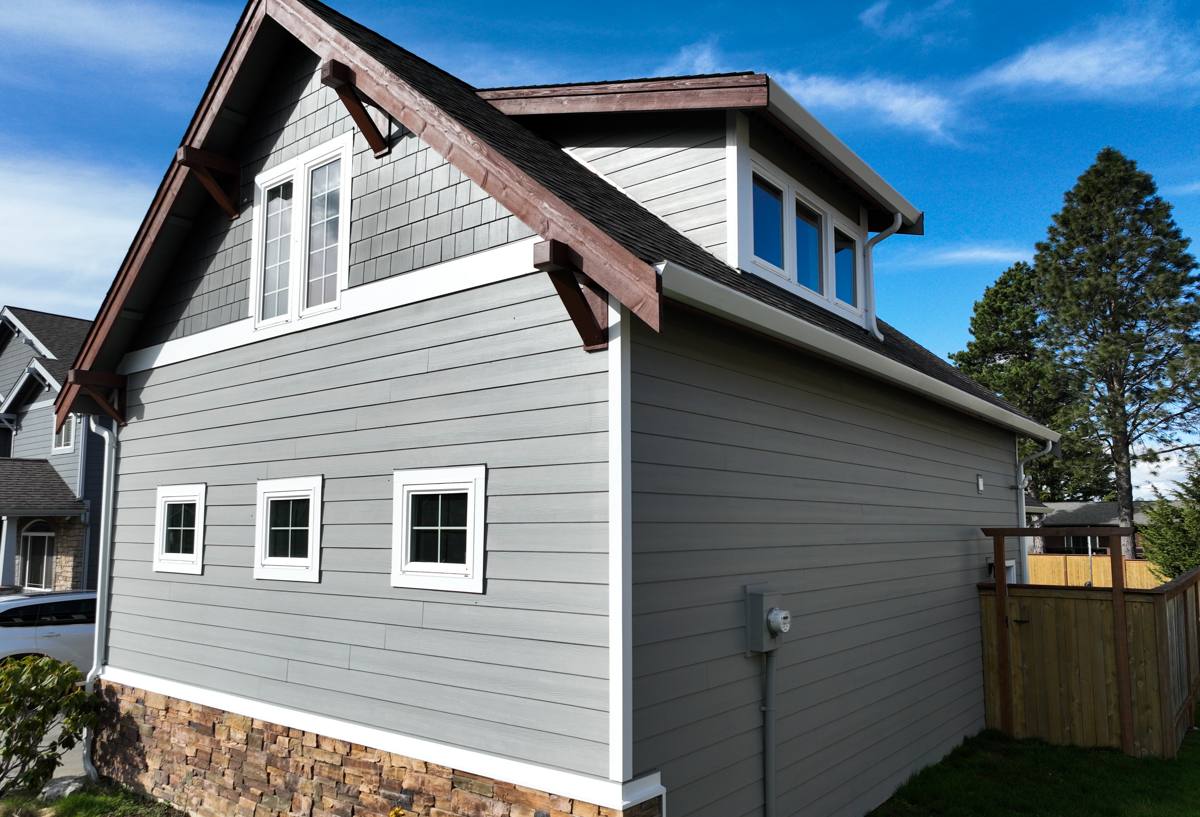
What Skagit County Weather Actually Does to Siding
People who haven't lived on this side of the state sometimes assume "rain" is the whole story. It's not. A few things stack up on homes in this region that don't show up the same way further inland:
- Salt air corrosion. Even a few miles inland from the Sound, airborne salt accelerates the breakdown of fasteners, trim, and lower-grade siding materials over time.
- Driving rain. Wind-driven rain doesn't just wet a wall — it pushes moisture sideways into seams, laps, and butt joints, which is where most siding failures actually start.
- Extended damp season. Long gray stretches with little drying time between rain events mean any siding product that absorbs or traps moisture stays wet longer here than it would in a drier climate.
- Moss and algae growth. Shaded north and east-facing walls, combined with persistent moisture, create ideal conditions for moss and algae to take hold on porous or textured surfaces.
None of this is exotic — it's just the reality of building an exterior for the Pacific Northwest. But it does mean the siding decision matters more here than it would in a drier climate, and it's a big part of why we standardized on one product line instead of offering everything on the market.
Common Siding Problems We See on Burlington-Area Homes
Moisture Behind the Cladding
The most expensive siding problems are rarely visible from the curb. Water that gets behind siding — through a failed caulk joint, a cracked board, or a poorly flashed window — can sit against sheathing for months before anyone notices soft trim, staining, or a musty smell inside. In a climate with this much sustained rainfall, how a siding system manages incidental moisture matters as much as how it looks.
Wood and Composite Deterioration
Cedar and other wood-based siding products can look great when new, but they need consistent maintenance — repainting, resealing, and monitoring for rot — to hold up under Skagit County's rain totals. Skipping even one maintenance cycle can let moisture get a foothold, especially at butt joints and lower courses near grade.
Vinyl Fading and Cracking
Vinyl siding handles rain fine on its own, but UV exposure over years causes fading and color shift, and cold snaps can make it brittle enough to crack on impact. It's also a poor match for homeowners who want a factory-finished look that holds its color for decades rather than a decade or less.
Why We Install Only James Hardie Fiber Cement Siding
We don't install LP SmartSide, vinyl, Cemplank, Allura, primed spruce, or cedar. That's a deliberate standard, not a limitation in what we're capable of installing. Fiber cement in general handles moisture, fire exposure, and coastal air better than wood-based or vinyl products, and James Hardie specifically engineers its HZ5 product line for climates like this one — cold, wet, and salt-influenced.
A few reasons this matters for a Burlington-area home specifically:
- Non-combustible core. Fiber cement doesn't feed a fire the way wood-based siding can, which matters both for direct wildfire exposure and for ember-driven ignition during regional fire seasons.
- ColorPlus factory finish. The baked-on finish resists fading and chipping far better than field-applied paint, and it removes the recurring repaint cycle that wood and some composite sidings require.
- Engineered for wet climates. Hardie's HZ5 line is formulated specifically for regions with sustained moisture exposure, which is exactly the profile of a Skagit County winter.
- Dimensional stability. Fiber cement doesn't swell, warp, or cup the way wood and some composite products can when they take on moisture repeatedly over years.
We'd rather install one product extremely well, backed by a strong transferable warranty, than offer a menu of options where some of them we know won't hold up as well in this specific climate.
How the Major Siding Options Compare
| Material | Moisture Behavior | Maintenance | Typical Lifespan | Finish |
|---|---|---|---|---|
| James Hardie Fiber Cement | Excellent — dimensionally stable, engineered for wet climates | Low — occasional wash, no repainting for years | 30-50+ years with proper install | Factory ColorPlus finish |
| Cedar / Wood | Prone to swelling, rot without upkeep | High — regular sealing/repainting | 15-30 years with diligent maintenance | Field-applied, fades/weathers |
| Vinyl | Good on its own, but seams can allow water intrusion | Low, but cracks/fades over time | 20-30 years, shorter with UV exposure | Molded-in color, fades and chalks |
| LP SmartSide / Engineered Wood | Moderate — treated but wood-based core | Moderate — edge sealing critical | 20-30 years, install-sensitive | Factory primed or finished |
What Correct Installation Actually Involves
Fiber cement siding is only as good as the installation behind it. Hardie publishes specific fastening, clearance, and flashing requirements, and skipping them is the most common reason any siding — not just Hardie — fails early. On every job we handle:
- Proper weather-resistive barrier and flashing details at windows, doors, and penetrations, so water is directed out rather than trapped behind the cladding.
- Correct fastener type, spacing, and embedment per Hardie's installation specifications.
- Manufacturer-specified clearances from grade, roofing, and decks, which is especially important on lots with limited drainage or grading toward the foundation.
- Properly caulked and sealed joints at trim and butt seams — the exact spots where driving rain finds its way in if they're rushed.
Installing to spec is also what keeps Hardie's transferable warranty intact. A beautiful-looking install that skips flashing details or uses the wrong fasteners can still fail behind the surface, and it can also void the coverage that's supposed to protect you.
Beyond Siding: Roofing, Windows, and Decks
Siding doesn't work in isolation — it's one piece of a home's exterior envelope, and in a climate this wet, the pieces have to work together. We also handle roofing, window replacement, and deck construction, and we look at all of it together when we're on site:
- Roofing. Roof-wall flashing intersections are one of the most common leak points on homes in this region — if the roofing and siding aren't detailed to work together, water finds the gap.
- Windows. Window flashing has to integrate correctly with the siding water-resistive barrier, or you end up trading one leak path for another.
- Decks. Deck ledger connections against the house need the same careful flashing attention as any other penetration through the siding.
A crew that only does siding and treats the roof, windows, or deck ledger as someone else's problem is exactly how these gaps happen. We'd rather catch it before it's a call-back.
Moss, Algae, and Exterior Maintenance in a Wet Climate
Even with the right siding installed correctly, exterior surfaces in Skagit County need some basic seasonal attention. A few habits go a long way:
- Rinse siding periodically, especially on shaded north and east-facing walls where moss and algae take hold fastest.
- Keep gutters clear so overflow isn't running down the siding face during heavy rain events.
- Trim back vegetation and tree cover that keeps a wall section damp and shaded most of the day.
- Have caulking and trim seals inspected periodically — sealant is a maintenance item on any siding system, including fiber cement.
Hardie's factory finish and non-porous surface make it considerably more resistant to moss and algae staining than wood or some textured composites, but "resistant" isn't "immune" — a little seasonal attention keeps it looking the way it did on installation day.
Choosing a Contractor for a Burlington-Area Home
Because we work throughout the Anacortes area including Burlington, we see the same exterior issues repeat across the region — it's a function of the climate, not any one neighborhood. A few things worth checking before hiring anyone for exterior work here:
- Ask what siding brands and lines they install, and why — a contractor who installs everything often isn't specializing in the installation details any one product requires.
- Confirm they're familiar with manufacturer flashing and clearance specs, not just general carpentry practice.
- Ask how they handle roof-wall and window-to-siding transitions specifically, since that's where most leaks originate.
- Check that any warranty offered is actually transferable, and understand what voids it.
- Get a clear, written scope — vague estimates are a common source of disputes later.
If you're weighing a siding, roofing, window, or deck project on a Burlington-area home, we're happy to take a look and talk through what your specific home and exposure actually need. A free, no-pressure estimate is a good starting point — use the form below to get in touch.