 Anacortes Siding
 Windows Built for Burlington's Weather, Not Just the Catalog
Burlington sits in the Skagit Valley, close enough to the water that homes here deal with the same marine air, wind-driven rain, and long wet stretches that shape building decisions all across this part of Skagit County. Windows in this area don't fail because of one big storm. They fail slowly, from years of moisture finding its way into places it shouldn't be, seals breaking down under constant humidity, and frames that were never really built to handle a climate this consistently damp. A window that performs fine in a dry inland market can be a maintenance headache here within a decade.
When we talk about "energy-efficient windows" for a Burlington home, we're not just talking about the glass. We're talking about a whole assembly — frame material, glazing, flashing, and installation detail — that has to hold up to salt-tinged air, driving rain that hits at an angle, and a moss season that runs longer here than it does in drier parts of the state. Get any one of those wrong and you end up with a window that looks fine for a year or two and then starts costing you money in heat loss, condensation, or rot.
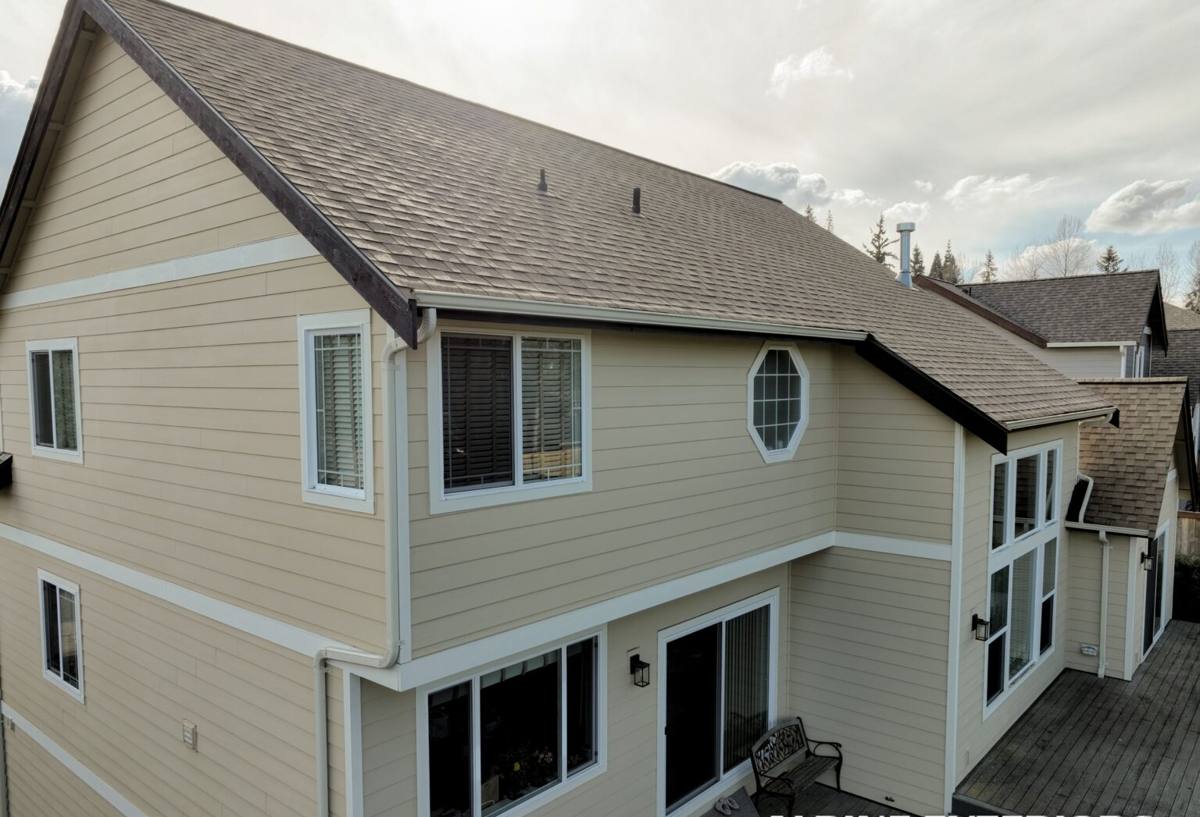
What This Climate Actually Does to a Window
It helps to understand the specific stresses at play, because they're different from what you'd deal with on the dry side of the mountains.
Salt Air
Proximity to Puget Sound and the surrounding waterways means the air carries a fine amount of salt, even well inland. Over years, that salt-laden moisture accelerates corrosion on hardware — hinges, locks, cranks, and fasteners — and can degrade certain finishes faster than a manufacturer's warranty assumes. This is one reason we pay attention to hardware quality and finish, not just the glass package, when we spec a window for this area.
Driving Rain
Storms coming off the water don't just fall straight down — they hit siding and window openings sideways, which puts real pressure on flashing and sealant details. A window that's air-sealed but not properly flashed can still let water track in behind the trim, where it does damage you won't see until there's already rot or mold in the wall cavity.
Moss Season
The long stretch of cool, wet months each year keeps moisture sitting on north-facing walls, sills, and trim longer than in drier climates. Moss and algae growth on window sills and exterior casing isn't just cosmetic — it holds moisture against wood and painted surfaces, which shortens the life of anything that isn't properly sealed, primed, or built from a moisture-tolerant material.
What "Energy-Efficient" Should Mean Here
Energy efficiency in a window comes down to how much heat it lets escape (or lets in) and how well it manages moisture and air movement. In the Pacific Northwest, that second part — moisture management — matters just as much as the insulating value, because a window that's technically efficient on paper but poorly sealed will still cause condensation, drafts, and long-term damage.
A few terms worth knowing:
- U-factor — measures how well the window prevents heat from escaping. Lower is better for our heating-dominated climate.
- SHGC (Solar Heat Gain Coefficient) — measures how much solar heat passes through the glass. Less critical here than in sunnier climates, but still worth balancing on south- and west-facing walls.
- Air leakage rating — how much air passes through the window assembly itself. A tight rating here directly affects both comfort and moisture control.
- NFRC label — the independent rating sticker that lets you compare these numbers across brands honestly, rather than relying on marketing claims.
For most Burlington homes, we're recommending double-pane windows with a low-E coating and argon fill as the baseline, with triple-pane as an upgrade option for homes with rooms that run cold, high street noise, or owners who want the lowest possible utility bills. Neither choice is wrong — it's a matter of budget and priorities.
Frame Material Comparison
| Frame Material | How It Handles This Climate | Trade-Offs |
|---|---|---|
| Vinyl | Doesn't rot, resists moisture well, low maintenance | Can't be repainted; quality varies a lot between manufacturers |
| Fiberglass | Very stable in temperature swings and humidity, holds paint well | Higher upfront cost than vinyl |
| Wood-clad | Warm appearance, good insulator | Cladding must be detailed correctly or moisture gets behind it — a real risk in a wet climate like ours |
| Aluminum | Strong and slim sightlines | Poor insulator unless thermally broken; prone to condensation in cold, damp conditions |
We don't push one material as "the only right answer." What we do is steer homeowners away from assemblies that are known to struggle with sustained moisture exposure — particularly poorly detailed wood-clad units and aluminum without a thermal break — because we've seen how this specific climate exposes those weaknesses over time.
Signs Your Burlington Home's Windows Need Attention
Not every window issue means full replacement, but these are the signals worth taking seriously:
- Condensation building up between the panes (a sign the seal has failed)
- Visible fogging or a cloudy haze that won't wipe away
- Drafts you can feel near the frame on a windy day
- Wood trim or sills that feel soft, stay damp, or show moss/algae growth
- Hardware that's stiff, corroded, or won't latch properly
- A noticeable jump in heating costs without another explanation
- Visible daylight or gaps around the frame from outside
If you're only seeing one or two of these, it may be a sealing or hardware repair rather than a full window swap. Part of what we do on a site visit is tell you honestly which situation you're in, rather than assuming replacement is always the answer.
What a Correct Installation Actually Involves
The window unit itself is only part of the job. Most of the failures we get called out to fix in older installations trace back to installation shortcuts, not the window product. A correct job includes:
- Removing the old unit carefully to inspect the rough opening for hidden rot or water damage before anything new goes in.
- Repairing any damaged framing or sheathing found during that inspection — installing a new window into a compromised opening just locks the problem inside the wall.
- Flashing the opening properly, with materials and a sequence that shed water outward and downward, sized for the angle of rain this area actually gets.
- Setting the window level, plumb, and square, shimmed correctly so the frame isn't under stress that can crack seals prematurely.
- Sealing and insulating the gap between the window frame and the rough opening with the right materials — not just packed with fiberglass and caulked over.
- Finishing the exterior trim and flashing so water is directed away from the opening, not toward it.
Skip any one of these steps and you can end up with a brand-new, high-efficiency window that still leaks air or lets moisture into the wall — which defeats the purpose of the upgrade entirely.
Our Process for a Burlington Window Project
1. On-Site Assessment
We look at your existing windows, the condition of the openings, and how your home is oriented to wind, rain, and sun. We'll point out any framing or moisture issues we can see before quoting anything.
2. Honest, Itemized Quote
You'll get a clear breakdown of window options, install scope, and pricing — no pressure to upgrade beyond what actually makes sense for your home and budget.
3. Scheduling Around Weather
Given how much rain this area gets, we plan install timing and sequencing to minimize how long any opening sits exposed. Openings are protected and never left open overnight.
4. Installation and Quality Check
Each window is set, flashed, sealed, and trimmed following the same sequence every time — not shortcuts based on how the crew feels that day. We walk the finished work with you before we consider the job done.
5. Cleanup
Old windows, packaging, and debris leave with us. We don't leave a work site for the homeowner to finish cleaning up.
Why Local Experience in This Area Matters
A crew that already works window jobs throughout Burlington and the surrounding Skagit County area brings a few concrete advantages over an out-of-area contractor:
- We already know which failure patterns show up in this specific climate — salt-affected hardware, moss-driven trim rot, driving-rain flashing failures — because we've opened up enough walls to see them firsthand.
- We're familiar with local permitting requirements and inspection expectations, so there are no surprises mid-project.
- We're not learning the region's weather patterns on your project — installation sequencing and weather protection decisions are second nature, not guesswork.
- Being local means warranty follow-up, adjustments, or questions after the install don't involve waiting on a crew that has to drive in from somewhere else.
What Affects the Cost of a Window Project
| Factor | Why It Matters |
|---|---|
| Number and size of windows | Larger openings and full-house replacements cost more but often get better per-unit pricing |
| Frame material | Vinyl is typically the most affordable; fiberglass and wood-clad run higher |
| Glass package | Double-pane low-E is standard; triple-pane or specialty coatings add cost |
| Condition of the rough opening | Hidden rot or framing damage found during removal adds repair time before the new window goes in |
| Access and site conditions | Second-story windows, tight side yards, or landscaping obstacles can affect labor time |
| Trim and finish work | Matching existing exterior trim or upgrading it adds to the scope |
We'd rather walk you through these factors on-site than throw out a number without seeing your home. Broad ranges without context tend to be either misleading or meaningless, so we skip that and give you a real, itemized figure instead.
A Straightforward Next Step
If your windows are fogging, drafting, sticking, or just costing more to heat around than they should, it's worth having a second set of eyes on them before winter weather makes the problem worse. We're happy to come take a look, tell you honestly what we see, and put together a free, no-pressure estimate for your Burlington home — just fill out the form below to get started.