 Anacortes Siding
 Siding Built for Edison's Corner of Skagit County
Edison sits in one of the more exposed pockets of Skagit County — open farmland running right up to the tidal flats of Samish Bay, with very little tree cover or elevation to slow down weather coming off the water. Homes here take a steadier, more direct hit from salt-laden air, driving rain, and wind than properties tucked into more sheltered parts of the county. If you own a home in or around Edison, you've probably already noticed that exterior materials seem to wear faster here than they would twenty minutes inland.
We're a local siding, roofing, window, and deck crew based near Anacortes, and Edison is inside our regular service area. We don't treat it as an afterthought stop between bigger jobs — the salt air and moisture patterns here are specific enough that they change how we approach a siding installation, from the products we'll put on the wall to the flashing and drainage details underneath it.
What the Climate Actually Does to Siding in Edison
Three things drive most of the exterior damage we see on homes in this part of Skagit County:
Salt Air
Proximity to Samish Bay means airborne salt is a constant, low-level presence, even on days that feel calm. Salt is corrosive to exposed metal fasteners and trim, and it accelerates the breakdown of paint films and lower-grade composite materials. Siding that isn't engineered to shrug off a marine-influenced environment tends to chalk, fade, and degrade faster here than the same product would in a drier inland town.
Driving Rain and Wind
With open farmland on most sides and no real windbreak, storms come through Edison with more force than they would in a wooded or hillside neighborhood. Rain doesn't just fall here — it gets driven sideways into wall assemblies, which puts real pressure on seams, laps, and butt joints. A siding system with weak moisture resistance at the joints will find that weakness eventually.
Moss and Prolonged Dampness
Skagit County's long, wet stretch from fall through spring keeps north-facing walls, shaded siding, and anything under overhangs damp for extended periods. That's exactly the environment moss and mildew favor. On wood-based or wood-look products, sustained dampness plus organic growth is a slow but steady path toward rot, delamination, and paint failure.
Why We Standardized on James Hardie Fiber Cement
We install James Hardie fiber cement siding exclusively. We don't offer LP SmartSide, vinyl, Cemplank, Allura, primed spruce, or cedar — not because those products don't have a place in the market, but because after years of exterior work in this climate, we decided we could no longer put our name on installations we didn't think would hold up the way homeowners expect.
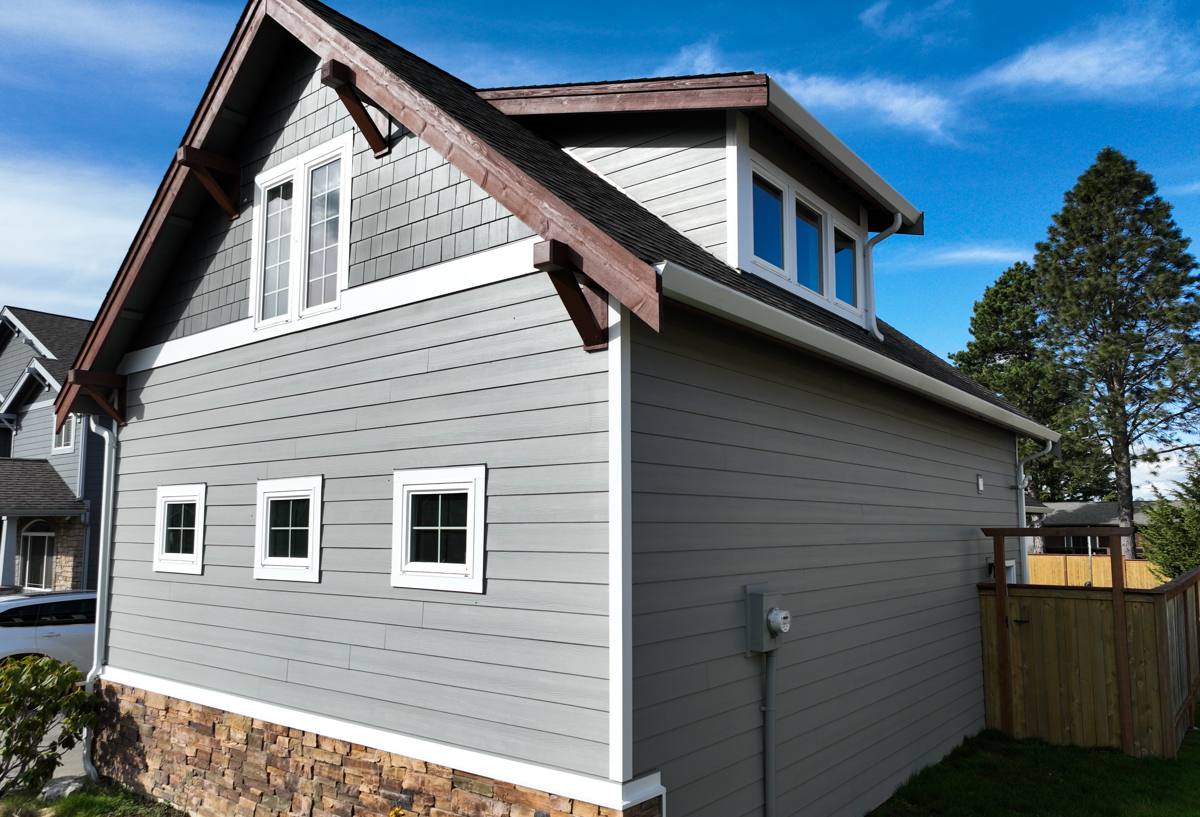
Fiber cement is cement, sand, and cellulose fiber — it doesn't have the organic wood content that gives moisture and moss something to feed on, and it's non-combustible. James Hardie's HZ5 product line is engineered specifically for climates like ours, with freeze-thaw and moisture-cycling performance built into the formulation rather than added on. The factory-applied ColorPlus finish is baked on and warrantied against fading and peeling, which matters in a spot where UV, salt, and rain all attack a paint film simultaneously. And Hardie backs its siding with a strong, transferable warranty — worth something if you ever sell the home.
None of this means every alternative product is a bad choice everywhere. It means that for Edison's specific combination of salt exposure, driving rain, and long damp seasons, we think fiber cement is the more honest recommendation, and we'd rather specialize in doing one system correctly than spread ourselves across several we're less confident in for this environment.
How a Siding Project Runs in Edison
Inspection and Assessment
We start by walking the exterior and checking for the usual coastal-exposure issues: soft or delaminating siding, rusted or failing fasteners, moss buildup, caulk failure at joints, and signs of moisture intrusion around windows, doors, and roof-to-wall transitions. On older Edison properties, we pay particular attention to the water-facing and prevailing-wind sides of the house, since those elevations usually show the most wear.
Tear-Off and Prep
Once old siding is off, we inspect the sheathing and framing underneath for hidden rot or moisture damage — common in a climate where problems can develop behind the surface for years before they show. We correct any flashing or drainage-plane issues we find before anything new goes up. Skipping this step is one of the most common reasons a siding job fails early, regardless of the product used.
Installation to Manufacturer Spec
James Hardie siding performs the way it's rated to perform only when it's installed to spec — correct fastener type and placement, proper clearances, and correctly lapped and caulked joints. In a high-wind, high-moisture area like Edison, cutting corners on these details is exactly where a siding job starts to fail years down the road.
Final Walkthrough
We finish with a walkthrough covering trim, caulking, and touch-up work, and we talk through basic care specific to your home's exposure — which walls will need more attention for moss, where debris tends to collect, and what to watch for as the seasons change.
Beyond Siding: Roofing, Windows, and Decks
Siding is rarely the only exterior surface under stress in Edison. We also handle roofing, window replacement, and decks, and on a lot of projects it makes sense to look at more than one system at once:
- Roofing: wind-driven rain and salt air age roofing materials and flashing the same way they age siding — a roof inspection during a siding project can catch problems before they become interior leaks.
- Windows: failing seals and old flashing around windows are a common source of the hidden water damage we find behind old siding; replacing windows at the same time as siding lets us integrate the flashing properly in one pass.
- Decks: outdoor living surfaces take the same salt and moisture load as siding, and coordinating deck work with an exterior project can simplify scheduling and reduce disruption to your property.
Why It Helps to Hire a Local Crew
Skagit County's microclimates vary more than people expect — a home a few miles inland from Edison can face genuinely different weather than one closer to the bay. A crew that works this specific area regularly has already seen how salt air, wind exposure, and moss patterns actually play out on real houses here, not just in general climate data. That translates into better decisions on flashing details, product selection, and which parts of a home need extra attention.
Being local also means we're accountable after the job is done. If a warranty question or a maintenance concern comes up two or five years from now, we're still in the area and still reachable — not a crew that came through once from out of town.
Cost Factors for a Siding Project in Edison
Every home is different, but these are the main variables that move the price of a siding project in this area:
| Factor | Why It Matters |
|---|---|
| Home size and wall complexity | More square footage, dormers, and corners mean more material and labor time. |
| Condition of existing sheathing | Hidden rot or moisture damage found during tear-off requires repair before new siding goes up. |
| Siding profile and trim detail | Lap width, board-and-batten accents, and trim complexity affect both material cost and install time. |
| Wind and exposure level | Homes on more exposed elevations may need extra attention to fastening and flashing detail. |
| Access and site conditions | Rural lots, long driveways, or tight setbacks can affect staging and scaffolding needs. |
| Scope beyond siding | Bundling roofing, window, or trim work into the same project changes overall cost and timeline. |
Signs Your Edison Home May Need New Siding
- Visible moss or algae growth that keeps coming back after cleaning
- Soft spots, bubbling, or delamination when siding is pressed by hand
- Cracked, peeling, or chalky paint that fails faster than it used to
- Warping or buckling boards, especially on water-facing or wind-exposed walls
- Rust streaks or corroded fasteners showing through the surface
- Gaps or separation at seams, corners, and trim joints
- Rising energy bills that may point to compromised insulation behind failing siding
Living With Fiber Cement Siding in a Salt Air Climate
Fiber cement siding cuts down on maintenance compared to wood-based products, but "low-maintenance" isn't "no-maintenance," especially this close to Samish Bay. A periodic rinse to clear salt residue and organic buildup, keeping gutters and downspouts clear so water sheds away from the walls, and an occasional visual check of caulking at trim and window joints will go a long way toward getting the full lifespan out of the material. None of this is heavy work — it's the kind of upkeep that takes an hour or two a couple of times a year and prevents much bigger problems down the line.
If you're weighing a siding, roofing, window, or deck project on an Edison property, we're happy to take a look and talk through what your home's specific exposure calls for. Reach out for a free, no-pressure estimate — there's a form below to get started.