 Anacortes Siding
 Two Fiber Cement Products, One Real Difference
Cemplank and James Hardie siding both start from the same basic idea: a mix of Portland cement, sand, and cellulose fiber, pressed and cured into planks that won't rot, won't feed termites, and won't burn like wood or warp like vinyl. If you're comparing spec sheets side by side, they can look almost identical. Both are legitimate fiber cement products manufactured to recognized industry standards, and we're not going to tell you Cemplank is junk, because it isn't. What we will tell you is why, after years of installing exterior products on homes across Anacortes and the rest of Skagit County, we made the decision to install James Hardie exclusively and turn down jobs that call for anything else.
The short version: manufacturing consistency, factory finish quality, engineering for our specific climate, and a warranty structure that actually protects the homeowner. The long version is below, because "we just prefer it" isn't good enough when you're the one paying for siding that has to survive forty more winters of Salish Sea weather.
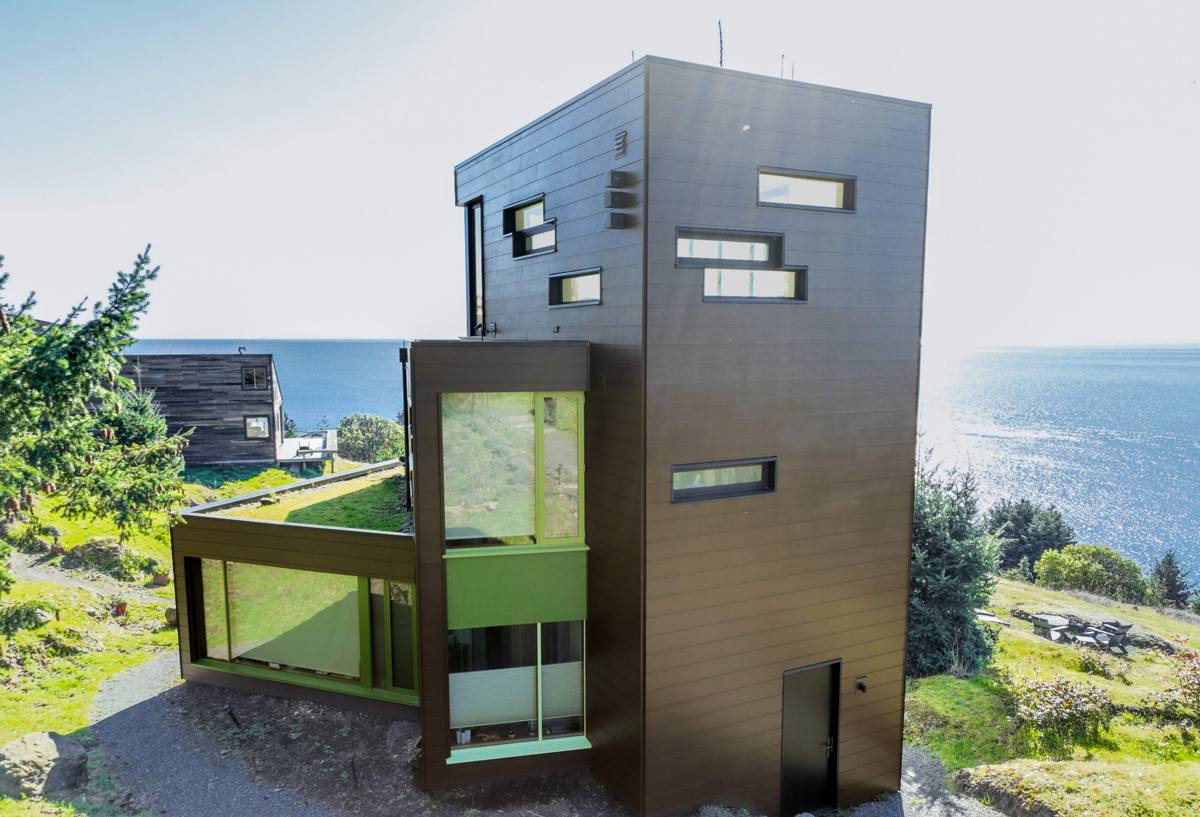
What Cemplank Gets Right
Cemplank, made by Etex/Nichiha in North America, is a genuine fiber cement product, not an imitation. It's non-combustible, it holds paint and finish better than wood, and it resists the woodpeckers, carpenter ants, and moisture rot that make cedar and primed spruce a long-term headache in this region. For homeowners on a tighter budget who still want the core benefits of fiber cement over vinyl or wood, it's a legitimate improvement over those alternatives.
Where it starts to fall behind, in our experience specifying and installing exterior materials, is in three areas: factory finish technology, product-line engineering for wet marine climates, and the depth of the installer network and warranty backing available in the Pacific Northwest.
Factory Finish: The Part That Actually Fails First
Siding rarely fails structurally in this climate. It fails at the finish. Anacortes sits on the water, which means the siding on every home here is dealing with salt-laden air, wind-driven rain off Rosario Strait and the Guemes Channel, and long stretches of gray, damp weather that keeps painted surfaces wet longer than almost anywhere else in the state. A factory finish that's engineered for those conditions is not a cosmetic upgrade — it's the single biggest factor in how the siding looks and performs at year 15 versus year 5.
ColorPlus vs. Standard Factory Finishes
James Hardie's ColorPlus finish is baked on in multiple coats under controlled factory conditions and backed by its own dedicated finish warranty, separate from the base product warranty. That matters because color and coating failure — chalking, fading, peeling at seams — is the actual complaint we hear about aging fiber cement siding, far more often than complaints about the substrate itself. Cemplank offers factory-primed and some factory-finished options, but the finish technology and warranty backing behind it isn't in the same category, and in a marine climate that difference shows up faster than it would somewhere dry and inland.
Engineered for the Region, Not Just "Fiber Cement in General"
James Hardie builds region-specific product lines — HZ5 for the wetter, harsher climate zones that include Western Washington — with formulations tuned to that region's moisture exposure and freeze-thaw pattern. That's not marketing language; it reflects the fact that fiber cement performance is genuinely climate-dependent. A product engineered as a one-size-fits-all national line doesn't have that same regional tuning built in. For a house in Anacortes dealing with moss season nine months out of the year and salt air three hundred and sixty-five days a year, that engineering difference is exactly the kind of thing that separates siding that looks the same at year one from siding that looks the same at year twenty.
Side-by-Side: What Actually Differs
| Factor | Cemplank | James Hardie |
|---|---|---|
| Core material | Portland cement fiber composite | Portland cement fiber composite (proprietary HardieZone formulation) |
| Climate-specific engineering | General national formulation | Region-specific HZ5/HZ10 zones tuned to local climate |
| Factory finish | Factory-primed; limited factory-finish options | ColorPlus baked-on finish with separate finish warranty |
| Warranty | Limited product warranty | Non-prorated limited warranty, transferable, plus separate ColorPlus finish coverage |
| Installer network depth (PNW) | Smaller, less standardized | Large certified/preferred contractor network with documented install specs |
| Fire resistance | Non-combustible | Non-combustible |
| Typical field track record | Fewer decades of PNW-specific installs to reference | Extensive long-term PNW installation history |
Installation Sensitivity Is the Real Risk With Any Fiber Cement
Here's something we'll say plainly: fiber cement of any brand fails at the install more often than it fails at the material. Wrong nailing pattern, missing rain screen gap, caulked butt joints that should have been left to breathe, wrong fastener spacing near a coastline where corrosion resistance matters — these installation errors cause far more callbacks than any manufacturing defect. That's true of Cemplank and it's true of Hardie. The difference is that Hardie's installation specifications are more thoroughly documented, more widely trained on, and backed by a warranty that can actually be voided and enforced if an installer cuts corners — which, frankly, gives homeowners more leverage, not less.
Why Installer Standardization Matters to Us
When we standardize on one product, our crews aren't relearning fastener specs, flashing details, and finish touch-up procedures from job to job. That consistency reduces the single biggest failure point in fiber cement siding: installer error. We'd rather be excellent at installing one system correctly on every home in Skagit County than good at installing three or four different systems with three or four different rulebooks.
Warranty: Read What You're Actually Signing Up For
A siding warranty is only as good as what it covers and how easily it transfers if you sell the house. James Hardie's warranty structure is non-prorated for the life of coverage and transferable to a new owner, which matters directly to resale value on a home in a market like Anacortes where buyers are increasingly asking pointed questions about exterior maintenance history. Cemplank's warranty coverage is real, but it doesn't carry the same depth of transferability and finish-specific backing that Hardie's does. If you're planning to be in the home for decades, this may matter less to you. If there's any chance you sell in 10, 15, or 20 years, it's worth reading both warranty documents side by side before you decide.
Why We Draw the Line Here
We could install both products and let the price difference sort out the decision for homeowners. We chose not to, for a simple reason: when something goes wrong with siding — a finish issue, a warranty claim, a flashing detail that needs revisiting five years down the road — we want to be the contractor who's dealt with that exact product hundreds of times, not one who's spread across four different manufacturers' spec sheets. Standardizing on Hardie means every crew member knows the fastening pattern, the joint treatment, the finish touch-up process, and the exact warranty language cold. That consistency is what actually protects a homeowner long after the invoice is paid.
It also means we're not tempted to quote a cheaper product on a house that's three blocks from the water in Anacortes, where salt exposure and driving rain punish weak points in siding faster than almost anywhere else in Western Washington. We'd rather lose a bid to a lower price than install something we don't think will hold up to this specific coastline.
What to Check Before You Choose Either Product
- Ask which specific product line is being quoted — HZ5 or a generic national line, not just "fiber cement"
- Ask whether the finish is factory-applied or job-site primed and painted
- Get the actual warranty document, not a sales summary, and check if it's transferable
- Ask how the installer handles butt joints, corner treatment, and the rain screen gap
- Ask how many years the installer has worked with that specific product in a marine climate
- Check whether fasteners and flashing are corrosion-rated for coastal salt exposure
- Get pricing for both material and labor broken out separately so you can compare fairly
What This Means for Your Project
If you're gathering quotes for a siding replacement in Anacortes or elsewhere in Skagit County and one contractor is proposing Cemplank while another is proposing Hardie, don't treat it as an apples-to-apples price comparison. Ask both contractors the questions above. A lower bid on a lesser-engineered product isn't a deal if it means repainting or dealing with finish issues a decade sooner than you would with a product built specifically for this coastline's moss, moisture, and salt air.
We install James Hardie because it's what we're willing to put our name behind on every home we touch in this region — not because it's the only fiber cement product that exists, but because it's the one we trust to still look right after twenty winters on the water.
If you'd like a straight answer on what your home actually needs, we offer free, no-pressure estimates — walk the house with us, and we'll tell you exactly what we'd recommend and why.