 Anacortes Siding
 Flounder Bay: A Waterfront Neighborhood With Waterfront Weather
Flounder Bay sits on the west side of Fidalgo Island, close enough to open water that the weather off Rosario Strait and the surrounding marine waters is a daily fact of life, not an occasional event. Homes here live with a version of the Anacortes climate that's a step more aggressive than what you'll find a few miles inland: more direct salt spray, more wind-driven rain, and a marine layer that lingers on siding and trim long after the rest of Skagit County has dried out. If you own a home in this neighborhood, your exterior isn't just decoration — it's the thing standing between that environment and your framing, sheathing, and insulation.
We're a local Anacortes crew that works this exact kind of exposure regularly, not occasionally. That matters more here than in a typical inland Skagit County subdivision, because the failure modes on a waterfront-adjacent home show up faster and hit harder when the material or the installation isn't right for the setting.
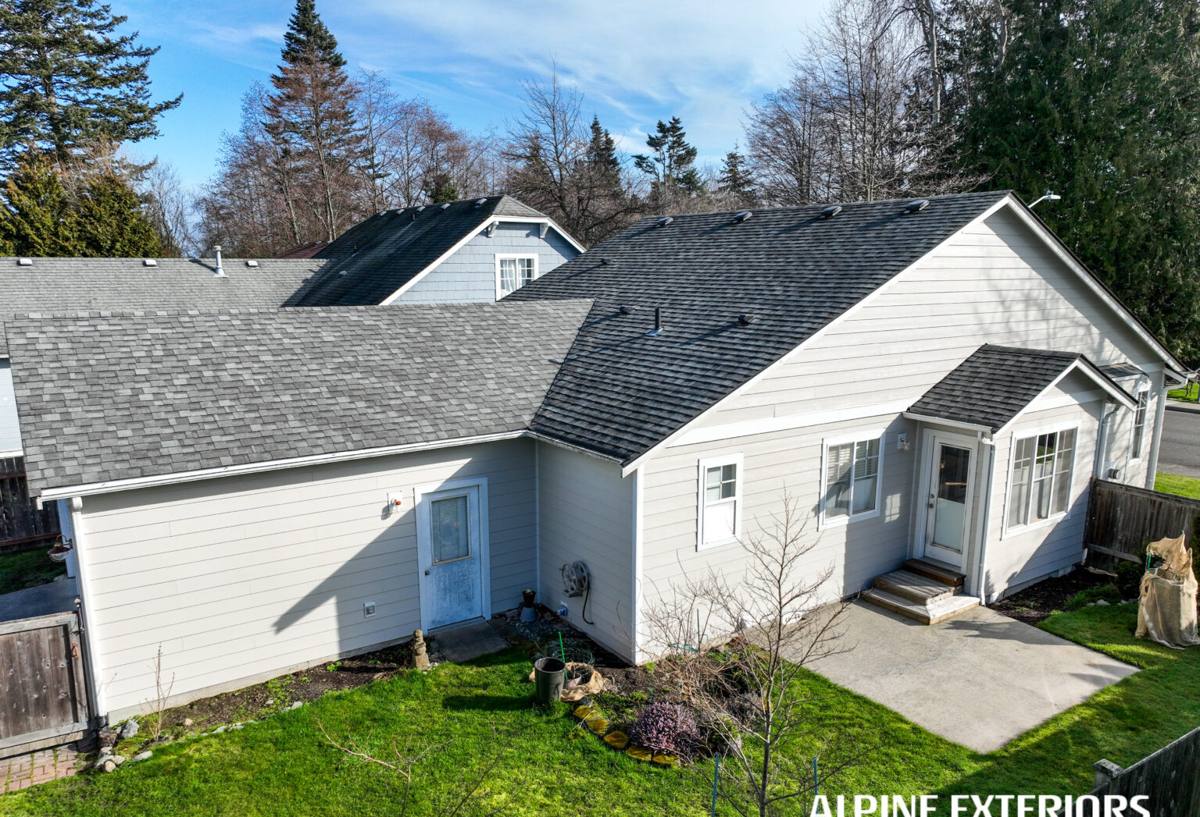
What Flounder Bay Homes Are Actually Up Against
Salt Air
Proximity to saltwater means airborne salt settles on every exterior surface — siding, trim, fasteners, flashing. Salt is corrosive to bare or poorly coated metal, and it's abrasive to finishes that weren't engineered to shed it. Over years, salt exposure accelerates fading, chalking, and breakdown of lower-grade coatings, and it can corrode fasteners and hardware that aren't rated for a marine-adjacent environment.
Driving Rain and Wind
Flounder Bay's exposure to the water means wind-driven rain doesn't just fall — it gets pushed sideways into wall assemblies, into seams, into anything with a gap. That's a very different load than a sheltered lot gets. Siding systems, house wrap, flashing details, and caulk joints all have to be installed with that in mind, because a detail that's "fine" on a protected inland lot can leak here.
Moss and Sustained Moisture
Western Washington's long wet season is well known, but waterfront and near-waterfront properties tend to stay damp longer between rain events because of fog, dew, and the marine layer. That extended dampness is exactly what moss, algae, and mildew need to take hold on north- and shade-facing walls. On wood-based siding products, sustained moisture also means more swelling, more paint failure, and a shorter repaint cycle.
Why This Adds Up to a Different Standard
None of these conditions individually are unique to Flounder Bay — you'll find salt air, wind, and moss all over the Puget Sound region. What's different here is that a Flounder Bay home often gets more of all three at once, more consistently, than a comparable home set back from the water. That's the reason we treat waterfront-adjacent Anacortes properties as a distinct case when we're talking about siding, not just a standard install with a nicer view.
Why We Only Install James Hardie Fiber Cement
We made a deliberate decision as a company to install one siding system: James Hardie fiber cement. We don't install vinyl, LP SmartSide, Cemplank, Allura, primed spruce, or cedar. That's not a marketing position — it's a standard we hold to because of what we've seen hold up (and what struggles) in exactly this kind of coastal Pacific Northwest exposure.
The short version of why
- Non-combustible core: Fiber cement doesn't burn, feed a fire, or contribute fuel the way wood-based products can.
- Engineered for moisture: Hardie's HZ5 product line is specifically formulated for wetter, harsher climates like ours, rather than a one-size-fits-all national spec.
- Factory-cured ColorPlus finish: The finish is baked on in a controlled factory process, not brushed on in the field, which gives it a real edge in UV and salt-air fade resistance compared to field-applied paint.
- Dimensionally stable: Fiber cement doesn't swell, cup, or rot the way wood or wood-composite siding can when it stays damp for extended periods, which matters a lot on a shaded, marine-layer-soaked wall.
- Backed by a strong transferable warranty: That warranty structure only holds up if the install itself follows spec, which is where a lot of the real risk lives.
We're not going to tell you every other siding product is worthless — that's not accurate and it's not our place. Vinyl, LP SmartSide, and cedar all have legitimate uses and loyal customers. What we will say is that after years of doing exterior work on Fidalgo Island and around Skagit County, we don't think any of them are the right call for the exposure a Flounder Bay home sees, and we'd rather turn down a job than install something we don't believe will hold up here.
How We Approach a Flounder Bay Siding Job
Assessment First
Every project starts with a real look at the specific exposure of your home: which walls face the water and prevailing wind, where moss and staining are already showing, where flashing and trim are original versus previously repaired, and what condition the sheathing is in underneath the existing siding. Waterfront-adjacent homes sometimes have moisture issues hiding behind the cladding that a purely cosmetic quote would miss entirely.
Installation Details That Matter More Here
- Correct fastener selection and placement — corrosion-resistant fasteners matter more in salt air than they do a few miles inland.
- Proper flashing and water-resistive barrier detailing at windows, doors, and penetrations, sized for wind-driven rain rather than just vertical rainfall.
- Correct clearances at grade, decks, and roof lines so water has somewhere to go instead of sitting against the bottom edge of the siding.
- Manufacturer-spec fastening patterns and joint treatment, since Hardie's warranty coverage depends on the install matching their published requirements.
Coordinated Exterior Work
Because we also handle roofing, windows, and decks, we can look at a Flounder Bay home as one exterior system instead of a series of disconnected trades. A roof-to-wall flashing detail, a window that's letting water track down into the wall cavity, or a deck ledger board tying into the siding line are all places where problems hide at the seams between trades. Coordinating that work under one crew means fewer gaps in responsibility and fewer callbacks where one contractor blames another.
Local Crew, Not a Franchise Route
We're based in Anacortes and work Skagit County, including the neighborhoods on and around Fidalgo Island. That's worth something specific on a job like Flounder Bay: we already know how this particular stretch of coastline behaves, we're not learning your microclimate on your dime, and we're not driving a crew in from out of the area for a one-off job. If a warranty question or a callback comes up two or five years down the road, we're still here, still local, and still reachable.
Cost Factors for Flounder Bay Siding Projects
Every home is different, but the variables that move a Flounder Bay project's scope and cost tend to fall into a consistent set of categories:
| Factor | Why It Matters Here |
|---|---|
| Existing wall condition | Hidden moisture damage behind old siding is more common near the water and can add repair scope before new siding goes on |
| Wind and rain exposure by elevation | Water-facing walls may need more robust flashing and weather-resistive barrier detailing than sheltered walls |
| Trim and accessory package | Corner boards, fascia, and trim choices affect both cost and long-term maintenance |
| Home size and complexity | Roof lines, dormers, and multiple stories add labor and material beyond a simple rectangular footprint |
| Coordinated work | Bundling siding with roofing, window, or deck work can be more efficient than scheduling separate projects |
| Access and staging | Waterfront lots sometimes have tighter access or steeper grades that affect scaffolding and staging time |
We don't quote from a distance for a job like this — an in-person look at your specific walls, exposure, and existing condition is what a real number is based on.
Signs a Flounder Bay Home Might Need Siding Attention Soon
- Persistent moss or algae staining that comes back within months of cleaning, especially on shaded or north-facing walls
- Paint that's chalking, peeling, or fading noticeably faster on the water-facing side of the house than elsewhere
- Soft spots, visible swelling, or delamination on wood-based siding or trim
- Rust streaking from fasteners or hardware
- Visible gaps, cracked caulk, or separated joints at corners, windows, or trim boards
- Interior signs like musty smells, discoloration, or soft drywall near exterior walls, which can point to moisture getting past the cladding
None of these mean you need to panic, but they're worth having a professional look at sooner rather than later in an exposure like this one, since moisture problems tend to compound the longer they sit.
What to Expect Working With Us
We'll walk your property, talk through what we're seeing on your specific walls, and give you a straightforward assessment — including telling you if something is a maintenance issue rather than a full replacement. If replacement is the right call, we'll explain why we're recommending James Hardie for your situation specifically, not just as a blanket policy, and what installation details matter most given your home's exposure to the water and wind.
If you're in Flounder Bay or anywhere else around Anacortes and Skagit County and want an honest read on your siding, roofing, windows, or decks, we're happy to come take a look. Fill out the form below for a free, no-pressure estimate.