 Anacortes Siding
 Building for March Point's Water-Facing Climate
March Point sits out on the water, and that changes what a house has to put up with year-round. Homes here face a steady mix of salt-laden air off the bay, wind-driven rain that comes at the wall sideways instead of straight down, and a long, damp moss season that runs from fall through spring. None of that is unique to March Point alone, but the exposure is more constant here than it is a few miles inland in Anacortes proper, simply because there's less landscape and fewer buildings breaking up the wind and moisture before it reaches your siding.
Over time, that combination finds every weak point in an exterior. Caulking dries and cracks. Paint chalks and fades faster on the water-facing sides of a house. Wood trim swells, splits, and opens seams that let water behind the cladding. It's not dramatic, and it doesn't happen overnight — it's a slow accumulation of small failures that eventually shows up as soft spots, peeling paint, or a siding replacement that comes years earlier than it should have.
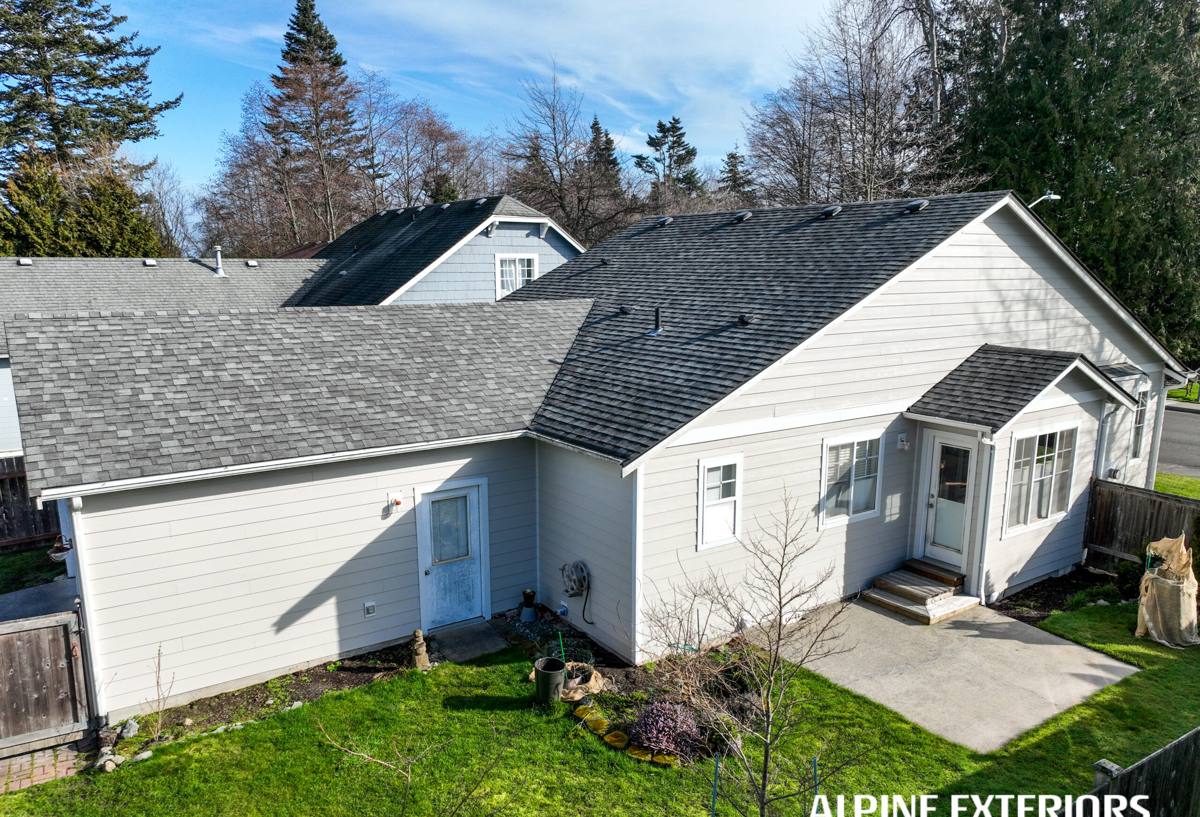
Signs Your Siding Is Losing the Battle
Most siding problems in this area give warning signs well before they become structural. Homeowners in March Point and the surrounding waterfront neighborhoods should keep an eye out for:
- Green or black staining that returns within weeks of being cleaned, especially on north-facing and shaded walls
- Paint that's peeling, bubbling, or chalking off on your hand when you touch it
- Soft or spongy spots when you press on siding near the bottom of walls or below windows
- Visible gaps or separation at seams, corners, and trim boards
- Warping, cupping, or boards that no longer sit flat against the wall
- A musty smell in a room along an exterior wall, which can point to moisture getting in behind the cladding
Any one of these on its own might be minor. Several showing up together, especially on the sides of the house that face the water, usually means the siding is nearing the end of what it can handle.
Why We Only Install James Hardie Fiber Cement
We made a deliberate decision years ago to install one siding system — James Hardie fiber cement — and nothing else. We don't install vinyl, LP SmartSide, cedar, primed spruce, Cemplank, or Allura. That's not a marketing angle; it's a standard we hold because of what we've seen these products do, and not do, in exactly the kind of marine-influenced climate March Point sits in.
Moisture Is the Real Enemy Here
Wood-based siding products, including engineered wood options like LP SmartSide, are still organic material at their core. Give them enough sustained moisture exposure — which is exactly what a bay-adjacent property delivers for much of the year — and eventually water finds its way into cut edges, fastener holes, or seams that aren't perfectly sealed. Fiber cement is made from cement, sand, and cellulose fibers. It doesn't swell, rot, or feed the moss and mildew that thrive in this climate the way wood products can.
Vinyl's Trade-Offs in Wind and Salt Air
Vinyl siding is inexpensive and low-maintenance in mild conditions, but it's a thin plastic product that expands and contracts with temperature swings, can crack in impact or cold, and tends to fade and chalk under sustained UV and salt exposure. It also relies on overlapping panels rather than a continuously sealed surface, which gives wind-driven rain more opportunities to work its way behind the cladding over time.
A Factory Finish Built for This
James Hardie's ColorPlus finish is baked on at the factory under controlled conditions, rather than field-applied paint that has to cure in whatever weather shows up that week. It resists fading, chipping, and cracking far longer than standard field-applied paint, which matters on a coastline where UV and salt spray are working on your paint job every single day.
Fire Resistance as a Bonus, Not the Selling Point
Fiber cement is non-combustible, which is a genuine safety advantage over wood-based products, even though wildfire exposure isn't the primary driver behind our recommendation for a waterfront property like March Point. It's one more reason the math favors Hardie once you add everything up.
What a Siding Project Looks Like on a March Point Home
Inspection and Assessment
We start by walking the exterior and identifying which walls are taking the worst of the weather — usually the sides facing open water or prevailing wind — and checking sheathing, flashing, and trim for hidden moisture damage before any siding decision gets made.
Weather Barrier and Prep
Correct installation starts underneath the siding, not with the siding itself. That means a properly lapped weather-resistant barrier, correctly flashed windows and doors, and attention to the details around penetrations — vents, hose bibs, light fixtures — that are the most common places water actually gets in.
Installation to Manufacturer Spec
James Hardie publishes specific fastening, clearance, and caulking requirements, and those specs exist for a reason — they're what the warranty is actually built on. Proper ground clearance, gapping at butt joints, and correct nailing patterns all matter more in a wind-and-rain-exposed spot like March Point than they would on a sheltered inland lot.
Cleanup and Walkthrough
We finish with a full site cleanup and walk the finished exterior with the homeowner so you know exactly what was done and what maintenance, if any, to expect going forward.
Beyond Siding: Roofing, Windows, and Decks Facing the Same Conditions
The same salt air, rain, and moss that wear down siding are working on the rest of your exterior too, and we handle all of it rather than treating siding as an isolated project.
Roofing on a March Point home deals with the same driving rain and moss growth that affects walls, and a roof that's shedding water poorly is often the real source of a "siding problem" that actually starts at the roofline. Windows in this climate need to seal well against wind-driven rain, and older or poorly flashed windows are a common entry point for the moisture issues we get called out for. Decks facing open water take a beating from UV, rain, and salt spray on top of normal foot traffic, and material choice and fastening matter just as much there as they do on the walls of the house.
Looking at siding, roofing, windows, and decks together, instead of one at a time, usually catches problems — and saves money — that a siding-only inspection would miss.
Cost Factors for a March Point Siding Project
Every home is different, but the factors that move the price on a project in this area tend to be the same ones:
| Factor | Why It Matters |
|---|---|
| Amount of existing damage | Rot or soft sheathing found during tear-off has to be repaired before new siding goes on, which adds labor and material |
| Home size and wall complexity | More corners, dormers, and trim detail mean more cutting, fitting, and labor time |
| Water and wind exposure | Walls facing open water often need extra attention to flashing and sealing details |
| Siding profile and color | Lap width, shingle-style panels, and factory ColorPlus color choice all affect material cost |
| Site access | Waterfront lots with limited staging space or steep grades can add time for equipment and material handling |
We give straightforward, itemized estimates so you can see exactly what you're paying for and why, rather than a single lump number.
Why a Local Crew Matters for March Point Homeowners
A contractor who works Skagit County regularly knows how a house on the water behaves differently from one a few miles inland — which walls take the worst weather, how moss establishes itself, and where flashing tends to fail first in this specific climate. That local knowledge shows up in better decisions during the project, not just in a faster response time if something needs a follow-up visit.
It also means accountability. We're not a crew that flies in for one job and disappears — we're working in Anacortes and the surrounding communities on an ongoing basis, and our reputation here depends on the work holding up.
Maintenance in a Marine Climate
Fiber cement siding cuts down on maintenance significantly compared to wood or vinyl, but no exterior in a bay-adjacent climate is entirely maintenance-free. A simple annual routine goes a long way:
- Rinse siding down once or twice a year to clear salt residue and organic buildup, especially on shaded or north-facing walls
- Keep gutters clear so water isn't overflowing and running down the siding face
- Trim back vegetation that's holding moisture against exterior walls
- Recaulk trim joints and penetrations if you notice gaps opening up
- Address moss or mildew growth early, before it spreads across a wider section of wall
If you're seeing signs of trouble, or you'd just like an honest look at where your siding, roof, windows, or deck stand, we're happy to come out and take a look. There's no cost and no pressure to move forward — just a straight assessment from a crew that knows what March Point's weather does to a house.