 Anacortes Siding
 Siding Built for Conway's Lowland Climate
Conway sits in the low, flat farmland of the Skagit River delta, close enough to Skagit Bay and Puget Sound that salt-laden air is a regular part of the weather, not an occasional visitor. Add in the driving rain that rolls off the Sound during fall and winter storms, and a long, shaded moss season that stretches across much of the year, and you have a climate that is genuinely hard on exterior siding. Homes here don't fail because owners neglect them. They fail because the wrong siding material was never built to handle this specific combination of moisture, salt exposure, and shade.
We've worked on homes throughout this part of Skagit County long enough to know that Conway's conditions are not the same as siding a home twenty miles inland. The delta's humidity sits differently on a wall. Wind off the water carries fine salt spray that settles into seams and fasteners. And because so many properties here are ringed by trees, shrub lines, or sit low relative to the water table, siding stays damp longer after every rain. That's the environment we design every installation around.
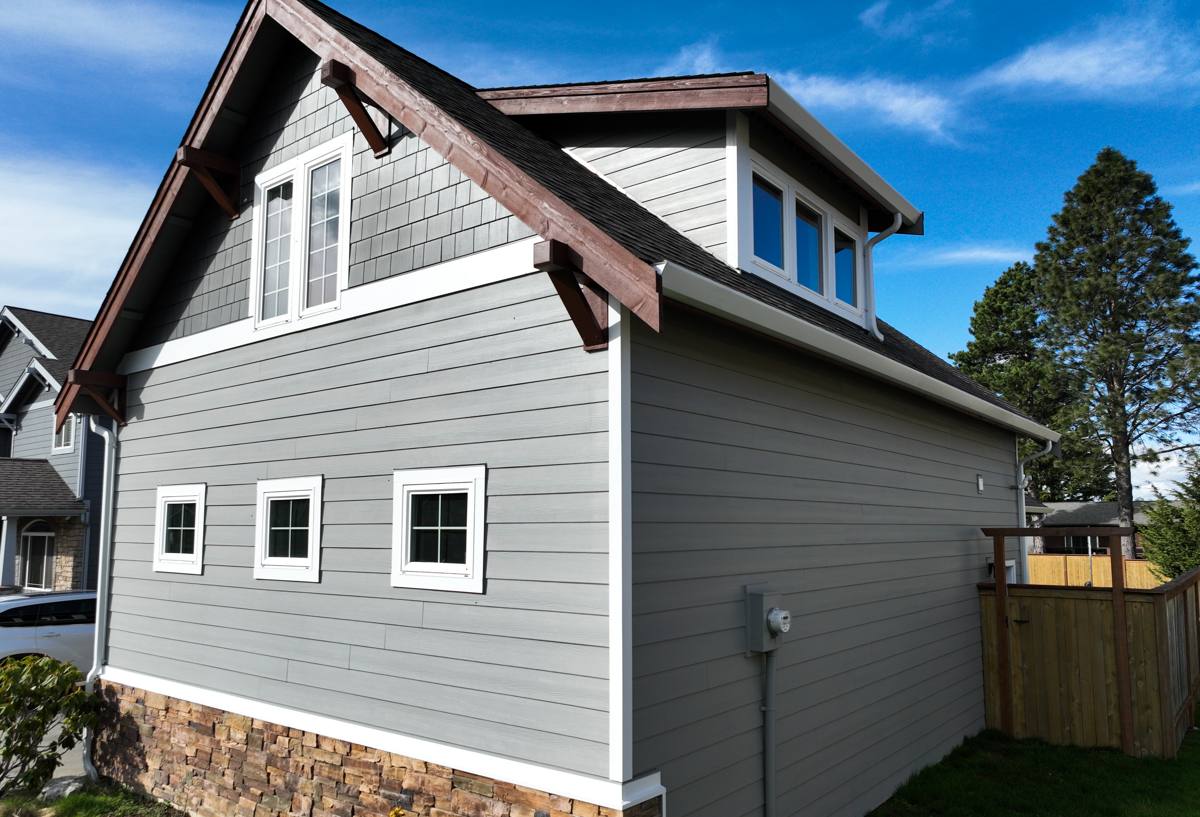
What the Local Climate Actually Does to a House
Salt Air and Corrosion
Airborne salt from Skagit Bay and the broader Puget Sound doesn't just affect homes right on the water. It travels inland on wind, and in a low delta area like Conway, there's little in the way of elevation or terrain to block it. Over years, salt exposure accelerates corrosion of fasteners, flashing, and any metal trim components. It also degrades paint finishes faster than a typical inland application, which is one of the biggest reasons factory-applied, baked-on finishes hold up so much better here than field-applied paint.
Driving Rain and Wind-Driven Moisture
Storms coming off the Pacific pick up speed and moisture as they cross the Sound and the delta's open farmland, and Conway gets hit with rain that doesn't just fall straight down, it drives sideways into walls, trim, and window edges. That kind of wind-driven rain finds every weak seam, every poorly lapped joint, and every gap where water-resistant barriers weren't installed correctly. Siding material and installation quality both matter enormously in conditions like this.
Moss, Mildew, and Extended Dampness
Between tree cover, low elevation, and persistent regional humidity, many Conway properties see siding that simply doesn't dry out quickly between rain events. That extended dampness is exactly what moss, algae, and mildew need to take hold, particularly on north-facing walls and shaded sections of a home. Materials that absorb or hold moisture invite that growth. Materials that resist it stay cleaner for far longer with far less maintenance.
Why We Install Only James Hardie Fiber Cement
We made the decision years ago to install one siding system on every home we work on: James Hardie fiber cement. That's not a marketing position, it's a practical one, built around exactly the conditions Conway homes face. Fiber cement is non-combustible, dimensionally stable, and doesn't absorb moisture the way wood-based or wood-adjacent products do. Combined with Hardie's ColorPlus factory finish, it holds color and resists the fading and chalking that salt air and UV exposure cause on field-painted materials.
We don't install vinyl siding, LP SmartSide, Cemplank, Allura, primed spruce, or cedar. Each of those products has legitimate uses in the right setting, but none of them, in our professional judgment, perform as reliably as Hardie fiber cement in a coastal-influenced delta environment like Conway's. Vinyl can warp and become brittle with age and temperature swings. Engineered wood products rely on their outer coating staying intact to keep moisture out, and once that coating is compromised, the substrate underneath is vulnerable. Primed wood and cedar require an ongoing paint and sealing commitment that most homeowners underestimate until they're several years in.
James Hardie Product Lines We Install
- HardiePlank lap siding — the standard horizontal siding profile, available in several textures and exposures
- HardiePanel vertical siding — often used for accent sections, gables, or a more modern look
- HardieTrim boards — matched trim system for corners, window and door surrounds, and fascia
- HZ5 or HZ10 engineered formulations — Hardie's climate-specific product engineering, matched to Pacific Northwest moisture and temperature conditions
Siding, Roofing, Windows, and Decks — One Local Crew
Siding rarely fails in isolation. On a lot of Conway homes we evaluate, the siding issues we find trace back to a roofing problem, a window flashing gap, or moisture getting trapped behind a deck ledger board. That's why we handle all four exterior systems: siding, roofing, windows, and decks. When one crew looks at the whole envelope of the house, problems get caught and fixed at the source instead of getting patched over and over on the surface.
A new deck built without proper flashing where it meets the house wall will drive water behind your siding no matter how good that siding is. A roof with failing underlayment will send water down behind fascia and trim. Windows installed without correct flashing integration create a chronic leak point that no amount of caulking will permanently solve. We look at how these systems interact, not just at the individual material.
What a Siding Project Looks Like Here
Inspection and Assessment
We start by walking the exterior and identifying where moisture, salt exposure, or shade have caused the most wear. On many delta-area homes, that means paying close attention to north- and west-facing walls, areas under tree cover, and any spot where trim, flashing, or old caulking has started to fail.
Removal and Sheathing Check
Once old siding comes off, we check the sheathing and water-resistive barrier underneath. This is often where the real story of a home's moisture history shows up, and it's the step that gets skipped by installers trying to move fast. Any rot or compromised sheathing gets addressed before new siding goes on, not covered up.
Installation to Manufacturer Spec
James Hardie's warranty and performance depend on installation being done to their published specifications, including correct fastener spacing, clearances, and flashing details. We install to that standard on every job, which is a meaningful part of why the product performs the way it's rated to.
Trim, Caulking, and Final Detailing
The last stage is where a lot of long-term durability gets decided: proper caulking at joints, correctly lapped trim, and attention to any transition point where water could otherwise find its way behind the siding.
Comparing Siding Options for a Delta Climate
| Material | Moisture Resistance | Salt Air Performance | Maintenance |
|---|---|---|---|
| James Hardie Fiber Cement | Excellent — non-combustible, dimensionally stable | Strong; factory finish resists fading and chalking | Low — occasional wash, no repainting cycle |
| Vinyl Siding | Fair — can trap moisture behind panels | Can become brittle and discolor over time | Low but limited lifespan in harsh exposure |
| LP SmartSide / Engineered Wood | Good if coating stays intact; vulnerable once breached | Coating degradation accelerated by salt exposure | Moderate — depends on coating integrity |
| Cedar or Primed Wood | Poor to fair without diligent upkeep | Salt accelerates weathering and finish breakdown | High — regular painting/sealing required |
Cost Factors for Conway Homeowners
Every siding project's cost depends on a handful of real variables, and being upfront about them helps you plan rather than guess. Home size and wall complexity matter, since more corners, dormers, and trim details mean more labor. The condition of your existing sheathing matters too, since hidden rot or moisture damage found during tear-off adds scope that couldn't be quoted sight unseen. Product selection within the Hardie lineup, whether you choose lap siding, panel siding, or a combination with additional trim work, also shifts the price. We walk through all of this during a free estimate so there are no surprises once work begins.
What to Look for in a Local Contractor
- Manufacturer-specific installation training, not just general siding experience
- Willingness to inspect and address sheathing and moisture barrier issues before covering them up
- Clear, written estimates that explain what's included
- Local experience with the specific climate challenges of the Skagit County delta and Puget Sound region
- Ability to speak knowledgeably about why they use the products they use, not just that they use them
A Local Crew That Knows This Ground
A crew that primarily works inland or in a drier climate zone doesn't always account for what salt air and constant dampness do to a home over a decade. We're based in this region, and the way we detail flashing, choose fastener spacing, and sequence a project around Skagit County's weather patterns reflects work we do here regularly, not a generic approach applied everywhere. That local familiarity is part of what protects your investment long after the project is finished.
If you're noticing moss buildup, fading, warping, or soft spots on your Conway home's exterior, or you're simply planning ahead for a replacement, we're happy to take a look. We offer free, no-pressure estimates and can walk your property with you to explain exactly what we see and what we'd recommend. Reach out using the form below to get started.