 Anacortes Siding
 Siding in Bow: Built for Farmland, Shoreline, and Everything In Between
Bow sits in one of the more varied microclimates in Skagit County. Within a few miles you've got open farmland exposed to wind off the flats, shaded properties tucked under fir and maple canopy, and homes close enough to Samish Bay and the Chuckanut shoreline to catch salt-laden air rolling off the water. That mix means siding here has to handle several kinds of punishment at once, not just one. A product that shrugs off rain but hates salt exposure, or one that resists moisture but stains under constant shade, isn't a great fit for a lot of Bow properties. We install siding, roofing, windows, and decks throughout this area, and the siding decisions we make always start with what the specific lot is actually exposed to.
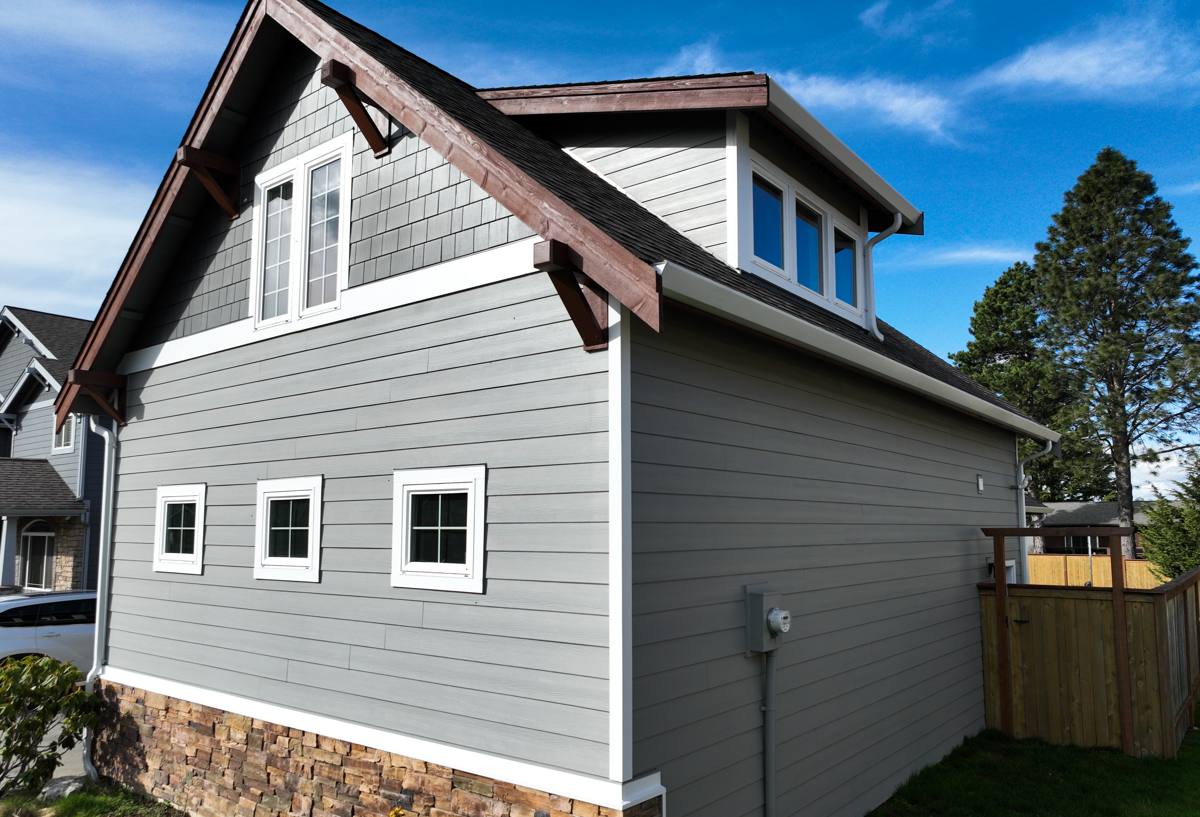
What Bow's Climate Actually Does to Exterior Siding
Salt Air and Shoreline Exposure
Properties closer to Samish Bay and the surrounding tidal flats deal with a slow, steady form of wear that inland Skagit County homes don't see as much: airborne salt. It doesn't take a beachfront lot to be affected — wind carries salt-laden moisture well inland, especially on the exposed, low-lying stretches around Bow. Salt accelerates corrosion on fasteners and metal trim, and it interacts with certain siding coatings and adhesives in ways that shorten their working life. Materials that rely on paint film alone for protection tend to show chalking, fading, and bubbling faster in this kind of exposure.
Driving Rain and Wind-Driven Moisture
Bow gets the same wet-season weather pattern as the rest of western Skagit County, but the open, flat terrain around town means wind-driven rain hits building envelopes at an angle rather than falling straight down. That matters more than most homeowners realize — angled rain finds lap seams, butt joints, and trim gaps that vertical rain never reaches. Over years, siding materials that swell, wick moisture, or delaminate under sustained wetting start to fail from the inside out, often before any damage is visible from the ground.
Moss, Algae, and Shaded Lots
Bow's mix of open farmland and wooded parcels means a lot of homes sit under partial or heavy tree cover, and that shade holds moisture on north- and west-facing walls far longer than open sun exposure would. Combined with our long wet season, that's a recipe for moss, algae, and mildew growth on siding that doesn't dry out quickly. Wood-based products are especially vulnerable here — moss roots hold moisture against the surface and accelerate rot in ways that are hard to reverse once established.
Why We Install James Hardie Fiber Cement, and Nothing Else
We made a decision as a company to install only James Hardie fiber cement siding — no vinyl, no LP SmartSide, no Cemplank or Allura, no primed spruce or raw cedar. That's not a marketing angle; it's a standard we hold because of what we've seen these materials do (and not do) in exactly the conditions Bow homes face.
Vinyl is inexpensive and low-maintenance in mild climates, but it's a petroleum-based product that expands and contracts with temperature swings, and in salt-air environments the surface can chalk and discolor faster than in inland areas. It also doesn't hold up structurally the way fiber cement does — impact and wind resistance are noticeably lower.
Engineered wood products like LP SmartSide use a wood-strand substrate with a resin-saturated overlay. It's a legitimate improvement over old-style hardboard, but any wood-based product is still vulnerable at cut edges and fastener penetrations if moisture gets behind the surface layer — a real risk given how much wind-driven rain and prolonged shade exposure this area sees.
Cemplank and Allura are also fiber cement, and fiber cement as a category is the right call for this climate. Where we draw the line is manufacturing consistency, factory finish quality, and warranty structure — James Hardie's ColorPlus finishing process and engineered climate-specific product lines are, in our experience, the more dependable long-term choice.
Raw or primed cedar and spruce look great on day one, but they require an ongoing maintenance commitment — re-staining or repainting on a regular cycle — that most homeowners underestimate, especially on a shaded, moss-prone lot where wood dries slowly. We'd rather not put a product on someone's home that sets them up for a maintenance burden we know they didn't sign up for.
James Hardie: The Product Lines We Actually Use
James Hardie fiber cement is a cement, sand, and cellulose fiber composite, engineered specifically to resist moisture absorption, fire, insects, and the freeze-thaw and wet-dry cycling that hits Pacific Northwest homes every year. It doesn't rot, it doesn't feed moss the way wood does, and it holds paint and factory finish far longer than wood or vinyl.
- HardiePlank lap siding — the most common choice for Bow homes, available in a range of textures and exposures, engineered for the Pacific Northwest's wet climate zone (HZ5/HZ10).
- HardiePanel vertical siding — often used for board-and-batten looks or accent sections on farmhouse-style homes, common in this area.
- HardieTrim — matching trim boards that resist the swelling and cracking wood trim shows around windows, corners, and rooflines.
- HardieSoffit — pre-vented and non-vented panels for eaves, important on homes with heavier moss and moisture exposure under overhangs.
- ColorPlus Technology — a factory-applied, baked-on finish that resists fading and chipping far better than field-applied paint, backed by its own finish warranty separate from the substrate warranty.
James Hardie's HZ5 product is engineered specifically for climates like ours — cold, wet winters and moderate humidity — and it's what we spec for the majority of homes in Bow and the surrounding Skagit County area.
Our Siding Installation Process for Bow Properties
| Step | What Happens | Why It Matters Here |
|---|---|---|
| Site assessment | Evaluate exposure — proximity to water, shade cover, prevailing wind direction | Determines flashing detail and product line selection |
| Tear-off and inspection | Remove old siding, check sheathing and framing for hidden rot or moisture damage | Coastal and shaded lots often hide moisture problems behind old wood or vinyl siding |
| Weather barrier | Install or repair house wrap and flashing at every penetration | Wind-driven rain finds gaps other climates never test |
| Hardie installation | Install per James Hardie's published fastening and clearance specifications | Correct gapping and fastening is what makes the warranty valid and the siding perform |
| Trim, caulking, final inspection | Seal and finish all joints, verify manufacturer clearances from grade and roofline | Improper clearance is the most common cause of premature moisture damage |
A Full Exterior, Not Just a Siding Job
Siding doesn't work in isolation. A roof that's shedding granules or backing up water at the valleys will soak the top course of siding no matter how good the material is. Windows with failed flashing will feed moisture directly into wall cavities behind brand-new siding. Because we handle roofing, windows, and decks in addition to siding, we look at the whole building envelope on a Bow property rather than treating siding as a standalone product swap. That matters more here than in a drier climate — every exterior component has to work together to keep moisture out over a long wet season.
Roofing
Roof condition directly affects how siding performs at the roofline and in valleys. We check roof drainage and flashing as part of any siding estimate.
Windows
Window flashing integration is one of the most common failure points we find when we tear off old siding. Replacing siding is a natural time to address aging or poorly flashed windows.
Decks
Decks in this climate face the same moss, moisture, and salt-air exposure as siding, and deck ledger connections tie directly into the wall assembly — another reason we treat the exterior as one system.
What Siding Replacement Tends to Cost in This Area
| Factor | Impact on Cost |
|---|---|
| Home size and wall complexity | More corners, gables, and dormers mean more cutting, trim, and labor |
| Tear-off scope | Full removal of old siding and sheathing repair adds cost versus siding over sound substrate |
| Hardie product line chosen | ColorPlus prefinished panels cost more upfront than field-painted but save on repainting |
| Site access | Rural or wooded lots with limited equipment access can add labor time |
| Hidden moisture damage | Rot found behind old siding during tear-off is common on shaded or coastal-exposed walls |
Every property is different, and the only way to give an accurate number is to look at the actual walls, exposure, and existing condition. We provide free, no-pressure estimates for exactly that reason.
Choosing a Contractor for a Bow Property
- Ask whether the crew is factory-trained on James Hardie's specific fastening and clearance requirements — generic siding experience isn't the same thing.
- Confirm they'll inspect and address sheathing and moisture damage before installing new siding, not just cover it up.
- Ask how they handle flashing at windows, rooflines, and decks — not just the siding panels themselves.
- Get a written scope that specifies the exact Hardie product line and finish, not just "fiber cement."
- Ask about local experience — a crew that's worked on shoreline-adjacent and shaded rural properties in Skagit County will spot exposure issues a generalist might miss.
- Verify licensing, bonding, and insurance before signing anything.
Maintaining Hardie Siding in a Moss-Prone, Salt-Exposed Area
Fiber cement is low-maintenance, not no-maintenance. In Bow's climate, a few habits go a long way toward getting the full lifespan out of the investment:
- Rinse siding annually to clear salt residue and organic buildup, especially on walls facing prevailing wind off the water.
- Keep gutters clear so water isn't overflowing directly onto siding below rooflines.
- Trim back vegetation and tree limbs that hold shade and moisture against exterior walls.
- Inspect caulking around trim and penetrations every year or two, and re-caulk before gaps let water behind the siding.
- Address any moss or algae growth early with a gentle wash rather than pressure-washing, which can damage the finish.
If you're weighing siding options for a home in Bow, or dealing with moss buildup, salt-worn trim, or aging wood siding that's finally past its service life, we're happy to take a look and walk through what we'd recommend. Reach out for a free, no-pressure estimate — there's no obligation, just an honest read on what your home actually needs.