 Anacortes Siding
 Siding in Cap Sante: Built for the Water's Edge
Cap Sante sits right where Anacortes meets Fidalgo Bay and the marina — close enough to the water that the air itself is part of the exterior maintenance equation. Homes here take on a different kind of weathering than houses even a few miles inland. Salt-laden air, wind-driven rain off the water, and the deep shade many of these lots get from mature evergreens all combine to put real, ongoing stress on exterior siding. If you own a home in Cap Sante, you've probably already noticed it: paint that fails faster than it should, trim that stays damp longer than seems reasonable, or moss and algae that keep coming back no matter how often you clean it off.
We're a local exterior contractor working throughout Anacortes and Skagit County, and Cap Sante is one of the areas where the case for the right siding material is easiest to make. We install James Hardie fiber cement siding exclusively — not vinyl, not LP SmartSide, not cedar or primed wood — because it's the product that actually holds up to what this specific stretch of coastline throws at a house year after year.
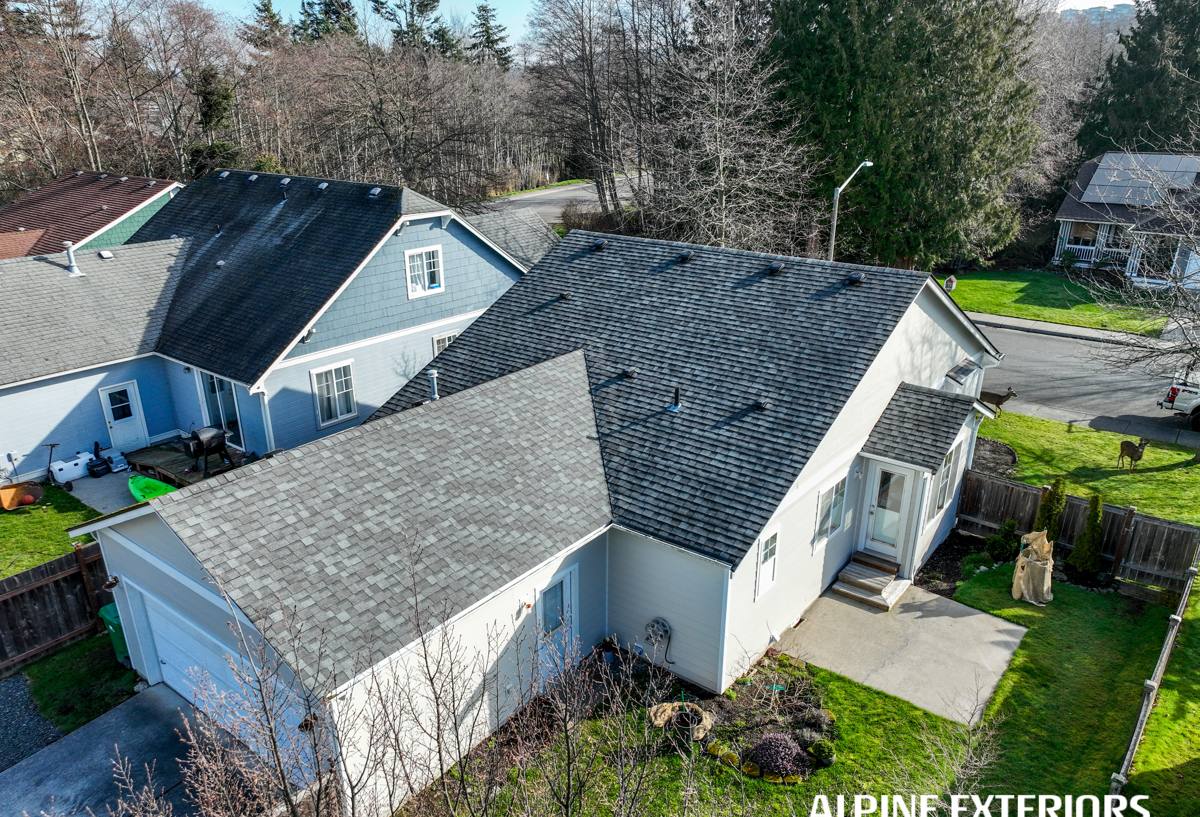
What Cap Sante's Climate Does to a House
Salt Air and Metal/Fastener Corrosion
Proximity to Fidalgo Bay and the marina means a steady low-level exposure to salt in the air, especially on west- and south-facing walls that catch onshore breezes. Salt air accelerates corrosion on exposed fasteners, flashing, and any lower-quality hardware used in siding installation. Over years, that corrosion can telegraph through as rust streaking, loosened panels, or failure points at fastener locations — problems that often show up at the siding itself even though the root cause is what's holding it on.
Driving Rain and Wind-Driven Moisture
Anacortes gets weather that comes in sideways off the water more often than inland Skagit County does. Wind-driven rain doesn't just wet a wall surface — it pushes moisture into every gap, seam, and lap joint it can find. Siding materials that swell, absorb water, or rely on paint film alone for protection are put to the test here in a way they wouldn't be in a more sheltered location.
Shade, Moisture, and a Long Moss Season
Many Cap Sante properties sit under or near tall evergreens, and combined with our marine-influenced humidity, that shade extends how long walls, trim, and roof lines stay damp after a storm. That's the recipe for a long moss and algae season — moss doesn't just grow on roofs here, it takes hold on north-facing siding, under eaves, and in any spot that doesn't get direct sun and airflow. Once established, it holds moisture against the surface underneath it, which compounds whatever material weakness is already there.
Why We Standardized on James Hardie
We used to get asked why we don't install everything a homeowner might request. The honest answer is that after years of doing exterior work in this climate, we stopped installing products that require homeowners to fight the marine environment every few years just to keep their house looking decent.
- Non-combustible core: Hardie's fiber cement composition doesn't burn, rot, or attract wood-boring insects — relevant given the dry-season wildfire risk that affects even coastal Washington communities.
- Factory-applied ColorPlus finish: baked-on, warrantied color that resists fading and doesn't rely on a field-applied paint job holding up against salt air and UV.
- HZ5 engineering: Hardie's climate-specific product lines are engineered for moisture and freeze-thaw performance, which matters directly in a marine, high-humidity zone like Cap Sante.
- Dimensional stability: fiber cement doesn't expand and contract with moisture the way wood-based products can, which keeps seams and paint lines tighter over time.
- Transferable warranty: a real, documented warranty that follows the product, which also tends to matter to a buyer if you ever sell.
We're not going to pretend other siding products don't have their place in the industry — vinyl is inexpensive, engineered wood has a place in drier climates, cedar has genuine curb appeal. But for a marine-exposed neighborhood like Cap Sante, we've made the professional call that fiber cement is the material that lets a homeowner stop thinking about their siding for a couple of decades instead of every couple of years.
How a Siding Project Works in Cap Sante
Assessment and Moisture Check
We start every project with a real look at the wall assembly, not just the visible siding. In a shaded, moisture-heavy area like Cap Sante, it's common to find that the siding itself is only part of the story — sheathing, house wrap, and flashing details around windows and roof lines all get checked, because replacing siding over a compromised wall just buries the same problem under new material.
Removal and Wall Prep
Old siding comes off, and we address what we find — soft sheathing, failed flashing, inadequate weather barrier. This is also the stage where we correct clearances that tend to cause trouble later: siding installed too close to grade, deck ledgers, or roof lines traps moisture and shortens the life of everything above it.
Installation to Spec
James Hardie siding is only as good as its installation. Correct fastener spacing, proper caulking at joints, factory-specified clearances, and attention to flashing details around every penetration are what actually deliver the performance the product is engineered for. This is where a lot of the difference between a siding job that lasts and one that doesn't gets decided.
Trim, Color, and Finish Details
We work through Hardie's trim boards, corner options, and ColorPlus palette to match the look you want — whether that's a traditional lap siding profile common around Anacortes or a more modern shingle or panel combination.
Comparing Siding Options for a Marine Environment
| Factor | James Hardie Fiber Cement | Vinyl | Engineered Wood / Cedar |
|---|---|---|---|
| Salt air / corrosion resistance | Strong — non-organic, engineered composition | Doesn't corrode, but can warp/fade in UV and temperature swings | Vulnerable to moisture absorption and rot over time |
| Moisture / moss resistance | High, especially HZ5 lines built for wet climates | Moderate — moisture can get behind panels | Lower — organic material is a moss/algae food source |
| Fire resistance | Non-combustible | Combustible, can melt/deform near heat | Combustible |
| Finish longevity | Factory-baked ColorPlus finish, long fade resistance | Color molded through material, can chalk/fade | Requires ongoing paint/stain maintenance |
| Typical maintenance | Low — periodic wash, occasional caulk check | Low but limited repair options if damaged | Higher — repainting/staining on a recurring cycle |
Repair vs. Replacement in a Neighborhood Like This
Not every Cap Sante home needs a full siding replacement. If your current siding is fundamentally sound and the damage is isolated — a cracked panel, a section that took an impact, localized moss staining — targeted repair can be the right call. But there are signals that point toward full replacement being the smarter long-term move:
- Recurring paint failure or bubbling across multiple wall sections, especially on the water-facing side of the house
- Soft spots when you press on siding or trim, which usually indicates moisture has reached the sheathing
- Moss or algae that returns within months of cleaning, even after treatment
- Visible gaps, warping, or separation at seams and corners
- A siding material at or past its realistic service life for this climate
We'll give you a straight answer during the assessment about which category your home falls into — we don't have an incentive to sell a full replacement when a repair will genuinely hold up.
Beyond Siding: A Full Exterior Approach
Cap Sante's climate doesn't stop at the walls. The same salt air, rain, and moss pressure that affects siding also wears on roofing, window seals, and any deck or outdoor structure exposed to the marina-side weather. We handle roofing, windows, and decks alongside siding, which matters most at the details where these systems meet — roof-to-wall flashing, window trim integration, and ledger connections are common failure points when different contractors handle each piece in isolation without coordinating the water management between them.
Why a Local Crew Matters Here
Cap Sante isn't a generic siding job. A crew that works throughout Anacortes and Skagit County knows which walls take the brunt of the marine weather, how far moss creep tends to travel on shaded lots, and how flashing details need to be handled differently here than they would on a dry, inland job forty miles east. That local knowledge shows up in the small decisions — clearance heights, fastener choices, where extra flashing attention actually pays off — that determine whether a siding job holds up through its full warranty period or starts causing problems in year six.
Get a Free Estimate for Your Cap Sante Home
If you're dealing with moss that won't quit, paint that's failing faster than it should, or you're simply planning ahead for a home in a demanding coastal environment, we're happy to take a look. We'll walk your home, give you a straight assessment of what your siding actually needs, and put together a free, no-pressure estimate — just fill out the form below to get started.