 Anacortes Siding
 Similk Beach: A Different Kind of Exposure
Similk Beach sits along the water on the south end of Fidalgo Island, in that stretch of Skagit County where Anacortes gives way to the channel crossing toward Whidbey Island. It's a beautiful place to own a home, and it's also a demanding place to own a home. Homes here take a steady diet of salt-laden air off Similk Bay, driving rain that comes sideways more often than straight down, and long stretches of overcast, moisture-heavy weather that never quite lets exterior surfaces fully dry out. Add in the tree cover common to this part of Fidalgo Island — lots of shade, lots of dampness held close to the house — and you have a climate that is genuinely tougher on siding, roofing, and trim than most manufacturers' warranty language assumes.
We're based in Anacortes and have worked on homes throughout Skagit County, including the waterfront and near-waterfront properties around Similk Beach. We know what this specific stretch of coastline does to a house over ten, twenty, thirty years, because we've been the crew called back out to look at siding that failed early. That experience is why we've narrowed what we install down to one product system rather than offering everything on the market.
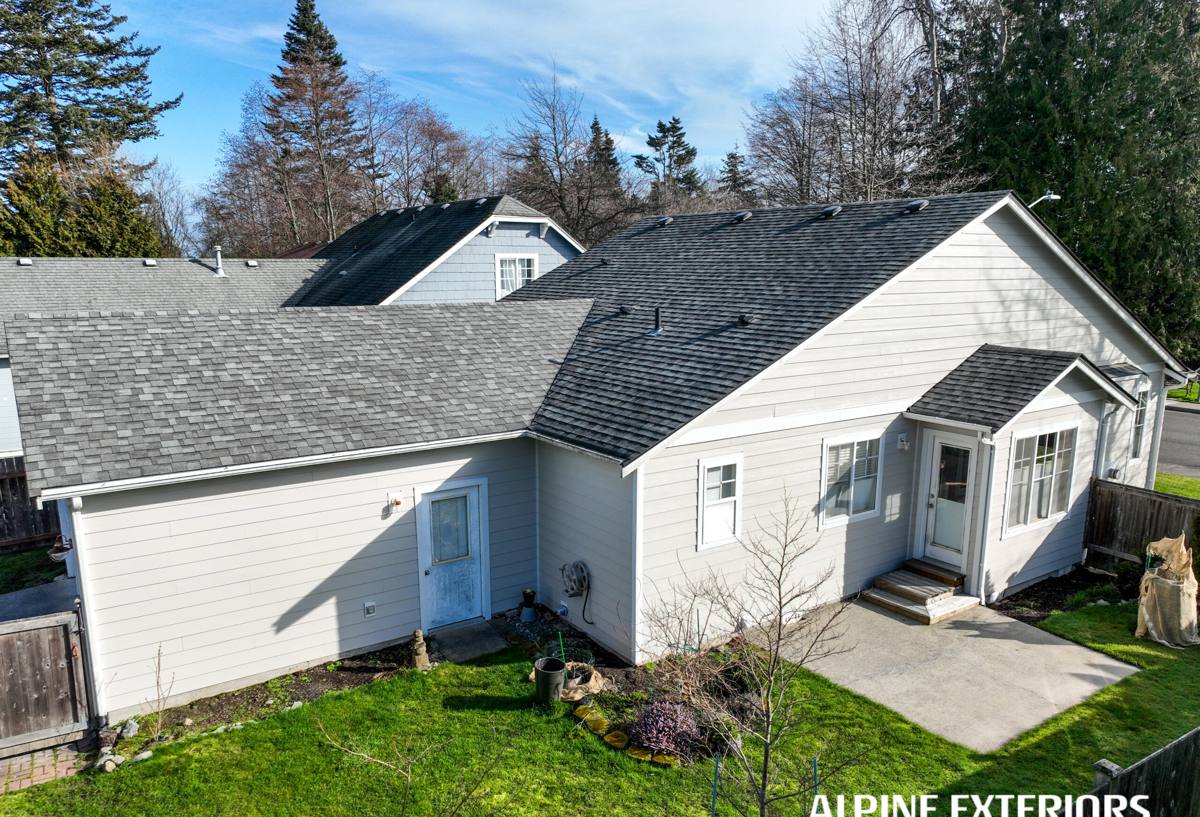
What Salt Air and Moss Actually Do to a House
Salt Air
Airborne salt is corrosive to metal fasteners and flashing, and it's abrasive to painted and coated surfaces over time. On homes close to Similk Bay, that salt exposure accelerates the breakdown of lower-quality paint films and speeds up corrosion wherever fasteners or trim details aren't properly protected. It doesn't take a direct waterfront lot to feel this — wind carries salt air well inland on Fidalgo Island.
Driving Rain
Wind off the water pushes rain into wall assemblies at angles that a lot of siding products, and a lot of standard installations, aren't built to handle. Water finds seams, laps, and butt joints. What matters isn't just the siding material itself but how it's flashed, how it drains, and whether the assembly behind it can dry out between storms.
Moss and Persistent Moisture
Skagit County's moss season is long, and shaded, tree-lined lots around Similk Beach hold moisture longer than open, sun-exposed sites. Moss and algae growth on siding and roofing isn't just cosmetic — sustained dampness under organic growth is exactly the condition that rots wood-based products and delaminates lower-grade composite siding from the inside out.
Why We Standardized on James Hardie Fiber Cement
We install James Hardie fiber cement siding exclusively. We don't offer vinyl, LP SmartSide, Cemplank, Allura, primed spruce, or cedar as options, and that's a deliberate professional standard, not an oversight. Each of those products has genuine strengths — cedar looks beautiful, vinyl is inexpensive, engineered wood siding installs quickly — but each also carries a trade-off that shows up hardest in exactly the conditions Similk Beach delivers: sustained moisture, salt exposure, and shade.
- Wood-based siding (cedar, primed spruce, LP SmartSide): even with treated substrates and engineered resins, wood-based products depend heavily on paint film integrity and consistent maintenance to resist moisture intrusion. In a long wet season with heavy moss pressure, gaps in that maintenance schedule show up as swelling, rot, or fungal damage faster than they would in a drier climate.
- Vinyl siding: it's low-maintenance and budget-friendly, but it's a thin material that can warp or crack in temperature swings, and its seams and panel movement give wind-driven rain more opportunities to work behind the cladding over time.
- Other fiber cement brands (Cemplank, Allura): these are legitimate fiber cement products, but we've standardized on one manufacturer's system — factory finish, trim components, and installation specs — so every job we do is consistent, warrantied as a system, and backed by one company we know well.
James Hardie fiber cement is non-combustible, dimensionally stable, and engineered specifically for climates like ours through Hardie's HZ5 product line, which is formulated for the wetter, cooler regions of the Pacific Northwest. The ColorPlus factory finish is baked on under controlled conditions rather than field-applied, which matters a great deal on a coastline where field-applied paint has less time to cure between rain events. It resists moisture, holds up to salt air better than wood or vinyl, and doesn't feed moss and algae growth the way organic and some composite materials do.
Siding Material Comparison for Coastal Skagit County Homes
| Material | Moisture Resistance | Maintenance Burden | Salt Air Durability |
|---|---|---|---|
| James Hardie Fiber Cement | Strong — engineered, non-combustible core | Low — factory finish, periodic caulk/inspection | Strong when properly flashed and installed |
| Cedar / Primed Spruce | Moderate — depends entirely on paint film and upkeep | High — regular repainting and moisture checks | Moderate, fades and weathers faster near water |
| LP SmartSide | Moderate — resin-treated but still wood-based | Moderate — seams and cut edges need attention | Moderate |
| Vinyl | Low-moderate — sheds water but seams can leak | Low — but panels can warp, crack, fade | Weak — brittle in temperature extremes, fades in UV/salt |
This table reflects general industry behavior, not a claim about any specific product's failure. Every material on it can perform reasonably well when installed correctly and maintained — the differences show up in how much maintenance is required, and how forgiving the material is when that maintenance slips for a season or two, which happens in real life.
Beyond Siding: Full Exterior Protection
Siding is only one part of how a Similk Beach home sheds water and wind. We also handle roofing, windows, and decks, because a house's exterior only works as a system. A new siding job installed against a roof with failing flashing, or windows with degraded seals, just moves the water intrusion problem somewhere else.
Roofing
Roof-wall intersections, valleys, and step flashing are common failure points on homes exposed to the kind of wind-driven rain Similk Beach sees regularly. When we're on-site for siding, we look at these details, because they directly affect how well the siding assembly performs.
Windows
Window flashing and integration with the siding plane is one of the most common sources of hidden water damage we find when we open up an older wall. Replacing windows at the same time as siding lets us get that flashing detail right the first time, rather than working around an existing installation that may already be compromised.
Decks
Outdoor living space near the water takes its own beating from moisture and sun. We build and repair decks with the same attention to drainage and material longevity that we bring to siding work.
Why a Local Crew Matters Here
Similk Beach isn't a large market, and it's not a neighborhood most large regional contractors know in detail. Lot conditions, tree cover, wind exposure, and how close a given property sits to the water all vary block to block along this stretch of Fidalgo Island. A crew that works Skagit County regularly recognizes those variations on sight — where extra flashing attention is warranted, where moss pressure will be worse, where wind load off the bay needs to factor into fastening schedules. We're not commuting in from Seattle or subcontracting the job out to whoever's available that week. We're an Anacortes-based company, and Similk Beach is inside the area we know.
What Our Process Looks Like
- On-site assessment of existing siding, trim, flashing, and any moisture or moss damage
- Honest conversation about scope — full re-side, partial replacement, or repair, plus roofing/window/deck needs if relevant
- Written estimate with James Hardie product line and color options suited to the site's sun/shade exposure
- Proper removal, house-wrap and flashing correction where needed, and installation to Hardie's written specifications
- Final walkthrough and warranty paperwork
Cost Factors Homeowners Should Know
| Factor | Why It Matters |
|---|---|
| Home size and wall complexity | More corners, gables, and trim details increase labor time and material cuts |
| Existing wall condition | Rot or moisture damage found during tear-off needs repair before new siding goes on |
| Product line and profile | Lap width, texture, and trim style affect material cost |
| Access and site conditions | Waterfront lots, slopes, and tree-heavy sites can affect staging and labor |
| Scope beyond siding | Bundling roofing, window, or deck work can improve overall efficiency and sequencing |
A Practical Maintenance Checklist for This Climate
- Rinse siding and trim once or twice a year to clear salt residue and organic buildup before it sets in
- Trim back tree branches and vegetation to reduce shade-driven moisture retention against the house
- Inspect caulking at trim, window, and door edges annually — gaps here are common entry points for water
- Check gutters and downspouts seasonally so roof water isn't dumping directly against siding
- Watch for early moss or algae growth and address it before it spreads across a wall
- Have flashing at roof-wall intersections and window heads inspected every few years, especially on wind-exposed elevations
Getting Started
If you're dealing with aging siding, visible moss buildup, soft spots near trim, or you're just planning ahead for a home near the water, we're glad to take a look. We'll give you a straightforward assessment of what your Similk Beach home actually needs — no pressure, no upsell to a product we don't stand behind. Reach out for a free estimate using the form below.