 Anacortes Siding
 Siding That Has to Work in Burlington's Weather, Not Just Look Good on Day One
Burlington sits inside the same marine-influenced weather system that shapes the rest of Skagit County. Storms moving in off the Salish Sea bring driving, wind-pushed rain rather than the gentle straight-down rain that most siding warranties are tested against. Add a long, damp shoulder season every spring and fall, and you get months at a time where north- and west-facing walls barely dry out between storms. That combination is what actually determines how long a siding job lasts here — not the brochure photo, but how the material and the installation behave during week six of a wet February.
We install James Hardie fiber cement siding exclusively, and we don't say that as a sales pitch — it's a standard we hold because we've seen what this climate does to siding systems that weren't built or installed for it. This page covers what Burlington homes specifically need from their siding, what a correct Hardie installation looks like, and what our process covers from first look to final inspection.
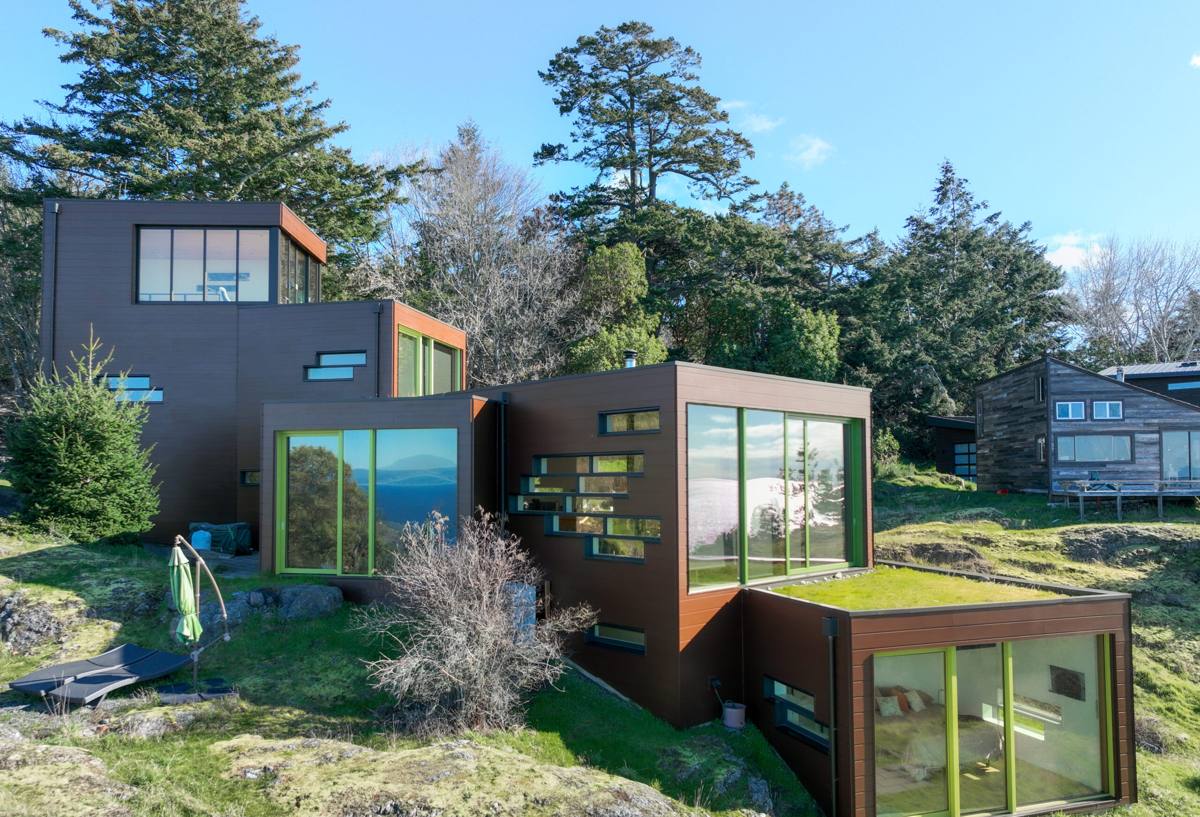
What Skagit County Weather Actually Does to a Wall
Salt Air and Fastener Corrosion
Proximity to Puget Sound and the surrounding waterways means airborne salt is a real factor for exterior materials throughout this part of Skagit County, not just on waterfront lots. Salt-laden moisture accelerates corrosion in unprotected or undersized fasteners, and it degrades finishes that weren't formulated to resist it. Over years, corroding fasteners can telegraph rust streaks through paint or siding joints and eventually weaken the hold of the siding itself.
Driving Rain and Wall Assembly
Wind-driven rain doesn't just hit a wall — it gets pushed sideways and upward into laps, seams, and penetrations that a vertical-rain assumption never accounts for. Siding systems that rely on face-sealing alone (rather than proper flashing, laps, and drainage) tend to let water past the cladding over time. Once water gets behind the siding, what happens next depends entirely on the water-resistive barrier, flashing details, and the siding material's own tolerance for occasional moisture contact.
Moss, Algae, and a Long Wet Season
Skagit County's shoulder seasons stay damp and shaded for long stretches, which is exactly what moss and algae need to establish on siding, especially on north-facing walls, under eaves, and anywhere tree cover blocks sun and airflow. Materials that hold surface moisture or have a porous, uncoated finish give moss something to grip. Once established, moss holds water against the siding surface, which extends the wall's wet periods even further — a feedback loop that shortens the service life of the wrong material.
Why We Standardized on James Hardie for Homes Like These
James Hardie fiber cement is a cement, sand, and cellulose fiber composite — it does not rot, and it is non-combustible. For Burlington homes dealing with sustained moisture exposure, the more relevant advantage is dimensional stability: Hardie board doesn't swell, cup, or warp the way wood-based products can when they take on repeated moisture cycling. Hardie also manufactures HZ5 and HZ10 product lines specifically engineered for climate zones with significant moisture and freeze-thaw exposure, which fits the Pacific Northwest better than a one-size-fits-all product.
The factory-applied ColorPlus finish matters here too. It's baked on under controlled conditions and backed by its own finish warranty, which means the color layer is more resistant to fading and to the kind of surface breakdown that gives moss and algae an easier foothold. A dense, well-sealed factory finish sheds water and resists staining better than field-applied paint on a porous substrate — a real advantage during a moss season that can run several months.
We're not going to tell you every competing product is worthless — some have legitimate uses. But when we weigh moisture tolerance, dimensional stability, fire performance, and finish durability against what Burlington's climate does to a wall year after year, Hardie is the product we're willing to put our name behind and warranty our labor on.
What a Correct Installation Actually Involves
Fiber cement siding is only as good as the assembly behind it. A rushed or generic install can undercut even the best material. Here's what we treat as non-negotiable on every Hardie job, Burlington included:
- Weather-resistive barrier: a continuous, properly lapped house wrap or building paper installed before siding goes on — the first line of defense if water gets past the cladding.
- Flashing at every penetration: windows, doors, hose bibs, light fixtures, and vents all get proper flashing and integration with the water-resistive barrier, not just a bead of caulk.
- Correct fastener spec: corrosion-resistant fasteners driven to Hardie's published pattern and depth — not overdriven, not underdriven, and sized for the exposure this climate creates.
- Proper clearances: minimum gaps at grade, roofing, and decks so siding isn't sitting in standing water or trapped moisture from an adjoining surface.
- Rainscreen or drainage gap where called for: a small air gap behind the siding lets incidental moisture drain and the wall assembly dry, which matters more here than in drier climates.
- Caulking only where Hardie specifies it: over-caulking seams that are designed to be left open for drainage can trap water instead of shedding it.
Every one of these details is invisible once the job is finished — which is exactly why the crew's discipline during installation matters more than the marketing on the siding itself.
Our Process for a Burlington Job
- On-site assessment: we look at wall orientation, existing moisture damage, roof and gutter drainage, and shading — the same factors that drive moss growth and wind-driven rain exposure on your specific lot.
- Tear-off and substrate check: removing old siding is when hidden rot, prior water intrusion, or damaged sheathing shows up. We address it before anything new goes on, not after.
- Barrier and flashing installation: the water-resistive barrier and flashing details go in per manufacturer spec, since this is the layer that determines long-term performance.
- Hardie installation: siding, trim, and any accessory pieces installed to Hardie's fastening and clearance requirements for our climate zone.
- Final walkthrough: we inspect seams, caulk lines, and clearances with you before calling the job done.
Comparing Options for This Climate
| Factor | James Hardie Fiber Cement | Vinyl | Untreated Wood / Primed Spruce |
|---|---|---|---|
| Moisture tolerance | High — doesn't rot, engineered HZ lines for wet climates | Moderate — doesn't rot itself, but seams and fasteners are the weak point | Low — prone to swelling, cupping, and rot with sustained moisture |
| Moss/algae resistance | Strong with factory finish, especially on shaded walls | Moderate — surface can host growth over time | Weak — porous surface holds moisture, common moss host |
| Fire performance | Non-combustible | Combustible, can deform under heat | Combustible |
| Finish durability | Factory ColorPlus finish, separate finish warranty | Color molded through material, can fade and chalk | Depends entirely on paint upkeep |
| Typical maintenance | Periodic wash, caulk check, gutter maintenance | Low, but seam and impact damage is hard to repair invisibly | Frequent repainting and moisture monitoring |
Cost is always part of this conversation, and Hardie carries a higher upfront material and labor cost than vinyl or unfinished wood siding. We think that's the honest trade-off: more cost at installation for meaningfully less maintenance burden and better performance against the specific conditions Burlington sees every year.
What Homeowners Can Do Between Professional Visits
- Rinse siding annually, especially shaded and north-facing walls, to slow moss and algae buildup before it establishes.
- Keep gutters clear so overflow doesn't run down siding faces and concentrate moisture in one area.
- Trim back vegetation and tree limbs that shade walls and restrict airflow — less shade means faster drying after storms.
- Walk the exterior once a year and look for cracked or missing caulk at trim and penetrations; failed caulk is usually the first sign something needs attention.
- Watch for staining or streaking near fasteners or seams, which can indicate a flashing or drainage issue worth having looked at.
Why It Matters That We Already Work in This Area
A crew that installs siding across Skagit County sees the same wall failures repeat: moss colonies on the same shaded elevations, rot at the same missed flashing details, fastener corrosion at the same exposure points. That pattern recognition is worth more than a generic install crew that's never had to answer for how their work holds up through a full Pacific Northwest wet season. We're also familiar with the permitting expectations local jurisdictions apply to residential siding replacement, which keeps the paperwork side of your project from becoming a delay.
We stand behind our installation labor, and James Hardie backs its material and finish with manufacturer warranties that are transferable to a future homeowner — a detail worth knowing if you plan to sell down the road. Doing the flashing, fastening, and drainage details right the first time is what makes that warranty actually mean something instead of just being paperwork.
Get a Straight Answer for Your Home
If you're dealing with aging siding, visible moss buildup, or you just want a professional look at what your walls are actually facing after another Skagit County wet season, we're happy to take a look. Request a free, no-pressure estimate using the form below and we'll walk your property, answer your questions, and give you a straightforward assessment of what your home needs.