 Anacortes Siding
 Burlington's Climate Is Harder on Windows Than Most Homeowners Realize
Burlington sits in the Skagit Valley, a short drive inland from Anacortes and the saltwater of Fidalgo Bay. That inland position means Burlington homes get a little less direct salt exposure than houses right on the water, but they still sit squarely inside Skagit County's marine-influenced weather pattern: long stretches of driving rain, heavy valley humidity, morning fog off the river bottoms, and a moss season that can run from fall through spring. Windows here don't fail because of one dramatic storm. They fail slowly, from repeated cycles of moisture getting into places it shouldn't, wood and composite trim staying damp longer than it should, and seals that were never rated for this kind of sustained exposure in the first place.
A window that performs fine in a drier climate can still let water track behind the trim here, especially on walls that face the prevailing weather or sit under a roofline where moss and debris build up and redirect runoff. The right replacement job accounts for that from the start, not as an afterthought.
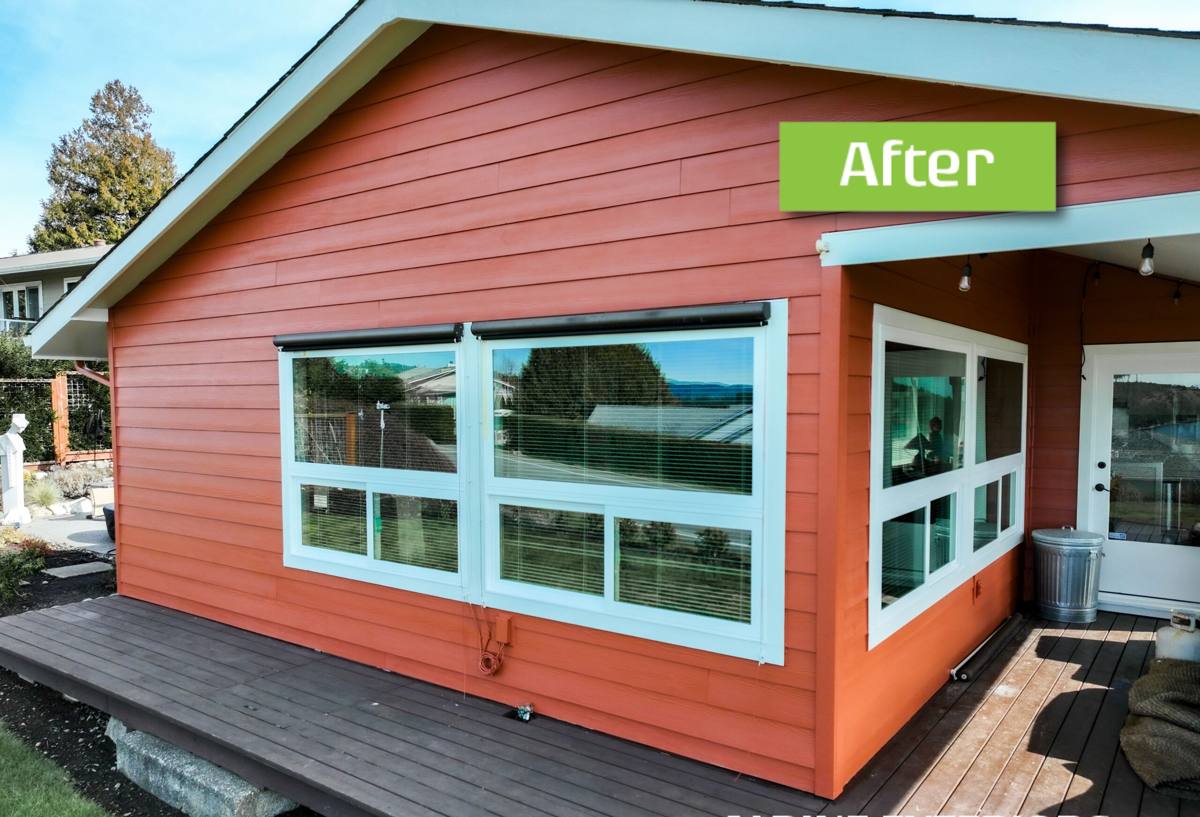
Signs a Burlington Home Is Due for Window Replacement
Most window problems show up gradually. Homeowners often live with small issues for years before realizing they add up to a real energy and moisture problem. Watch for:
- Fogging or a hazy film between the panes, which means the seal has failed and the insulating gas has escaped
- Soft or discolored trim and sill wood, especially on north- and west-facing walls that catch the most weather
- Windows that are difficult to open, close, or lock, often from swelling frames or settled hardware
- Visible daylight or a noticeable draft around the frame when it's windy
- Condensation forming on the inside of the glass during cold, damp mornings
- Rising heating bills without any other clear cause
- Moss or dark streaking on the exterior trim or casing, a sign moisture is sitting there longer than it should
Any one of these on its own might not mean full replacement is urgent. Several at once, especially on the same wall, usually points to a window system that's no longer keeping water out.
What a Correct Window Replacement Job Actually Involves
Flashing and Water Management
This is the part that matters most in Skagit County and the part that's easiest to shortcut. Every new window opening needs proper flashing tape and a drainage path so any water that gets past the exterior trim has somewhere to go besides your wall sheathing. On older Burlington homes, especially anything built before modern flashing standards were common, we often find the original opening has no real water management at all. Replacing the window without correcting that just buys the same problem a few more years.
Air Sealing and Insulation
Once the window is set and shimmed level, the gap between the frame and the rough opening gets sealed with a proper low-expansion foam or backer rod and sealant, not just caulk smeared over the outside. Skipping this step is one of the most common reasons a "new" window still feels drafty.
Exterior Trim and Sealant
The exterior finish work, trim, caulking, and paint or stain touch-up, is what actually sheds the rain day to day. Given how much of the year Burlington sees wet weather, we use sealants rated for sustained moisture exposure and make sure trim is back-primed on cut edges, not just painted on the visible face.
Interior Finish Work
Inside, we match existing trim profiles where possible and make sure the reveal lines are even. It's a small detail, but it's usually the first thing homeowners notice if it's done poorly.
Choosing a Frame Material for This Climate
There's no single "best" window material for every home. The right choice depends on your budget, the age and style of your house, and how much upkeep you want to take on. Here's how the common options actually perform in Skagit Valley conditions:
| Frame Material | Moisture Resistance | Maintenance | Best For |
|---|---|---|---|
| Vinyl | Very good; won't rot, doesn't need painting | Low; occasional cleaning | Most Burlington homes wanting a durable, budget-friendly option |
| Fiberglass | Excellent; very stable in temperature and moisture swings | Low | Homeowners wanting a longer-term investment with minimal movement over time |
| Wood-Clad | Good on the exterior clad side, but the interior wood still needs protection from condensation | Higher; interior finish needs periodic attention | Older or historic-style homes where matching original wood interior trim matters |
| Aluminum | Poor on its own; prone to condensation and heat loss without thermal breaks | Low | Rarely our first recommendation for this climate unless paired with modern thermal-break design |
We steer most Burlington customers toward vinyl or fiberglass for the simple reason that they hold up to repeated wet-dry cycles without the ongoing maintenance that painted wood or bare aluminum demands. That's a maintenance and moisture-behavior call, not a knock on wood-clad windows, which still make sense on homes where matching a specific trim look matters more than minimizing upkeep.
Our Process, Start to Finish
1. On-Site Assessment
We look at each window opening individually, not just the glass. That means checking the condition of the framing, sill, and any existing water damage before quoting the job.
2. Honest, Itemized Estimate
You get a clear breakdown of what's included, window units, flashing and water management, trim, labor, so there are no surprises once work starts.
3. Scheduling Around Skagit Valley Weather
We plan install days with the forecast in mind. Openings aren't left exposed to a passing rain system longer than necessary.
4. Installation
Old windows come out, openings get inspected and repaired if needed, new units go in plumb and level, and flashing, insulation, and sealant are done to the standard described above.
5. Walkthrough and Cleanup
We walk the finished work with you, operate every window and lock, and clean up job debris before we leave.
What Drives the Cost of Window Replacement
Every home is different, so we don't publish flat pricing, but the main cost factors are consistent from job to job:
| Factor | Why It Matters |
|---|---|
| Number and size of windows | More openings and larger units mean more material and labor |
| Frame material | Vinyl is generally the most budget-friendly; fiberglass and wood-clad cost more upfront |
| Glass package | Double-pane vs. triple-pane, low-E coatings, and gas fills all affect price and performance |
| Condition of existing openings | Rot repair or reframing adds time and material beyond the window itself |
| Access and site conditions | Second-story or hard-to-reach windows take more setup time |
| Trim and finish scope | Matching existing trim profiles or repainting adjacent siding adds labor |
A realistic estimate accounts for all of these up front rather than quoting a low per-window number and adding costs once work is underway.
Why It Matters That We Already Work in Burlington
Window replacement done right depends on understanding how a specific house sits in relation to weather, not just following a generic install checklist. A crew that regularly works Burlington and the surrounding Skagit County area already knows which wall orientations take the worst of the driving rain, how moss tends to build up on north-facing trim, and how quickly humidity can move into an open wall cavity during a wet stretch. That local pattern recognition shows up in small decisions, how long an opening should stay exposed during install, what sealant actually holds up through a full winter here, that don't show up on a spec sheet.
It also means straightforward answers about permitting and any local requirements that apply to exterior work in the area, instead of guesswork from a crew that mostly works somewhere with a different climate.
Keeping New Windows Performing Through Skagit County Seasons
A correctly installed window still benefits from basic upkeep in this climate:
- Rinse pollen, road film, and moss spores off glass and frames a couple times a year
- Check exterior caulking annually, especially after a hard winter, and touch up any cracked or separated sections
- Keep gutters and nearby roof valleys clear so runoff doesn't sheet directly down over window trim
- Wipe down interior sills during cold snaps if you notice condensation, and improve room ventilation if it's a recurring issue
- Trim back vegetation that keeps trim and siding shaded and damp longer than the rest of the house
None of this is heavy maintenance, it's the kind of routine care that lets a well-installed window last as long as it's built to.
If your Burlington home has windows showing any of the signs above, or you're just ready to stop losing heat and money through old glass, we're happy to take a look and give you a straightforward, no-pressure estimate. Use the form below to get started.