 Anacortes Siding
 Decks Built for Conway's Skagit County Climate
Conway sits in the low, green stretch of Skagit County where the Skagit River nears the sound, and that geography shapes everything about how an outdoor deck should be built here. This isn't a dry-climate deck job. Between the driving rain off the water, the salt-tinged air moving inland, and a moss season that can run nine months out of twelve, a deck in this area needs to be engineered for moisture from the ground up, not just finished to look good on day one.
We build and repair decks throughout the Anacortes and greater Skagit County area, and Conway properties get the same attention to material selection, flashing, and drainage that we'd put into a deck on Fidalgo Island itself. The climate doesn't care where the property line is — it treats every deck in this region the same way, and the building has to respond accordingly.
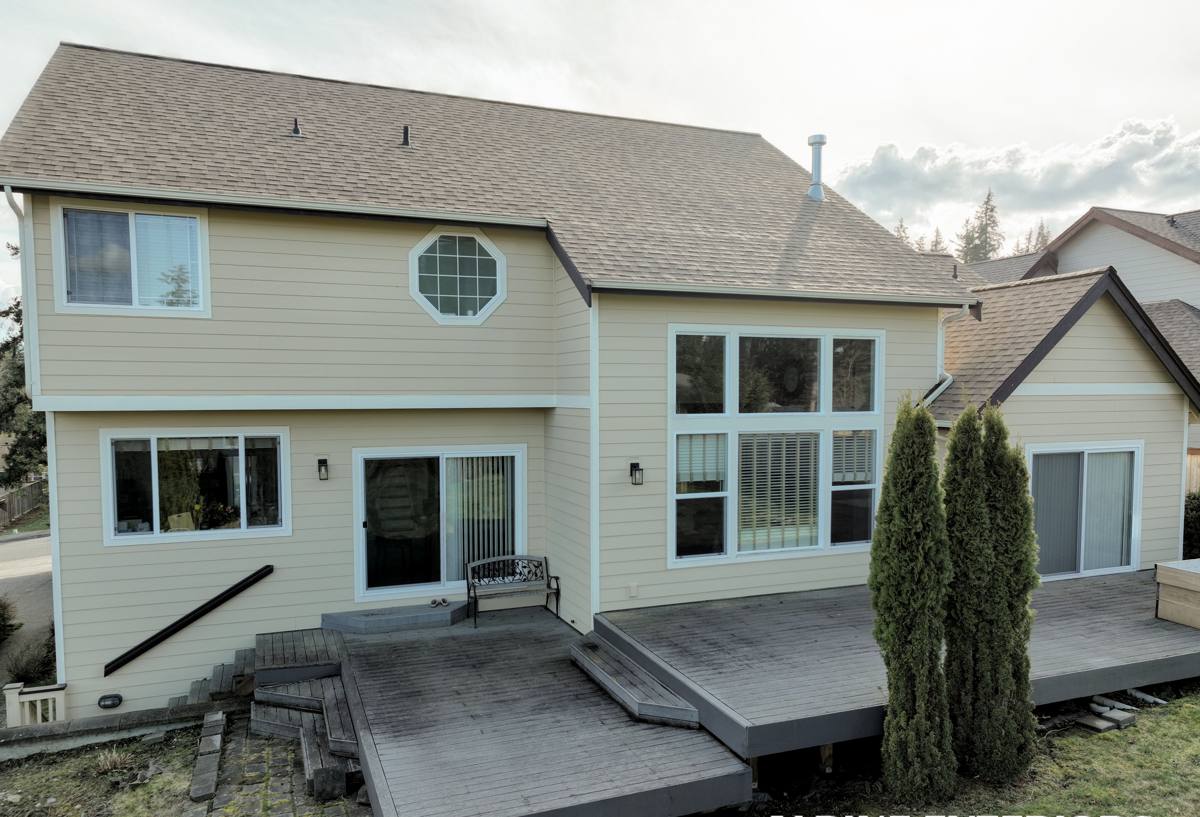
What Conway's Weather Does to an Outdoor Deck
Driving Rain and Ledger Rot
The single most common failure point we find on older decks in this region is the ledger board — the framing member that bolts the deck to the house. When wind-driven rain comes in at an angle, as it regularly does here, it gets pushed up and behind ledger boards that weren't properly flashed. The rot that results is often invisible from the deck surface until the structure is already compromised underneath.
Salt Air and Corrosion
Skagit County's proximity to Puget Sound means the air carries salt further inland than most homeowners expect. Standard fasteners, brackets, and hardware corrode faster here than they would in a dry inland climate, and corroded hardware is a structural problem, not a cosmetic one — a rusted-through joist hanger can fail without warning.
The Long Moss Season
Shaded, north-facing, or tree-covered decks in this area can stay damp for most of the year, which is exactly the condition moss and algae need to take hold. Beyond the slip hazard, moss holds moisture against the decking surface and accelerates wood decay or, on composite boards, can stain and etch the surface if left unaddressed.
Choosing Decking Material for This Climate
There's no single "best" decking material — the right choice depends on how much maintenance a homeowner wants to take on, the deck's sun exposure, and budget. Here's how the common options actually perform in a wet, moss-prone climate like ours.
| Material | Moisture Tolerance | Moss/Algae Resistance | Maintenance | Typical Lifespan |
|---|---|---|---|---|
| Pressure-Treated Lumber | Good, if sealed and maintained | Low — needs regular cleaning | Annual cleaning and re-sealing | 15-20 years |
| Cedar | Naturally decay-resistant | Moderate — still needs cleaning in shade | Cleaning plus periodic oil or stain | 15-25 years |
| Composite | Excellent — won't rot | Better, but surface can still stain | Occasional washing, no sealing | 25-30+ years |
Composite has become the default recommendation for shaded or low-lying Conway lots simply because it removes rot from the equation, though it isn't immune to moss and still needs an occasional wash. Cedar and quality pressure-treated lumber remain solid choices for sunnier, better-drained sites where a homeowner is willing to keep up with sealing.
The Structural Details That Determine Whether a Deck Lasts
Ledger Flashing and House Attachment
Correct ledger flashing — metal Z-flashing paired with a self-adhering waterproof membrane behind and over the ledger board — is non-negotiable on a deck attached to the house in this climate. This is the detail that keeps driving rain from working its way behind the board and into the rim joist, and it's the single upgrade that separates a deck that lasts fifteen years from one that lasts forty.
Joist and Beam Protection
Every cut end and top edge of framing lumber gets covered with a self-adhering joist protection tape before decking goes down. Untreated cut ends and the tops of joists, where fasteners puncture the wood and water can pool, are where rot typically starts first — the tape closes off that entry point.
Hardware and Fasteners
Given the salt content in the air here, we use stainless steel or heavy hot-dip galvanized hardware and coated fasteners rated for ground contact and coastal exposure, not the lighter-duty fasteners that are fine in a drier inland climate. It costs more up front and is worth every bit of it over the life of the deck.
Footings and Post Bases in Low-Lying Ground
Conway's lower-lying, river-adjacent parcels often mean ground that stays wetter, longer, than higher ground closer to town. Footings need to be sized and set to local frost and load requirements, and post bases should hold the post above grade so end grain never sits in standing water or wet soil — a small detail that has an outsized effect on how long the structural posts last.
Design Choices That Fit a Conway Property
Drainage and Grading Around the Deck
Where a deck sits low relative to the surrounding yard, we pay close attention to grading and drainage underneath and around it so water has somewhere to go instead of pooling against footings or framing. On flatter, wetter lots this sometimes means adding gravel drainage beds or adjusting the deck's height off grade.
Railings and Code Requirements
Any deck surface more than 30 inches above grade needs a code-compliant guardrail, and Skagit County inspectors check baluster spacing and railing height closely. We build to code as a baseline, then offer cable, metal picket, or traditional wood rail styles depending on the look a homeowner wants.
Orientation and Shade Management for Moss Control
Where trees or the house itself throw shade across a deck for most of the day, we'll talk through options like trimming sightlines to let more air and light across the surface, or choosing a decking material and finish that resists moss better in that specific spot. There's no eliminating shade on a wooded lot, but the deck's design can work with it instead of fighting it.
Permits and Skagit County Requirements
Most new deck construction and many significant deck repairs in unincorporated Skagit County — which covers Conway — require a building permit, with specifics depending on the deck's height, size, and attachment to the house. We handle the permit process as part of the job, including drawing up plans that meet setback and structural requirements, so homeowners aren't left navigating county paperwork on their own.
Our Process From Estimate to Finished Deck
- On-site visit to assess the ground, existing structure (if any), sun exposure, and drainage.
- Design and material discussion based on budget, maintenance preference, and how the space will be used.
- Written estimate with a clear scope, so there are no surprises once work begins.
- Permit drawings and submittal to Skagit County where required.
- Demolition of any failing existing structure, done carefully to protect the surrounding landscaping.
- Framing with proper ledger flashing, joist protection, and coastal-rated hardware.
- Decking installation, railing, and any stairs or accessory features.
- Final walkthrough and care instructions specific to the material installed.
Keeping a Conway Deck in Good Shape Year After Year
A well-built deck still needs some seasonal attention in this climate. This is the routine we recommend to homeowners after we hand over a finished project:
- Sweep debris and standing leaves off the deck surface regularly through fall, when they trap moisture against the boards.
- Clean visible moss or algae buildup at least once a year, more often on shaded sections.
- Check that gaps between boards stay clear so water can drain through rather than pool.
- Inspect railings and stair connections annually for looseness or corrosion at fastener points.
- Re-seal or re-stain wood decking on the manufacturer's recommended schedule — don't wait until it looks dry and gray.
- Confirm gutters and downspouts near the deck are directing roof water away from the structure, not onto it.
Why Hire a Crew That Already Works in Conway
A deck built to a generic national code minimum can still fail early in a climate like this one if the crew building it hasn't spent years watching how local moisture, salt air, and moss actually behave against real structures. We've built and repaired decks throughout the Anacortes and Skagit County area long enough to know which details are worth the extra cost up front — proper ledger flashing, coastal-rated hardware, joist protection — because we've seen what happens on the decks that skipped them.
If you're planning a new deck or need an honest look at one that's showing its age, we're glad to come out to your Conway property, walk the site, and put together a straightforward estimate — no pressure, no obligation. Just fill out the form below to get started.