 Anacortes Siding
 Roofing in Burlington's Skagit Valley Climate
Burlington sits in the flat, marine-influenced Skagit Valley just east of Anacortes, close enough to the water to pick up salt-laden air off Padilla Bay and Puget Sound, yet inland enough to sit under the low gray cloud cover that settles over the valley much of the year. That combination is harder on a roof than either factor alone. Salt air accelerates corrosion on exposed metal fasteners and flashing. Long stretches of driving rain push water sideways into laps and seams that a dry-climate roof would never test. And the shade, moisture, and mild temperatures that make the valley good for farming also make it excellent for moss, algae, and lichen growth on anything with a north-facing slope or overhanging tree cover.
A roof replacement here isn't just swapping old shingles for new ones. It's an opportunity to correct whatever let the old roof fail early, and to build back a system suited to Skagit County conditions rather than a generic install.
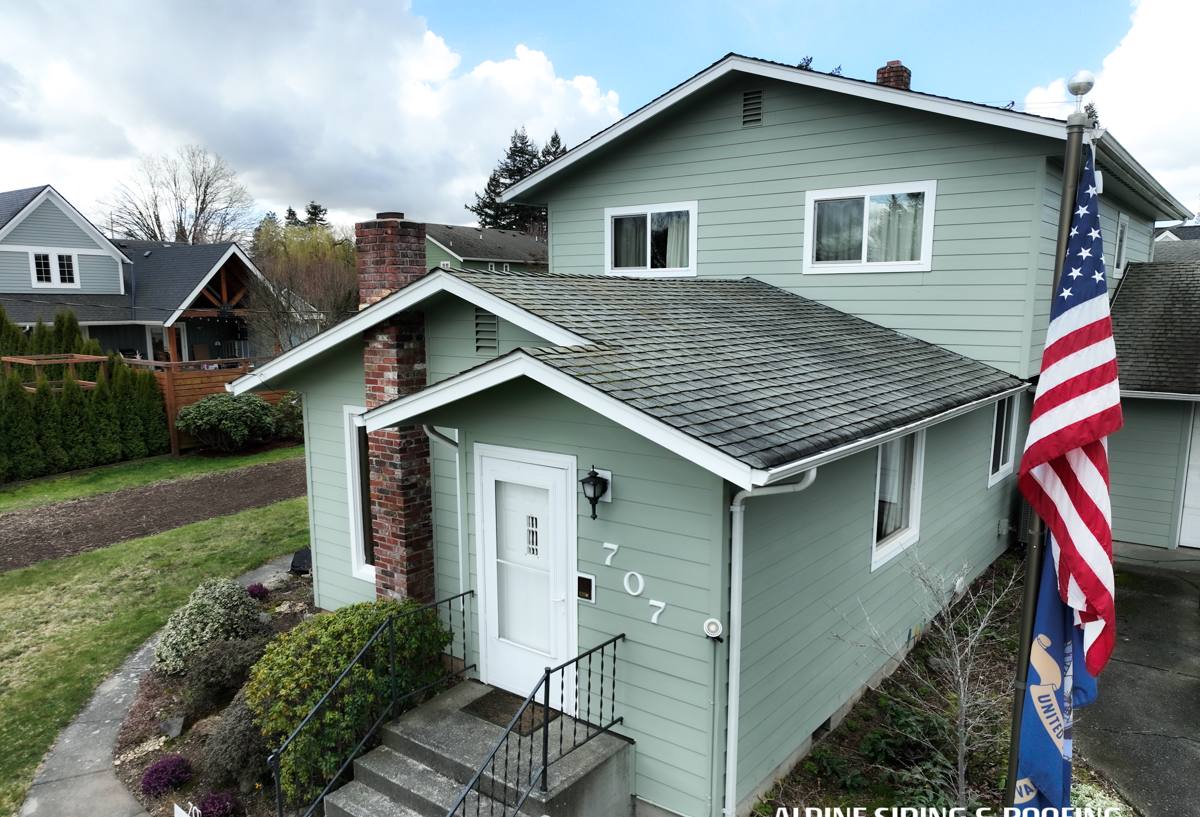
Signs a Burlington Roof Needs Replacing, Not Patching
Roofs in this area rarely fail all at once. They show a pattern of small problems that add up. Before recommending replacement over repair, we look for:
- Granule loss heavy enough to expose the black asphalt mat on multiple slopes, not just one worn area
- Moss or algae established under the shingle tabs, not just sitting on the surface — this lifts shingles and holds moisture against the deck
- Soft or spongy decking felt underfoot, usually near valleys, chimneys, or eaves where water has been sitting
- Curling, cracking, or cupping shingles across the roof's age, not isolated storm damage
- Repeated leaks in different spots each winter, which usually means the underlayment has failed generally rather than one flashing detail
- Visible daylight or water staining in the attic along the ridge or rafters
If the damage is confined to one area — a bad flashing detail, a single storm-damaged section — repair is usually the honest answer. Replacement makes sense when the roofing system itself, not just a detail, has reached the end of its service life.
What a Correct Tear-Off and Install Looks Like Here
Tear-Off and Deck Inspection
Every roof replacement starts with a full tear-off down to the deck. This is the point where we find out what the old roof was hiding — soft plywood from long-term moss moisture, under-ventilated attic sheathing, or flashing that was never properly integrated in the first place. In a climate that stays damp for months at a time, skipping this inspection step and roofing over a compromised deck just locks the problem under a new layer of shingles.
Underlayment and Ice-and-Water Protection
Given how much of the valley's precipitation arrives as sustained, wind-driven rain rather than short downpours, underlayment selection matters more here than in drier regions. We install synthetic underlayment across the full roof and self-adhered ice-and-water membrane at eaves, valleys, and any low-slope transitions — the spots where wind-driven rain is most likely to work its way backward under a shingle course.
Flashing
Flashing failure is the single most common cause of "mystery leaks" on roofs we replace in this area. Step flashing at wall intersections, counter-flashing at chimneys, and valley metal all get replaced as part of the job, not reused. Reusing old flashing to save a step is a false economy — it's usually already corroded or bent from the original install, and it's the first thing to fail again.
Ventilation
Attic ventilation is easy to overlook because it's invisible from the ground, but it directly affects how long a new roof lasts. Poor intake or exhaust ventilation traps moisture against the underside of the deck, which shortens shingle life from below and can encourage rot regardless of how good the roofing material is. We check and correct ventilation balance as part of every replacement.
Material Choices for Salt Air and Moss Pressure
There's no single "best" roofing material — the right choice depends on the home's exposure, slope, budget, and how much moss and shade pressure the specific site sees.
| Material | How It Handles Local Conditions | Trade-Offs |
|---|---|---|
| Architectural asphalt shingle | Good balance of cost and durability; algae-resistant (AR) shingles reduce staining from moss and lichen spores | Still needs periodic moss removal on shaded, north-facing slopes |
| Standing seam metal | Sheds moss and rain well due to smooth, steep-shedding surface; fewer horizontal laps for wind-driven rain to exploit | Higher upfront cost; fasteners and flashing must be corrosion-rated for salt exposure |
| Synthetic/composite shingle | Resists moisture absorption better than wood, holds up to repeated wet-dry cycling | Product and installer variability — we're selective about which lines we install |
| Cedar shake | Traditional look that suits some Skagit Valley homes | Highest moss and moisture maintenance burden in this climate; shortest service life without diligent upkeep |
We're straightforward about trade-offs like these before you commit to a material — the goal is a roof that performs for its expected lifespan, not just one that looks right on install day.
Fasteners, Flashing Metal, and the Salt Air Factor
Because Burlington sits close enough to tidal water to get salt-influenced air, we pay attention to what the metal components of a roof are made of, not just the shingles. Galvanized fasteners and flashing can corrode faster near salt air than stainless or better-coated alternatives. On homes with more direct exposure, upgrading fastener and flashing hardware is a small cost during install that avoids early rust staining and loosened flashing down the road.
Moss and Algae: Prevention Built Into the Install
Moss isn't just cosmetic in this region — left unaddressed, it lifts shingle edges, holds standing moisture against the roofing material, and works its way under laps over a season or two. A few things we build into every replacement to slow it down:
- Algae-resistant shingle products where the budget allows, which reduce (not eliminate) staining and growth
- Zinc or copper strips near the ridge on shaded slopes, which release trace metal ions that inhibit moss growth as rain washes over them
- Correct shingle exposure and nailing per manufacturer spec, since improperly seated shingles give moss more surface to grab onto
- A conversation about nearby tree cover — sometimes the most effective moss control is trimming back branches that keep a slope shaded and damp
None of these steps make moss removal maintenance disappear entirely. What they do is stretch out the interval between cleanings and reduce how aggressively moss re-establishes.
Our Process, Start to Finish
- On-site inspection. We walk the roof (or use a drone where pitch or access makes that safer) and check the attic from inside, looking at deck condition, ventilation, and existing flashing details.
- Written estimate. You get a clear scope of work and material options in writing, with trade-offs explained honestly — no pressure to upsell material you don't need.
- Scheduling around weather. Skagit Valley rain patterns mean we plan tear-off days around dry windows and keep the roof dried-in at the end of every work day, never leaving a deck exposed overnight.
- Tear-off and deck repair. Old roofing comes off down to the deck; any soft or damaged sheathing is replaced before anything new goes down.
- Underlayment, flashing, and ventilation correction. These get done to spec, not reused or shortcut.
- Final installation and cleanup. New roofing goes on per manufacturer specification, the site is cleaned of debris and nails, and we walk the finished roof with you.
Why Hire a Crew That Already Works Burlington
A roofing crew that regularly works Burlington and the surrounding Anacortes and Skagit County area already knows which details matter here — how much moss pressure a given slope orientation is likely to see, which fastener upgrades are worth the cost near the water, and how to sequence a job around a valley weather pattern that can turn wet with little warning. That local pattern recognition is hard to substitute with a generic install, no matter how good the crew's general roofing skills are. It also means we're a known, findable business if a warranty question or maintenance need comes up years down the line — not a crew that worked through the area once and moved on.
Get a Straight Answer on Your Roof
If your roof is showing granule loss, moss buildup, recurring leaks, or is simply old enough that repair no longer makes sense, we're happy to take a look and give you an honest read on whether it's a repair or a full replacement. Reach out for a free, no-pressure estimate using the form below — we'll walk the roof, explain what we find, and lay out your material options plainly.