 Anacortes Siding
 Building Decks for Cap Sante's Exposure to the Water
Cap Sante sits up on the bluff overlooking the marina and Fidalgo Bay, which is exactly why homes here have some of the best views in Anacortes — and exactly why decks built on this bluff take more weather than decks a few miles inland. The elevation catches wind off the water, salt-laden air drifts up from the harbor and Guemes Channel, and the long Skagit County wet season keeps every horizontal surface damp for months at a time. A deck built without that in mind will look fine for a year or two, then start showing corrosion streaks, soft spots, and green moss growth well ahead of schedule.
A deck built for Cap Sante is not a different structure than a deck built anywhere else in Anacortes — it's the same structure with more careful choices at every layer: the framing, the fasteners, the decking surface, and the drainage details that keep water from sitting where it shouldn't.
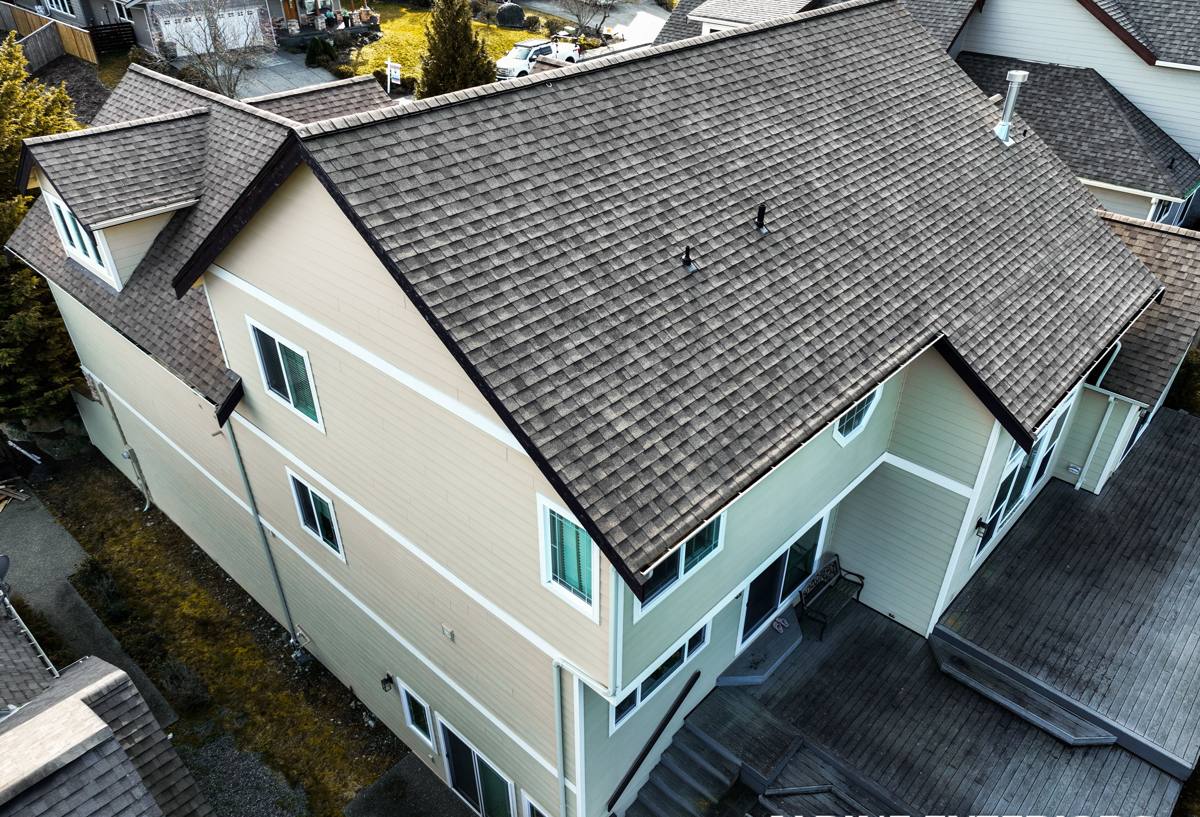
What Cap Sante Homes Actually Need From a Deck
Most of the decks we're asked to build or replace in this neighborhood share a few things in common: they're taking advantage of a view toward the water, they're exposed to wind that a more sheltered lot wouldn't see, and they often sit on a slope or a bluff edge that adds structural considerations beyond a flat backyard deck.
- Orientation toward the view usually means more direct exposure to wind-driven rain, not less
- Elevated or sloped lots often need taller posts, additional bracing, or engineered footings
- Proximity to salt water accelerates corrosion on unprotected metal hardware
- Shaded sides of the house (common on tree-lined Cap Sante lots) hold moisture longer, which feeds moss and algae growth
None of this means a Cap Sante deck has to be over-built or over-priced. It means the standard details — flashing, fastener grade, decking material — have to be right the first time, because a deck up here doesn't get a break between rain events the way a deck in a drier climate would.
Choosing a Decking Material for Salt Air and Moss
There's no single "best" decking material for every home — it depends on budget, how much upkeep you want to do, and how exposed the deck is. Here's how the common options actually perform in this kind of marine, moss-prone environment:
| Material | How it handles salt air & moisture | Moss/algae resistance | Maintenance |
|---|---|---|---|
| Pressure-treated wood | Fine if sealed and re-sealed on schedule; end grain and fastener holes are the weak points | Low — needs regular cleaning to stay ahead of it | Annual cleaning and re-staining/sealing |
| Cedar | Naturally more rot-resistant, but still needs finish maintenance near the water | Low to moderate | Cleaning plus periodic oil or stain |
| Capped composite | Very good — the cap layer sheds moisture and doesn't absorb salt spray | Good — surface doesn't hold moisture like wood grain | Occasional wash-down, no sealing |
| PVC decking | Excellent — fully synthetic, unaffected by salt or moisture absorption | Good, though shaded areas still need periodic cleaning | Occasional wash-down, no sealing |
We install all of these, and we'll give you an honest read on which one fits your budget and how the deck will be used. Where we push back is on uncapped composite in fully shaded, low-airflow spots — it can hold moisture at the surface longer than either wood or capped composite, which is a real trade-off worth knowing before you buy, not a knock on the product itself.
Wood Still Has a Place
Plenty of Cap Sante homeowners want the look and feel of real wood, and that's a legitimate choice — you just have to go in knowing it's a maintenance commitment. If you're not going to keep up with sealing on a one- to two-year cycle in this climate, composite or PVC will save you money over the life of the deck even though the upfront cost is higher.
What's Underneath Matters More Than the Decking
The decking boards are the part everyone sees, but the framing underneath is what actually determines how long the deck lasts in salt air. This is where we see the most corner-cutting in older or budget builds:
- Ledger flashing — where the deck attaches to the house, proper flashing keeps wind-driven rain from working its way behind the siding. This is one of the most common failure points we find on decks we're asked to repair.
- Joist protection — a joist tape or flashing over the top of each framing member keeps water from soaking into the end grain where deck screws and joist hangers penetrate.
- Post bases and footings — posts should sit on standoff hardware that keeps the wood off standing water, not buried in or resting directly on concrete.
- Beam and joist spacing — sized to the actual load and span, not just "what's typical," especially on elevated or sloped Cap Sante lots.
Fasteners and Hardware: The Part That Fails First Near the Water
Salt air is hard on metal, full stop. Standard galvanized fasteners and connectors that hold up fine a few miles inland can start showing rust streaks and pitting within a few seasons this close to the marina. For Cap Sante builds, we spec hardware rated for coastal exposure — stainless steel or heavy-duty coated fasteners and connectors — everywhere the metal is exposed or embedded in wet wood. It costs a little more up front. It's a lot cheaper than replacing rusted-out joist hangers under a deck that otherwise still has years of life left in it.
Drainage, Slope, and Keeping Moss From Taking Over
Anacortes' moss season runs long, and a deck with poor drainage is one of the first places it shows up. Correct build practice includes a slight slope away from the house so water actually sheds off the surface instead of pooling, gaps between boards sized to let water and debris through rather than trap it, and enough clearance and airflow underneath the deck so the framing can dry out between rain events instead of staying damp for weeks. Decks tucked under trees or against the shaded side of the house need this even more than sunny, open ones — shade plus moisture is exactly what moss and algae need to establish.
Our Process for a Cap Sante Deck Project
We keep the process straightforward because the details that matter are in the build, not the sales pitch:
- Site visit — we look at slope, exposure, sun/shade pattern, and how the deck will tie into the existing structure before we talk materials.
- Design and material selection — we walk through the honest trade-offs between wood, composite, and PVC based on your budget and how much maintenance you actually want to do.
- Permitting — most attached and elevated decks in Anacortes require a building permit; we handle that process rather than leaving it on you.
- Framing and flashing — this is where a deck's real lifespan is decided, so we don't rush it.
- Decking, railing, and finish work — installed to the manufacturer's spec so warranties stay intact.
- Final walkthrough — we go over how to maintain the specific material you chose, so there are no surprises.
Keeping a Cap Sante Deck in Good Shape
However well a deck is built, this climate still asks something of the owner every year. A short seasonal checklist covers most of it:
- Rinse or sweep off salt residue, pollen, and organic debris a few times a year, more often near the water
- Check and clear gaps between boards so drainage paths don't clog with debris
- Look over railing posts and stair connections for movement or rust streaks once a year
- Re-seal or re-stain wood decking on the schedule the product calls for — don't wait for it to look bad
- Trim back overhanging branches that keep shaded sections of the deck from drying out
- Check under-deck framing and post bases for standing water after major storms
Why It's Worth Hiring a Crew That Already Works This Neighborhood
A lot of what makes a deck last in Cap Sante isn't visible in a bid sheet — it's knowing which fastener grade actually holds up this close to the marina, which corners of a shaded lot need extra drainage attention, and how Anacortes' permitting process works for elevated and bluff-adjacent builds. A contractor who hasn't worked this specific stretch of Skagit County waterfront is guessing at some of those details. We're not guessing, because we've built and repaired decks in this exact environment and seen firsthand which details hold up and which ones fail early.
If you're planning a new deck or replacing one that's showing its age, we're happy to come take a look and give you a straightforward, no-pressure estimate — just fill out the form below.