 Anacortes Siding
 Siding That Has to Earn Its Keep in This Climate
Burlington sits inland from Anacortes but still gets the full weather package that defines siding performance in Skagit County: moisture-laden air off Puget Sound, driving rain that comes in sideways during winter storms, and long stretches of gray, damp weather that keep exterior walls wet for days at a time. Add tree cover on many lots and north-facing walls that rarely see direct sun, and you get a textbook environment for moss, algae, and slow moisture intrusion to take hold on the wrong siding material.
None of that is unusual for this part of Washington. It just means the siding choice matters more here than it would in a dry inland climate. A product that performs fine in Spokane can struggle in Burlington within a decade. This page covers what local homes actually need from their siding, what a correctly installed job looks like, and how we handle fiber cement projects for homeowners in this area.
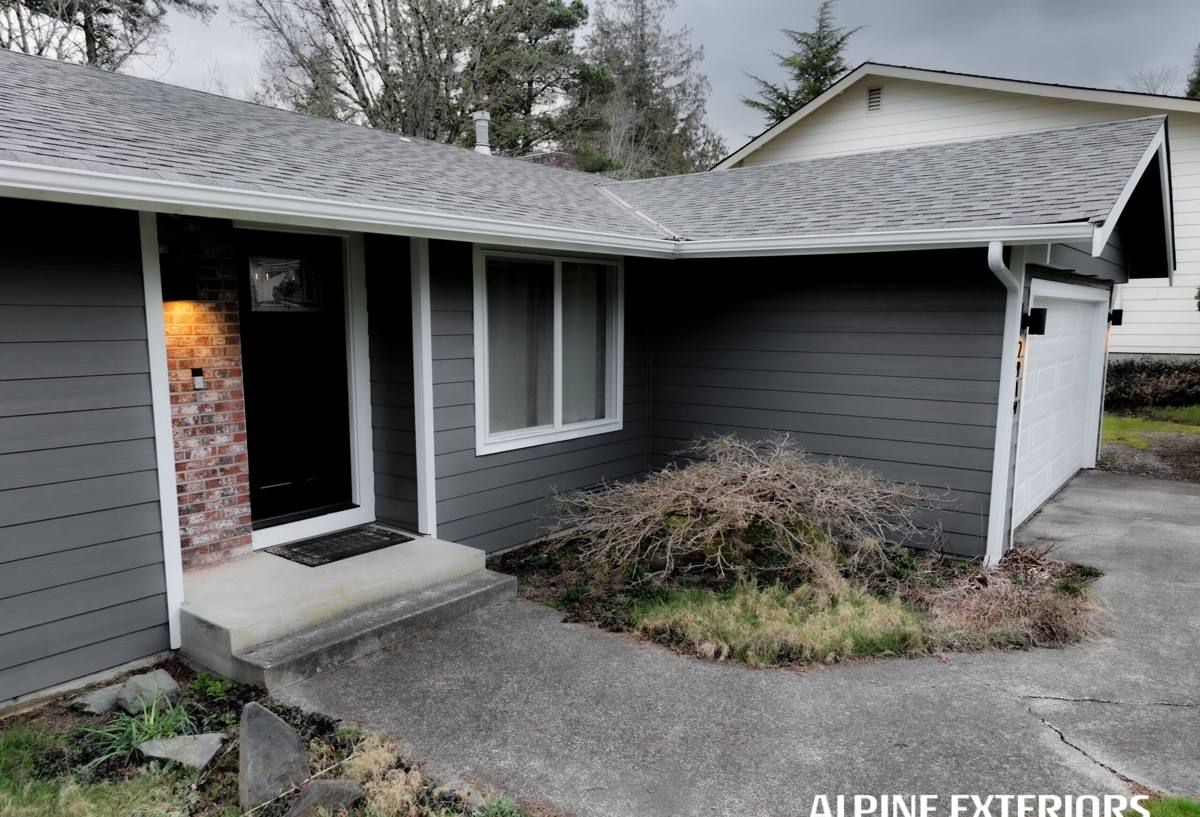
What Salt Air, Rain, and Moss Actually Do to Siding
Three things drive most of the siding failures we see on inspections in this region: repeated wetting and drying cycles, airborne salt and moisture near the water, and organic growth wherever shade and dampness combine. Different siding materials respond to that combination very differently.
| Material | Moisture Behavior | Moss & Algae Resistance | Long-Term Maintenance |
|---|---|---|---|
| Vinyl | Doesn't absorb water, but panels can warp, gap, or blow off in wind-driven storms; seams let moisture behind the cladding | Algae and mildew grow readily on the surface, especially on shaded walls | Periodic washing; repainting is not an option if the color fades |
| Cedar / natural wood | Absorbs and releases moisture constantly; prone to swelling, cupping, and rot at joints and end grain | Highly susceptible to moss and mildew without diligent upkeep | Frequent refinishing, caulking, and spot repair |
| Engineered wood (LP SmartSide) | Wood-based core is sensitive to sustained moisture exposure; performance depends heavily on installation quality and caulk maintenance | Better than raw wood, but organic growth can still take hold on shaded elevations | Requires ongoing field paint and caulk maintenance to keep the warranty intact |
| Fiber cement (James Hardie) | Cement-based composition doesn't swell, rot, or support insect damage; handles wet-dry cycling well | Factory finish and material composition resist moss and algae far better than wood-based products | Occasional washing; no repainting needed for years with ColorPlus finish |
This is the core reason we standardized on fiber cement years ago. It's not that other products can't be installed correctly — it's that in a climate like Burlington's, the margin for error is smaller with wood and wood-based materials, and the ongoing upkeep is real, not theoretical.
Why We Install Only James Hardie Fiber Cement
We don't install vinyl, LP SmartSide, Cemplank, Allura, primed spruce, or cedar. That's a deliberate standard, not a lack of options. We've made the call that James Hardie's fiber cement system is the product we're willing to put our name behind on homes in this part of Washington, and we think homeowners deserve to know why.
HZ5 Engineering for This Region
James Hardie engineers its siding by climate zone, and the HZ5 formulation is built for regions with heavy moisture exposure — which includes western Washington. It's not a marketing distinction; the material's moisture resistance and durability are formulated specifically for climates that see what Skagit County sees: sustained rain, humidity, and freeze-thaw swings in the colder months.
ColorPlus Factory Finish
Most callbacks and touch-up headaches on siding come down to field-applied paint failing at the edges, seams, or fastener heads. James Hardie's ColorPlus finish is baked on in a controlled factory environment before the boards ever reach a jobsite, which gives far more consistent, durable color than a coat of paint applied outdoors in variable weather. It holds up better against UV fading and the kind of damp, low-sun conditions this area sees for months at a time.
Non-Combustible and Backed by a Real Warranty
Fiber cement is non-combustible, which matters for insurance and peace of mind regardless of wildfire exposure in a given year. James Hardie also backs its products with a transferable limited warranty, which carries real weight if you sell the home — something wood and vinyl warranties typically don't match.
What a Correct Fiber Cement Installation Involves
Fiber cement siding is only as good as the installation behind it. A poorly installed Hardie job can still trap moisture and fail early, while a well-installed one will genuinely go the distance in this climate. Here's what we hold every Burlington job to.
Clearances That Keep Water Moving Away From the Wall
Siding needs proper clearance from grade, roof lines, decks, and patios so water has somewhere to go instead of wicking up into the bottom edge of the boards. This is one of the most commonly skipped details on rushed jobs, and it's one of the first things we check on an existing home before quoting a replacement.
Flashing and the Weather-Resistive Barrier
Every window, door, and penetration needs correctly lapped flashing tied into a continuous weather-resistive barrier underneath the siding. In a climate with this much driving rain, flashing details are what actually keep water out of the wall assembly — the siding itself is the second line of defense, not the only one.
Fastening, Gaps, and Joint Treatment
James Hardie specifies fastener type, spacing, and placement for a reason: correct fastening keeps boards secure without over-driving nails that crack the material or leave gaps that let water in. Butt joints and panel seams need to be treated according to manufacturer specs, not just caulked and left.
- Minimum clearance maintained from grade, roofing, and decking
- Weather-resistive barrier installed continuously, with no gaps or tears
- Flashing correctly lapped at every window, door, and penetration
- Fasteners placed per manufacturer spacing, not over- or under-driven
- Joints and seams treated with the specified sealant, not generic caulk
- Trim and corner details finished to shed water, not trap it
Our Process for Burlington Siding Projects
The steps don't change much from project to project, but the details we're checking for do, based on the specific exposure of your home.
- Inspection: We walk the exterior, check current siding condition, note moisture-prone areas (shaded walls, low clearances, past water staining), and assess what's driving the need for replacement.
- Estimate and product selection: We go over James Hardie product lines, profiles, and ColorPlus color options that fit the home and your budget, with a written estimate.
- Prep: Removal of old siding, repair of any damaged sheathing or framing found underneath, and installation of a continuous weather-resistive barrier.
- Installation: Siding, trim, and flashing installed to manufacturer spec, with attention to the clearances and joint details covered above.
- Final walk-through: We review the finished work with you before calling the job complete.
- Warranty registration: Your project is registered so the manufacturer warranty is properly on file.
Signs Your Current Siding Is Already Losing the Fight
Homeowners in Burlington usually call us for one of two reasons: they're doing planned maintenance ahead of problems, or they're already seeing signs of trouble. Watch for these:
- Soft or spongy spots when you press on the siding, especially near the bottom edge
- Persistent green or black staining on north-facing or shaded walls that washing doesn't fully remove
- Paint that's peeling, bubbling, or needs repainting more often than it used to
- Visible gaps, warping, or panels that have pulled away from the wall
- Water stains or discoloration on interior walls near exterior corners
- Siding that's original to a home built more than 20-25 years ago and has never been replaced
Any one of these is worth a look. Caught early, a lot of these issues are limited to isolated repairs rather than a full replacement.
What Affects the Cost of Fiber Cement Siding Here
Every home is different, so we don't publish flat per-square-foot pricing, but these are the factors that most often move the number up or down on a real estimate.
| Factor | Why It Matters |
|---|---|
| Condition of existing sheathing | Rot or water damage found during removal needs repair before new siding goes on |
| Home size and wall complexity | More corners, gables, and trim details mean more labor and material cuts |
| Siding profile and finish chosen | Lap width, texture, and ColorPlus color selection affect material cost |
| Access and site conditions | Tight lots, multi-story walls, or landscaping obstacles affect labor time |
| Trim, fascia, and accessory work | Full exterior refreshes often include trim and soffit work alongside the field siding |
The only way to get an accurate number is a walk-through of your specific home — but knowing these factors ahead of time helps you understand what's actually driving the quote you receive.
Why a Crew That Already Works Burlington Matters
Siding work in this part of Skagit County isn't identical to siding work in a drier inland climate, and it isn't identical to coastal work right on the water either. A crew that regularly works Anacortes and the surrounding Burlington area knows what clearance and flashing details actually matter here, has already dealt with the moss and moisture patterns typical of local lots, and is familiar with permitting and inspection expectations in the county. That local repetition is what turns manufacturer specs into a installation that actually holds up through this area's wet seasons, year after year.
If your Burlington-area home needs new siding — or you're just not sure whether what's on the walls now still has years left in it — we're happy to take a look. Reach out for a free, no-pressure estimate using the form below.