 Anacortes Siding
 New-Construction Windows for Burlington Builds
Burlington sits inland from Anacortes but still gets the full range of Skagit County weather — wind-driven rain off the Sound, long stretches of gray damp winters, and the humidity that keeps moss and algae growing on anything that stays wet too long. When a house is framed and ready for windows, that's the moment to get the water management right, before siding, trim, and paint lock the details in place. New-construction window installs give you a chance to do this correctly the first time, with full access to the rough opening, the housewrap, and the flashing — something a retrofit or replacement job never fully offers.
We run an Anacortes-based crew that works Burlington regularly, alongside jobs throughout Skagit County. That matters here because window installation isn't just about setting a unit plumb and level — it's about how that window integrates with the wall assembly, the WRB (weather-resistive barrier), and the flashing details that keep water out for the next 30-plus years.
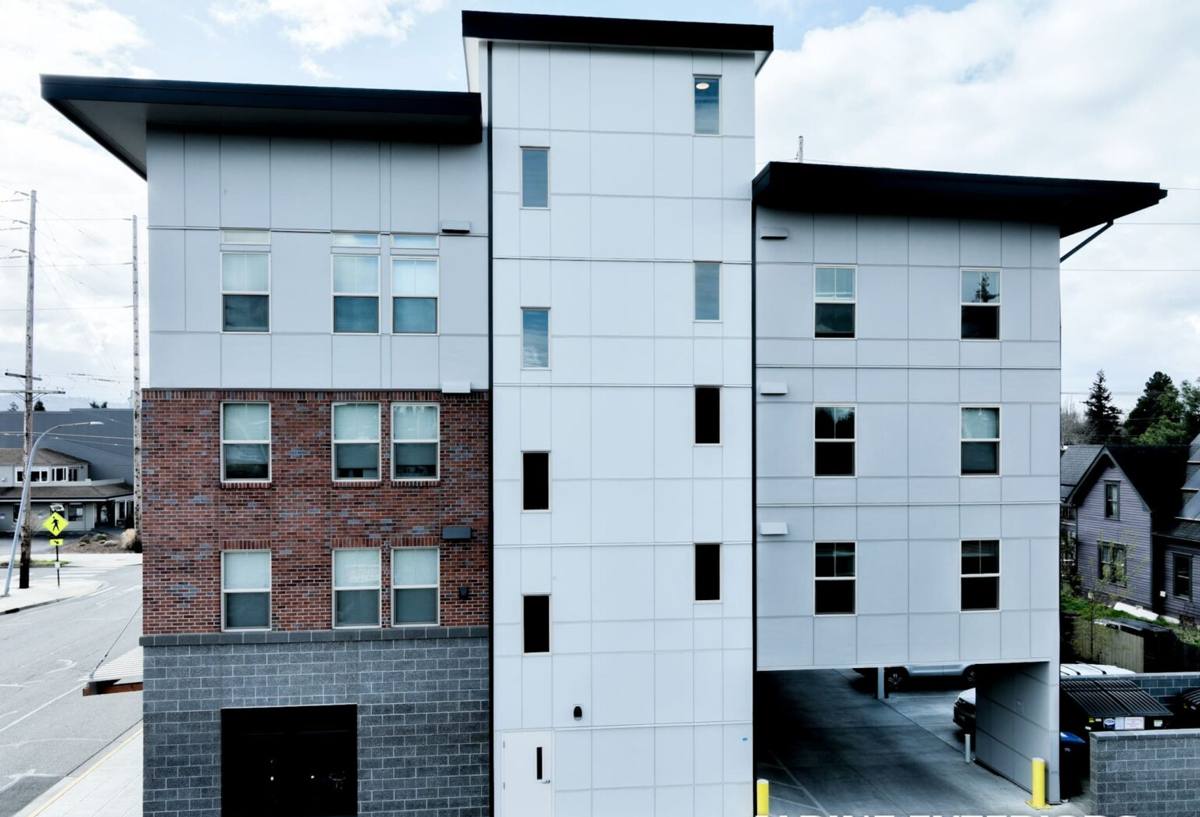
What Burlington Homes Need From a New-Construction Window Install
Burlington's mix of newer subdivisions and older infill lots means we see a range of framing conditions — modern 2x6 walls with house wrap systems, and some older platform framing on infill or remodel-adjacent new construction. Either way, the climate factors are consistent across the area:
- Wind-driven rain: Storms off the Sound don't just fall straight down — they push rain sideways into wall assemblies, which is why flashing laps and sill pans matter more here than in drier climates.
- Sustained humidity: Long wet seasons mean any trapped moisture behind a window has time to do real damage before anyone notices — rot doesn't need a flood, just months of dampness.
- Moss and algae growth: Anything that holds moisture — a poorly sloped sill, a gap in caulk, a missing drip cap — becomes a growth surface within a season or two.
- Temperature swings: Skagit County isn't extreme, but daily and seasonal shifts still move materials. Window units, jamb extensions, and trim need room to expand and contract without cracking seals.
Why Correct Installation Matters More Than the Window Brand
Homeowners often focus on window brand and glass package, and those choices matter. But we've seen good windows fail early because of bad installation, and mid-range windows perform well for decades because the flashing and sealing were done right. In a wet climate like ours, installation quality is the bigger variable.
What a Correct New-Construction Window Install Involves
A new-construction window has a nailing fin that gets integrated into the wall's water management system — this is different from a pocket replacement window, which drops into an existing frame. Doing it right means layering materials so water always has a path down and out, never in.
The Sequence We Follow
- Rough opening check: Confirm the opening is square, plumb, and sized correctly before anything goes in. Fixing framing errors now is far cheaper than after the window is set.
- Sill pan flashing: A sloped, sealed pan at the bottom of the opening so any water that gets past the window has a way out, not a place to pool.
- Housewrap integration: The WRB gets cut and lapped so water sheds over each layer like shingles — bottom to top, always overlapping correctly.
- Window fin sealing and fastening: The nailing fin is sealed to the sill pan and jambs, then fastened per the manufacturer's schedule — skipping fasteners or over-driving them both cause problems.
- Head flashing: A drip cap or flashing above the window that directs water around, not behind, the unit.
- Housewrap tape and integration at the top: The final layer laps over the head flashing to complete the shingle-style water path.
- Interior air sealing: Foam or sealant at the interior gap between frame and rough opening, which also matters for energy performance.
Every one of those steps needs to happen in order. Skipping the sill pan, taping in the wrong sequence, or over-caulking instead of properly flashing are the kinds of shortcuts that don't show up as a problem for a year or two — then show up as rot inside the wall.
New-Construction vs. Retrofit Window Framing
| Factor | New-Construction Window | Retrofit / Replacement Window |
|---|---|---|
| Access to framing | Full access to studs, sheathing, WRB | Limited — existing trim and siding stay in place |
| Flashing control | Complete sill pan and flashing system possible | Relies on existing flashing condition |
| Best used when | Building new, or siding is already off | Window frame is sound but glass/unit is failing |
| Long-term water management | Highest level achievable | Good, but constrained by what's already there |
If your Burlington project is new construction or a full re-side where the sheathing is exposed, new-construction windows with full flashing integration are the stronger long-term choice for this climate.
Our Process on Burlington Projects
Because we work Skagit County regularly, we're not learning the local weather patterns on your job. Here's how we approach a Burlington install:
- Site walk before scheduling: We look at the actual rough openings and framing condition, not just plans, before we commit to a timeline.
- Weather-aware scheduling: We try to time window sets and flashing work for dry windows where possible, since wrap and tape adhesion suffers in wet or freezing conditions.
- Manufacturer-spec installation: We follow the window manufacturer's written installation instructions, which is what keeps the product warranty intact — not just "how we've always done it."
- Photo documentation of flashing layers: Because sill pans and housewrap integration get covered by siding, we document each layer before it's closed up, so there's a record of what's behind the finished wall.
- Coordination with builders and other trades: On new construction, window timing has to line up with siding, trim, and sometimes stucco or masonry crews — we coordinate rather than working in isolation.
Why a Local Crew Matters Here
A crew that only occasionally works in this climate may default to installation methods built for drier regions — less flashing, more reliance on caulk alone. That approach can hold up fine somewhere with less driving rain, but it's a liability in Skagit County. Working Burlington and Anacortes regularly means we're applying methods that are actually matched to what this area's weather does to a building over time.
Common Mistakes We See (and Avoid)
Some of the most frequent problems we find when repairing or replacing window installs done elsewhere:
- Caulk used as the primary water barrier instead of proper flashing — caulk fails over time and was never meant to be the only defense.
- Reverse-lapped housewrap or tape — installed in a way that channels water into the wall instead of away from it.
- Missing or flat sill pans — no slope means water sits against the sill instead of draining out.
- Over-fastened or under-fastened nailing fins — either can cause the window to bow, bind, or leak at the corners.
- Trim installed before flashing was fully inspected — once trim and siding go on, problems underneath are expensive to find.
Materials and Product Considerations
We install a range of vinyl and fiberglass window lines suited to Pacific Northwest conditions. Our standard is to match the window's flashing and installation requirements to what the manufacturer specifies — deviating from that, even with a premium window, can void the warranty and undermine performance. Where we steer homeowners away from certain products or shortcuts, it's a maintenance and moisture-management call, not a brand judgment: some systems demand more precise installation sequencing or ongoing upkeep than others, and we're upfront about that trade-off before you commit to a product line.
Questions Worth Asking Before You Choose a Window
- What is the manufacturer's written installation requirement, and will the installer follow it exactly?
- What's the warranty structure — does it cover the glass, the frame, and labor, and for how long?
- Is the frame material (vinyl, fiberglass, wood-clad) appropriate for a wet marine climate?
- How does the window perform for both air infiltration and water resistance ratings, not just energy efficiency?
Timing Your Burlington Window Install
On new construction, window installs typically happen once framing is complete and the WRB is on, before siding starts. Coordinating this window in the build schedule — and having flashing materials on hand and installers ready — keeps the project moving and avoids the wall assembly sitting exposed to weather any longer than necessary. If you're planning a build or a full re-side in Burlington, it's worth looping in your window installer early rather than treating it as a late-stage decision.
If you're planning new construction or a major re-side in Burlington and want windows installed the right way the first time, we're happy to walk the site and put together a straightforward estimate — no pressure, no obligation. Use the form below to get started.