 Anacortes Siding
 Roof Replacement in Bow: Built for What This Ground Actually Gets
Bow sits in that stretch of Skagit County where open farmland meets shoreline air, and that combination is tougher on a roof than most homeowners realize until they're dealing with it. You're close enough to Samish Bay and the greater Puget Sound corridor to get real salt exposure on metal fasteners and flashing, open enough to catch driving rain off the water with nothing to break the wind, and shaded enough in places by fir and cedar cover to grow a healthy crop of moss every single year. A roof replacement out here isn't just "put new shingles on" — it's a decision about materials, ventilation, and flashing details that either hold up to that mix or don't.
We've replaced roofs across this part of Skagit County long enough to know which shortcuts show up as leaks three winters later. This page walks through what a Bow home actually needs from a roof replacement, what a correct installation involves, and how we handle the job from first estimate to final walkthrough.
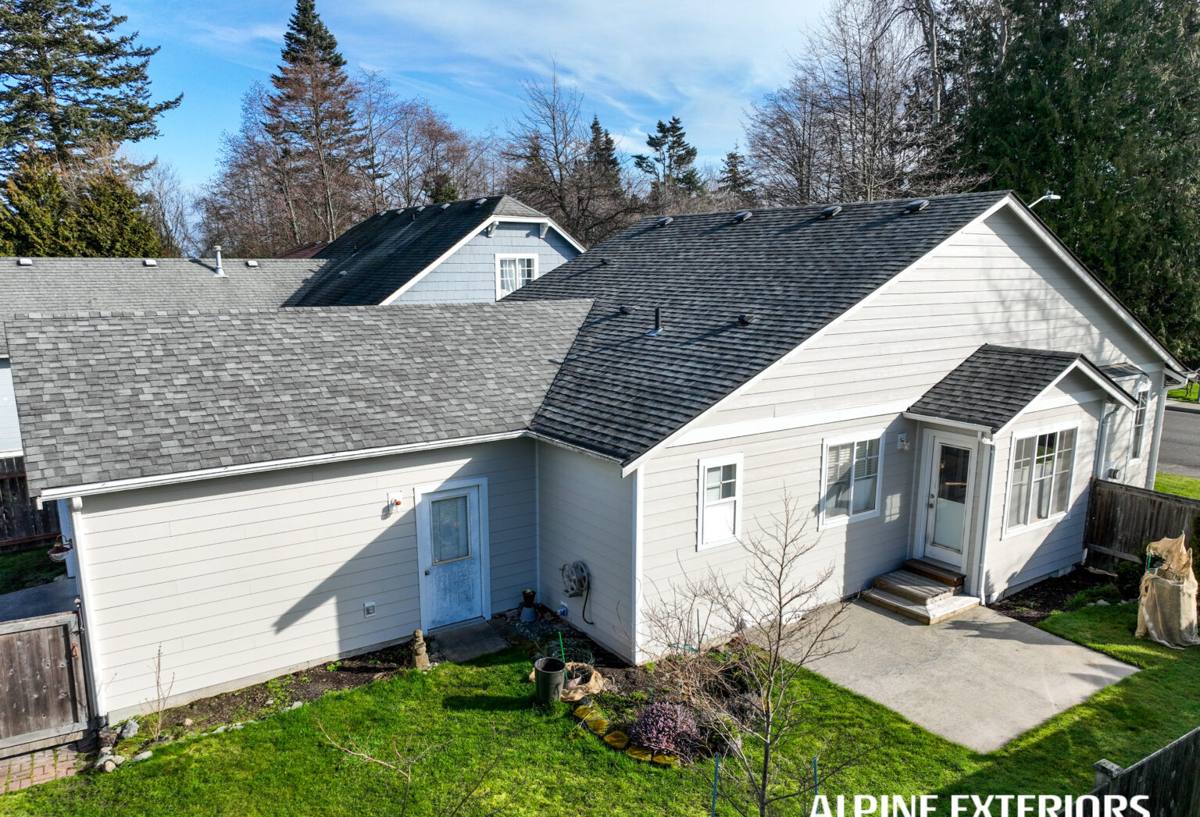
Signs You're Looking at Replacement, Not Repair
Not every roof problem means a full tear-off. But there's a point where patching stops making financial sense and starts costing more than a replacement would have, especially once the decking underneath is compromised. Here's what tends to separate a repair situation from a replacement situation on the roofs we see in this area:
- Granule loss heavy enough that you're finding shingle grit in gutters and downspouts every season, not just after a storm
- Shingles that are cupping, curling, or cracking across large sections rather than one isolated patch
- Soft or spongy decking felt underfoot in the attic, especially near valleys or eaves — a sign moisture has already gotten past the surface layer
- Persistent moss growth that keeps returning within a season or two of cleaning, which usually means the roof is holding moisture longer than it should
- A roof already past 20-25 years old (for asphalt) that's now needed two or more repair visits in the last few years
- Daylight visible through the roof deck from inside the attic, or staining on interior ceilings that tracks back to a roof source
If you're only seeing one or two isolated issues on a roof that's otherwise in decent shape, a repair is usually the honest answer and we'll tell you that. Replacement makes sense when the underlying materials — decking, underlayment, flashing — are failing as a system, not just the top layer.
Why Salt Air and Moss Season Change the Job
Salt Air and Metal Components
Every roof has metal in it somewhere — flashing around chimneys and skylights, drip edge, valley metal, fasteners. Salt-laden air off the bay accelerates corrosion on lower-grade or exposed metal faster than it would inland. That doesn't mean you avoid metal; it means the metal you use and how it's installed matters more here than it would forty miles east. We spec corrosion-resistant flashing and fastener packages for Bow jobs specifically because we've seen what standard-grade hardware looks like after a decade of that exposure.
Driving Rain and Wind-Driven Water
Open farmland with little windbreak means storms coming off the water hit roofs here at an angle, not straight down. That pushes water sideways under shingle edges and into any flashing detail that was installed loose or under-lapped. Underlayment choice and flashing technique carry more weight in wind-exposed, low-windbreak settings like this than they would on a tightly wooded suburban lot.
Moss and Shade Cover
Where trees shade part of a roof — which describes a lot of Bow properties with mature fir and cedar nearby — moss gets a foothold in the moist, shaded sections first and spreads from there. Moss holds moisture against the shingle surface long after the rest of the roof has dried, which shortens shingle life and works its way into fastener holes over time. A replacement is the right moment to address moss control properly: proper ventilation, zinc or copper strips at the ridge, and shingle products with algae-resistant granules where it makes sense.
Choosing the Right Material for This Exposure
There's no single "best" roofing material — there's the right material for your home's exposure, budget, and how long you plan to own it. Here's how the common options stack up specifically against Bow's salt air, rain, and moss conditions:
| Material | How It Handles Salt Air & Rain | Moss Resistance | Typical Lifespan |
|---|---|---|---|
| Architectural asphalt shingle | Good with proper underlayment and flashing; standard choice for the region | Better with algae-resistant granules; still needs periodic cleaning | 25-30 years |
| Standing seam metal | Excellent when specified in a coastal-rated finish; sheds wind-driven rain well | Very good — moss struggles to hold on a smooth metal surface | 40-50+ years |
| Cedar shake | Handles rain fine but needs diligent maintenance near salt air and shade | Poor without regular treatment — a high-maintenance choice here | 20-30 years with upkeep |
| Synthetic/composite shingle | Good; consistent performance without the maintenance cedar requires | Good with algae-resistant formulations | 30-50 years depending on product |
For most Bow homes, we point people toward a quality architectural asphalt shingle with algae-resistant granules or, for owners planning to stay long-term, standing seam metal in a coastal-rated finish. We steer away from recommending unfinished or budget-grade cedar shake in shaded, salt-air settings — not because the product is inherently bad, but because the maintenance schedule it demands to perform well here is more than most owners want to keep up with, and a missed maintenance year shows up fast as moss and premature wear.
What a Correct Roof Replacement Actually Involves
A roof is a system, and skipping any layer of it is where premature failures come from. Here's what should happen on every full replacement, regardless of material:
Tear-Off and Deck Inspection
Old roofing comes off down to the deck so we can actually see what's underneath — you can't properly assess or fix decking damage by roofing over it, which is why we don't offer overlay installations on tear-off-grade jobs. Any soft, rotted, or delaminated decking gets replaced before anything new goes down.
Underlayment
This is the layer that protects your home if wind-driven rain ever gets past the shingles, and given how exposed Bow properties are to sideways rain, it's not a place to cut corners. We use synthetic underlayment as standard and add ice-and-water shield membrane at eaves, valleys, and roof penetrations — the spots where water is most likely to find a way in.
Flashing
Chimneys, skylights, wall intersections, and valleys all need properly formed and lapped flashing, not just caulk over old metal. This is the single most common source of "mystery leaks" we get called out for on other contractors' work, and it's where the corrosion-resistant material choice matters most given the salt air here.
Ventilation
Balanced intake and exhaust ventilation keeps the attic temperature and moisture in check, which extends shingle life and reduces moss-friendly conditions on shaded sections. A lot of older Bow roofs we replace have inadequate or blocked ventilation, and correcting that during a replacement is one of the most cost-effective improvements we can make.
Final Layer and Details
Drip edge, ridge caps, and moss-control strips (zinc or copper, positioned to run rinse-off down the roof face) go in as standard on jobs with shade exposure. These are inexpensive additions at replacement time that meaningfully cut down on moss regrowth.
Our Process, Start to Finish
- On-site assessment — We walk the roof and attic, not just look from the ground, and check decking condition, ventilation, and existing flashing before quoting anything.
- Written estimate — A clear breakdown of material, labor, and scope, with the material trade-offs explained so you're choosing with full information, not guessing.
- Scheduling around weather — We plan tear-off days around forecasted dry windows since an open deck exposed to Skagit County rain is not a risk worth taking, and we tarp and protect the structure if weather shifts mid-job.
- Tear-off and deck repair — Old material removed, decking inspected and replaced as needed, debris hauled and cleaned up daily.
- Underlayment, flashing, and ventilation install — The parts of the job that don't show but determine how the roof performs over the next two or three decades.
- Final layer installation — Shingles, panels, or shakes installed to manufacturer spec, with attention to nailing pattern and exposure since improper installation voids most manufacturer warranties.
- Walkthrough and cleanup — We review the finished roof with you, cover care and maintenance, and do a magnetic sweep for stray fasteners around the property.
What Affects the Cost of a Bow Roof Replacement
Every roof is priced on its own specifics, but these are the factors that move the number most on jobs in this area:
| Factor | Why It Matters |
|---|---|
| Roof size and pitch | More surface area and steeper pitches both mean more material and labor time |
| Deck condition | Rotted or delaminated decking found during tear-off adds material and labor to replace it correctly |
| Material choice | Asphalt, metal, and synthetic products span a wide cost range with very different lifespans |
| Number of penetrations | Chimneys, skylights, and vents each need individual flashing work, which adds labor |
| Access and site conditions | Tree cover, driveway access, and roof complexity affect how efficiently a crew can work |
| Ventilation upgrades | Adding or correcting intake/exhaust venting is a worthwhile add-on that changes the total |
Rather than quote a number that doesn't mean much without seeing your roof, we'll give you a real, itemized estimate after a walk-through — no surprise line items added mid-job.
Keeping a New Roof Performing Out Here
A correctly installed roof still benefits from basic upkeep, especially in a moss- and rain-heavy climate. A short annual routine goes a long way toward protecting the investment:
- Clear gutters and downspouts each fall before the heavy rain sets in, so water has somewhere to go
- Trim back overhanging branches that keep sections of roof shaded and damp longer than the rest
- Do a visual moss check each spring, especially on north-facing or shaded slopes, and treat early rather than letting it establish
- Watch for granule buildup in gutters as an early sign of shingle wear
- Have flashing around chimneys and skylights checked every few years, since that's the first place a small leak tends to start
Why It Matters to Hire a Crew That Already Works Bow
Roofing crews that mostly work drier, more sheltered inland areas sometimes underspec underlayment or skip moss-control details because those aren't problems where they usually work. A crew that regularly handles roofs in this part of Skagit County already knows to plan around wind-driven rain angles, spec corrosion-resistant flashing hardware, and build moss control into the job by default rather than as an afterthought. That local pattern recognition is the difference between a roof that needs attention again in five years and one that goes the distance.
If you're weighing a roof replacement for a Bow property, we're glad to come take a look and give you a straight, no-pressure assessment — what your roof actually needs, what it doesn't, and a written estimate you can think over. Use the form below to request a free estimate.