 Anacortes Siding
 Why Old Town Anacortes Roofs Take a Different Kind of Beating
Homes in Old Town Anacortes sit close to the water on Fidalgo Island, which means the roof over your head is dealing with conditions that inland Skagit County homes simply don't see as often. Salt-laden air moves off the water and settles on every exposed surface, driving rain comes in at an angle instead of straight down, and the tree cover that makes this neighborhood attractive also means a long moss season that never fully lets up. Add in the age of a lot of the housing stock here — older framing, older flashing details, sometimes multiple roofing layers from past repairs — and you've got a roof system that needs more than a standard install to hold up.
We work on roofs in this neighborhood regularly, and the failures we get called out for are rarely random. They follow a pattern tied directly to this climate: corroded fasteners, moss-lifted material at the eaves, and water finding its way in at flashing joints that were never detailed for wind-driven rain. Metal roofing, installed correctly, addresses all three of those failure points — but "installed correctly" is doing a lot of work in that sentence, and it's worth understanding what that actually means before you commit to a roof that's supposed to last decades.
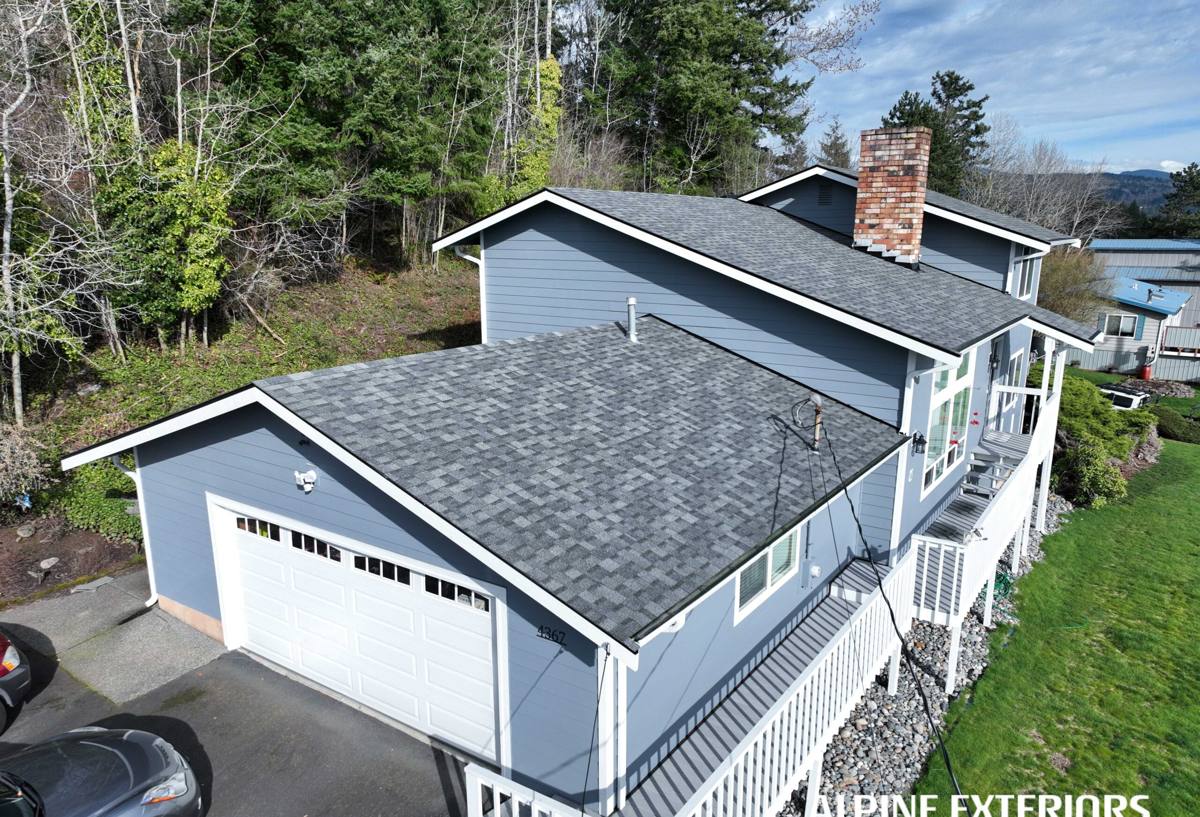
What Salt Air, Driving Rain, and Moss Season Actually Do to a Roof
Each of these three regional factors attacks a roof differently, and a roofing system that only handles one of them isn't enough here.
Salt Air
Salt in the air accelerates corrosion on any exposed metal — fasteners, flashing, even the cut edges of panels. On a home close to the water, an untreated or mismatched fastener can start showing rust streaks well before a comparable fastener would fail further inland. This is a material-selection problem, not just an installation problem, and it's one of the first things we account for when we spec a roof for this area.
Driving Rain
Rain that comes in sideways doesn't behave like rain falling straight down. It gets pushed up under laps, into valleys, and around penetrations that would stay dry in calmer weather. Roofing details that rely on gravity alone to shed water — rather than mechanically locked seams or properly lapped and sealed transitions — are the ones that leak first during a wind-driven storm.
Moss Season
Skagit County's wet, mild winters and heavy tree cover in older neighborhoods like this one create ideal conditions for moss to establish on roofing material. Moss doesn't just look bad — it holds moisture against the roof surface, works its way under shingle tabs and lifts them, and keeps a roof damp long after the rain has stopped. On organic roofing surfaces, moss has something to grip onto. That's a big part of why we steer many Old Town Anacortes homeowners toward metal.
Why Metal Roofing Is a Strong Fit Here
Metal roofing isn't automatically the right answer for every home, but for this specific combination of salt exposure, driving rain, and heavy moss pressure, it solves problems that asphalt shingle roofing structurally can't. A smooth, non-porous metal surface gives moss very little to anchor into, so it sheds spores and debris instead of holding onto them. Properly seamed metal panels shed wind-driven rain far more reliably than lapped shingles, because the water is locked out mechanically rather than relying on gravity and granule adhesion. And a correctly specified metal roof, with the right coating and fastener package, is built to handle decades of salt air exposure without the surface degradation you'd see on other materials over the same timeframe.
None of that means metal is maintenance-free — no roof is, especially this close to the water — but it shifts the maintenance burden from "replace failing material" to "keep a durable system clean and its details sealed," which is a much better position for a homeowner to be in.
Standing Seam vs. Exposed-Fastener Panels
Not all metal roofing is built the same, and the two most common options perform very differently in this climate.
| Feature | Standing Seam | Exposed-Fastener Panel |
|---|---|---|
| Fastener exposure | Hidden clips, no fastener penetrations through the panel face | Screws penetrate the panel face directly |
| Handling of driving rain | Mechanically locked seams shed wind-driven rain well | Relies on gasketed screws staying sealed over time |
| Long-term maintenance | Very low — few points that can loosen or corrode | Gaskets and screws need periodic checking and occasional replacement |
| Typical lifespan | 40-70 years with proper install and coating | 25-40 years, largely dependent on fastener condition |
| Upfront cost | Higher | More moderate |
For homes right in Old Town Anacortes, where salt air accelerates fastener corrosion, we generally recommend standing seam. The lack of exposed screw heads removes one of the most common long-term failure points in this specific environment. Exposed-fastener panels can still be a reasonable choice on outbuildings or lower-exposure roof planes where budget is a bigger factor, but we're honest with homeowners about the trade-off up front rather than letting it surface as a leak years down the road.
What a Correct Metal Roof Installation Involves
The panels themselves get most of the attention, but the majority of roof failures we see trace back to the details underneath and around them, not the metal itself.
- A synthetic underlayment rated for the exposure, not just felt paper, giving the deck a secondary water barrier if wind ever drives moisture past the panel seams
- Ice-and-water barrier at eaves, valleys, and any low-slope transitions, where standing water and driven rain are most likely to find a weak point
- Deck inspection and repair before anything goes down — older homes in this neighborhood sometimes have plank decking or past water damage that needs to be addressed, not covered over
- Flashing custom-fit at chimneys, roof-to-wall intersections, and dormers, which are common on the older roof lines you'll find in Old Town Anacortes and are frequent leak points when flashing is reused or generic
- Fasteners and clips matched to the panel metal to avoid galvanic corrosion between dissimilar metals — a detail that matters more here than in a drier, inland climate
- Proper ventilation so trapped moisture and condensation under the panels don't undermine the deck from below, which is its own slow failure mode independent of the roof surface
Skip any one of these and the panels can be flawless while the roof still leaks. This is where an experienced install crew earns its keep — the visible metal is the easy part.
Material Choices: Steel vs. Aluminum Near the Water
For homes this close to salt air, the choice between steel and aluminum panels is worth understanding rather than defaulting to whatever's cheapest.
| Factor | Steel | Aluminum |
|---|---|---|
| Corrosion resistance near saltwater | Good with a quality coating, but coating integrity matters | Naturally corrosion-resistant — doesn't rust |
| Weight | Heavier | Lighter, an advantage on older framing |
| Relative material cost | Generally lower | Generally higher |
| Best fit | Homes with some setback from direct salt exposure | Homes with direct, ongoing salt air exposure |
Steel is not a bad choice — most quality steel roofing holds up fine with the right coating system and proper detailing. But for homes with direct, sustained salt air exposure, we'll often walk a homeowner through why aluminum's natural corrosion resistance may be worth the added cost over a multi-decade roof life. This isn't about one product being defective; it's a straightforward trade-off between upfront cost and long-term exposure, and we'd rather lay it out plainly than have a homeowner find out the hard way in year fifteen.
Our Process for Old Town Anacortes Roofing Projects
Every metal roofing job starts with an on-site inspection, not a phone estimate. We check the current roof's condition, the state of the decking underneath, and how the roof lines, valleys, and penetrations are laid out — details that vary a lot from house to house in a neighborhood with this much older construction.
From there we walk through panel type, metal, and finish options based on what we found and how exposed the home is to wind and salt air. We give a written scope that spells out underlayment, flashing details, fastener specification, and ventilation — not just "install metal roof" — so there's no ambiguity about what's being done. During the install, tear-off and deck repair happen before any new material goes down, flashing is custom-formed on site rather than pieced together from stock trim where the roof geometry calls for it, and we walk the finished roof with the homeowner before calling the job done.
Keeping an Old Town Anacortes Metal Roof Performing
A correctly installed metal roof in this climate needs far less attention than a shingle roof, but "far less" isn't "none." A little seasonal attention goes a long way toward getting the full lifespan out of the system.
- Clear moss, needles, and organic debris from valleys and low-slope areas at least once a year — even moss-resistant metal collects debris that holds moisture against seams
- Check gutters and downspouts before the wet season, since a clogged gutter backs water up against the eave regardless of what the roof surface is made of
- Have flashing and sealant at penetrations — vents, chimneys, skylights — checked periodically, since these are the components most likely to need attention over time, not the panels themselves
- After a significant windstorm, a quick visual check for lifted trim or debris impact is worth the ten minutes it takes
- Keep overhanging branches trimmed back where practical, since they're a major contributor to the moss and debris load on roofs throughout this part of Skagit County
Why Local Experience on This Roof Type Matters
A metal roof installed by a crew unfamiliar with this specific stretch of coastline can look fine for a year or two and still be set up to fail early. The details that matter here — fastener selection for salt exposure, flashing approaches for older dormer and chimney configurations, panel and coating choices suited to driving rain — aren't universal best practices pulled from a manual. They're decisions shaped by what actually happens to a roof in this neighborhood over time.
We've worked enough roofs in and around Old Town Anacortes to know which details matter most for homes in this exact setting, from tight, tree-covered lots to the permitting expectations that come with older construction in the City of Anacortes. That local pattern recognition is what keeps a metal roof performing the way it's supposed to, well past the point where a generic install would start showing problems.
If you're weighing a metal roof for your home in Old Town Anacortes, we're happy to take a look and walk you through what your specific roof needs — no pressure, no guesswork. Reach out for a free estimate using the form below.