 Anacortes Siding
 Why West Anacortes Roofs Take a Different Kind of Beating
West Anacortes sits close enough to the water that roofs here don't age the same way roofs do further inland in Skagit County. Salt-laden air moves in off the water and settles on every exposed surface, including fasteners, flashing, and vent caps. Over years, that salt exposure speeds up corrosion on metal components long before the shingles or panels around them show their age. Add in wind-driven rain that comes at the roof sideways instead of straight down, and you get water finding its way into laps and seams that would stay dry in a calmer climate.
Then there's moss. Skagit County's long wet season and the shade cover common in West Anacortes yards give moss and moisture-loving growth months at a time to get established on north-facing slopes and anywhere debris collects. None of this means West Anacortes roofs are poorly built — it means they need repair work that accounts for these specific stresses, not a generic patch job.
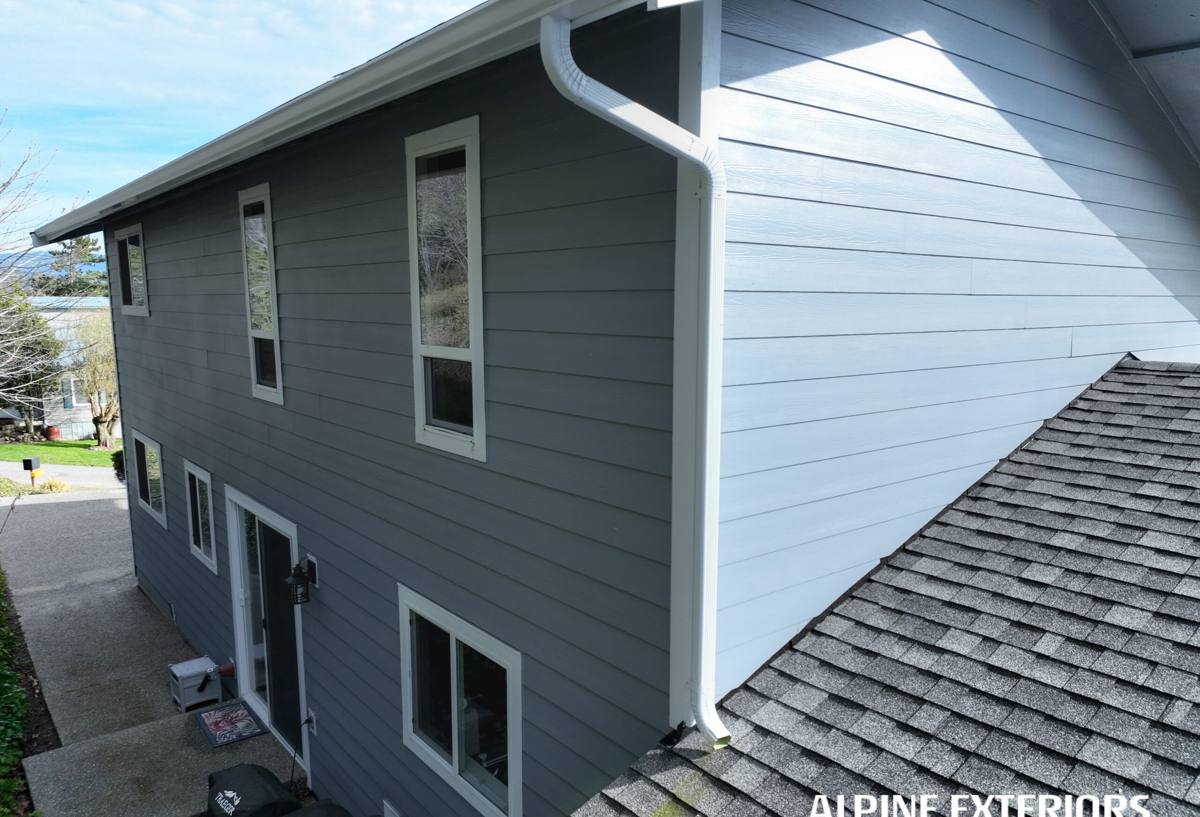
The Repair Issues We See Most in This Neighborhood
Moss, Algae, and Organic Buildup
Moss doesn't just look bad. As it spreads across shingles or along panel seams, it holds moisture against the roofing material far longer than open air would allow, and its root structure works into shingle granules and lifts tab edges. Left alone through a few wet seasons, moss patches turn into soft spots and eventually leak points. We see this most on shaded, north- and west-facing slopes near tree cover, which describes a lot of West Anacortes lots.
Flashing and Penetration Leaks
Flashing around chimneys, vent pipes, skylights, and roof-to-wall transitions is almost always where an active leak traces back to — not the field of the roof itself. Salt air accelerates corrosion in galvanized flashing and exposed fasteners, and once a flashing seam opens up even slightly, wind-driven rain will push water in during a storm even though the same spot might stay dry in a light, straight-down rain.
Wind and Storm Damage
Winter storms off the water can lift shingle tabs, crack ridge caps, or work fasteners loose without causing an obvious, visible hole. A roof can look fine from the ground and still have several compromised spots after a hard blow. This kind of damage is easy to miss until it's already caused an interior stain.
Fastener and Metal Corrosion
Nail heads, screw fasteners on metal roofing, and exposed flashing edges are usually the first things to show rust in a marine-air environment. Corroded fasteners back out slightly as they degrade, which opens a path for water even when the surrounding material is sound.
What a Correct Roof Repair Actually Involves
A repair that holds up in this climate isn't just sealing the spot where water is currently showing up inside the house. Interior stains often appear well away from the actual entry point, since water travels along the underlayment or framing before it drips through drywall. A correct repair means:
- Tracing the leak to its actual entry point, not just the visible stain location
- Checking flashing at every penetration near the affected area, not only the nearest one
- Assessing underlayment condition where it's exposed, since a surface patch over failed underlayment won't last
- Matching materials so the repair doesn't create a new weak point through mismatched expansion, corrosion pairing, or incompatible sealants
- Clearing moss, debris, and standing-water areas that contributed to the failure in the first place
Skipping any of these steps is how a homeowner ends up paying for the same repair twice within a few years.
Our Roof Repair Process
1. Inspection
We start by getting on the roof, not just looking at it from the driveway. We check flashing, fastener condition, moss coverage, and underlayment where it's accessible, and we look at the whole roof, not only the area near the reported leak — storm damage and corrosion rarely stay confined to one spot.
2. Diagnosis and Honest Options
We tell you what we actually found, including whether it's a straightforward, contained repair or a sign of broader wear that means repair is only a short-term answer. If a roof is old enough or damaged enough that repair is throwing money at a problem that will resurface, we say so directly instead of running up a bill on patches.
3. The Repair Itself
Work is done with materials matched to what's already on the roof and fastening appropriate for coastal exposure. Flashing gets replaced rather than resealed when it's corroded, since caulk over failing metal is a temporary fix at best. Moss is removed and treated as part of the job when it's a contributing factor, not left for the homeowner to deal with separately.
4. Cleanup and Walkthrough
We clear debris and moss material off the roof and out of gutters before we leave, and we walk you through what was found and what was done, in plain terms.
Repair vs. Replacement: How We Help You Decide
Not every roof problem in West Anacortes needs a full replacement, and not every leak is safely solved with a patch. The right call depends on the roof's age, how widespread the damage is, and how the material has held up to marine air over time.
| Factor | Leans Toward Repair | Leans Toward Replacement |
|---|---|---|
| Roof age | Under roughly 15 years, material still sound elsewhere | Nearing or past expected material lifespan |
| Damage extent | Isolated to one flashing point or section | Multiple leak points or widespread moss/wear |
| Underlayment condition | Intact where accessible | Visibly degraded or saturated |
| Corrosion level | Localized fastener or flashing rust | Widespread corrosion across the roof |
| Repair history | First repair in this area of the roof | Same area repaired more than once already |
We walk through these factors with you on-site rather than assuming replacement is always the safer sell — a well-targeted repair on a roof with years of life left is often the right, honest answer.
Materials Common on West Anacortes Homes
Most of the repair work we do here involves asphalt composition shingle and standing-seam or exposed-fastener metal roofing, with some cedar shake on older homes in the area. Each behaves differently under coastal exposure:
- Asphalt shingle: Reliable and repairable, but granule loss accelerates near the coast and moss takes hold easily on shaded slopes
- Metal roofing: Holds up well overall, but fastener and flashing corrosion is the main long-term maintenance point in salt air
- Cedar shake: Needs the most active moisture management of the common roofing types in this climate, since wood is more vulnerable to sustained damp than shingle or metal
Whatever is already on your roof, we repair with matching or compatible materials so the fix ages at the same rate as the rest of the roof instead of standing out as an obvious patch — or worse, creating a new failure point where two materials meet.
Timing: When to Get a Roof Repair Done Here
Skagit County's wet season runs long, and waiting until a leak is actively dripping inside the house usually means the damage has already spread past the original entry point. Late summer and early fall — after the driest stretch of the year and before winter storms roll in off the water — is the best window for non-emergency repair work, since materials and sealants cure properly in dry conditions. That said, active leaks and storm damage don't wait for good weather, and we handle those as they come up regardless of season.
Signs You Shouldn't Wait On
- A ceiling stain that's new or has grown since you first noticed it
- Visible moss coverage on more than a small patch of the roof
- Missing, cracked, or curling shingles you can see from the ground
- Rust streaks running down from flashing or vent caps
- Granules collecting in gutters after a windstorm
- Any daylight visible through the roof deck from the attic
Why a Local West Anacortes Crew Makes a Difference
A repair crew that regularly works this side of Anacortes already knows which slopes hold moss the longest, how far wind-driven rain typically gets past a marginal flashing detail, and which fastener types actually hold up to years of salt air instead of just looking fine on install day. That local pattern recognition matters more on repair work than on new construction, because repair is about correctly diagnosing what's already failed — and that's faster and more accurate when it's not the crew's first time seeing how this specific climate treats a roof.
It also means a shorter drive when you need someone back out to check a repair, and a crew that isn't guessing at Skagit County code requirements or typical roof-to-wall details used in local construction.
If you're dealing with a leak, visible moss, or storm damage on a West Anacortes roof, we're happy to take a look and give you a straight answer on what it needs. Reach out for a free, no-pressure estimate using the form below.