 Anacortes Siding
 Siding Repair Built for Burlington's Climate
Burlington sits in the Skagit Valley, close enough to Padilla Bay and the Salish Sea to catch salt-laden air on windy days, and low enough in the valley to collect the driving rain that funnels down from the Cascades and off the water. Add a long, wet moss season that runs from fall through spring, and you have a climate that is genuinely hard on exterior siding. Homes here don't fail because owners neglect them. They fail because the siding installed on them was never engineered for this specific mix of moisture, salt, and shade.
We repair and replace siding across Skagit County, and Burlington is one of the communities we return to often. The damage patterns we see here are consistent enough that we can usually tell what's wrong with a wall before we finish walking around the house.
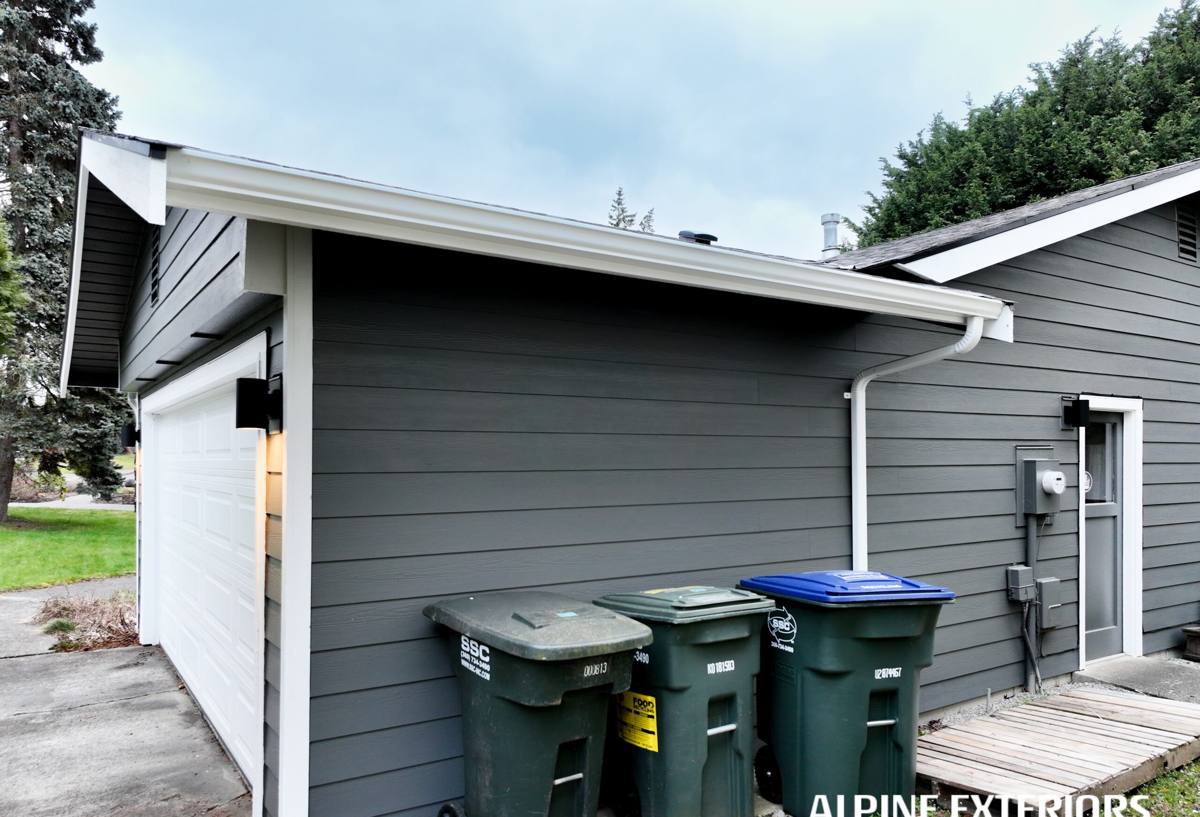
Why Siding Fails in Burlington Specifically
Driving Rain and Wind-Driven Moisture
Burlington's location in the valley means storms often arrive with real horizontal force. Rain doesn't just fall on siding here, it gets pushed into laps, seams, and butt joints. Siding that relies on paint film alone to keep water out, rather than a manufactured moisture-resistant core, starts absorbing water at exactly those joints. Once a board is wet on the inside, it stays wet longer than it looks from the street.
Salt Air Corrosion
Even well inland from the water, salt-tinged air travels with the wind off Padilla Bay and the Sound. Salt is hard on fasteners, trim flashing, and any siding product with metal components or exposed raw wood ends. It accelerates corrosion on nails and screws, which in turn accelerates rot around every point where a fastener penetrates the siding.
Moss, Shade, and Standing Moisture
North-facing walls, shaded elevations under mature trees, and anywhere gutters overflow are where moss and algae take hold first. Moss holds moisture directly against the siding surface for weeks at a time. On products that aren't dimensionally stable or that swell when wet, that constant damp contact is what starts rot from the surface inward, not just from hidden leaks.
Freeze-Thaw Cycling
Skagit County doesn't get brutal winters, but it does get repeated freeze-thaw swings through the colder months. Siding that has already absorbed moisture and then freezes will crack, delaminate, or push fasteners loose. It's a slow process, which is exactly why it's easy to miss until the damage is significant.
What We Look for on a Burlington Repair Inspection
- Soft, spongy, or crumbling siding, especially near the bottom courses and around window and door trim
- Bubbling, peeling, or chalky paint that signals moisture is trying to escape from behind the surface
- Buckled, warped, or bowed panels or lap boards
- Gaps or separation at butt joints, corners, and where siding meets trim
- Moss or algae buildup on shaded or north-facing walls
- Rust streaking from fastener heads or corroded flashing
- Soft trim boards, especially at window sills and where siding meets the foundation
- Signs of pest activity in soft or rotted sections
Most homeowners notice one or two of these signs and call about "a spot that looks bad." Our job is to find out whether that spot is isolated or a symptom of a larger moisture problem working its way across the wall.
What a Correct Siding Repair Actually Involves
A siding repair that's done right is not just pulling off a damaged board and nailing up a new one. It's a diagnostic process first, and a repair second.
- Identify the source, not just the symptom. Damaged siding is often the visible result of a flashing failure, a caulking gap, or a grading issue that's been pushing water into the wall assembly for a while. We trace it back before we patch anything.
- Check what's behind the siding. Once damaged material is removed, we look at the house wrap or building paper, the sheathing, and the framing underneath. If moisture has reached the sheathing, that has to be addressed before new siding goes back on, or the repair fails again in a year or two.
- Match materials correctly. Repairs need to match the existing siding's profile, exposure, and thickness so the new section sits flush and sheds water the way the rest of the wall does. Mismatched repairs are a common source of the "patchwork" look that also tends to leak.
- Re-flash and re-seal properly. Corners, butt joints, and penetrations (hose bibs, vents, light fixtures) get proper flashing and sealant, not just caulk smeared over a gap.
- Finish to spec. Whether that's factory-finished ColorPlus panels that need no field painting, or a color-matched touch-up on an existing job, the finish has to hold up to the same salt air and moisture that damaged the original siding.
Repair vs. Replacement: How We Help You Decide
Not every damaged wall needs full replacement, and not every repair is worth doing instead of replacing. The right call depends on how widespread the damage is, what's causing it, and how old the existing siding is.
| Factor | Leans Toward Repair | Leans Toward Replacement |
|---|---|---|
| Extent of damage | Isolated to one or two areas | Recurring across multiple walls |
| Cause | One-time event (impact, isolated flashing gap) | Systemic moisture or product-wide failure |
| Siding material | Sound overall, good remaining life | Original material prone to rot (untreated wood, older composite) |
| Age of siding | Under 10-15 years, well-maintained | Near or past expected service life |
| Sheathing condition | Dry, undamaged behind the siding | Soft or rotted sheathing found during inspection |
We'll tell you honestly which side of that table your house falls on. If a targeted repair will genuinely solve the problem, that's what we recommend. If the damage points to a wall assembly that's going to keep failing no matter what we patch, we'll say that too.
Why We Repair and Replace With James Hardie Fiber Cement Only
Anacortes Siding Contractors installs one siding system: James Hardie fiber cement. We don't install vinyl, LP SmartSide, Cemplank, Allura, or primed spruce and cedar, and we don't make exceptions for repair work either. When we patch a section of a Burlington home, we want that patch to outperform, not just match, what failed originally.
Fiber cement is non-combustible and dimensionally stable, meaning it doesn't swell, warp, or absorb water the way wood-based or engineered-wood products can. Hardie's HZ5 product line is specifically engineered for climates like ours, with wet, moisture-heavy weather patterns. The factory-applied ColorPlus finish is baked on under controlled conditions and backed by its own finish warranty, so repaired or replaced sections hold color and resist the chalking and peeling that field-painted products are prone to here.
For repair jobs specifically, this matters in a practical way: a patch done in Hardie fiber cement on an existing Hardie wall blends in color, texture, and profile far better than trying to splice mismatched materials. And on homes with older, failure-prone siding, converting a damaged section (or the whole elevation) to Hardie means that section stops being the weak point in the wall.
Our Repair Process, Start to Finish
- Inspection and diagnosis. We walk the exterior, identify every affected area, and check behind the siding wherever there's visible damage.
- Honest recommendation. We explain what we found, what's causing it, and whether repair or replacement is the right call, with reasoning you can follow, not just a quote.
- Scope and estimate. You get a clear breakdown of what's being repaired, what materials we're using, and what it costs, in writing.
- Removal and moisture check. Damaged siding comes off carefully to avoid spreading damage to sound material nearby, and we inspect the sheathing and wrap underneath.
- Repair of the wall assembly. Any compromised sheathing, house wrap, or flashing gets addressed before new siding goes on.
- Installation to spec. New Hardie siding is installed with correct fastening, clearances, and flashing detail, following James Hardie's published installation requirements.
- Final walkthrough. We review the completed work with you before considering the job done.
Why Hiring a Crew That Already Works Burlington Matters
Siding repair looks straightforward from the driveway, but the failure patterns in Burlington are specific enough that local experience changes the outcome. A crew that repairs siding in dry inland climates isn't necessarily thinking about salt air corrosion on fasteners, or how much moss buildup on a shaded north wall is telling you about a deeper moisture problem. We work Skagit County regularly, which means we've seen how Burlington's particular combination of rain direction, salt exposure, and shade patterns plays out on real walls, not in a manual.
That local pattern recognition is also what keeps repair costs honest. We're not guessing whether a soft board is isolated or a sign of something bigger, because we've traced that exact symptom back to its cause on other homes in this area. It means fewer surprises once we open up a wall, and a repair scope that reflects what's actually happening rather than a worst-case estimate or an underscoped patch that fails again next winter.
Maintaining Your Siding Between Repairs
A few habits go a long way toward protecting Burlington homes from the moisture and moss issues that drive most repair calls:
- Keep gutters clean and downspouts directed away from the foundation, since overflow is a major source of localized siding damage
- Trim back vegetation and tree limbs that shade walls and trap moisture against the siding
- Rinse moss and algae off shaded elevations before it builds up thick enough to hold water against the surface
- Reseal caulking at trim joints and penetrations every few years, since failed caulk is one of the most common entry points for water
- Walk the exterior after major storms and check for loose, cracked, or displaced boards while damage is still small and cheap to fix
If you're seeing soft spots, peeling paint, moss buildup, or gaps in your siding anywhere in Burlington, we're happy to take a look and give you a straight answer about what's going on and what it will take to fix it. Reach out for a free, no-pressure estimate using the form below.