 Anacortes Siding
 Decks in Bow Take a Different Kind of Beating
Bow sits in a stretch of Skagit County where saltwater, farmland, and heavy tree cover all meet, just up the road from Anacortes. That mix is hard on a deck. Homes here get salt-laden air drifting off the nearby bays, driving rain that comes in sideways during winter storms, and a moss season that can run from October clear into May. A deck built the way you'd build one in a drier, inland town won't hold up the same way out here, and repairs that don't account for the climate tend to fail again within a few years.
We've repaired enough decks around Anacortes and the surrounding Skagit County communities to see the same failure patterns show up again and again in Bow specifically: corroded fasteners, soft spots where the deck ties into the house, and boards that never quite dry out because of shade and moss. This page covers what we actually find out here, what a correct repair looks like, and how we approach the work.
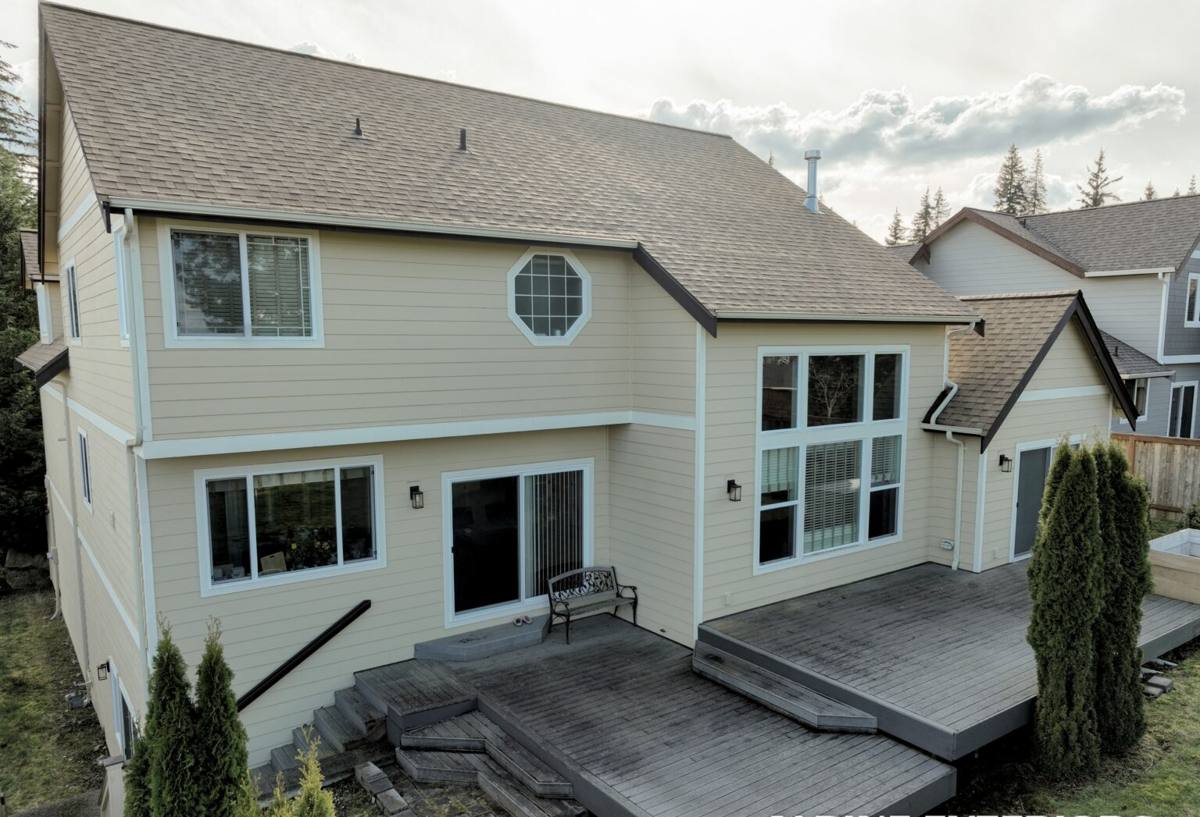
How the Local Climate Attacks a Deck
Salt Air and Hardware
Properties near the water get a steady drift of salt-laden moisture in the air. It doesn't take direct spray off the bay to cause damage — salt air alone accelerates corrosion on any fastener, bracket, or hanger that isn't rated for it. We regularly find nails and screws that have rusted through or lost most of their holding strength well before the surrounding wood shows obvious damage. Once a fastener corrodes, it stops doing its job even if the board around it still looks fine.
Driving Rain and Hidden Rot
Winter storms in this part of Skagit County don't just drop rain straight down — wind pushes it sideways and up under flashing, over ledger boards, and into any gap where a board meets the house. That's why some of the worst rot we find isn't out on the open deck surface at all; it's tucked behind the ledger board, under railing posts, or inside joist hangers, where water collects and never fully dries out between storms.
Moss, Shade, and Trapped Moisture
A lot of Bow properties have mature trees close to the house, which means shaded decks that stay damp for days after a storm. Moss and algae take hold in those conditions, and once established they hold moisture directly against the wood surface, block airflow underneath, and turn boards slick and dangerous underfoot. Moss isn't just a cosmetic problem — it's often the first visible sign that a board is holding more water than it should.
The Repair Problems We See Most Often in Bow
- Rusted or corroded joist hangers and fasteners, especially on decks more than 10-12 years old
- Soft or spongy decking boards, usually starting near the house or under planters and furniture
- Rot at the ledger board connection where the deck attaches to the structure
- Moss and algae buildup on shaded boards, creating a slip hazard and trapping moisture underneath
- Loose or wobbly railings and posts caused by softened wood at the base
- Stair stringers that have absorbed water at the cut ends and begun to split or rot
- Undersized or missing flashing where the deck meets the siding, letting water track behind the wall
These problems rarely show up in isolation. A deck with corroded fasteners near the water is often also dealing with moss on the shaded side and a slow leak at the ledger board — by the time one symptom is obvious, the others have usually been developing for a while too. That's why we look at the whole deck rather than just patching the one spot you called about.
Repair or Replace? What Actually Decides It
Not every deck problem means a full rebuild, but not every problem can be patched either. The honest answer depends on where the damage sits and how far it has spread, not on how the deck looks from the yard.
| Factor | Usually points to repair | Usually points to replacement |
|---|---|---|
| Framing (joists, beams, posts) | Isolated soft spots or corroded hardware only | Rot has spread through multiple structural members |
| Decking boards | A few damaged boards, scattered or in one area | Most boards are soft, cupped, or moss-covered throughout |
| Ledger connection | Flashing failure caught early, minimal wood damage | Rot has traveled into the house's rim joist |
| Age of the deck | Under 15 years, built to a reasonable standard | Original construction was undersized or poorly detailed |
| Cost to repair vs. rebuild | Repair cost is a fraction of full replacement | Repair cost approaches half or more of a new deck |
We won't recommend a full rebuild just to make a bigger job, and we won't patch a deck that has structural rot just to keep the estimate small. We tell you what we actually find underneath and let you decide from there.
What a Correct Repair Actually Involves
A repair that only replaces the boards you can see from the yard is a cosmetic fix, not a structural one. A correct repair starts underneath, not on the surface.
- Ledger and flashing check — the connection to the house is where the most serious rot tends to start, so it's checked first, not last.
- Framing inspection — joists, beams, and posts get probed for soft spots, not just looked at, since rot often hides under paint or stain.
- Hardware condition — hangers, bolts, and fasteners get checked for corrosion, since a rusted hanger can fail even when the wood around it is still sound.
- Footing and post base check — posts sitting in or near standing water are a common weak point in Bow's wetter yards.
- Surface decking and railings — addressed last, once the structure underneath is confirmed sound, including a check that railing height and baluster spacing still meet current code if the original construction predates it.
Skipping straight to new boards over a compromised frame is how a deck ends up needing the same repair again in just a few years.
Our Process, Start to Finish
- On-site inspection — we walk the deck, probe suspect boards and framing, and check the ledger and posts before quoting anything.
- Straight assessment — you get a clear picture of what's cosmetic, what's structural, and what your real options are.
- Written scope — the proposal spells out exactly what gets replaced, what hardware is used, and why.
- The repair itself — we work in the sequence above, structure before surface, and don't cover up a problem to save a step.
- Final walkthrough — you see the finished work and understand what was done and why before we consider the job complete.
Choosing Materials That Actually Hold Up Here
Material choice matters more in a salt-air, high-moss environment than it does in a drier climate. There's no single right answer for every deck, but the trade-offs are worth understanding before you decide.
| Material | Strength in this climate | Trade-off |
|---|---|---|
| Pressure-treated wood | Affordable, easy to source and match to existing framing | Needs regular sealing or staining to resist moss and moisture |
| Cedar | Naturally rot-resistant, ages well visually | Softer surface; still benefits from periodic finish maintenance |
| Composite decking | Resists moss staining and doesn't absorb water into the board itself | Higher upfront cost; needs a properly ventilated frame underneath |
| Stainless steel fasteners | Best corrosion resistance for salt-air exposure | Costs more than standard galvanized hardware |
| Hot-dip galvanized fasteners | Solid mid-range corrosion resistance for most inland decks | Can still corrode faster than stainless under direct salt exposure |
For most repairs, we match new material to what's already there unless the existing choice is part of why the deck failed in the first place. If corroded standard fasteners caused the original problem, we'll say so and recommend upgrading the hardware even if the decking itself stays the same species.
Maintenance Checklist Between Repairs
A repaired deck lasts longer with a little seasonal attention, especially with a moss season that runs this long.
- Sweep leaves and debris off the deck surface before fall rains set in
- Treat visible moss or algae early rather than waiting until the boards feel slick
- Check that nearby gutters and downspouts aren't dumping water onto the deck
- Keep planters and furniture legs from sitting directly on damp boards long-term
- Look at the ledger board area once a year for gaps, staining, or soft wood
- Reseal or restain wood decking on a regular schedule, not just when it starts to look faded
Why a Crew That Already Works Bow Matters
A contractor who mostly works drier, inland jobs can still do fine carpentry, but they may not think to check the ledger flashing first or recognize that a mossy board near the tree line is an early warning sign rather than just an eyesore. Working this stretch of Skagit County regularly means we've already seen how salt air, driving rain, and shade play out on decks in this area over time, and we bring that pattern recognition to every inspection instead of treating each deck like it's the first one we've seen with these conditions.
It also means straightforward logistics: scheduling around the wetter months, sourcing hardware that actually holds up locally — not guessing at what local suppliers stock and special-ordering treated lumber, composite boards, or stainless hardware in a way that stalls the job halfway through — and giving you a realistic timeline instead of one built for a different climate entirely.
If your deck in Bow has soft spots, rusted hardware, or a moss problem that keeps coming back, we're happy to take a look and give you a straight answer on what it actually needs. Fill out the form below for a free, no-pressure estimate.