 Anacortes Siding
 Metal Roofing in Bow: Built for This Corner of Skagit County
Bow doesn't get talked about much in roofing conversations, but the homes out here take a real beating. Between the salt-laden air rolling off the water, driving rain that comes in sideways more often than straight down, and a moss season that can stretch nine months out of the year, a roof in Bow works harder than a roof forty miles inland ever will. Metal roofing handles that combination better than almost anything else on the market, but only when it's specified and installed correctly for this specific environment. That's the part that gets skipped when a crew from outside the area shows up, and it's the part we don't skip.
We're based in Anacortes and work Bow regularly as part of our normal Skagit County service area. That matters more than it sounds like it should — the details that make a metal roof last thirty-plus years out here are different from the details that matter in a dry climate, and you only learn them by doing the work locally, year after year.
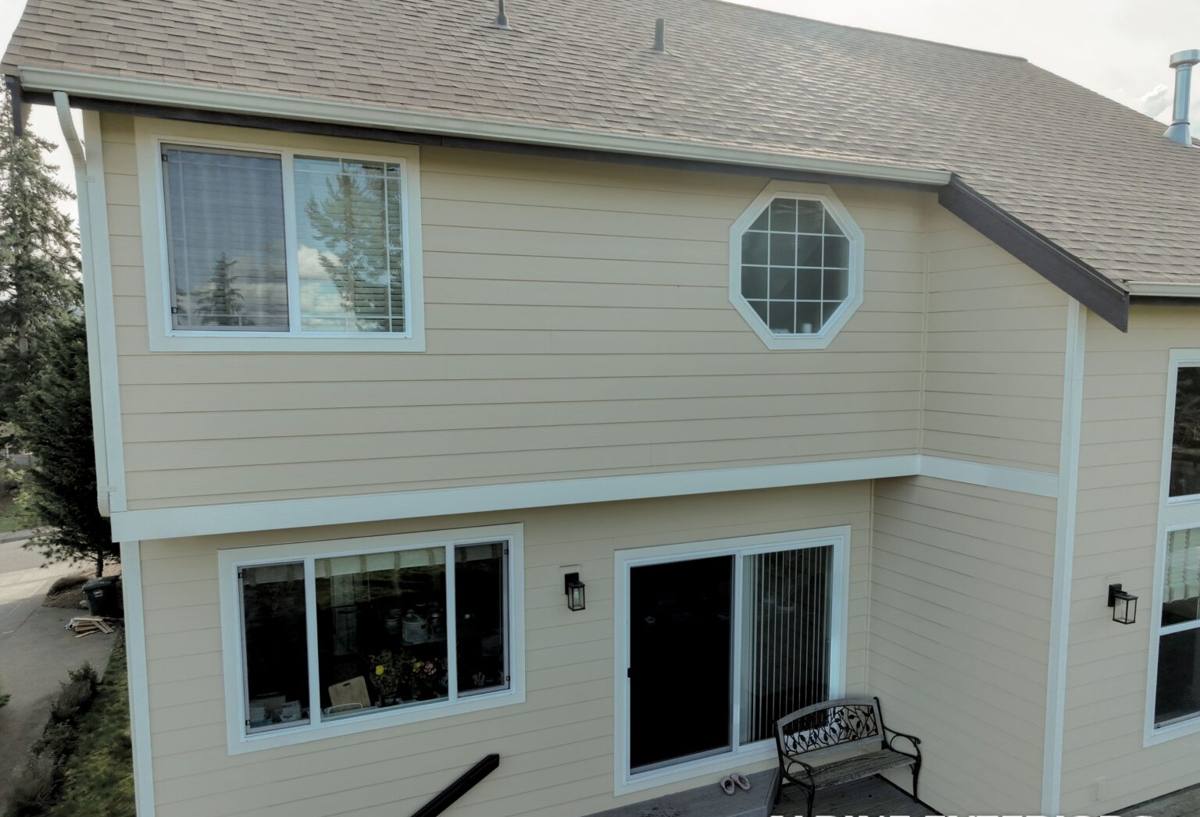
What Bow's Climate Actually Does to a Roof
Three conditions define roofing performance in this part of Skagit County, and they compound each other.
Salt Air
Proximity to Samish Bay and the broader Salish Sea means airborne salt is a constant, low-level presence on every exterior surface, including the roof. Salt accelerates corrosion on any exposed metal — fasteners, flashing edges, cut panel ends — far faster than it would inland. Standard hardware that would last decades in Mount Vernon can start showing rust streaks in a fraction of that time here if the wrong grade is used.
Driving Rain
Wind-driven rain doesn't just fall on a roof, it gets pushed underneath laps, up under flashing, and into any gap that a calm-weather installation would get away with. Roofs that look fine in a still afternoon can leak the first time a real system blows through with sideways rain. Every seam, lap, and penetration on a Bow roof has to be detailed as if the rain is coming from the side, because eventually it will be.
Long Moss Season
Cool, damp, and shaded conditions for most of the year make moss and algae growth a near-constant issue on north-facing slopes and anywhere tree cover holds moisture against the roof. Moss holds water against a surface, and on the wrong roofing material that trapped moisture leads to rot, granule loss, or corrosion. Metal roofing resists moss far better than composition shingle, but it isn't immune — panel profile, finish, and pitch all affect how much moss actually takes hold.
What a Correctly Installed Metal Roof Involves
Metal roofing has a reputation as a low-maintenance, long-life product, and that reputation is earned — but only when the installation respects a handful of details that are easy to shortcut and hard to notice until years later.
Panel Material and Finish
In a salt-air environment, panel coating matters as much as panel gauge. We steer homeowners toward coatings and finishes rated for coastal exposure rather than the base-grade options sometimes offered to cut cost, because the difference shows up as chalking, fading, or edge corrosion within the first several years if the wrong finish goes on a home this close to the water.
Fastener and Flashing Hardware
This is the single most common corner cut on metal roofs near the water. Using standard fasteners or flashing stock instead of hardware rated for marine or coastal exposure is the fastest way to end up with rust streaks bleeding down a panel face within a few years. We treat fastener and flashing spec as non-negotiable on any Bow project, not an upgrade option.
Underlayment
A synthetic, high-temperature underlayment rated for the panel type goes down as a second line of defense under every metal roof we install. Given how much wind-driven rain this area sees, underlayment isn't a formality — it's what protects the deck if wind ever pushes water past a lap or a flashing detail during a storm.
Valleys, Penetrations, and Laps
Valleys carry the most water on any roof and take the brunt of wind-driven rain. We detail valleys, pipe boots, and every panel lap for lateral water intrusion, not just gravity flow — closures, sealant placement, and lap direction all get set up assuming the rain won't fall straight down.
Ventilation
A tight, well-insulated home with poor roof ventilation traps moisture in the attic space, which is a bigger problem in a damp climate than a dry one. Proper intake and exhaust venting keeps moisture from condensing against the underside of the deck, which protects both the roof structure and the metal panels from the inside out.
Comparing Metal Roofing Systems for a Bow Home
Not every metal roofing system performs the same way in this climate. Here's how the common options stack up for a coastal Skagit County home specifically.
| System | Best For | Coastal / Moss Performance | Trade-offs |
|---|---|---|---|
| Standing seam (concealed fastener) | Most Bow homes, especially open roof planes | Excellent — no exposed fasteners to corrode, sheds moss buildup well | Higher upfront cost, requires an experienced crew |
| Exposed-fastener panel | Outbuildings, shops, budget-conscious projects | Good if marine-grade fasteners and regular fastener checks are part of the plan | Fasteners need periodic inspection and eventual replacement |
| Metal shingle / shake profile | Homes wanting a traditional look with metal durability | Good, though more seams than standing seam means more detail work at install | More labor-intensive installation, cost sits between the other two options |
For most Bow homes directly exposed to bay winds, we lean toward standing seam because the concealed fastener system removes the biggest long-term corrosion risk. That said, the right answer depends on the roof's exposure, pitch, and the look the homeowner wants — it's a conversation, not a default.
How Our Process Works
We keep the process straightforward because homeowners have enough to think about without decoding contractor jargon.
- On-site assessment. We look at the existing roof, deck condition, ventilation, and the home's specific exposure to wind and salt before recommending anything.
- Written estimate. A clear scope of work with panel system, hardware grade, and underlayment spelled out — no vague allowances.
- Tear-off and deck inspection. Old roofing comes off and the deck gets checked for rot or soft spots before anything new goes down.
- Underlayment and flashing. The waterproofing layer goes in first, with valleys and penetrations detailed for wind-driven rain.
- Panel installation. Panels go on with coastal-rated fasteners and correct lap direction relative to prevailing wind and water flow.
- Final walkthrough. We go over the finished roof with the homeowner and cover basic maintenance expectations before we consider the job done.
Cost Factors on a Bow Metal Roof
Every roof is different, but the same handful of factors drive most of the cost variation we see on metal roofing projects in this area.
| Factor | Why It Matters |
|---|---|
| Panel system chosen | Standing seam runs higher than exposed-fastener panel due to labor and material |
| Roof pitch and complexity | Steep roofs, multiple valleys, and dormers add labor time and detail work |
| Deck condition | Rot or soft decking found at tear-off needs repair before new roofing goes on |
| Tear-off vs. overlay | Full tear-off costs more upfront but is almost always the right call over old roofing |
| Hardware and coating grade | Marine-rated fasteners and coastal finishes cost more but avoid early corrosion |
We give homeowners real numbers based on their actual roof rather than a rough range pulled from a website calculator, because the variables above swing the total more than any generic estimate can account for.
Maintenance a Metal Roof Actually Needs in This Climate
Metal roofing is low-maintenance compared to composition shingle, but "low" isn't "none," especially given the moss and salt exposure in Bow. A short annual checklist covers most of it.
- Clear debris and fallen needles from valleys and low-slope sections before fall rains set in
- Check north-facing and shaded slopes for early moss growth and remove it before it spreads
- Look at exposed fasteners (if applicable) for early rust staining or backing out
- Confirm gutters and downspouts are clear so water isn't backing up under the roof edge
- Have a professional check flashing, seams, and penetrations every few years, especially after a rough winter
Why a Crew That Already Works Bow Matters
A metal roof is only as good as the details behind the panels — the hardware grade, the underlayment choice, the flashing work in the valleys. Those aren't things a homeowner can inspect once the roof is finished, which is exactly why the contractor's judgment on the front end matters so much. A crew that regularly works Bow and the surrounding Skagit County coastline already knows which corners get exposed to the worst of the wind and salt, which fastener grades hold up, and how the moss pattern typically develops on local roof lines. That local pattern recognition is the difference between a roof that's still tight in twenty years and one that starts showing problems in five.
Signs an Existing Roof Needs Attention
A few warning signs come up often enough on older roofs in this area that they're worth watching for, whether the current roof is metal or something else nearing replacement.
- Rust streaking below fasteners or flashing edges
- Thick moss buildup on north-facing slopes that keeps returning after cleaning
- Water staining on interior ceilings after wind-driven storms specifically, even if calm-weather rain hasn't caused issues
- Panel oil-canning (visible waviness) that's worsened over time, which can point to fastening or substrate issues
- Loose or lifting flashing at valleys, chimneys, or vent penetrations
Any one of these is worth a look before it turns into a deck or interior repair, which almost always costs more than the roof work itself.
If you're weighing a metal roof for a home in Bow, or want a straight answer on whether an existing roof still has good years left in it, we're happy to take a look. The estimate is free, there's no pressure attached to it, and you'll get a clear answer based on what we actually see on your roof — just fill out the form below to get started.