 Anacortes Siding
 Cap Sante's Exposure Is Tougher on Siding Than Most of Anacortes Realizes
Cap Sante sits on a hill overlooking the water, which means homes here catch wind and weather that inland Skagit County properties simply don't deal with. The marina and open channel below send salt-laden air up the slope on a regular basis, and that salt settles on every exterior surface it touches — siding, trim, fasteners, gutters. Add in wind-driven rain that comes in sideways during winter storms, and you have a combination that finds every weak seam, every unsealed cut edge, and every gap in a siding system that wasn't installed with this exposure in mind.
Then there's moss. Western Washington's long wet season, moderate temperatures, and shade from mature trees around Cap Sante create ideal conditions for moss and algae growth on north- and west-facing walls. Moss doesn't just look bad — it holds moisture against the siding surface for months at a time, which is exactly the kind of sustained dampness that breaks down poorly-protected cladding.
None of this means siding is a lost cause up here. It means the material, the finish, and the installation details all have to be chosen with this specific exposure in mind — not treated the same way you'd treat a house in a dry inland subdivision.
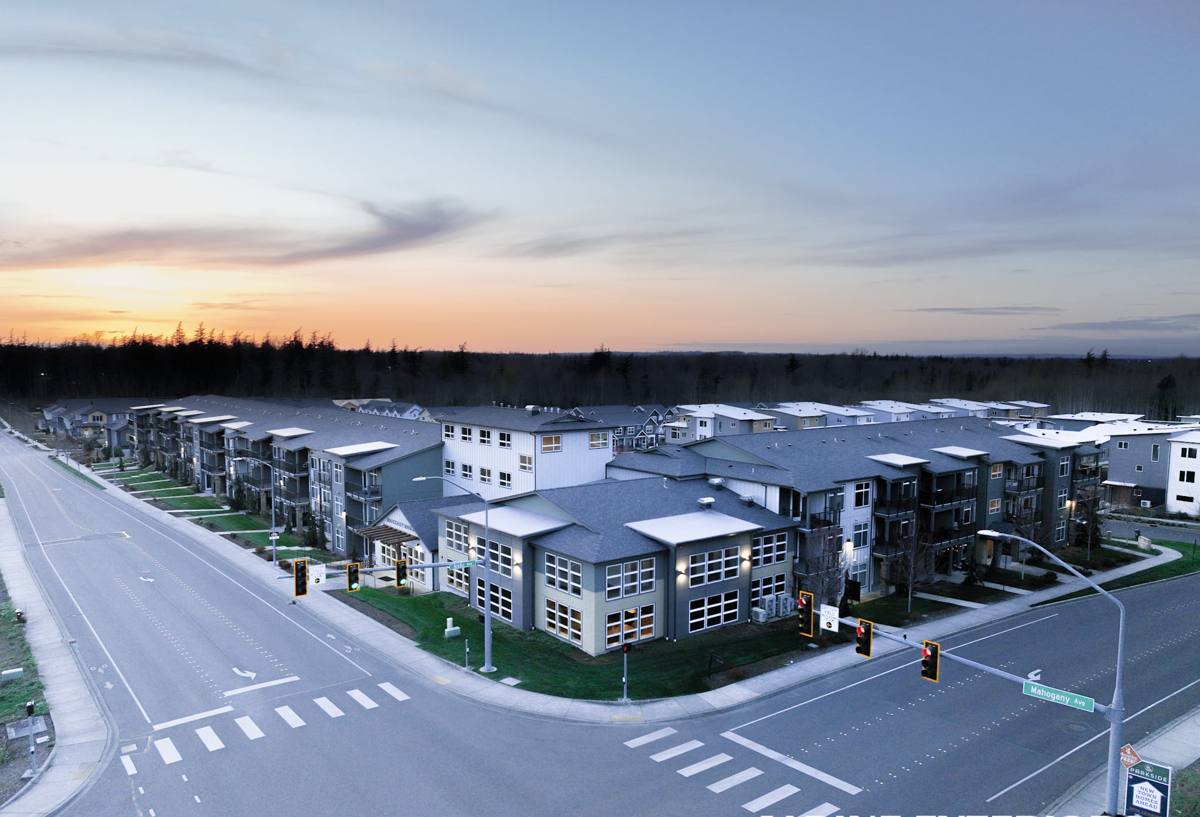
Why We Install James Hardie Fiber Cement and Nothing Else
We standardized on James Hardie fiber cement siding for every job we do, including here in Cap Sante, and we don't install vinyl, LP SmartSide, cedar, primed spruce, or other fiber cement brands. That's not a marketing position — it's a decision built around what actually holds up on a marine-exposed, moss-prone hillside.
What Fiber Cement Gets Right in This Environment
- It's non-combustible, which matters given Skagit County's dry summer wildfire risk alongside the wet winters.
- It doesn't rot, warp, or feed insects the way wood-based products can when moisture sits against them.
- James Hardie's ColorPlus factory finish is baked on and formulated to resist UV fade and moisture intrusion better than field-applied paint, which matters when a wall spends half the year damp.
- Hardie's HZ product lines are engineered for specific climate zones, including the wetter marine zones that cover the Puget Sound region.
We're honest about the trade-off: fiber cement is heavier and less forgiving to install than vinyl or engineered wood, and it demands correct technique — proper fastening, clearances, and joint treatment. That installation sensitivity is exactly why the crew matters as much as the product, which we'll get to below.
Comparing Siding Options for a Cap Sante Exposure
Homeowners often ask why we don't offer cheaper alternatives. Here's an honest comparison of how common siding materials actually perform against salt air, driving rain, and moss — the three factors that define this location.
| Material | Salt Air / Coastal Exposure | Moisture & Moss Resistance | Long-Term Maintenance |
|---|---|---|---|
| James Hardie Fiber Cement | Non-corroding, factory-finished, engineered HZ lines for marine climates | Doesn't absorb water or feed rot; moss can be power-washed off without damaging the surface | Occasional wash and caulk check; no repainting for years with ColorPlus finish |
| Vinyl Siding | Can become brittle and fade faster under salt exposure and UV cycling | Seams and J-channels trap moisture; moss grows readily on textured surfaces | Low upkeep but panels crack, warp, and can't be spot-repaired invisibly |
| LP SmartSide / Engineered Wood | Strand-based substrate is vulnerable if the factory seal is compromised near salt spray | Edge and cut-end swelling is a known risk if moisture gets past the coating | Requires diligent caulking and touch-up paint to protect exposed edges |
| Cedar / Primed Spruce | Natural wood is workable but needs constant sealing against salt-driven moisture | Prone to moss retention and rot in shaded, damp wall sections | Repainting and re-caulking on a recurring cycle; highest ongoing labor cost |
This isn't a claim that other products are unusable everywhere — it's why, specifically on a hillside like Cap Sante with this level of salt and moisture exposure, we've chosen to install only one system and install it correctly.
What a Correct Installation Actually Involves Here
Fiber cement performs the way it's supposed to only when it's installed to spec. In a coastal-exposure neighborhood like Cap Sante, a few details matter more than they would in a sheltered inland yard.
Fastening and Clearances
James Hardie specifies exact nailing patterns, fastener types, and minimum clearances from grade, roof lines, and decks. Skipping these — or using the wrong fastener material, which corrodes faster in salt air — is one of the most common ways an otherwise good product fails early.
Flashing and Water Management
Wind-driven rain doesn't just fall on a wall, it gets pushed into it. Every window, door, and penetration needs correct flashing and a drainage plane behind the siding so any water that does get past the surface has somewhere to go besides the sheathing.
Cut Edges and Caulking
Factory-finished panels are protected on the face, but any field cut exposes raw material unless it's sealed properly. In a high-moisture climate, an unsealed cut edge is where premature swelling or staining starts.
Ventilation Behind the Cladding
A rainscreen gap or properly vented assembly lets moisture that does get behind the siding dry out instead of sitting there feeding moss and mildew on the backside of the wall.
Choosing the Right Hardie Product Line for a Hillside Marine Exposure
Not every Hardie product or finish is the same, and picking the right one for a site like Cap Sante is part of doing the job right.
HZ5 vs. HZ10 Climate Engineering
James Hardie engineers its lap and panel products for different climate zones. Coastal and northern climates like ours call for the HZ5 formulation, built to handle the freeze-thaw and moisture cycling that's typical of Puget Sound weather rather than the hotter, drier HZ10 formulation used in other parts of the country.
Finish and Texture Choices
Smoother finishes shed wind-driven rain a bit more readily than deep woodgrain textures, which is worth weighing on the sides of a home that take the brunt of the weather off the water. Color choice matters too — darker ColorPlus finishes hide salt film and light moss staining differently than lighter colors, something worth discussing before you commit to a palette.
Our Process for a Cap Sante Job
Every property on this hill faces the water a little differently depending on orientation and tree cover, so we don't run a one-size-fits-all install.
- Walk and assess. We look at wind exposure by elevation, existing moss patterns, current flashing condition, and any moisture damage already present in the wall assembly.
- Plan the water management. Before any siding goes up, we confirm the drainage plane, flashing details, and fastener spec are right for this exposure — not just code-minimum.
- Install to Hardie spec. Correct clearances, nailing pattern, joint treatment, and sealed cut edges, every time, not just on the walls that are easy to see.
- Final walkthrough. We check caulking, trim details, and drainage points before calling the job finished.
Living With Fiber Cement Siding in a Moss-Heavy, Salt-Air Climate
Even the right product needs a little ongoing attention in this environment. The good news is that on Hardie fiber cement, that attention is minor compared to wood or vinyl.
- Rinse salt film and grime off the siding once or twice a year, especially on water-facing walls.
- Soft-wash moss and algae buildup on shaded sides before it thickens — a garden hose and mild cleaner is usually enough on properly installed fiber cement.
- Trim back vegetation and tree cover that keeps walls shaded and damp longer than necessary.
- Check caulking at trim, window, and door joints every couple of years and touch up any that's cracked or pulled away.
- Have a contractor inspect flashing and clearances after any major storm event.
Why It Matters That We Already Work This Neighborhood
A crew that hasn't worked a marine hillside site before will often install siding correctly by generic standards and still get surprised by how this specific exposure behaves — where moss actually forms, which elevation takes the worst of the wind-driven rain, how much salt film accumulates between cleanings. Working across Anacortes and the rest of Skagit County regularly means we're not guessing at how Cap Sante's climate treats a wall; we've seen it, planned around it, and adjusted our detailing accordingly on other homes nearby.
If you're planning a siding project on Cap Sante, or you want a straight answer on whether your current siding is holding up the way it should against this exposure, we're glad to take a look. Reach out for a free, no-pressure estimate using the form below.