 Anacortes Siding
 Cap Sante's Windows Work Harder Than Most
Homes around Cap Sante sit close to the water, which means the windows on those homes deal with a different set of stresses than a house ten miles inland in Skagit County. Salt-laden air moves in off Fidalgo Bay and the marina, driving rain comes in sideways during winter storms, and the long gray stretch of moss season keeps everything damp for months at a time. Windows are one of the first parts of a house to show the wear from that combination, and they're also one of the easiest problems to ignore until they've quietly gotten expensive.
We work on homes in this neighborhood regularly, and the pattern is consistent: it's rarely the glass itself that fails first. It's the frame, the seal, and especially the flashing and moisture barrier behind the trim. Salt air accelerates corrosion on hardware and metal components, wind-driven rain finds any gap in the weather barrier, and moss and algae growth on siding and trim traps moisture against the window opening longer than it should sit there. Get the water management wrong on the install, and a brand-new window can start failing again within a few years.
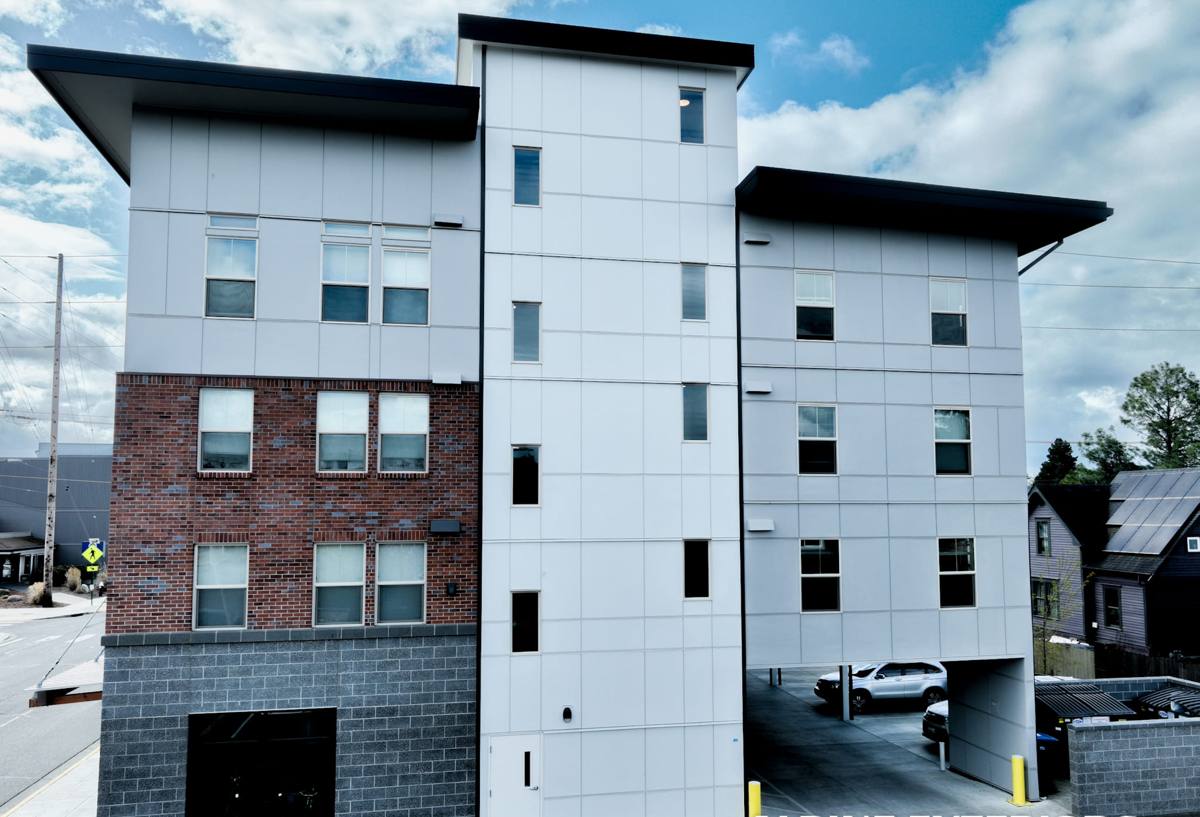
Signs a Cap Sante Home Actually Needs Replacement
Not every older window needs to come out. Some just need better maintenance or resealing. But there are a handful of signs that point to real replacement rather than a patch job, and we see these consistently on homes in this area:
- Fogging or a visible haze between panes on double-glazed units — the seal has failed and the gas fill is gone
- Soft or discolored wood at the sill or lower corners, often the first sign that water has been getting behind the frame
- Windows that are noticeably harder to open, close, or lock than they used to be
- A persistent draft you can feel even with the window fully latched
- Visible corrosion on hardware, hinges, or aluminum frame components
- Paint or finish that keeps failing on the interior trim around the window, even after repainting
- Noticeable outside noise (traffic, marina activity, wind) that seems louder than it should be for the glass in place
If you're seeing one or two of these, it's worth a look before deciding what's needed. If you're seeing several at once on the same window, that's usually a sign the frame and seal have already let water in, and replacement is the more honest answer than another round of caulk.
What a Correct Window Replacement Job Actually Involves
It's Not Just Swapping Glass
A proper window replacement is as much about what happens around the window as the window unit itself. On a home exposed to the kind of wind-driven rain Cap Sante gets, the flashing and moisture barrier detail around the rough opening matters more than the brand of window going in. We integrate window flashing with the existing weather-resistive barrier so water is directed out and down, never trapped behind the siding where it can sit against wood framing.
Sill Pans and Drainage
On homes with any history of water intrusion — or any window at or near grade, or under an area that collects runoff — we install a sill pan at the base of the rough opening. This gives any water that does get past the exterior seal a clear path back outside instead of pooling on the sill and soaking into the framing underneath. It's a small added step during installation that prevents the kind of rot damage that's expensive to fix later.
Sealing and Insulation
Gaps around the window frame get filled with low-expansion foam or backer rod and sealant, not just caulked at the trim. The goal is a continuous air and water seal from the exterior cladding through to the interior trim, with no gaps that let humid marine air condense inside the wall cavity.
Frame Material Comparison for Coastal Skagit County Homes
Frame material matters more here than in a drier inland climate, because salt air and constant moisture will find the weak point in any material over time. Here's how the common options hold up under those conditions:
| Material | Behavior Near Salt Air | Maintenance | Typical Cost Position |
|---|---|---|---|
| Vinyl | Doesn't corrode; performs well overall in coastal conditions | Low — occasional cleaning | Lower to mid |
| Fiberglass | Very stable, resists expansion/contraction and moisture damage | Low | Mid to higher |
| Wood or wood-clad | Attractive but needs a sound exterior clad or finish to keep moisture out | Higher — finish upkeep required | Higher |
| Bare aluminum | Prone to corrosion and condensation in salt air without a protective finish | Higher | Lower, but shorter service life here |
We don't push one material on every job. The right call depends on the home's exposure, the look the owner wants, and budget. What we will say plainly: on a home that takes direct salt air off the water, we steer away from bare aluminum frames and unclad wood exteriors, not because the products are bad in general, but because they demand more upkeep than most owners want to keep up with in this specific environment. That's a maintenance and moisture-behavior judgment, not a knock on any manufacturer.
Our Process on a Cap Sante Job
1. On-Site Assessment
We look at each window individually — frame condition, sill condition, how the opening is currently flashed, and how exposed that particular wall is to wind-driven rain. A window on the water-facing side of a house often needs a different level of detail than one tucked under an eave on the leeward side.
2. Straight Talk on What's Needed
We'll tell you if a window can be repaired instead of replaced, and we'll tell you if we think you're about to spend money on a repair that won't hold. The goal is a decision that makes sense for your house, not the biggest possible job.
3. Removal Without Collateral Damage
Old windows come out carefully, with attention to protecting surrounding siding and trim, especially where moss or algae growth has made materials more brittle than they look.
4. Correct Flashing and Sealing
This is the step that determines whether the new window lasts. We integrate flashing with your home's existing water barrier, add a sill pan where warranted, and seal continuously around the frame.
5. Finish Work
Interior and exterior trim gets reinstalled or replaced as needed, with attention to paint and caulk lines that will actually hold up through a wet Skagit County winter.
6. Walkthrough
We walk the finished work with you, operate every window, and answer questions before we call the job done.
Why a Local Crew Matters More Here Than It Sounds
It's easy to treat "local crew" as a marketing line, but on a job like this it has a real, practical meaning. A crew that regularly works homes around Cap Sante and the rest of Anacortes already knows which walls in this neighborhood take the worst of the weather, how moss and algae build up differently depending on sun exposure and tree cover, and what water intrusion actually looks like once you open up a wall here versus a drier inland location. That's the kind of knowledge that shows up in small decisions during an install — where to add extra flashing, which sills need a pan and which don't, how much ventilation clearance to leave — that a crew unfamiliar with this specific coastal microclimate might miss.
It also means someone is close by and easy to reach if a question comes up after the job is done, rather than a company that did one job in the area and then moved on.
Questions Worth Asking Any Contractor Before You Hire
Whoever you choose for window replacement, these are reasonable things to ask before signing anything:
- Will you tie the new window flashing into my existing weather barrier, and can you explain how?
- Do you install a sill pan, and under what conditions do you recommend one?
- What warranty covers the installation labor, separate from the manufacturer's product warranty?
- Can I see the actual window unit and frame material before it's ordered?
- How do you handle existing wood rot or damage discovered once the old window is out?
- What's your plan for protecting my siding, landscaping, and interior during the work?
A contractor who answers these clearly and specifically, without hand-waving, is usually one who does this work carefully and often.
Living With Windows Long-Term in a Marine Climate
Even a well-installed window benefits from a little seasonal attention in this climate. Rinsing salt residue off exterior frames a couple times a year, keeping weep holes clear of debris and moss so water can drain properly, and checking exterior caulk lines each fall before the wet season sets in will all extend the life of any window, regardless of material. None of this is complicated, but it's the kind of upkeep that gets skipped, and skipping it is usually what turns a 20-plus-year window into a 10-year window on a home this close to the water.
Ready When You Are
If you're noticing drafts, fogged glass, or sticky frames on your Cap Sante home, or you just want an honest read on whether repair or replacement makes more sense for your situation, we're happy to take a look. There's no pressure and no obligation — just a straightforward assessment from a crew that knows this stretch of Anacortes. Use the form below to request your free estimate.