 Anacortes Siding
 Building a Deck That Actually Holds Up in Bow
Bow sits in that stretch of Skagit County where the marine air off the water meets thick tree cover and a lot of shade. That combination is rough on outdoor structures in a specific way: decks here don't just get wet, they stay wet. Between the salt-laden air, long stretches of driving rain through fall and winter, and a moss season that can run most of the year in shaded yards, a deck built to a generic spec sheet will show its age fast — soft spots in the decking, rusted-out fasteners, slick green boards, and rail posts that loosen at the base before the wood itself even fails.
A deck built correctly for this area isn't a different-looking deck. It's the same clean lines and usable outdoor space, but with the framing, hardware, and drainage details handled so the structure is still solid in ten or fifteen years instead of five.
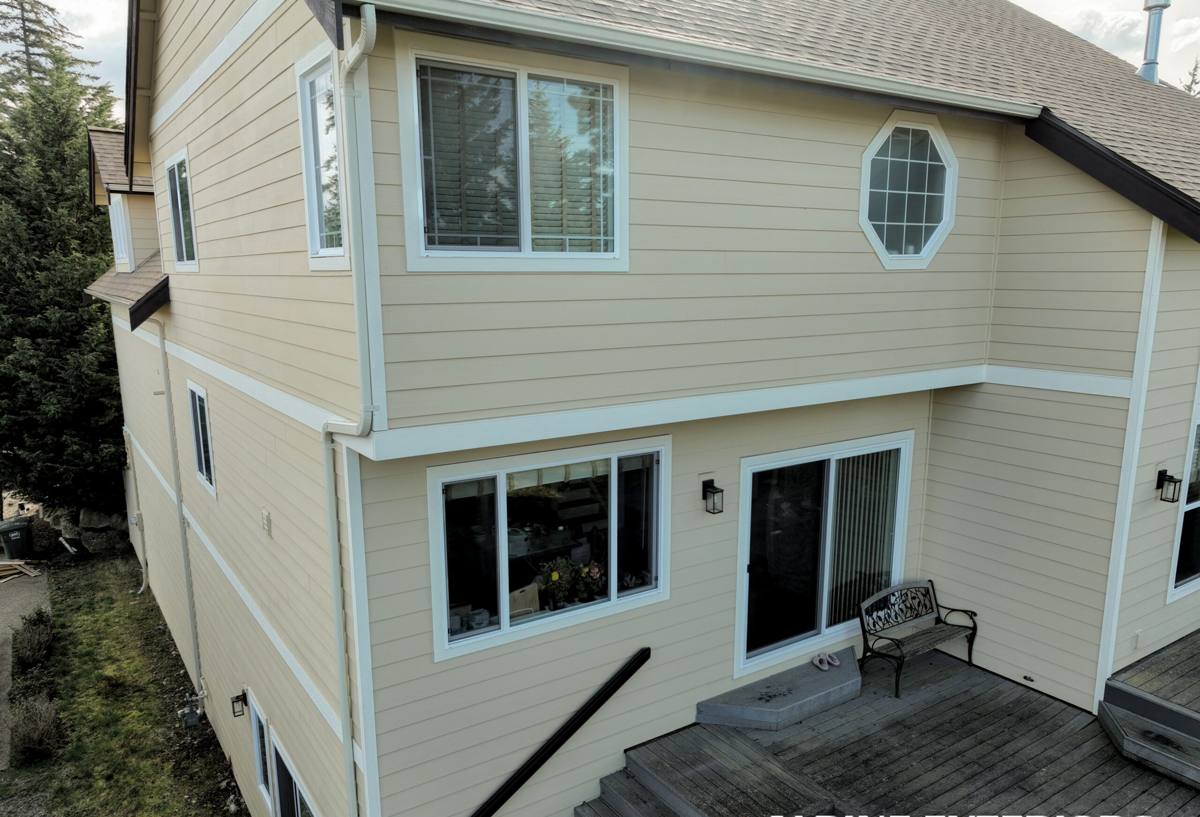
What Bow's Climate Does to an Ordinary Deck
Three things work against a deck here at the same time, and they compound each other:
- Salt air — even a few miles inland, airborne salt accelerates corrosion on any fastener, bracket, or connector that isn't rated for it.
- Driving rain — wind-driven rain gets pushed sideways and up under ledger boards, rail caps, and stair treads, not just straight down onto flat surfaces.
- Shade and moss — wooded lots and tree-lined properties common around Bow keep deck surfaces damp longer after every rain, which is exactly what moss and algae need to take hold.
Individually, any one of these is manageable. Together, they're why we see decks in this area fail at the ledger connection, at fastener heads, and on shaded deck boards well before the rest of the structure is anywhere near done.
Getting the Structure Right the First Time
Ledger Board and House Connection
The ledger board — where the deck attaches to the house — is the single most common failure point on decks in wet climates, and it's almost always a flashing problem, not a lumber problem. Water gets behind the ledger, into the rim joist, and starts rotting the house framing from the outside in, often invisibly for years. A correct ledger installation uses proper flashing that sheds water away from the house, not just a bead of caulk and a hope. This is also one of the most common things we find done wrong when we're called out to repair or replace an existing deck in this area.
Fasteners and Hardware
Given the salt air, we don't treat fastener choice as a minor detail. Structural connectors, joist hangers, and screws all need to be rated for coastal or treated-lumber exposure — stainless steel or heavy-duty coated hardware, not standard galvanized fasteners that will streak and weaken over a decade of salt exposure. It costs more up front and it's the difference between hardware that outlasts the deck and hardware that becomes the reason you're rebuilding early.
Footings and Framing for Wet Ground
Yards around Bow often have heavier, slower-draining soil, especially on shaded or lower-lying lots. Footings need to go below frost depth and bear on undisturbed soil, and post bases should keep the wood post itself off the concrete and out of standing water. Where a yard holds water after a storm, we'll also look at grading and drainage near the footings before we ever pour concrete — a deck built on soggy ground has problems no amount of good decking material can fix.
Choosing a Decking Material for This Climate
There's no single "best" decking material — the right choice depends on how much upkeep you want to do and how shaded the deck area is. Here's how the common options actually behave in a wet, mossy, salt-air environment like Bow's:
| Material | Moisture & Moss Behavior | Maintenance | Typical Installed Cost* |
|---|---|---|---|
| Pressure-treated wood | Absorbs moisture, prone to moss/algae in shade, can cup or split over time | Annual cleaning and periodic staining/sealing | Lowest of the three |
| Capped composite | Resists moisture absorption, moss can still grow on the surface film in deep shade | Periodic washing, no staining/sealing needed | Mid-range |
| PVC / cellular decking | Doesn't absorb moisture at all, most resistant to mold/algae staining | Occasional washing | Highest of the three |
*Ranges vary with deck size, height, and complexity — we'll give you real numbers for your specific layout during an estimate, not a generic per-square-foot figure.
For heavily shaded lots — common on wooded Bow properties — we generally steer clients away from bare pressure-treated wood as a final surface unless they're committed to yearly maintenance. Composite and PVC cost more initially but hold up with far less intervention, which matters more here than in a drier, sunnier climate where wood decking is a much easier material to live with.
Railings, Stairs, and Code Requirements
Guardrails, baluster spacing, and stair geometry are governed by building code, and Skagit County requires permits for most new deck construction and many deck replacements — this isn't optional paperwork, it's what protects you if you ever sell the house or have an insurance claim involving the deck. We handle the permit and inspection process as part of the job rather than leaving it to the homeowner to sort out.
Beyond code minimums, in this climate we also pay attention to how rail post connections are flashed and fastened, since a loose or rotting post at the base is one of the most common issues we find on older decks we're asked to repair rather than replace outright.
Moss, Algae, and Keeping a Deck Slip-Safe
Shaded decking in this region will grow moss and algae — that's just the climate, not a sign of a bad build. What separates a low-maintenance deck from a constant chore is the material choice and surface texture, plus a realistic maintenance routine. A few habits go a long way toward keeping a deck safe underfoot and looking good:
- Sweep debris and standing leaves off the deck regularly, especially in fall — trapped organic matter holds moisture and feeds moss growth
- Wash the surface at least once or twice a year with a deck-safe cleaner, more often in deep shade
- Keep gutters and downspouts clear so runoff isn't dumping extra water directly onto the deck
- Check rail posts and stair connections yearly for movement or soft wood
- Re-seal or re-stain wood decking on the manufacturer's recommended schedule — don't wait until it's visibly gray or cracking
- Trim back overhanging branches where practical to let more light and air reach the surface
How We Build a Deck in Bow, Start to Finish
The process is straightforward, but the details inside each step are where climate-appropriate building actually happens:
- On-site assessment — we look at sun/shade exposure, drainage, soil condition, and how the deck will tie into the house before recommending materials.
- Design and material selection — sizing, layout, and decking/railing material chosen for how the space will actually be used and how much upkeep you want.
- Permitting — we handle the Skagit County permit application and coordinate required inspections.
- Framing and flashing — ledger flashing, corrosion-rated hardware, and footings sized for the soil and load.
- Decking, rails, and stairs — installed to code with attention to fastening details that hold up to wind-driven rain.
- Final walkthrough — we go over care and maintenance specific to the material you chose, so there are no surprises the first wet winter.
Why Local Experience in Bow Matters
A deck contractor who mostly works drier inland areas will often spec the same materials and details they'd use anywhere — and that's exactly how decks end up with moss-slick boards and rusted hardware within a few years out here. Working regularly around Bow and the rest of Skagit County means we've already seen which ledger details fail in this rain pattern, which fastener grades actually hold up to the salt air, and which decking surfaces stay slip-resistant under tree cover through a wet Pacific Northwest winter. That experience shows up in the parts of the deck you don't see once it's finished — the flashing, the hardware, the footing depth — which is exactly where a deck's real lifespan gets decided.
If you're planning a new deck or need to replace one that's showing its age, we're happy to take a look and put together a straightforward, no-pressure estimate for your property in Bow. Use the form below to get started.