 Anacortes Siding
 Why Decks in Sedro-Woolley Wear Out Faster Than Homeowners Expect
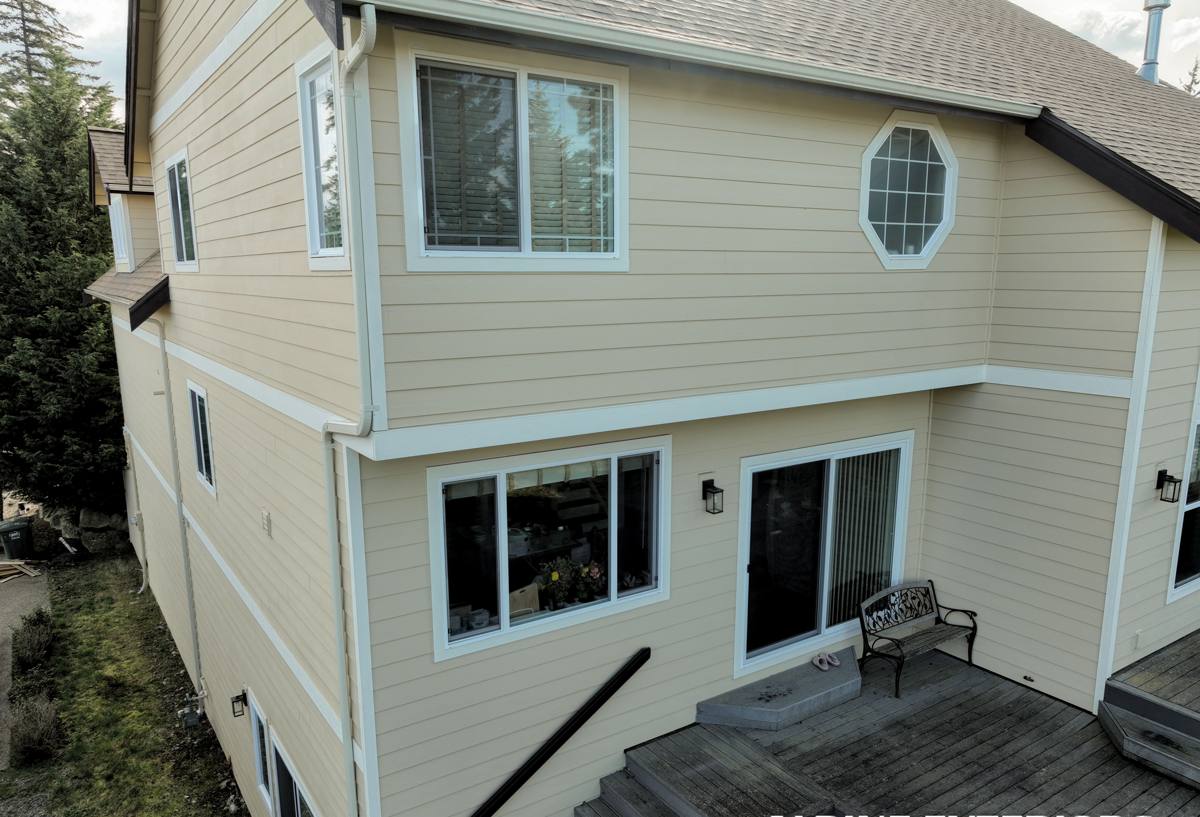
Sedro-Woolley sits in the Skagit Valley, close enough to the Salish Sea that the region's marine-influenced weather shapes almost every exterior surface on a home, decks included. Even away from the immediate shoreline, damp air moves up the valley for months at a time, and that moisture doesn't just fall as rain — it lingers as fog, dew, and condensation on wood and composite surfaces long after a storm has passed. Add in the driving rain that comes through in fall and winter, and a deck here is under near-constant moisture load for a good chunk of the year.
That combination is exactly what drives the long moss season homeowners in this part of Skagit County deal with every year. Moss doesn't just look bad on a deck surface — it holds water against boards, blocks drainage between planks, and creates a slick, slippery walking surface that's a real fall hazard on stairs and landings. A deck that looks fine in July can be hiding moisture damage that only shows up once winter moss takes hold.
Signs a Deck Needs Replacement, Not Another Repair
Not every deck problem calls for a full tear-out. But there's a point where patching boards or re-staining stops being a fix and starts being a way to delay a bigger bill. Here's what we look for when we're deciding whether a deck can be saved or should be replaced.
- Soft or spongy spots in the decking boards, especially near the house or around post bases
- Ledger board separation or gaps where the deck meets the house siding or rim joist
- Persistent moss or algae growth that returns within weeks of cleaning
- Visible rot, splitting, or discoloration at joist ends and beam connections
- Loose, wobbly, or corroded railings and stair stringers
- Fasteners that are rusted, popped up, or staining the wood around them
- A structure built before current post-to-beam and ledger attachment standards were common
If you're seeing two or more of these, especially anything involving the framing rather than just the surface boards, it's worth having someone look at the whole structure before spending more money on cosmetic repairs.
What a Correct Deck Replacement Actually Involves
Framing and Footings Come First
The decking boards are what everyone sees, but the framing underneath is what determines whether a deck lasts eight years or twenty-five. In a climate that keeps wood wet for extended stretches, framing lumber needs to be properly rated for ground contact where it touches or sits near soil, footings need to be set below frost depth and sized for the loads they're carrying, and every connection — post to beam, beam to joist, joist to ledger — needs the right hardware, not just nails toe-driven in at an angle. We replace framing that's undersized or deteriorated rather than building new decking on top of old bones, because a deck is only as good as what's under it.
Drainage and Airflow
Given how long moss season runs here, drainage matters as much as the framing itself. Decking gaps need to be consistent so water sheds instead of pooling, and there needs to be enough clearance and airflow underneath the deck so the framing can actually dry out between rain events instead of sitting damp for weeks. A deck built tight to the ground with poor ventilation is a deck that rots from the underside first, often before any problem is visible from above.
Choosing the Right Decking Material
Material choice matters more here than in drier climates, because the wrong product spends more of the year wet than dry. We walk homeowners through the honest trade-offs rather than pushing whatever's easiest to install.
| Material | Moisture Behavior | Maintenance | Typical Lifespan |
|---|---|---|---|
| Pressure-treated wood | Absorbs and releases moisture; prone to checking and splintering if not sealed regularly | Annual cleaning and re-sealing recommended | 10-15 years with upkeep |
| Cedar | Naturally rot-resistant but still needs sealing in a wet climate to hold color and resist moss | Periodic cleaning and re-staining | 15-20 years with upkeep |
| Capped composite | Won't absorb water into the core; surface sheds moisture well, reducing moss adhesion | Periodic washing, no staining or sealing | 25-30+ years, per manufacturer warranty |
| PVC decking | Fully synthetic, essentially waterproof; performs consistently in wet, low-sun conditions | Occasional washing | 25-30+ years, per manufacturer warranty |
We don't install every product on the market. Some lower-grade composite boards use an uncapped or thin capping layer that lets moisture work into the core over time, which in a climate like this can mean swelling, delamination, or mold growth well before the board's rated lifespan. Our standard is to install fully capped composite or PVC products with manufacturer warranties that actually hold up to Pacific Northwest moisture, and to be upfront when a cheaper option isn't going to perform well here long-term.
Our Deck Replacement Process
Homeowners generally want to know two things: how disruptive is this, and what am I actually getting. Here's the sequence we follow on a typical deck replacement.
- On-site evaluation of the existing deck, framing, footings, and ledger attachment to determine what's salvageable and what isn't
- Written estimate that separates structural work from surface materials, so you can see where the cost is actually going
- Permit application and inspection scheduling through the local jurisdiction, handled on our end
- Careful demolition and removal of the old deck, with attention to protecting siding, landscaping, and utility lines at the ledger connection
- Framing rebuild or repair, including footings, posts, beams, joists, and a properly flashed ledger board where the deck meets the house
- Decking, railing, and stair installation per the material and layout you've chosen
- Final walkthrough and inspection sign-off before we consider the job finished
Permits and Inspections in Skagit County
Most deck replacements that involve structural changes — new footings, a rebuilt frame, or a deck attached above a certain height — require a permit and inspection through the applicable local building department, whether that's the City of Sedro-Woolley or Skagit County, depending on the property's location. This isn't paperwork for its own sake: the ledger attachment and footing depth are the two places we see the most failures on older, unpermitted decks, and inspection is what catches those problems before they become safety issues. We handle the permit process as part of the job rather than leaving homeowners to navigate it on their own.
Why It Matters to Hire a Crew That Works This Area
A deck built to a generic national spec doesn't always hold up to what Skagit County actually throws at it. Crews who work Sedro-Woolley and the surrounding Anacortes area regularly know which framing details tend to fail first in this climate, which decking products actually resist moss buildup instead of just claiming to, and what local building departments expect to see at inspection. That familiarity shows up in fewer surprises during the project and a deck that's built for the weather it will actually experience, not just the weather on a spec sheet.
What Deck Replacement Typically Costs
Cost depends on deck size, framing condition, material choice, and site access, so any number without a look at your specific deck is a rough estimate at best. That said, the biggest cost swings usually come down to a short list of factors.
- Whether the existing footings and framing can be reused or need to be rebuilt
- Decking material — pressure-treated wood sits at the low end, capped composite and PVC cost more upfront but less over time
- Deck size and layout complexity, including multiple levels, built-in stairs, or custom railing
- Site access for demolition and material delivery
- Permit and inspection requirements based on deck height and attachment type
We provide itemized estimates that break out structural work from surface materials so you know exactly what's driving the price, rather than a single lump number.
Keeping a New Deck Ahead of Moss Season
Once a deck is replaced, a small amount of seasonal upkeep goes a long way in this climate. Clearing debris and standing water from the surface before fall rains set in, keeping nearby trees and shrubs trimmed back for airflow, and doing an annual wash-down before moss has a chance to establish will keep either wood or composite decking performing the way it's supposed to for its full expected lifespan. We're happy to walk through the specific maintenance routine for whatever material you choose.
If your deck is showing its age or you're not sure whether it needs repair or full replacement, we're glad to take a look and give you a straight answer. Request a free, no-pressure estimate using the form below and we'll get back to you with what we actually see, not just what's easiest to sell.