 Anacortes Siding
 Windows Built for a Marine Neighborhood
Ship Harbor sits right where Anacortes meets Rosario Strait, and that location shapes everything about how windows perform here. Homes in this part of Skagit County take on salt-laden air off the water, wind-driven rain that hits glazing at an angle instead of straight down, and a wet season that can stretch from October well into spring. Add the low winter sun bouncing off the water and the daily temperature swing between a cold morning and a milder afternoon, and you have a window opening that works harder than one a few miles inland.
Energy-efficient windows are usually sold on utility bill savings, and that's real, but in Ship Harbor the bigger issue is often what happens to a window's seals, frame, and hardware over ten or fifteen years of that exposure. A window that's efficient on day one but fails early because it wasn't built or installed for a marine environment isn't actually efficient — it's a problem you'll pay for twice.
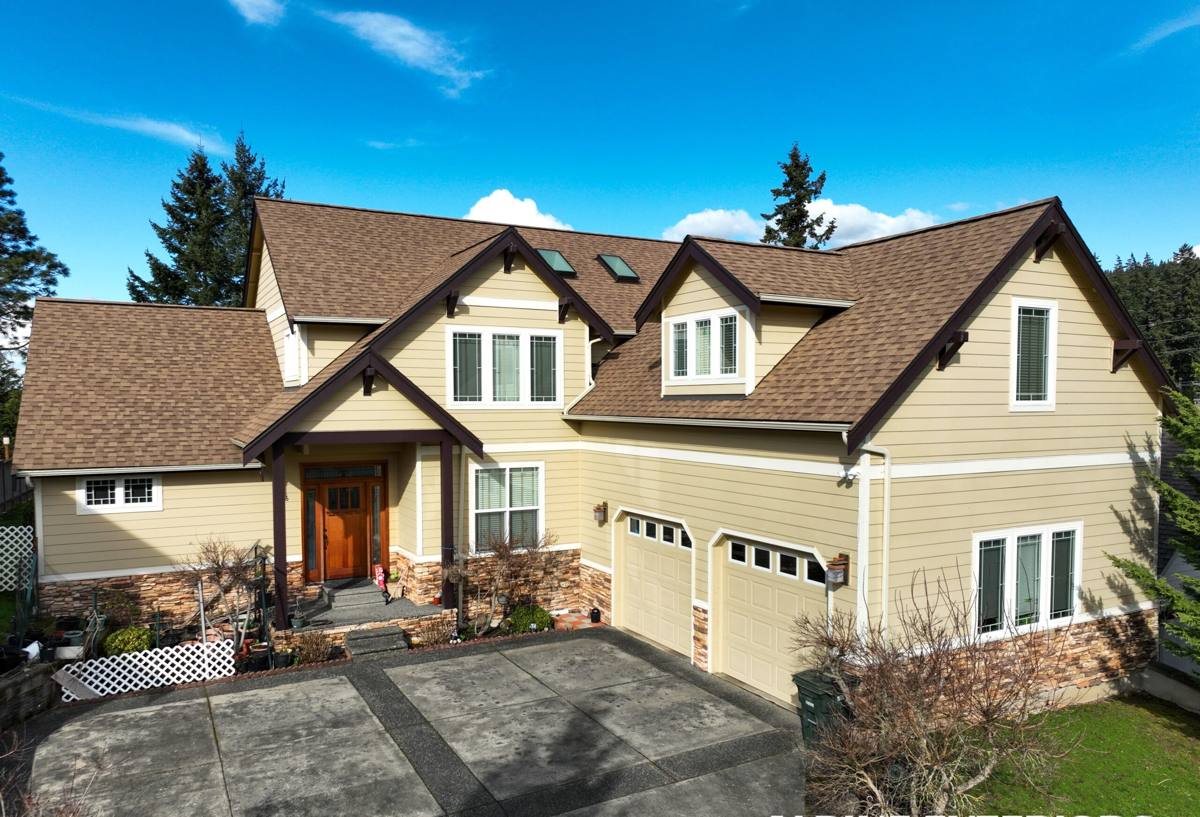
What Salt Air and Driving Rain Actually Do to a Window
Corrosion You Can't See Until It Fails
Salt in the air settles on metal hardware — hinges, locks, balance systems, and aluminum frames — and speeds up corrosion compared to homes further from the water. This doesn't usually show up as visible rust right away. It shows up years later as a lock that won't turn smoothly, a sash that binds, or a balance that gives out. Vinyl and fiberglass frames avoid most of this because there's no bare metal exposed to the weather, which is one reason we lean toward those materials for homes this close to Ship Harbor.
Wind-Driven Rain Finds Weak Seals
Rain that's pushed sideways by wind off the water tests a window's weatherstripping and flashing differently than rain that just falls straight down. A window that would be fine on a sheltered inland lot can leak here if the flashing detail wasn't done correctly or the seal has started to degrade. This is why the installation matters as much as the window product itself — a top-tier window installed with a mediocre flashing job will leak, and a mid-grade window installed correctly usually won't.
Moss Season and Sustained Moisture
Skagit County's long stretch of overcast, damp weather keeps trim, siding, and window perimeters wet for extended periods. Moss and algae take hold anywhere moisture sits, and once organic growth gets established around a window's exterior trim, it holds even more moisture against the wood or caulk joint. Over a few seasons that's enough to start rot in untreated wood trim, even if the window unit itself is holding up fine.
What "Energy-Efficient" Should Mean for Your Ship Harbor Home
Efficiency isn't one spec — it's a combination of glass, gas fill, frame, and how well the whole assembly resists air and water infiltration. For this location, we weight a few factors differently than we would for a drier, more sheltered part of the county.
- Low-E glass coatings tuned for our climate — reducing heat loss in winter without overdoing solar control, since Anacortes doesn't get the intense summer heat that some other regions design around
- Dual or triple-pane glazing with argon or krypton gas fill for both thermal performance and better sound dampening
- A frame material that won't corrode, swell, or rot under sustained damp exposure
- Multi-point locking hardware that stays smooth and weathertight even with salt exposure
- NFRC-rated U-factor and air infiltration numbers appropriate for a marine, coastal-adjacent climate zone
Ship Harbor's proximity to the ferry terminal is also worth mentioning for a different reason: better glazing and a tighter seal cut down on outside noise, which matters more to homes near ferry loading and traffic patterns than it would elsewhere in Anacortes.
Frame Material: What Holds Up Here
| Frame Material | Salt Air Performance | Maintenance | Typical Fit for Ship Harbor |
|---|---|---|---|
| Vinyl | No corrosion risk, handles moisture well | Low — occasional cleaning | Strong default choice for value and durability |
| Fiberglass | Excellent — very stable in moisture and temperature swings | Low | Best long-term option, especially for waterfront-facing walls |
| Wood-clad | Vulnerable if cladding seams open up over time | Higher — requires monitoring seals and finish | Works if appearance is a priority and upkeep is expected |
| Aluminum | Prone to corrosion and thermal bridging near salt air | Moderate | We generally steer homeowners away from this near the water |
We don't install every material we could sell. Aluminum frames conduct cold and are more exposed to the corrosion issues described above, so for homes in Ship Harbor we typically recommend vinyl or fiberglass and explain the trade-offs honestly rather than pushing whatever has the best margin.
Installation Details That Matter More Here Than Inland
Flashing and Water Management
Correct flashing — integrating the window with the house wrap or building paper so water is directed out and down, never trapped behind the trim — is the single biggest factor in whether a window stays dry over time. This is more critical on walls that take direct wind-driven rain, which describes a lot of Ship Harbor's water-facing exposures.
Sealant Selection
Not all exterior sealants hold up the same way under constant damp-dry cycling. We use products rated for the movement and moisture conditions of marine climates, not whatever's cheapest at the supply house, and we don't rely on caulk alone to do a flashing detail's job.
Sill and Sub-Sill Prep
A sloped sill pan under the window unit gives any water that does get past the exterior seal somewhere to go besides your wall cavity. On older Ship Harbor homes being retrofitted, this is often missing entirely from the original construction, and adding it during replacement is one of the best long-term investments you can make in the opening.
Our Process for a Ship Harbor Window Project
- On-site assessment — we check existing frame condition, look for signs of past water intrusion, and measure each opening individually since older homes rarely have perfectly uniform rough openings
- Product selection — we walk through frame material, glazing package, and hardware options against your budget and how exposed your specific walls are to wind and rain
- Removal and inspection — once the old window is out, we check the framing and sheathing underneath for hidden rot or moisture damage before anything new goes in
- Installation — proper flashing, sill pan, air-sealing, and fastening to manufacturer and code specifications
- Exterior finish work — trim, caulking, and sealant details matched to the rest of your home's exterior
- Final walkthrough — we test operation, locks, and seals with you before we consider the job done
Cost Factors for Ship Harbor Window Replacement
| Factor | Why It Moves the Price |
|---|---|
| Number of openings | More windows means more labor and material, though per-unit cost usually drops with volume |
| Glazing package | Triple-pane and upgraded Low-E coatings cost more than standard dual-pane |
| Frame material | Fiberglass generally runs higher than vinyl; wood-clad higher still |
| Existing condition | Rot or water damage found during removal adds repair scope before the new window can go in |
| Wall exposure | Water-facing openings sometimes warrant upgraded flashing details that add labor time |
| Trim and finish | Matching existing exterior trim profiles adds carpentry time versus a standard finish |
We give straightforward, itemized estimates so you know what you're paying for and why — no vague lump-sum numbers that hide which parts of the job cost what.
Living With the Moss Season: Upkeep That Protects Your Investment
- Rinse salt residue off frames and glass a few times a year, especially after windy weather off the water
- Keep gutters and downspouts clear so runoff isn't sheeting directly across window trim
- Check exterior caulk lines each fall before the wet season sets in, and have any cracked or separated sealant redone promptly
- Trim back vegetation that shades window trim and keeps it damp longer than the rest of the exterior
- Operate locks and hardware periodically through the winter so moving parts don't seize from disuse combined with moisture
Why a Crew That Already Works Ship Harbor Matters
A window installer who mostly works drier, inland jobs may not think twice about flashing details or frame material that are genuinely important here. Working regularly in Ship Harbor and the surrounding Anacortes waterfront means we've seen how older homes in this specific area were originally built, where water tends to find its way in on these lots, and which products actually hold up rather than just looking good on a spec sheet. That local pattern recognition is hard to replace with a general contractor passing through once.
If you're weighing options for windows on a Ship Harbor home, we're happy to take a look and give you a straightforward, no-pressure estimate — just fill out the form below and we'll go from there.