 Anacortes Siding
 Flounder Bay Sits Right Where the Weather Gets Serious
Homes around Flounder Bay live in one of the more exposed pockets of Anacortes. You're close enough to the water that salt-laden air is a daily fact of life, open enough to Rosario Strait and the Salish Sea that wind-driven rain hits siding sideways instead of straight down, and shaded enough by evergreens and marine humidity that moss and algae get a long head start every year. Any one of those conditions is manageable on its own. Together, they're exactly the combination that separates siding that lasts twenty-plus years from siding that starts failing in five.
We install fiber cement siding on homes throughout Skagit County, and Flounder Bay is one of the areas where the material choice and the installation details matter most. This page covers what that actually looks like — not generic siding advice, but what we specifically watch for on bayside Anacortes homes.
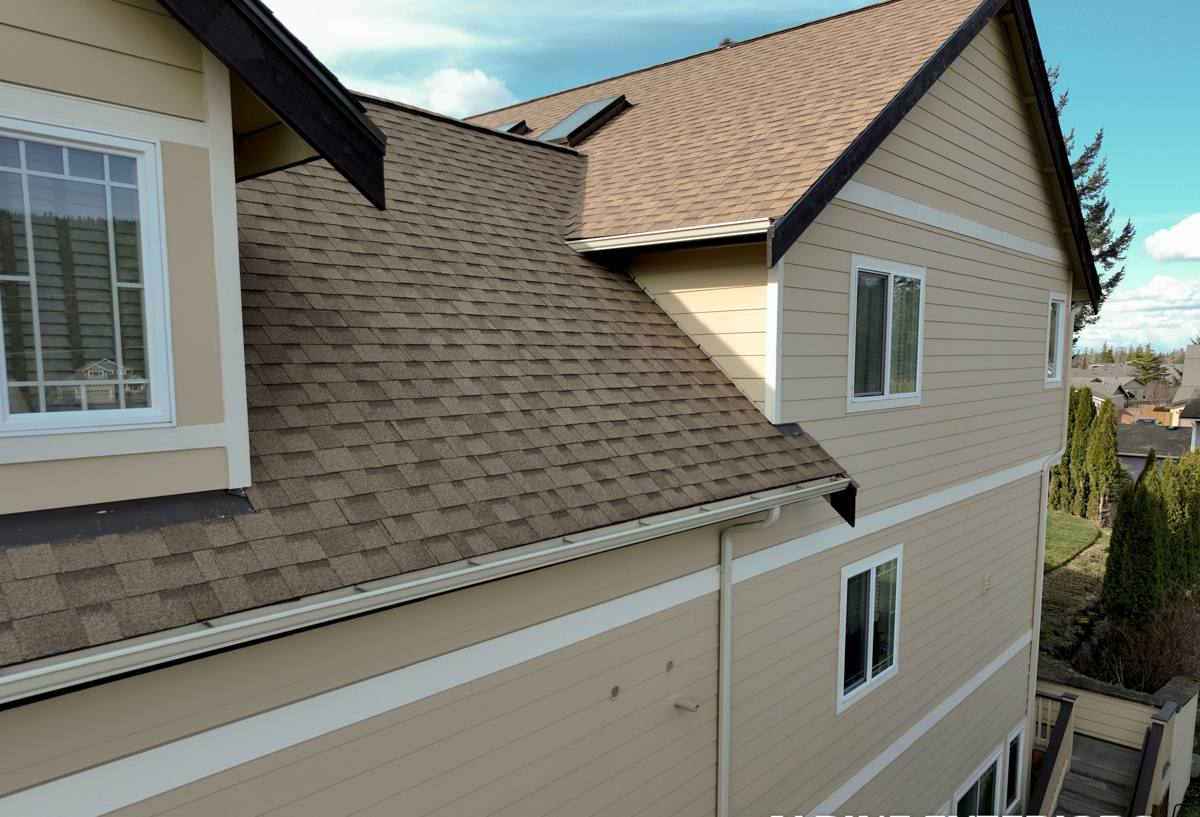
What Salt Air, Driving Rain, and Moss Actually Do to Siding
Salt Air
Airborne salt is corrosive to metal fasteners, flashing, and trim, and it accelerates the breakdown of unprotected wood fibers. It also holds moisture against a wall longer than dry inland air would, which keeps siding surfaces damp more often than homeowners realize.
Driving Rain
Anacortes gets wind off the water that pushes rain into seams, laps, and butt joints that would stay dry in a calmer setting. Siding installed with standard clearances and standard caulking practices — the kind that's fine two miles inland — can let water in at Flounder Bay. Weather-resistive barrier detailing, flashing, and joint treatment all need to be tighter here.
Moss Season
Western Skagit County's wet, mild fall-through-spring stretch gives moss and algae months to establish themselves on any siding surface that stays shaded and damp. Once organic growth gets a foothold in a porous or poorly finished surface, it's very hard to fully remove without damaging the material underneath.
Why We Install Only James Hardie Fiber Cement
We stopped installing vinyl, LP SmartSide, primed wood, and other fiber cement brands years ago, and waterfront neighborhoods like Flounder Bay are a big part of why. Here's how the materials actually compare under these specific conditions:
| Material | How it handles salt air & driving rain | How it handles moss/algae exposure |
|---|---|---|
| Vinyl siding | Won't rot, but panels can warp or rattle loose in sustained wind, and seams are a common water entry point | Smooth surface resists moss somewhat, but doesn't hold factory color well once algae staining sets in |
| Primed wood / cedar | Absorbs moisture at cut edges and joints; salt air accelerates paint failure and fiber breakdown | Organic material — moss and mildew actively feed on it if finish is compromised |
| LP SmartSide (engineered wood) | Engineered wood strand product; edge sealing and caulking maintenance is critical near salt spray | Requires consistent finish maintenance to resist organic growth long-term |
| James Hardie fiber cement | Non-combustible cement-based composition; engineered HZ product lines built for wet climates | Dense, factory-finished surface resists moisture absorption that feeds moss and mildew |
Hardie's HZ5 product line is engineered for climates like ours — it's rated for the freeze-thaw and moisture cycling that a marine Pacific Northwest winter brings. Combined with the ColorPlus factory finish (baked-on, not field-applied), it gives Flounder Bay homes a surface that isn't relying on a homeowner's repainting schedule to stay protected.
What Correct Fiber Cement Installation Involves Here
Fiber cement siding is only as good as the installation behind it. In a high-exposure setting like Flounder Bay, a few details matter more than they would on a sheltered inland lot:
- Proper clearance — siding held at least 6" above grade, decks, and roof lines to keep splash-back and standing moisture away from the bottom edge
- Correct fastener spec — corrosion-resistant fasteners driven to Hardie's specification, not standard-grade fasteners that salt air will degrade over time
- Weather-resistive barrier detailing — a continuous drainage plane behind the siding so any moisture that does get past the surface has somewhere to go
- Flashing at every penetration — windows, doors, vents, and hose bibs all need properly lapped flashing, since wind-driven rain finds gaps that a calmer climate would never test
- Factory-cut edges sealed — any field cut gets sealed per Hardie spec so the cut edge doesn't become the weak point in an otherwise protected system
- Joint and butt seam treatment — sealed and shimmed correctly so seams don't become the entry point driving rain is looking for
Skip any one of these and you can still end up with moisture problems behind good siding material. This is where installation quality matters as much as product choice.
Our Process for a Flounder Bay Project
1. On-Site Assessment
We look at your home's specific exposure — how close you are to open water, which walls take the worst of the wind and rain, where moss is already established, and what condition the existing siding, sheathing, and trim are in underneath.
2. Tear-Off and Sheathing Check
Old siding comes off and we inspect the sheathing underneath for hidden water damage before anything new goes up. This step catches problems that a surface-level look never would — it's common on older bayside homes to find damage that's been building quietly for years.
3. Weather Barrier and Flashing
We install a continuous drainage plane and flash every window, door, and penetration before a single piece of siding goes on. This is the layer that actually keeps your walls dry, and it's the layer that's invisible once the job is finished.
4. Hardie Panel Installation
Siding goes up to manufacturer spec — proper clearances, correct fastener pattern, sealed cuts, and lapped joints built for wind-driven rain.
5. Trim, Caulking, and Final Detail
Trim and caulking are finished last, using products rated for marine exposure, so the whole system — not just the panels — is built for the environment it's going into.
6. Walkthrough
We walk the finished job with you, point out what was done and why, and make sure you know what (if anything) needs periodic attention going forward.
Maintenance Realities for Bayside Anacortes Homes
No siding is maintenance-free at Flounder Bay — the environment is too active for that claim to be honest. But there's a real difference in how much maintenance different materials demand:
| Task | James Hardie (ColorPlus) | Painted wood or engineered wood |
|---|---|---|
| Repainting schedule | Not required — factory finish is warrantied separately from the substrate | Typically every 3-7 years in marine exposure |
| Moss/algae rinse-down | Occasional gentle rinse recommended | Occasional rinse, but growth adheres more readily to porous or worn finishes |
| Caulk and joint inspection | Periodic check, especially after storm seasons | Periodic check, more critical where finish has worn thin |
| Fastener/flashing check | Occasional visual inspection | More frequent — corrosion risk is higher on unprotected fasteners |
Why Hiring a Crew That Already Works Flounder Bay Matters
General contractors who mostly work inland don't always adjust their detailing for a marine environment — they'll install to a standard that's perfectly fine in Mount Vernon or Burlington but under-built for wind-driven rain off the water. A crew that regularly works Anacortes's bayside neighborhoods already knows to tighten up flashing details, use the right fastener grade, and account for moss exposure from the start, instead of learning it the hard way on your home.
Before you hire anyone for a Flounder Bay siding project, it's worth asking a few direct questions:
- Do they install to James Hardie's published fastener and clearance specifications, or their own shortcut version?
- Have they worked on homes with direct water exposure in Skagit County before, and can they explain what they do differently there?
- Is their crew factory-trained on Hardie installation, or is fiber cement just one of several products they install without specialization?
- Will they inspect and address sheathing condition before re-siding, or just cover over whatever's underneath?
A contractor who can answer those clearly, without hedging, is one who understands what this climate actually demands.
Cost Factors for a Flounder Bay Fiber Cement Project
Every home is different, but the factors that move the price on a bayside Anacortes siding job are fairly consistent:
| Factor | Why it matters here |
|---|---|
| Extent of hidden water damage | Sheathing repair adds cost but is essential — covering damaged sheathing with new siding just hides the problem |
| Home size and wall complexity | More corners, penetrations, and trim details mean more flashing and detail work |
| Siding profile and finish selection | HardiePlank lap, panel, and shingle styles carry different material and labor costs |
| Access and site conditions | Waterfront lots can have tighter access, slopes, or staging constraints that affect labor time |
| Trim and accessory scope | Full trim replacement versus reusing sound existing trim changes the total significantly |
We give a written, itemized estimate after seeing the home in person — not a phone-quote guess — so you know exactly what you're paying for and why.
Built for This Climate, Not Just Installed In It
There's a difference between siding that's simply located at Flounder Bay and siding that was actually specified and installed for what Flounder Bay's climate does to a home over time. Salt air, wind-driven rain, and a long moss season don't forgive shortcuts, and they don't wait for a "someday" repaint. James Hardie fiber cement, installed to spec by a crew that understands this specific stretch of Skagit County, is how you get siding that still looks and performs the way it should ten and twenty years out.
If you own a home near Flounder Bay and want an honest look at your siding's condition, we're happy to come take a look. There's no pressure and no cost — just a straightforward assessment and a written estimate you can think over. Reach out using the form below to get started.