 Anacortes Siding
 Building New in March Point Means Building for the Water
March Point sits low and close to the water on the edge of Fidalgo Bay, which means every house going up out here gets more wind-driven rain, more salt-laden air, and a longer wet season than homes just a few miles inland. New-construction windows are one of the few building components that have to fight all three of those conditions at once — they seal the envelope, they carry the structural loads around the rough opening, and they're the first thing to show weathering if the install was rushed. Get the window package right during framing and you won't touch it again for decades. Get it wrong and you're chasing leaks, fogged glass, and stained siding within a few winters.
We install new-construction windows on homes throughout Anacortes and greater Skagit County, and March Point's exposure is a step up from a sheltered inland lot. Salt air accelerates corrosion on hardware and fasteners that aren't rated for it. Driving rain — rain that comes in sideways, not straight down — finds every gap in flashing that would stay dry on a calmer site. And the region's long moss season means anything that traps moisture against wood trim or sheathing becomes a growth problem, not just a cosmetic one. A correct new-construction install accounts for all of that before the siding ever goes on.
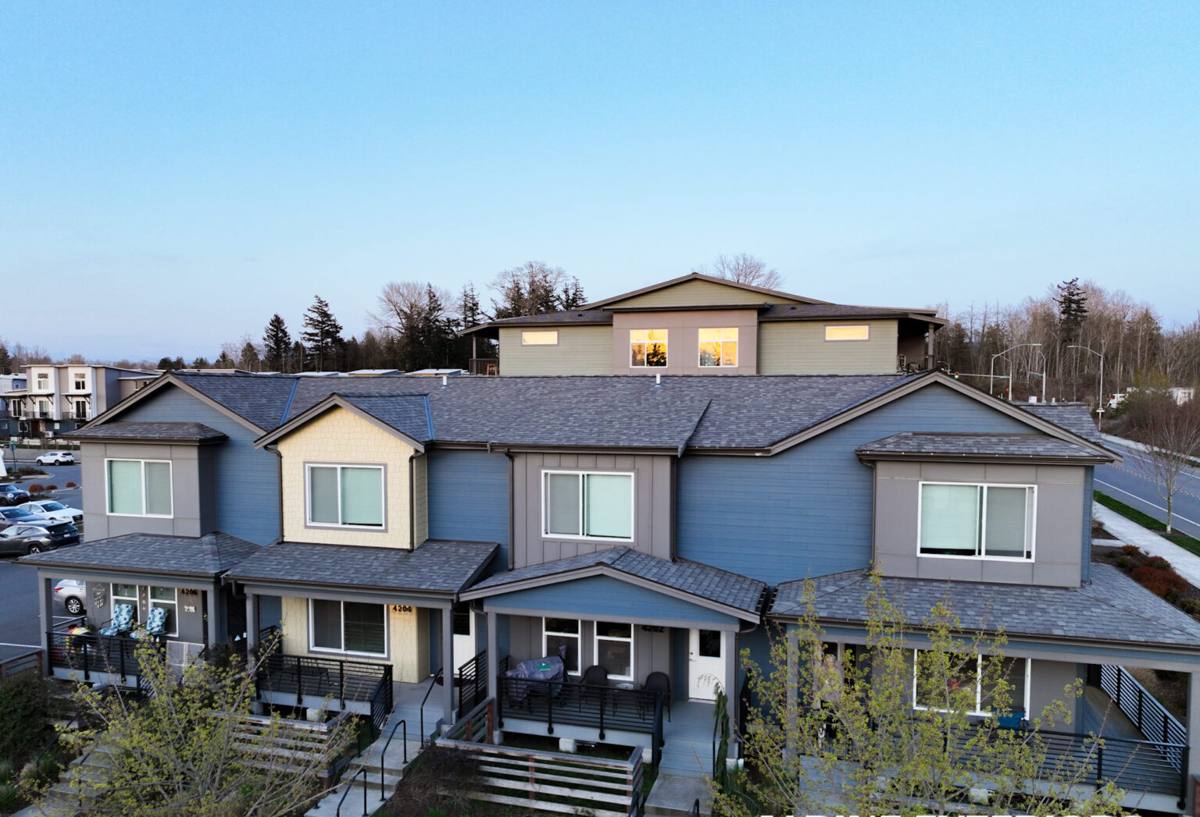
New-Construction Windows vs. Replacement Windows
These are two different jobs, and it matters that homeowners and builders alike understand the difference before framing is finalized.
New-construction windows have a nailing flange — a flat flange around the perimeter of the frame that gets fastened directly to the sheathing and then integrated into the weather-resistive barrier (WRB) and flashing system. Because the wall isn't finished yet, we have full access to the rough opening, the sheathing, and the house wrap, which means the window becomes part of a continuous drainage plane rather than something patched into an existing wall. Replacement windows, by contrast, are built to fit inside an existing frame with the exterior trim left in place, and they rely on sealant rather than a fully lapped flashing system.
For a new build or an addition in March Point, new-construction windows are the right call almost every time, because they give us the chance to build a water-management system into the wall from the studs out — instead of working around one later.
Getting the Water Management Right the First Time
Flashing Sequence That Actually Sheds Water
Every layer of flashing at a window opening has to lap over the layer below it, like shingles on a roof, so water is always directed outward and down — never trapped behind the WRB. On a March Point job, we treat this sequence as non-negotiable:
- Self-adhered flashing membrane or a formed sill pan set into the rough opening before the window ever arrives on site
- Back dam or sloped sill pan so any water that gets past the window sill drains back outside instead of pooling on the framing
- Jamb flashing that laps over the sill pan on both sides
- Head flashing that laps over the jamb flashing and tucks behind the WRB above the opening
- WRB integration so the whole assembly ties into the housewrap with proper shingle-lap order, not just taped seams
This is standard building science, but it only works if every layer is installed in the correct order and pressed down with real hand pressure, not just draped over the opening. Skipping the sill pan or reversing the lap order is the single most common cause of hidden window leaks we get called out to diagnose on homes that are only a few years old.
Sill Pans and Sub-Sill Flashing
A sloped or dammed sill pan is worth calling out on its own, because it's the piece most often left out on production-built homes to save time. Without it, any water that works past the window's own weep system sits directly on bare framing. With a proper sill pan, that same water is directed back outside before it ever touches wood. On a site exposed to driving rain like March Point, this one detail does more to prevent long-term rot than almost any other single step in the install.
Choosing Window Materials for a Salt-Air, High-Rain Site
Frame material matters more here than it does on a sheltered inland lot. Salt air is corrosive to unprotected metal hardware, and constant moisture cycling stresses whatever seals the frame to the glass unit. Here's how the common options stack up for a March Point new build:
| Frame Material | Coastal/Salt-Air Performance | Maintenance | Typical Fit |
|---|---|---|---|
| Vinyl | Good — won't corrode or pit; UV-stable formulations hold up well | Low — occasional cleaning | Most new-construction homes; strong value |
| Fiberglass | Excellent — dimensionally stable, resists moisture-driven expansion and contraction | Low | Higher-end builds, larger openings, dark exterior colors |
| Aluminum | Fair — needs a marine-grade or well-sealed finish to resist salt corrosion long-term | Moderate | Contemporary designs, larger glass spans |
| Wood/wood-clad | Requires diligence — exposed wood is vulnerable to the region's long wet season and moss growth | High | Traditional aesthetics where upkeep is planned for |
We don't push one brand over another — we spec what's appropriate for the exposure, the budget, and the look the homeowner or builder wants. Where we do draw a hard line is on hardware: any exterior fasteners and cladding clips on a March Point job should be corrosion-resistant, because standard zinc-coated hardware can start showing rust streaks on siding within a couple of seasons this close to the water.
Our New-Construction Window Process
On a framing crew's timeline, windows have to go in at exactly the right moment — after the WRB is up, before the siding starts. Here's how we run it:
- Rough opening check. We verify every opening is square, plumb, and sized correctly before any flashing goes in. Undersized or out-of-square openings get flagged and corrected before install, not worked around with extra shims and sealant.
- Sill pan and flashing install. Sill pan first, then jamb flashing, then the window, then head flashing — in that order, every time.
- Window setting and fastening. The unit is set level and plumb, shimmed at the manufacturer's specified points, and fastened through the nailing flange with corrosion-resistant fasteners spaced per the manufacturer's schedule.
- WRB integration and sealing. Housewrap is lapped over the flanges in the correct shingle order and sealed with compatible tape — not just caulked over.
- Interior air sealing. A backer rod and low-expansion sealant at the interior gap between the frame and the rough opening stops air leakage without bowing the frame.
- Final check. Every window is operated, checked for square and smooth operation, and photographed before siding closes it in — because it's the last easy chance to catch a problem.
Common Mistakes We See on New-Construction Window Jobs
Most window problems trace back to a handful of shortcuts. On a March Point site, these get punished faster than they would somewhere drier:
- No sill pan, or a flat sill pan with no slope or back dam to direct water outward
- Flashing installed out of shingle-lap order, which channels water behind the WRB instead of away from it
- Housewrap taped over the nailing flange instead of properly lapped, trapping moisture against the frame
- Standard fasteners used in a salt-air zone, leading to early rust staining on siding below the window
- Sealant used as the primary water barrier instead of a backup to proper flashing
- Windows fastened before the opening was checked for square, leaving the unit under stress and hard to operate
Energy Performance and Code Requirements
Washington's energy code sets minimum performance requirements for new-construction windows, and those requirements have gotten more demanding in recent code cycles. For a new build in Skagit County, that generally means paying attention to U-factor (how well the window resists heat loss) and, depending on the home's overall energy path, solar heat gain coefficient as well. We spec glass packages that meet or exceed current code minimums and match the home's orientation — south- and west-facing openings sometimes benefit from a different glass package than north-facing ones, particularly on a site with as much open water exposure as March Point has. We handle the product specs so the builder or homeowner doesn't have to cross-reference code tables themselves, and we make sure what goes on the permit matches what actually gets installed.
Why Hire a Crew That Already Works March Point
Flashing details that work fine on a sheltered lot in town aren't always enough on an exposed, low-lying site like March Point. Crews who haven't worked this specific stretch of coastline sometimes under-spec the flashing or skip the sill pan because it's "worked everywhere else." We've installed windows on homes across Anacortes and the surrounding Skagit County waterfront, and we build every opening for the worst rain angle the site will actually see, not the average one. That's the difference between a window package that's still watertight in fifteen years and one that starts showing problems in five.
If you're framing a new home or addition in March Point and want a window package built for the site's actual exposure — not a generic spec — we're happy to walk the plans with you and put together a straightforward, no-pressure estimate. There's a form below to get that conversation started.