 Anacortes Siding
 Why March Point Roofs Wear Differently
March Point sits out on the water, surrounded by Fidalgo Bay on multiple sides, which means homes here take on weather that inland Skagit County neighborhoods simply don't deal with in the same way. Salt-laden air moves off the bay and settles on roofing materials, fasteners, and flashing year-round. Add Anacortes's wind-driven winter rain, which pushes water sideways and upward under shingles instead of just falling straight down, and you've got a roof that's working harder than the manufacturer's warranty paperwork usually accounts for.
Then there's moss. Skagit County's long wet season and heavy tree cover in and around March Point keep roof surfaces damp for extended stretches, especially on north-facing slopes and anywhere shade lingers into midday. Moss doesn't just look bad — it holds moisture against the roofing surface, lifts shingle edges, and accelerates granule loss. A roof replacement out here needs to account for all three factors at once: salt exposure, wind-driven rain, and a moss season that can run eight or nine months of the year.
Signs Your Roof Needs Replacing, Not Just Another Repair
Not every roof problem calls for a full replacement, but there's a point where patching becomes throwing money at a roof that's already past its useful life. Watch for these signs:
- Granule loss showing up in gutters or downspouts, or bald patches visible on shingle faces
- Shingles that are curling, cupping, or cracking, especially on south and west-facing slopes
- Soft or spongy spots when walking the roof, which usually means the decking underneath has taken on moisture
- Daylight visible through the roof deck from inside the attic
- Leaks that keep returning in the same spot even after repairs
- Thick moss mats that have been sitting for more than a season, particularly along shaded valleys
- Rusting or lifting flashing around chimneys, skylights, and vent pipes
Asphalt composition roofs in this climate tend to run shorter than their rated lifespan suggests — salt air and near-constant moisture cycling take a toll that manufacturers' national averages don't reflect. If your roof is approaching 18-20 years and showing two or more of the signs above, replacement is usually the more honest recommendation than another round of spot repairs.
Overlay vs. Tear-Off
Some contractors will offer to install new shingles directly over the old layer to save money. We don't recommend this for March Point homes. An overlay hides the condition of the decking underneath, traps moisture between layers, and makes it impossible to properly address the flashing details that matter most in a high-wind, high-moisture location. A full tear-off costs more up front but is the only way to actually know what you're covering up.
What a Correct Roof Replacement Involves Here
A roof replacement done right for this location isn't just "new shingles, same as before." Several details matter more here than they would in a drier, more sheltered part of the state.
Decking Inspection and Repair
Once the old roofing is stripped, the deck gets inspected board by board. Any sheathing that's soft, delaminated, or water-stained gets replaced before anything new goes down. Skipping this step is the single most common shortcut that leads to early failure.
Ice-and-Water Shield at Eaves and Valleys
Self-adhering membrane at the eaves, valleys, and around penetrations gives an extra layer of protection where wind-driven rain is most likely to find its way under the shingle line. Given how often that happens on exposed sites near the bay, this isn't an optional upgrade — it's standard practice for us out here.
Flashing That's Actually Rebuilt
Flashing around chimneys, skylights, and sidewalls should be replaced, not reused. Old flashing that's been exposed to salt air is often more corroded than it looks from the ground, and reusing it just sets up the next leak.
Fastening for Wind Exposure
Homes with open exposure toward the bay see higher sustained winds than sheltered inland lots. Proper nail placement and pattern — following the shingle manufacturer's high-wind installation instructions rather than the standard pattern — makes a real difference in how the roof holds up during winter storms.
Choosing a Roofing Material for This Location
Material choice matters more here than in a lot of Skagit County neighborhoods because of the combined salt-air and moss exposure. Here's how the common options compare for a home in March Point specifically.
| Material | Typical Lifespan in This Climate | Salt Air & Moss Behavior | Maintenance Load |
|---|---|---|---|
| Architectural asphalt shingle | 18-25 years | Good with proper ventilation and periodic moss treatment; algae-resistant granule options help | Low to moderate |
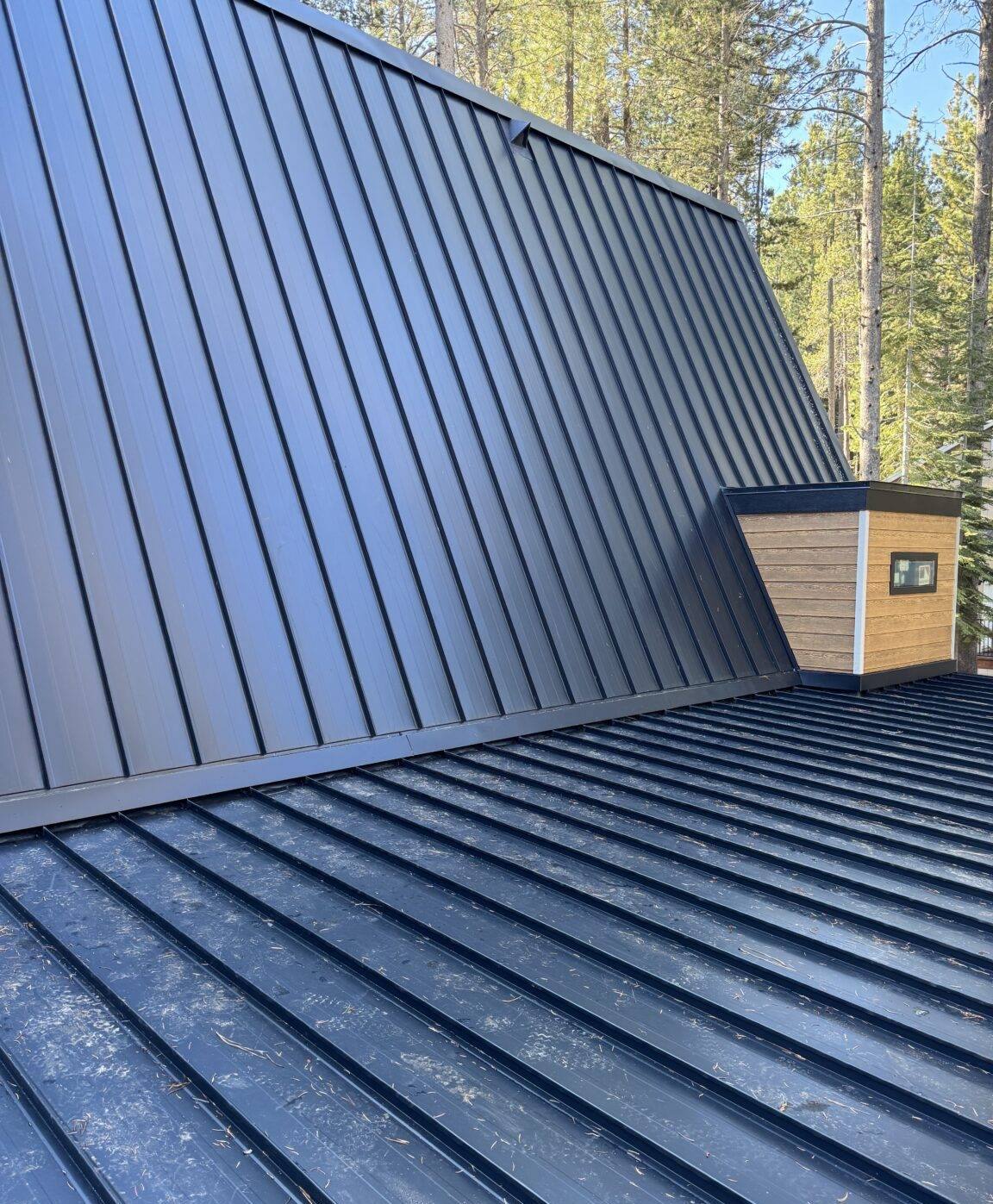
| Standing seam metal | 40+ years | Sheds moisture fast, very little surface for moss to grip; coastal-rated coatings resist salt corrosion well | Low |
| Cedar shake | 20-30 years with diligent upkeep | Attractive but holds moisture longest of the three; needs consistent moss and algae treatment to avoid early rot | High |
We install and stand behind architectural asphalt and standing seam metal on most March Point homes. We're upfront that cedar shake, while a good-looking product, asks for a maintenance commitment that most homeowners underestimate in a climate this wet — it's a legitimate choice, but one that needs real upkeep to reach its full lifespan rather than rotting out early.
Our Roof Replacement Process
- On-site inspection and estimate — we walk the roof, check the attic for ventilation and moisture issues, and give you a written scope and price, not just a verbal guess.
- Material selection — we go over the trade-offs above based on your home's exposure, roof pitch, and budget.
- Permitting and scheduling — we handle the permit application with the local building department and plan around the weather window.
- Tear-off and decking inspection — old roofing comes off, decking gets inspected and repaired as needed.
- Underlayment and flashing — ice-and-water shield, synthetic underlayment, and new flashing go in before any finish roofing is installed.
- New roofing installation — installed to manufacturer high-wind specifications given the site's exposure.
- Ventilation check — intake and exhaust ventilation are balanced, not just left as-is from the old roof.
- Cleanup and final walkthrough — magnetic sweep for nails, full site cleanup, and a walkthrough so you know exactly what was done.
Ventilation and Moisture: The Part Homeowners Don't See
A new roof installed over bad ventilation will still develop problems, just from the inside instead of the outside. In a humid coastal climate, warm, moist air from the living space rises into the attic and needs a clear path out through ridge or roof vents, balanced by enough intake air at the soffits. When that balance is off, condensation builds up on the underside of the decking, which rots sheathing from below regardless of how good the shingles above it are.
Part of every replacement estimate includes checking whether the existing ventilation is adequate, undersized, or blocked by insulation. It's a detail that's easy to skip but expensive to ignore, since fixing rotted decking after the fact means tearing into a roof that's otherwise still under warranty.
Moss, Algae, and Keeping a New Roof Looking Right
Even a well-installed roof in this part of Skagit County will face moss pressure for most of the year. A little routine attention keeps it from becoming a bigger problem down the line.
- Keep gutters and downspouts clear so water isn't backing up under the shingle edge
- Trim back overhanging branches where practical to let more light and airflow reach shaded slopes
- Consider zinc or copper control strips near the ridge on moss-prone slopes; rain carries trace metal down the roof and helps slow regrowth
- Have moss treated and gently removed on a regular schedule rather than letting it build into thick mats
- Avoid pressure washing — it strips granules and shortens the roof's life; low-pressure, roof-safe cleaning methods are the better call
- Schedule a walk-through inspection every year or two, ideally after the wettest months
Permits, Timeline, and What to Expect During the Job
Most roof replacements require a permit through the local building department, and we handle that application as part of the job rather than leaving it to the homeowner. Timeline for a typical single-family home runs a few days for tear-off and installation, weather dependent — and weather is the real variable in this part of Washington. We plan around dry windows where possible and won't rush a tear-off into an incoming storm just to hit a schedule.
During the job, expect a staging area for materials and a dumpster or disposal trailer on-site, plus some noise and foot traffic around the property. We do a nail sweep and general cleanup at the end of each day, not just at the very end of the project, so the site doesn't sit exposed or hazardous overnight.
Why Hire a Crew That Already Works March Point
Roofing crews that mostly work drier, more sheltered inland areas don't always account for how differently a bay-exposed roof ages. We work on homes throughout Anacortes and the surrounding Skagit County area, including March Point specifically, so we're not guessing at how salt air and moss behave on this kind of site — we see it on every job. That familiarity shows up in the small decisions: which ventilation upgrades are worth it, where the wind-driven rain actually gets in, and which materials are worth the extra cost versus which ones just add maintenance burden without adding real service life.
If your roof is showing its age or you're just trying to plan ahead, we're happy to take a look and give you a straightforward, no-pressure estimate — no upsell, just an honest read on what your roof actually needs. Use the form below to get started.