 Anacortes Siding
 Why Mount Vernon Roofs Wear Out Faster Than the Warranty Says
A roof in Mount Vernon doesn't fail the same way a roof does in a dry climate. Skagit County sits under a long wet season, with marine-influenced air moving in off the Salish Sea and settling over the valley for weeks at a time. That means roofs here deal with more than just rain volume — they deal with sustained moisture, driving wind-blown rain that gets up under shingle edges, and shaded, tree-covered lots where moss and moss-fed algae never really stop growing.
None of that is a reason to panic about your roof. It's a reason to make sure the one you install is built for this specific climate, not a generic spec sheet. A roof that would hold up fine in a drier region can start showing granule loss, moss lift, and soft decking years ahead of schedule here if it wasn't installed with local conditions in mind.
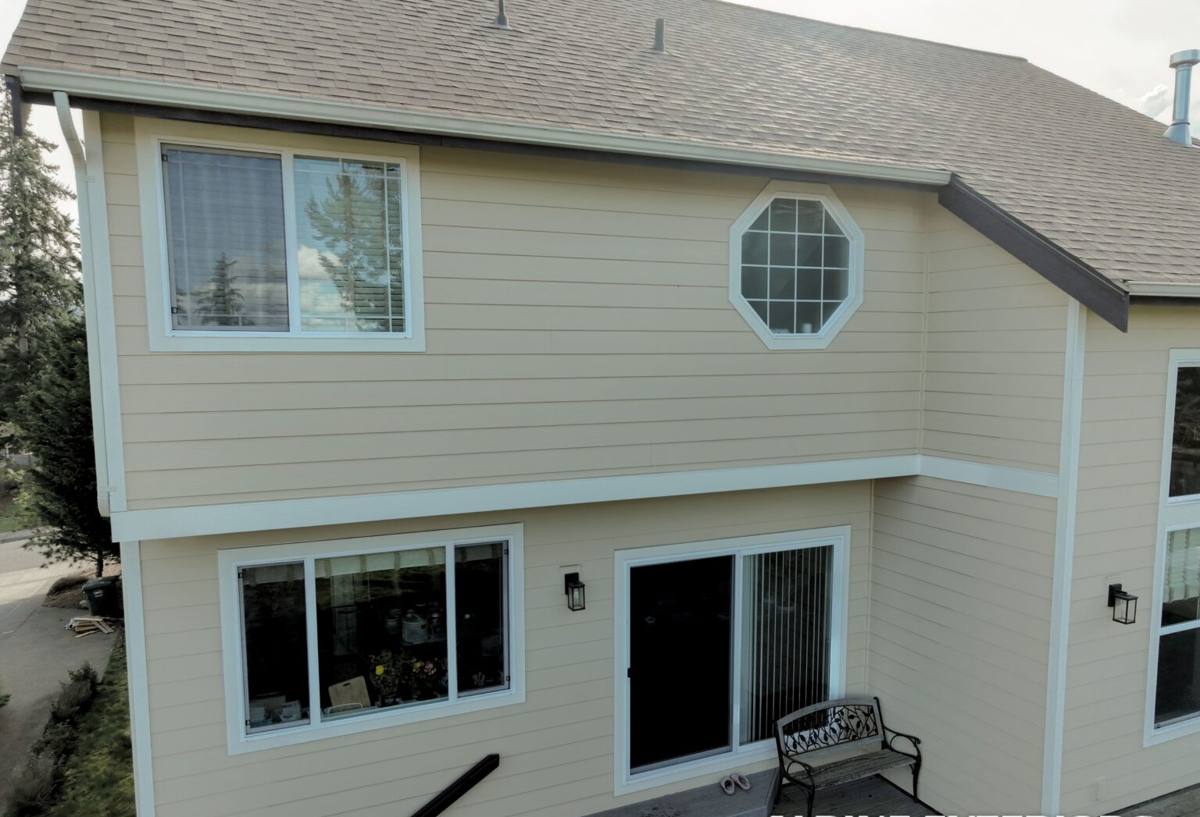
Signs a Mount Vernon Roof Needs Replacement, Not Another Repair
Repairs make sense when the damage is isolated. Replacement makes sense when the roof as a system is past the point where patching does anything but delay the inevitable. Common signs we see on Mount Vernon area homes include:
- Shingles that are cupping, curling, or shedding granules in patches, not just around one flashing point
- Moss established at the shingle tabs, not just on the surface — this lifts shingles and lets water track underneath
- Soft or spongy decking felt underfoot in the attic, or daylight visible through the roof deck
- Leaks that keep reappearing near valleys, chimneys, or skylights after repeated spot repairs
- A roof in the range of 20-25 years old for standard asphalt composition, which is a realistic ceiling given how much moisture this region puts a roof through
If you're only seeing one of these, a repair might genuinely be the right call — we'll tell you that if it's true. Replacement gets recommended when the underlying deck, underlayment, and shingle field are all showing age at the same time.
What a Correct Roof Installation Actually Involves
Tear-Off and Deck Inspection
We don't install a new roof over an old one, and we'd caution against hiring anyone who offers to. A second layer traps moisture, hides deck problems, and voids most manufacturer warranties. A full tear-off lets us see the actual decking — plywood or board sheathing — and replace any sections that have gone soft or delaminated from years of moisture exposure. Skipping this step is the single most common reason a "new" roof fails early.
Underlayment and Water Barrier
Underlayment is the layer that actually keeps your house dry if wind-driven rain gets past the shingles — and in this climate, it will, eventually. We use synthetic underlayment across the field for its tear resistance and consistent moisture protection, with self-adhered ice-and-water barrier at the eaves, valleys, and any roof-to-wall transitions where water concentrates.
Flashing Details
Flashing around chimneys, skylights, vent pipes, and wall intersections is where most roof leaks actually start, not in the open shingle field. Correct step flashing, counter-flashing, and pipe boots — installed fresh, not reused from the old roof — matter more to a roof's longevity here than almost any other single detail.
Ventilation
A roof needs balanced intake and exhaust airflow to manage the moisture that naturally builds up in an attic. Get this wrong and you trap warm, damp air against the underside of the deck — which accelerates rot and gives moss and mildew a head start from the inside out. We size and balance venting to the actual attic, not a one-size-fits-all default.
Roofing Materials That Make Sense for Skagit County Homes
There isn't one "right" material for every home, but some options handle this climate better than others. Here's how the common choices compare for a Mount Vernon roof:
| Material | Typical Lifespan Here | Moss & Moisture Behavior | Best Fit For |
|---|---|---|---|
| Asphalt composition shingle (standard) | 18-22 years | Moderate — needs good venting and periodic moss treatment | Budget-conscious replacements, most home styles |
| Asphalt composition shingle (architectural/laminate) | 25-30 years | Better shedding profile, still benefits from venting | Homes wanting more curb appeal and longer service life |
| Standing seam metal | 40-50+ years | Excellent — moss struggles to establish on smooth metal | Owners planning to stay long-term, steep or shaded roofs |
| Cedar shake | 20-25 years with upkeep | High maintenance burden — this region's moisture keeps moss and rot pressure constant | Homes matching a specific historic or architectural look, with owners committed to upkeep |
We'll walk through these tradeoffs against your budget, roof pitch, and how much shade your lot gets — a heavily treed property changes the moss-resistance calculation more than almost any other factor.
Moss, Ventilation, and the Mistakes We See Most Often
Two things separate a roof that holds up in Mount Vernon from one that doesn't, and neither of them is the shingle brand. The first is ventilation, covered above. The second is moss management built into the installation itself — not left as an afterthought for the homeowner to handle later. That means proper flashing at valleys and eaves so moss can't dam water behind it, and it means being honest with clients about which roof planes will need occasional moss treatment regardless of material, because full sun exposure just isn't realistic on every roof face in this region.
The most common mistake we find when we tear off an older roof isn't a bad shingle — it's flashing that was reused instead of replaced, or a ridge vent installed without matching intake at the soffits, leaving the attic no way to actually exhaust moist air.
Our Roof Installation Process, Start to Finish
- On-site inspection and estimate — we get on the roof, not just in the driveway, and check the deck condition where accessible, current ventilation, and flashing points before quoting.
- Material selection — we go over the tradeoffs in plain terms so you're choosing based on your home and budget, not a sales pitch.
- Scheduling around the weather — roofing in Skagit County means working around rain windows; we plan tear-off days to minimize how long your home is exposed.
- Tear-off and deck repair — full removal of the old roofing, deck inspected and any damaged sections replaced before anything new goes down.
- Underlayment, flashing, and shingle installation — installed in the sequence and to the specs outlined above, not shortcut.
- Cleanup and final walkthrough — magnetic sweep for nails, debris hauled off, and a walkthrough so you know exactly what was done.
Permits, Timelines, and What to Expect During the Job
Most straightforward residential roof replacements in the area take one to a few days on-site, depending on roof size, pitch, and how much deck repair turns up once the old roofing is off. Weather is the biggest variable — we don't tear off more roof than we can dry-in the same day, which sometimes means a job stretches an extra day rather than gambling on the forecast.
Depending on the scope of work, a permit may be required through the local jurisdiction, and we handle that coordination rather than leaving it on the homeowner. During the job, expect a work zone around the perimeter of the house for debris and material staging, daily cleanup, and protection laid down over landscaping and walkways near the drop zone.
Why Hiring a Crew That Already Works in Mount Vernon Matters
A roofing crew that regularly works Mount Vernon and the surrounding Skagit County area isn't guessing at how the climate affects a roof — they've seen how moss establishes on the shaded roof planes common to the area's tree-covered lots, how driving rain off the valley finds weak flashing, and what deck condition tends to look like under older roofs once they're opened up. That translates into more accurate estimates up front and fewer surprises mid-job, because the surprises they might hit are ones we've already worked through on other roofs nearby.
It also means faster response if something needs attention after the fact — a local crew isn't a multi-hour drive away when a warranty question or storm-related issue comes up.
Questions to Ask Before You Sign a Roofing Contract
- Is the bid based on a full tear-off, or does it include the option to install over existing layers?
- Does the quote specify underlayment type, and ice-and-water barrier at eaves and valleys?
- Will flashing be replaced, or reused from the old roof?
- Is attic ventilation being assessed and addressed, or just the shingle field?
- What's covered under workmanship warranty versus manufacturer material warranty, and for how long?
- Is the contractor licensed and insured to work in Washington, and can they provide proof?
If you're weighing a repair against full replacement, or just want an honest read on how much life is left in your current roof, we're happy to take a look. Fill out the form below for a free, no-pressure estimate.