 Anacortes Siding
 Roofing Built for West Anacortes Conditions
West Anacortes sits close enough to the water that homes here take a different kind of weathering than roofs a few miles inland. Salt-laden air off Rosario Strait and the surrounding shoreline works on metal fasteners and flashing year-round. Winter storms bring driving rain that doesn't fall straight down so much as sideways, testing every seam and lap in a roof system. And the long stretch of mild, damp weather that defines a Pacific Northwest fall through spring gives moss and moisture months to work into a roof that isn't holding up its end of the bargain. A roof that would be fine in a drier, inland climate can fail early here if it wasn't built with these specific conditions in mind.
This page covers what a correct new roof installation looks like for a West Anacortes home — the materials, the details that matter, and the process we follow — so you know what to expect and what to ask for.
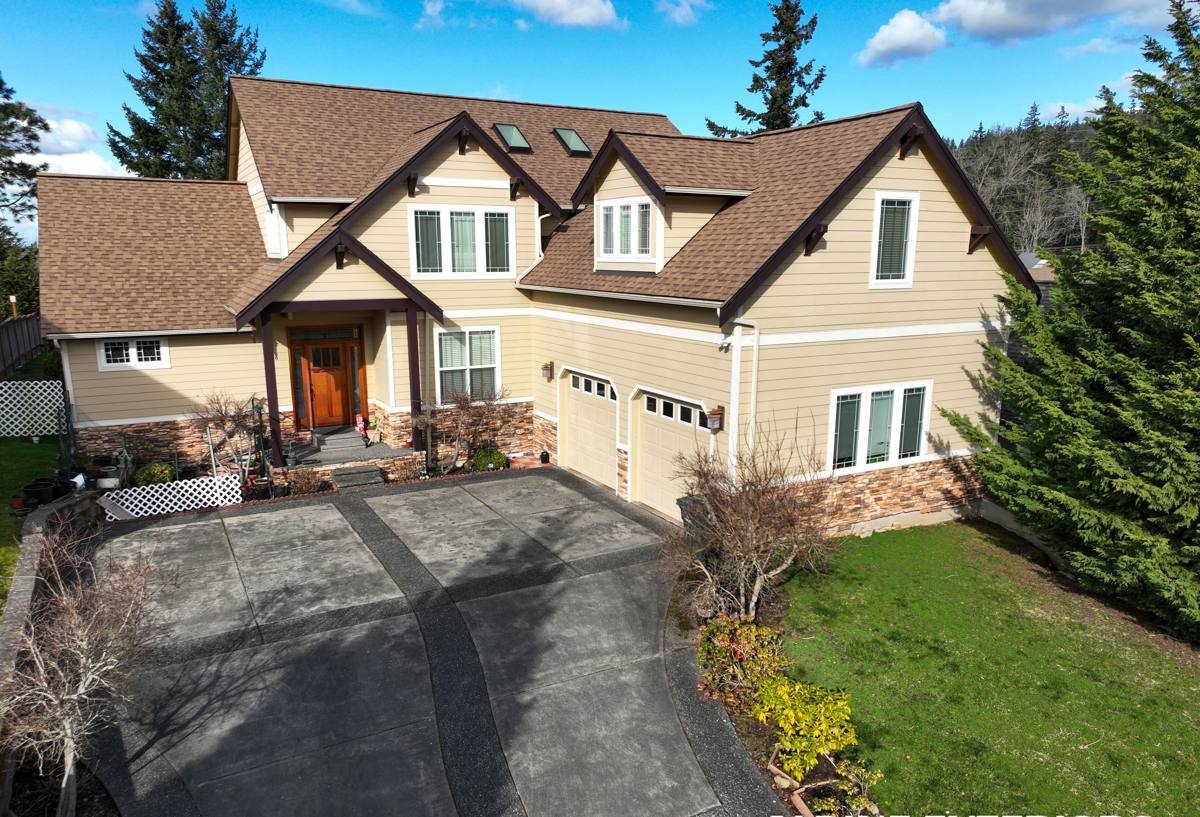
What Salt Air, Driving Rain, and Moss Season Actually Do
Salt Air and Corrosion
Airborne salt accelerates corrosion on exposed metal — nails, flashing, vent boots, and hardware. Fasteners that would last decades elsewhere can start rusting and losing holding power years sooner near the shoreline. This is why fastener and flashing choice matters more here than it does for a roof twenty miles inland: cheaper coated materials degrade faster, and once a fastener starts to fail, it can loosen shingles or let water find a path underneath long before the roofing material itself is worn out.
Driving Rain and Wind
Storms coming off the water frequently push rain sideways rather than straight down. That matters because a roof isn't just shedding water off a slope — wind-driven rain can work its way under shingle edges, around vents, and into any gap in flashing that a calmer rain would never reach. Roof edges, valleys, and penetrations (chimneys, vents, skylights) need tighter, more deliberate detailing in a driving-rain climate than a standard installation manual assumes.
Moss Season
Skagit County's long damp season — often stretching from fall through spring — gives moss and algae months of moisture and shade to establish themselves, especially on north-facing slopes and roof sections shaded by trees. Moss isn't just cosmetic. As it grows, it holds moisture against the roofing material, lifts shingle edges, and can work its way under laps over time. A roof designed for this climate accounts for moss resistance and drainage from the start, rather than treating it as an afterthought to be dealt with after the fact.
Signs a West Anacortes Roof Is Due for Replacement
Not every roof problem means a full replacement, but certain signs point that direction, especially on homes exposed to the elements described above:
- Granule loss showing bare or shiny patches on asphalt shingles
- Curling, cupping, or cracked shingle edges, especially on south- and west-facing slopes
- Moss or algae buildup that returns quickly after cleaning
- Rusted, lifted, or missing flashing around chimneys, vents, and valleys
- Daylight visible through the roof deck from the attic
- Water stains on interior ceilings or in the attic near penetrations
- A roof older than 20-25 years for asphalt, or with a history of repeated repairs
- Soft or spongy spots underfoot on the roof deck
If you're seeing two or more of these, it's worth having someone look at the whole system rather than patching the symptom.
What a Correct Installation Actually Involves
A roof is a system, not a single layer of material. Skipping or shortcutting any one part of it undermines the rest, especially in a climate that punishes weak points. A proper installation for this area includes:
Tear-Off and Deck Inspection
Old roofing comes off down to the deck so it can actually be inspected — not covered over. Any soft, rotted, or water-damaged sheathing gets identified and replaced before anything new goes down. Installing over a compromised deck just hides a problem that will resurface.
Underlayment
Given the amount of driving rain this area sees, underlayment choice matters. Synthetic underlayment with taped or lapped seams, combined with self-adhered ice-and-water membrane at eaves, valleys, and around penetrations, gives the roof a real second line of defense if wind-driven water gets past the primary roofing material.
Flashing
New flashing at every valley, chimney, skylight, and wall intersection — not reused old flashing tucked under new shingles. Given salt-air corrosion, we favor corrosion-resistant flashing materials and fastener types suited to a coastal-influenced climate rather than the cheapest standard option.
Ventilation
Balanced intake and exhaust ventilation keeps the attic dry and temperature-regulated, which reduces condensation buildup, extends shingle life, and helps prevent the trapped moisture that moss and algae thrive on.
Roofing Material Installation
Correct nailing patterns, exposure, and overlap per manufacturer specification — not just "close enough." In a wind-driven-rain climate, installation precision on laps and fastening is often the difference between a roof that holds up and one that doesn't.
Comparing Roofing Material Options for This Climate
| Material | Moss/Moisture Resistance | Wind & Rain Performance | Maintenance |
|---|---|---|---|
| Standard asphalt shingle | Moderate — benefits from algae-resistant granules | Good when properly fastened and flashed | Periodic moss removal recommended |
| Algae-resistant (AR) asphalt shingle | Better — copper/zinc granules slow algae and moss growth | Good | Lower moss maintenance than standard shingle |
| Standing seam metal | Excellent — sheds moisture, minimal surface for moss to anchor | Very good in high wind and driving rain | Low; watch fastener and coating condition near salt air |
| Composite/synthetic shingle | Good, varies by product | Good | Moderate |
There's no single "correct" material for every home — roof pitch, budget, HOA or architectural preferences, and how much shade the roof sits under all factor in. What matters is picking a material honestly suited to a damp, salt-influenced, wind-exposed environment rather than the cheapest option available, and installing it correctly regardless of which one you choose.
Our Installation Process
- On-site inspection and estimate: We look at the existing roof, attic ventilation, and any problem areas before quoting anything, and walk you through honest material options for your home.
- Material selection: We help you weigh cost, appearance, and how each option holds up to local moss and moisture conditions — no pressure toward the most expensive option.
- Scheduling around weather: Roof installation needs a reasonable dry window. We plan the job with Anacortes' weather patterns in mind so the deck isn't left exposed longer than necessary.
- Tear-off and deck inspection: Full removal of old roofing, with any damaged sheathing replaced before new materials go down.
- Underlayment and flashing installation: Ice-and-water membrane at vulnerable areas, synthetic underlayment across the field, and new flashing throughout.
- Roofing material installation: Installed to manufacturer specification, with attention to fastening and exposure suited to wind-driven rain.
- Ventilation check: Intake and exhaust ventilation confirmed or upgraded as part of the job, not treated as optional.
- Final walkthrough and cleanup: Site cleared of debris and nails, and a walkthrough so you understand what was done and what to expect going forward.
Ventilation and Moisture: The Part Homeowners Often Miss
A brand-new roof installed over poor attic ventilation will age faster than it should. Trapped heat and moisture in the attic condense against the underside of the roof deck, which can lead to premature deterioration of the sheathing and the shingles above it — and it creates exactly the damp conditions moss and algae prefer on the outside. Balanced ventilation (adequate intake at the eaves paired with exhaust at or near the ridge) is a low-cost part of a new roof installation that pays off over the life of the roof, particularly in a climate as consistently damp as Skagit County's.
Pre-Installation Checklist for Homeowners
- Confirm the scope includes full tear-off, not an overlay on the existing roof
- Ask what underlayment is being used and where ice-and-water membrane will be installed
- Ask whether flashing will be fully replaced, not reused
- Confirm attic ventilation will be assessed as part of the job
- Get the manufacturer warranty terms in writing, including what voids them
- Ask about fastener material given proximity to salt air
- Confirm cleanup and debris/nail removal is included
Why Hiring a Crew That Already Works West Anacortes Matters
A roofing crew that regularly works this specific area already knows which slopes tend to hold moss, how far wind-driven rain reaches during a typical winter storm, and which flashing and fastener choices actually hold up near the water rather than just on paper. That local pattern recognition shows up in the details — where extra membrane goes, which vents need closer attention, how a roof is sequenced around Anacortes' weather windows. It's the difference between a roof installed to a generic checklist and one installed for the conditions it will actually face for the next 20-30 years.
Get an Honest Look at Your Roof
If your roof is showing wear, moss buildup, or you're just planning ahead, we're glad to take a look and give you a straightforward assessment — no pressure, no upsell. Reach out for a free estimate and we'll walk your roof, explain what we see, and lay out real options for a system built to handle West Anacortes' salt air, driving rain, and moss season.