 Anacortes Siding
 Roofing Old Town Anacortes: A Different Kind of Job
Old Town Anacortes sits close to the water, with a mix of older homes and newer builds tucked among mature trees on Fidalgo Island. That combination — age, tree cover, and constant marine exposure — means roofs here rarely fail the same way a roof does forty miles inland. We've replaced enough roofs in this neighborhood to know what actually causes trouble: not just age, but how age interacts with salt air, shade, and rain that never really stops for months at a time.
A new roof installation here isn't just about swapping old shingles for new ones. It's about building a roof system that's going to hold up to the specific conditions of this stretch of Skagit County, and doing the underlying work — decking, ventilation, flashing — correctly the first time, since a roof is not something you want to redo in five years because a shortcut was taken.
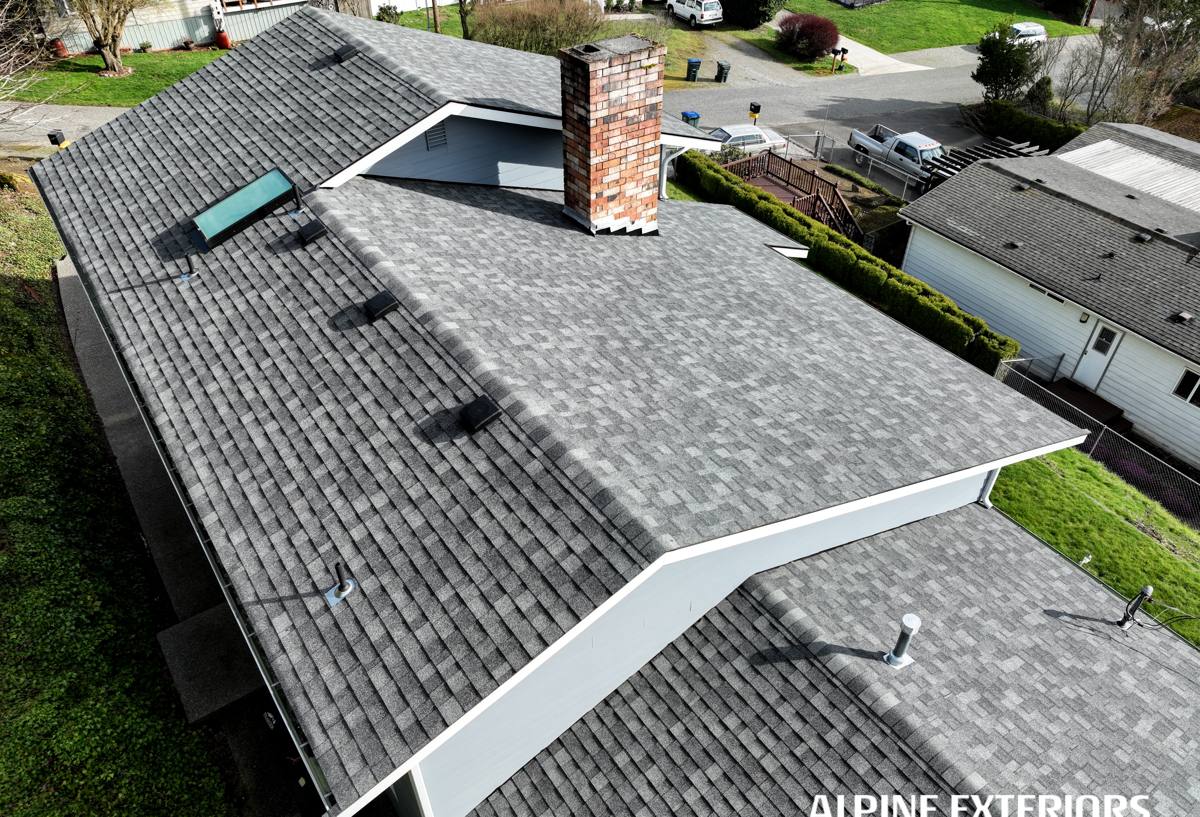
What Anacortes Weather Actually Does to a Roof
Anacortes homes deal with three things most inland roofs don't have to contend with in combination:
Salt Air
Being surrounded by Rosario Strait and Guemes Channel means airborne salt is a constant, low-grade factor. It accelerates corrosion on any exposed metal — nail heads, flashing, vents, gutters — faster than a roof built the same way would corrode in a dry inland climate. This is why fastener and flashing material choice matters more here than in a lot of other places we work.
Driving Rain
Storms off the water tend to come in sideways rather than straight down. That wind-driven rain finds every weak point in a roof's underlayment, flashing, and edge details that a calmer rain would never expose. A roof that's merely "watertight" in still conditions can still leak here if the underlayment and flashing weren't installed with wind-driven moisture in mind.
Long Moss Season
Shade from mature trees, high humidity, and mild temperatures give moss a long growing window in this part of Skagit County — often most of the year. Moss holds moisture against the roof surface, works its way under shingle edges, and can lift granules and shorten the life of an otherwise sound roof if it isn't addressed at installation and managed afterward.
What a Correct Roof Replacement Involves
A roof is a system, not a single product. Every layer has a job, and skipping or under-building any one of them shows up later as a leak, premature wear, or a warranty claim that gets denied because the installation didn't meet manufacturer specs. On an Old Town Anacortes home, we pay particular attention to:
- Decking condition — soft, delaminated, or water-stained sheathing gets replaced, not covered over
- Underlayment rated for wind-driven rain, not just a basic felt layer
- Ice-and-water shield at eaves, valleys, and penetrations where wind-driven moisture is most likely to intrude
- Corrosion-resistant fasteners and flashing suited to a marine-air environment
- Balanced intake and exhaust ventilation so moisture doesn't get trapped in the attic
- Proper valley, chimney, and vent-pipe flashing — the most common places older roofs actually leak
- Edge metal and drip edge that shed water cleanly instead of letting it wick back under the shingles
Material Options for This Neighborhood
There's no single "right" roofing material for every home in Old Town Anacortes — it depends on the home's age, roof pitch, tree cover, and budget. Here's how the common options stack up for this specific climate:
| Material | How It Handles Salt Air | Moss Resistance | Typical Lifespan Here |
|---|---|---|---|
| Architectural asphalt shingle | Good, with corrosion-resistant fasteners | Moderate — benefits from algae-resistant granules | 20-30 years |
| Standing seam metal | Excellent with marine-grade coatings and fasteners | Strong — sheds moss more readily due to smooth surface | 40-50+ years |
| Composite/synthetic shingle | Good | Moderate to good, product-dependent | 30-40 years |
| Cedar shake | Requires diligent upkeep near salt air | Low without regular maintenance | 20-30 years with upkeep |
For heavily shaded lots with a lot of moss pressure, we often steer homeowners toward algae-resistant asphalt shingles or metal roofing, simply because they require less ongoing maintenance to stay healthy. That's a judgment call based on the specific lot, not a blanket recommendation — we'll walk your roof and tree line with you before making one.
Our Installation Process, Step by Step
1. On-Site Assessment
We inspect the existing roof, decking, ventilation, and flashing details in person before quoting anything. This is also when we look at tree cover and drainage patterns specific to your lot, since those drive material and ventilation decisions.
2. Tear-Off and Decking Inspection
Old roofing comes off down to the deck. This is the only point in the whole job where hidden decking damage — often from long-term moss moisture or a slow flashing leak — becomes visible. Any soft or damaged sheathing is replaced before anything new goes down.
3. Underlayment and Water-Barrier Details
We install underlayment rated for wind-driven rain conditions, with ice-and-water shield reinforcement at eaves, valleys, and every roof penetration.
4. Flashing and Ventilation
New flashing goes in at chimneys, walls, valleys, and vent penetrations, along with a balanced intake/exhaust ventilation system sized to the attic space.
5. Roofing Material Installation
Shingles, metal panels, or your chosen material go on per manufacturer specification, using corrosion-resistant fasteners appropriate for a marine-air environment.
6. Final Walkthrough
We walk the finished roof and the site with you, cover care and maintenance specific to your material and tree cover, and make sure debris and old materials are cleared from the property.
Ventilation and Moisture in Older Homes
A lot of the older housing stock in and around Old Town Anacortes was built before current ventilation standards were common practice. Undersized or unbalanced attic ventilation traps moisture, which can rot decking from underneath even when the roof surface itself looks fine from the outside. When we replace a roof on an older home here, we check the existing ventilation against the size of the attic and correct it as part of the job — not as a costly surprise add-on discovered after the fact. This single detail is one of the biggest differences between a roof that reaches its full expected lifespan and one that needs decking repairs again in ten years.
Managing Moss and Tree Debris Long-Term
No roofing material is entirely moss-proof under Old Town's tree cover and marine humidity, but the installation choices we make up front — material selection, algae-resistant granules where applicable, and proper flashing that doesn't give moss a foothold — reduce how much maintenance your roof will need. After installation, simple habits go a long way:
- Keep overhanging branches trimmed back so the roof gets more light and airflow
- Clear gutters and valleys of needles and leaf debris each fall
- Have moss growth removed gently before it spreads, rather than left to establish
- Schedule a periodic roof check rather than waiting for a visible leak
Timeline and What to Expect During the Job
Most single-family roof replacements in this area take one to three days on-site once materials are staged, weather permitting — driving rain and high wind days get rescheduled rather than worked through, since installing underlayment or flashing correctly requires dry conditions. We'll give you a realistic window based on your roof's size and complexity, and we keep the property as clean as we found it, with daily debris cleanup and magnetic sweeps for stray fasteners.
Signs Your Old Town Home May Need a New Roof
Not every roof problem means a full replacement — some are repairable. These are the signs worth having a professional look at, especially on a home exposed to Anacortes' salt air and rain:
- Granules collecting in gutters or at downspout outlets
- Curling, cracking, or missing shingles, especially on wind-exposed slopes
- Heavy or spreading moss growth, particularly on shaded north-facing slopes
- Daylight visible through the attic decking or staining on attic sheathing
- Soft spots when walking the roof, or visible sagging
- A roof age approaching or past the upper end of its material's expected lifespan
- Recurring interior water stains near chimneys, valleys, or vent pipes
Why Hiring a Crew That Already Works Old Town Anacortes Matters
A roof installed by a crew unfamiliar with this specific stretch of coastline is still going to face the same salt air, wind-driven rain, and moss pressure — the risk is that generic installation choices, ones that would be perfectly fine forty miles inland, don't hold up the same way here. Fastener corrosion resistance, underlayment selection, and ventilation sizing all benefit from local, repeated experience with how this climate actually behaves over years, not just what a spec sheet says on paper. We're a Skagit County crew that works this coastline regularly, and we bring that pattern recognition to every roof we install in Old Town Anacortes.
If your roof is showing its age or you're planning ahead rather than waiting for a leak, we're happy to take a look and give you an honest assessment. Reach out for a free, no-pressure estimate using the form below.