 Anacortes Siding
 Roofs in Sedro-Woolley Wear Differently Than Roofs Elsewhere in the County
Sedro-Woolley sits inland from Anacortes at the edge of the Skagit River valley, tucked closer to the foothills and surrounded by more mature trees than you'll find along the water. That changes what actually damages a roof out here. Homes right on the Anacortes waterfront deal with more direct salt air corrosion on metal fasteners and flashing. Sedro-Woolley roofs deal with something just as damaging but different: near-constant shade from overhanging trees, heavier leaf and needle litter in the valleys and gutters, and long stretches of damp, low-light weather that never quite dries the roof deck out between storms.
The result is one of the most common calls we get from Sedro-Woolley homeowners: moss and lichen working into shingle tabs, granule loss from constant moisture exposure, and flashing that's corroded or lifted from years of trapped dampness rather than any one storm event. Add in Skagit County's driving rain — the kind that comes in sideways during a fall or winter system — and any small gap in flashing or a cracked shingle stops being a minor cosmetic issue and starts becoming an active leak path.
A roof repair here isn't just about patching what's broken. It's about understanding why that spot failed first, so the same repair isn't needed again in eighteen months.
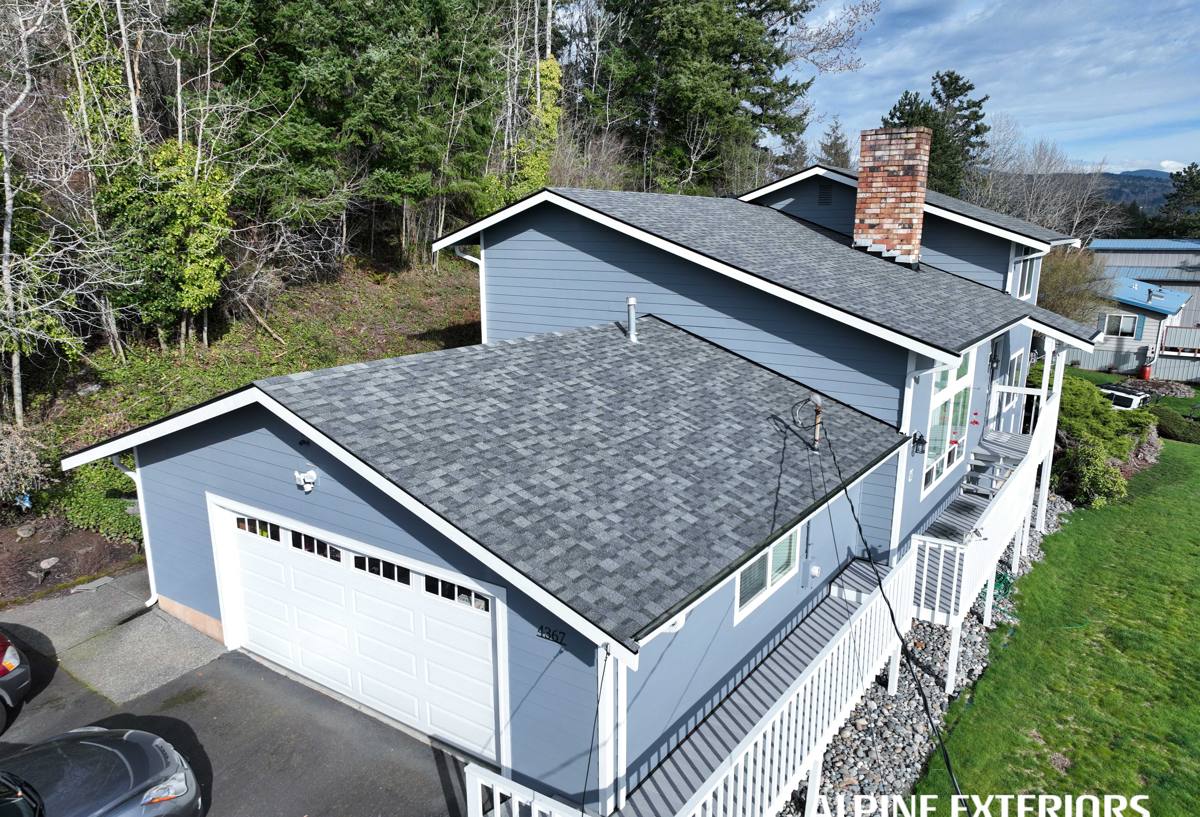
Signs Your Roof Needs Repair, Not Replacement
Most Sedro-Woolley roofs we're called out to are still structurally sound — they just have isolated problem areas. Here's what usually points to a repair rather than a full tear-off:
- A stain on a ceiling or ridge board that shows up after a specific heavy rain, especially near a chimney, skylight, or roof valley
- Visible moss buildup on the north-facing or shaded slopes, with shingle tabs starting to lift at the edges
- One or two sections of missing, cracked, or curling shingles while the rest of the roof still looks tight
- Rusted, bent, or separated flashing around penetrations — plumbing vents, chimneys, or where a lower roof meets a wall
- Granules collecting in gutters from one specific area rather than uniformly across the whole roof
- A roof that's under 15-20 years old with damage that's clearly localized, not systemic
If the damage is spread across most of the roof, or if the decking underneath has gone soft from long-term moisture intrusion, that's a different conversation — but we'll always tell you honestly which situation you're in before we recommend anything.
What We're Actually Checking For
On a repair inspection we're not just looking at the surface. We check the felt or synthetic underlayment condition where shingles are missing, the state of the decking underneath any soft or spongy spots, whether nails have backed out from thermal cycling, and how water is actually moving across the roof during rain rather than just where it appears to be entering. A leak visible in an attic is often several feet away from where the water actually got in — tracing that path correctly is the difference between a repair that lasts and one that fails again next winter.
The Most Common Roof Repairs We Make in Sedro-Woolley
Moss and Lichen Treatment
Moss doesn't just sit on top of a roof — its root structure works under shingle tabs and holds moisture against the granule surface, which accelerates wear and can eventually create paths for water intrusion. On heavily shaded Sedro-Woolley lots, this is often the number-one repair driver. Correct treatment means physically clearing the moss without gouging the shingle surface, treating the area to slow regrowth, and addressing why that section stays damp longer than the rest of the roof — usually overhanging branches or poor airflow.
Flashing Repair
Flashing around chimneys, skylights, dormers, and roof-to-wall transitions is the single most common source of the leaks we diagnose. It's a small, inexpensive-looking piece of metal doing a disproportionate amount of the work keeping water out, and it's often the first thing to fail — well before the shingles around it show any wear.
Shingle and Valley Repair
Valleys concentrate a huge volume of water runoff, especially during the driving rain events Skagit County sees several times a season. A cracked or improperly lapped shingle in a valley will leak far sooner than the same damage on an open field of roof. We replace damaged shingles to match existing coursing and confirm the valley's underlayment and metal (if present) are still doing their job underneath.
Gutter Edge and Fascia Repair
Where gutters have overflowed repeatedly from needle and leaf buildup, we often find soft fascia boards or drip edge that's pulled away from the roofline. This gets fixed alongside the roof repair itself — patching the roof without addressing the water management around it just means the same rot returns.
What a Correct Repair Actually Involves
A roof repair done right isn't just "replace what's visibly broken." It follows a sequence:
- Diagnose the actual entry point, not just the visible symptom
- Remove and inspect the decking under the damaged area for soft spots or rot
- Replace any compromised decking before reroofing that section
- Install new underlayment tied properly into the surrounding dry sections
- Reflash any penetrations in the repair area, not just patch around old flashing
- Match shingles as closely as possible in profile and, where feasible, color
- Confirm water sheds correctly off the repaired section during the next rain check
Skipping the decking inspection is the most common shortcut in rushed repairs — and it's the one that causes the same leak to reappear a year later, usually after the new shingles have already been paid for.
Repair or Replace? What Actually Drives That Decision
| Factor | Points Toward Repair | Points Toward Replacement |
|---|---|---|
| Roof age | Under 15-20 years | Nearing or past manufacturer lifespan |
| Damage extent | Isolated to one or two areas | Spread across multiple slopes |
| Decking condition | Solid, dry underneath | Soft, rotted, or repeatedly wet |
| Moss/algae pattern | Localized to shaded sections | Widespread with granule loss throughout |
| Prior repair history | First or second repair on this roof | Repeated patching in the same areas |
We'll walk you through where your roof actually falls on this before recommending either option — a repair that's likely to need another repair within a year or two isn't a good use of your money, and we'll say so.
How We Handle a Repair Job
- Free on-site inspection with photos of the specific problem areas
- Clear explanation of what's causing the issue, not just what's leaking
- Written estimate that separates decking repair, underlayment, flashing, and shingle costs
- Materials matched to your existing roof where possible
- Cleanup of all moss, debris, and old material removed from the work area
- A straightforward answer if we think replacement is the smarter long-term call instead
Why It Matters That We Already Work in Sedro-Woolley
Roofing crews that mostly work coastal jobs sometimes miss what's specific to the more wooded, inland parts of Skagit County — the way tree cover extends how long a roof stays wet after a storm, or how much faster moss reestablishes on a north-facing slope surrounded by conifers versus an open lot. A crew that's repaired roofs in Sedro-Woolley regularly knows which failure patterns show up here again and again, and that shapes both the diagnosis and the fix. It also means we're not guessing at how local weather timing affects the repair schedule — Skagit County's wet season runs long, and getting a repair done in a dry window matters for how well new materials seal and cure.
Keeping a Repaired Roof From Needing the Same Fix Twice
Once a repair is done, a little maintenance keeps it from becoming a repeat job:
- Trim back branches that overhang the roofline to cut down on shade and debris
- Clear gutters and valleys at least twice a year, more often under heavy tree cover
- Have moss-prone slopes checked annually rather than waiting for visible regrowth
- Address small flashing or shingle issues promptly instead of waiting for a leak to show up inside
If you're seeing moss buildup, a stain on a ceiling, or damaged shingles on a Sedro-Woolley roof, we're glad to take a look and give you an honest read on what it actually needs. The estimate is free, there's no pressure to sign anything on the spot, and you'll get a clear explanation of the problem before any work starts — just fill out the form below to get started.