 Anacortes Siding
 Why Similk Beach Roofs Wear Differently
Similk Beach sits on the water side of Fidalgo Island, close enough to Similk Bay and the broader Skagit County shoreline that homes here take on a different kind of weather punishment than a roof ten miles inland. Salt-laden marine air moves through constantly, driving rain comes in sideways off the water during fall and winter systems, and the tree cover common to this part of Anacortes — fir, cedar, madrona — keeps roof surfaces shaded and slow to dry out. That combination is exactly what shortens a roof's life: salt accelerates corrosion on metal fasteners and flashing, standing moisture from shade and rain feeds moss and algae, and repeated wet-dry cycling stresses shingles and seams faster than a dry-climate roof would ever see.
None of this means a roof at Similk Beach has to fail early. It means the roofing choices — materials, ventilation, flashing detail, fastening — have to actually account for the site instead of following a generic spec. That's the difference between a roof that looks fine for five years and one that holds up for its full rated life.
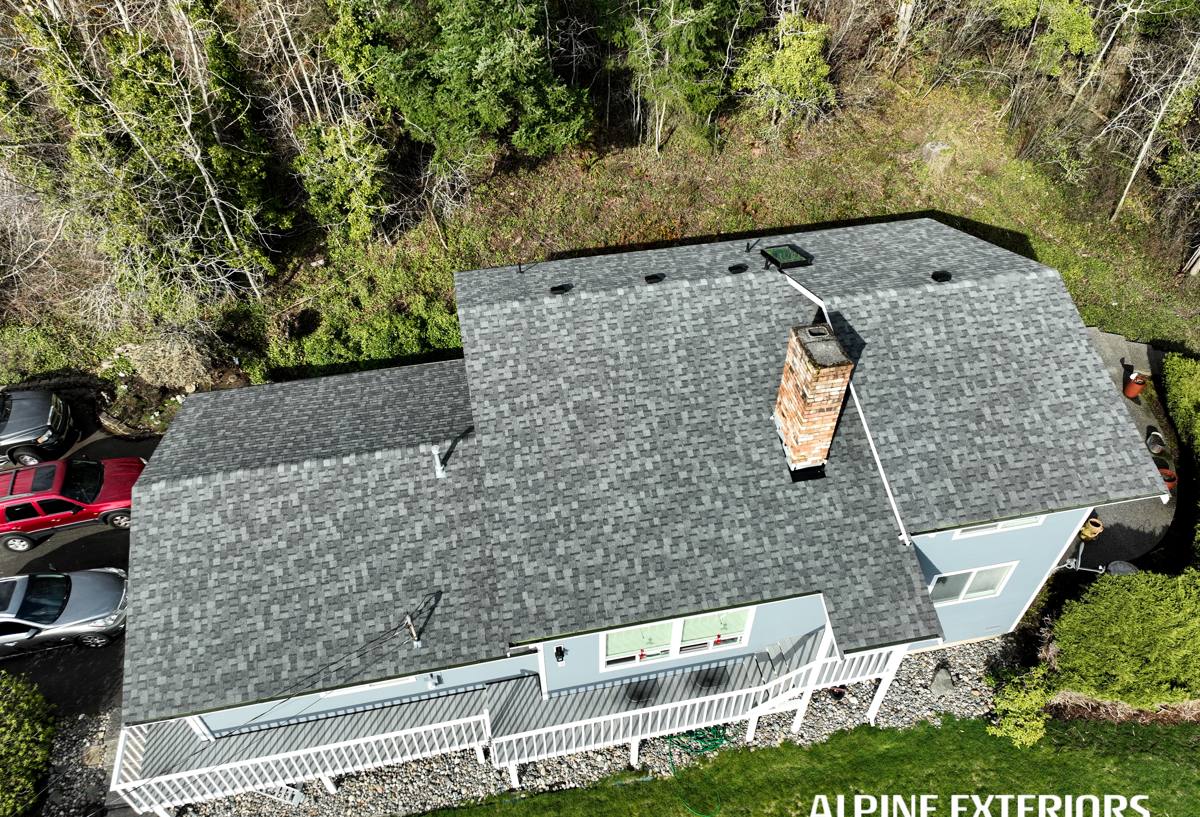
Signs a Similk Beach Roof Needs Replacing, Not Just Repairing
A lot of roofs get patched for years past the point where patching still makes sense. In a marine, moss-prone environment, the signs are usually visible if you know where to look:
- Moss or algae streaking that keeps coming back within a season or two of cleaning
- Granule loss visible in gutters or downspouts, especially on the north-facing or shaded slopes
- Shingles that are curling, cupping, or feel brittle underfoot
- Rust staining or corrosion around flashing, vent boots, and fasteners
- Soft spots or slight sag when walked, which usually points to wet decking underneath
- Daylight visible through the attic roof deck, or damp insulation after a storm
- A roof that's already had two or more rounds of repair in the same areas
Any one of these on its own might just call for a repair. Several together, especially on a roof already past 15–20 years old, usually means the underlying materials have reached the end of their useful life and repairs are just delaying an inevitable full tear-off.
What a Correct Replacement Involves on This Kind of Home
Underlayment and Water Barriers
Given how much driving rain a waterfront-adjacent property like this takes on, underlayment isn't a place to cut corners. Synthetic underlayment across the full roof, combined with self-adhering ice-and-water membrane at eaves, valleys, and any low-slope transitions, gives the roof a real second line of defense if wind-driven rain gets under the shingle course — which, on an exposed lot, it eventually will during a bad storm.
Flashing Detail
Chimneys, skylights, dormers, and sidewall intersections are where roofs actually fail — not usually the open field of shingles. Salt air corrodes cheap or thin flashing faster than people expect, so flashing material and installation quality matter more here than on a typical inland roof.
Fastening for Wind and Salt Exposure
Corrosion-resistant fasteners matter on a property that gets consistent marine air. Standard fasteners can start showing rust streaks and losing holding strength years before the shingles themselves are due for replacement.
Algae and Moss Resistance
Many asphalt shingle lines now include algae-resistant granules (typically copper or zinc-infused) built specifically to slow the black streaking and moss growth that shaded, humid roofs are prone to. It's not a permanent fix — nothing is, under enough tree cover — but it meaningfully extends the time between cleanings and reduces the granule erosion that moss root systems cause over time.
Comparing Roofing Materials for a Similk Beach Property
There's no single "best" material — the right call depends on how shaded the lot is, how much maintenance the homeowner wants to take on, and budget. Here's an honest comparison for this specific environment:
| Material | Typical Lifespan Here | How It Handles Salt Air & Moss | Maintenance Reality |
|---|---|---|---|
| Standard asphalt composition | 15–20 years | Adequate; moss-prone under tree cover without algae-resistant granules | Periodic moss/algae treatment recommended |
| Algae-resistant asphalt composition | 20–25 years | Noticeably better resistance to streaking and moss buildup | Lower maintenance, still benefits from occasional cleaning |
| Standing seam metal | 40+ years | Sheds moisture fast, minimal moss surface to grip; needs quality coating to resist salt corrosion long-term | Very low; periodic fastener/seam check |
| Cedar shake | 20–30 years with upkeep | Attractive but holds moisture longer in shaded, salt-air conditions — highest moss and rot risk of the group | Highest; requires regular treatment and inspection |
We're honest with homeowners about cedar shake specifically: it can look great on the right lot, but on a shaded, moisture-heavy site near the water, it demands a maintenance commitment most people underestimate going in. That's a trade-off worth knowing before you commit, not a knock on the material itself.
Our Roof Replacement Process
- On-site inspection. We walk the roof and attic, check decking condition, ventilation, flashing points, and moss/moisture patterns specific to your lot's sun and tree exposure.
- Written estimate and material selection. We go over honest options for your situation — budget, shade level, how long you plan to stay in the home — with no pressure toward the most expensive option.
- Tear-off. Old roofing is fully removed so the decking can actually be inspected, not covered over. Any soft or water-damaged decking gets flagged and replaced before anything new goes down.
- Underlayment and water barriers installed. Full synthetic underlayment plus ice-and-water membrane at vulnerable points.
- Flashing and ventilation work. New flashing at all penetrations and transitions; ventilation checked and corrected if intake/exhaust airflow is unbalanced.
- Roofing material installed to manufacturer spec, with corrosion-resistant fasteners appropriate for a marine-air site.
- Final walkthrough and cleanup. Site is cleaned of debris and nails, and we walk the finished roof with you before calling the job done.
Ventilation and Moisture: Where Roofs Actually Fail Around Here
A shingle can be rated for 25 years and still fail in 12 if the attic underneath isn't ventilating correctly. On tree-shaded, moisture-heavy lots like much of Similk Beach, trapped attic heat and humidity rot decking from the underside and feed moss growth from below the shingle line, not just from above. Balanced ventilation — enough soffit intake matched with adequate ridge or high-point exhaust — lets the roof dry out between rain events instead of staying damp for days. We check this on every replacement, because installing new shingles over an unventilated or poorly balanced attic just resets the clock on the same problem.
What Affects Your Replacement Cost
Every roof is different, so we don't quote sight unseen — but these are the factors that move the price up or down on most Similk Beach homes:
| Factor | Why It Matters |
|---|---|
| Roof pitch and access | Steep pitches and limited equipment access take longer and require more safety setup |
| Number of existing layers | Tear-off of multiple old layers adds labor and disposal cost |
| Decking condition | Rotted or soft decking sections need replacing before new roofing goes down |
| Material choice | Standard asphalt, algae-resistant asphalt, and metal carry different material and labor costs |
| Ventilation corrections | Adding or rebalancing intake/exhaust ventilation is worth doing during a full replacement |
| Roof size and complexity | Valleys, dormers, and multiple roof planes add flashing and cutting time |
As a rough industry-wide guide, full asphalt roof replacements on a typical single-family home often fall somewhere in the low-to-mid five figures, with steep pitches, extensive tear-off, or metal roofing pushing that higher. The only way to give you a number you can actually trust is to look at your specific roof.
Why a Crew That Already Works Similk Beach Matters
Roofing crews that mostly work drier, inland areas can miss things that matter here. A local Anacortes crew that's used to Skagit County's marine weather brings a few real advantages:
- Familiarity with local permitting and inspection expectations in Anacortes and unincorporated Skagit County
- An eye for how tree cover and shade patterns on a given lot affect moss and ventilation needs
- Experience with the corrosion and wear patterns salt air causes on flashing and fasteners
- Established relationships with local material suppliers, which helps keep timelines realistic
- Availability to come back and stand behind the work — not a crew that finished the job and left the area
That local track record is worth asking about directly when you're vetting any contractor for a roof replacement in this area: how many roofs have they actually done nearby, and do they know the specific weather challenges of a waterfront-adjacent, tree-covered lot before they ever step on your roof.
If your roof is showing moss, granule loss, or age past 15–20 years, it's worth getting a straight answer on where it stands. We offer free, no-pressure estimates for Similk Beach homeowners — walk the roof with us, get an honest assessment, and decide from there. Use the form below to get started.