 Anacortes Siding
 Siding Installation for Bow Homes
Bow sits in the quieter, rural stretch of Skagit County between Anacortes and the Samish Bay flats, where farmland gives way to saltwater exposure and thick tree cover. Homes out here take a different kind of beating than a house tucked into a subdivision closer to town. Wide-open exposure to weather rolling off the water, long stretches of shade from surrounding trees, and moisture that lingers on north-facing walls all add up over time. Siding here has to do more than look good — it has to hold up.
We install siding for homeowners throughout the Anacortes area, including Bow, and we've built our process around what actually survives this climate rather than what's cheapest to install. That's why we work exclusively with James Hardie fiber cement siding. This page walks through what Bow's conditions mean for a siding job, what correct installation actually looks like, and why the crew doing the work matters as much as the material.
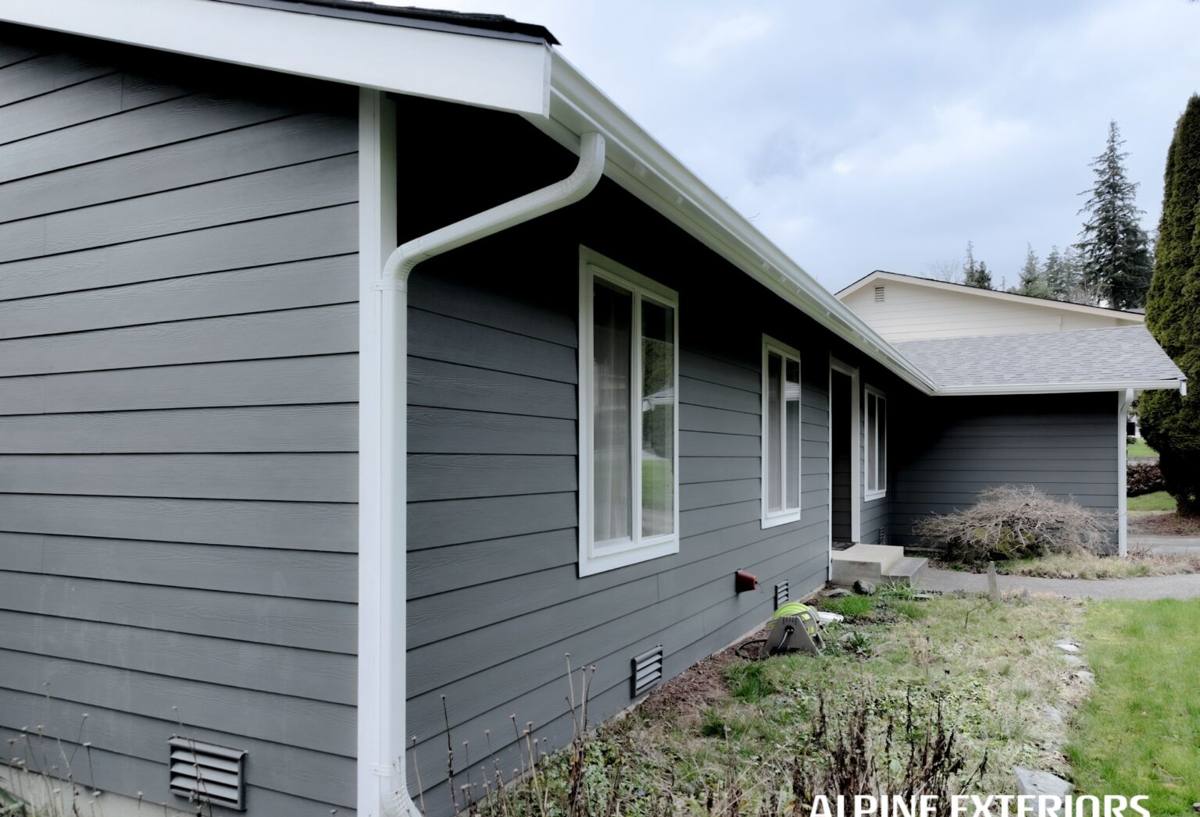
What Bow's Climate Does to Siding
Skagit County's marine climate is mild compared to a lot of the country, but "mild" doesn't mean easy on a house. A few things stack up against exterior siding in this specific area:
Salt Air and Driving Rain
Proximity to Samish Bay and the broader Puget Sound means airborne salt is a real factor for homes in Bow, not just waterfront properties right on the shoreline. Salt-laden air accelerates corrosion on fasteners, trim, and any exposed metal flashing. Combine that with driving rain pushed sideways by winter storms, and you get water intrusion at the exact spots — laps, corners, and butt joints — where a rushed or under-spec installation is weakest.
Moss and Prolonged Moisture
Wooded lots and the long gray stretch of fall through spring keep exterior walls damp for extended periods. Moss and algae don't just grow on roofs here — they'll colonize siding surfaces, especially on the north and west sides of a house that gets less direct sun. Some siding materials tolerate that constant moisture load far better than others.
Wide Temperature and Humidity Swings
Even without extreme heat or cold, Skagit County sees enough seasonal humidity swing to stress siding materials that expand and contract, or that absorb and release moisture. Over years, that movement is what causes warping, cupping, and failed seams on lower-grade products.
Why We Only Install James Hardie
We don't install vinyl, LP SmartSide, Cemplank, Allura, primed spruce, or cedar. That's a deliberate standard, not a lack of options. Each of those products has legitimate uses, but none of them hold up to Bow's combination of salt air, sustained moisture, and moss pressure as consistently as James Hardie fiber cement.
Fiber Cement's Advantage in This Climate
James Hardie siding is engineered from cement, sand, and cellulose fiber — a composition that doesn't rot, doesn't feed moss the way wood-based products can, and isn't vulnerable to the swelling and delamination that affects some engineered wood siding when it takes on water at cut edges or damaged spots. It's also non-combustible, which matters in a state where wildfire smoke and ember exposure have become a bigger part of the conversation even west of the mountains.
HardieZone HZ5 Engineering
James Hardie manufactures different formulations for different climate zones, and the products specified for our region are built for sustained moisture exposure, not desert heat or deep freeze. That's not marketing — it's a real difference in the product's moisture management and finish durability compared to a one-size-fits-all siding line.
ColorPlus Factory Finish
Most of the Hardie siding we install carries the ColorPlus factory finish — a baked-on finish that's more consistent and more resistant to fading and moisture damage than field-applied paint. For a Bow home dealing with UV exposure near open water and heavy rain for months at a stretch, that finish is doing real work, not just looking nice on day one.
What a Correct Siding Installation Actually Involves
Siding failures in this region are rarely about the siding material itself — they're almost always about what happened underneath it, or how it was fastened and flashed. A correct installation is methodical, and skipping steps is exactly how homeowners end up with hidden rot behind brand-new-looking walls.
Tear-Off and Sheathing Inspection
We remove the old siding down to the sheathing and inspect for existing moisture damage, soft spots, or prior water intrusion — especially around windows, doors, and any wall penetrations. This is the point where problems get caught while they're still fixable, instead of getting sealed behind new siding.
Weather-Resistive Barrier
A properly lapped and sealed weather-resistive barrier goes over the sheathing before any siding touches the wall. In a climate that sees as much driving rain as Bow does, this layer is the actual line of defense — the siding sheds the bulk of the water, but the barrier handles what gets past it.
Flashing at Every Penetration
Windows, doors, hose bibs, vents, and any other wall penetration need proper flashing integrated with the weather barrier, not just caulked over. Caulk fails; correctly lapped flashing directs water back out rather than into the wall cavity.
Fastening and Clearances
James Hardie specifies exact fastener types, spacing, and minimum clearances from grade, roof lines, and other siding. Getting these wrong is one of the most common ways a fiber cement installation voids its warranty and invites moisture problems at the bottom edge of the wall — a spot that matters even more on Bow lots where ground moisture and plantings tend to sit close to the house.
Joints, Caulking, and Paint Touch-Up
Butt joints get treated correctly, factory-cut edges get sealed, and any field-cut edges are primed and caulked per manufacturer spec before finish touch-up. This is detail work that's easy to rush and easy to notice later when it's done wrong.
Our Process for a Bow Project
Every siding job starts with a walk-around of the house, not a sales pitch. We look at existing siding condition, trim, moisture staining, roofline details, and anything specific to the lot — tree cover, sun exposure, proximity to water — that will affect the job.
- On-site assessment and measurement, including a look at current moisture or moss issues
- Written estimate covering material, labor, tear-off, disposal, and trim work
- Scheduling around weather windows, since fiber cement installation needs dry conditions for proper sealing and finishing
- Tear-off, sheathing inspection, and repair of any damaged framing or sheathing found underneath
- Weather barrier and flashing installation at every penetration
- Hardie panel or lap siding installation to manufacturer fastening and clearance specs
- Trim, caulking, and finish work, followed by a final walkthrough with the homeowner
Siding Options Compared
Homeowners in Bow often ask why we don't offer the full range of siding products other contractors carry. Here's an honest look at how the common alternatives stack up against James Hardie fiber cement for this specific climate.
| Material | Moisture Behavior | Moss/Algae Resistance | Maintenance |
|---|---|---|---|
| James Hardie Fiber Cement | Does not rot or swell; manages moisture well when installed to spec | Resists moss buildup better than wood-based products | Low — repaint or refresh only after many years |
| Vinyl | Doesn't absorb moisture, but can warp or buckle with temperature swings and trap moisture behind it if installed poorly | Moderate — moss grows on the surface in shaded, damp spots | Low, but damage usually means full panel replacement |
| LP SmartSide / Engineered Wood | Wood-based core is vulnerable to swelling and delamination if edges or fasteners fail | Lower resistance; organic material is more hospitable to growth | Moderate — edge sealing and paint upkeep matter |
| Cedar | Natural material that absorbs and releases moisture; needs consistent sealing | Low resistance without regular treatment | High — regular staining/sealing required |
What Drives the Cost of a Siding Job
Every house is different, and we don't quote sight unseen, but these are the factors that typically move a Bow siding project's price up or down.
| Factor | Why It Matters |
|---|---|
| Tear-off scope | Removing and disposing of existing siding down to the sheathing adds labor versus a simpler recover |
| Sheathing or framing repair | Hidden rot or moisture damage found during tear-off needs to be fixed before new siding goes on |
| Home size and wall complexity | Multiple stories, dormers, and cut-up wall lines take more time than a simple rectangular footprint |
| Siding profile and finish | Lap siding, panel siding, and trim details vary in material and labor cost |
| Site access | Tree cover, tight lot lines, and staging space affect how efficiently a crew can work |
Questions to Ask Before Hiring a Siding Contractor
Whether you go with us or another crew, these are worth confirming before signing a contract for a Bow siding project:
- Is the contractor licensed and insured to do exterior work in Washington State?
- Are they a factory-certified installer for the specific siding product they're proposing?
- Will they inspect and repair sheathing damage found during tear-off, or just cover it up?
- Does the written estimate spell out fastener type, weather barrier product, and flashing details — or just "siding installation" as a lump sum?
- What warranty applies to materials versus labor, and who do you call if something fails in year eight?
- Have they worked in this specific area before and dealt with its moisture and exposure conditions?
Why a Crew That Already Works in Bow Matters
Siding installation isn't just a product question — it's a familiarity question. A crew that regularly works this stretch of Skagit County already knows how driving rain hits a wall differently depending on orientation, how much moss pressure to expect on a shaded north wall, and what fastening and flashing details actually hold up out here versus in a drier inland climate. That local repetition matters more than it sounds like it should. It's the difference between a generic installation and one that's been quietly adjusted, job after job, to handle exactly what this area throws at a house.
We also know the practical side of working in Bow — permitting expectations in unincorporated Skagit County, scheduling around the wetter months, and coordinating with the realities of rural lots where site access and staging take more planning than a standard in-town job.
Get a Free Estimate
If your Bow home's siding is showing moss buildup, cracked caulk lines, or signs of moisture damage, it's worth having someone take an honest look before winter rain makes the problem worse. We offer free, no-pressure estimates for siding installation throughout the Anacortes area — fill out the form below and we'll schedule a time to walk the property with you.