 Anacortes Siding
 Why Cap Sante Siding Takes a Harder Hit
Cap Sante sits up above the marina and Guemes Channel, which means homes here catch more direct salt-laden air off the water than houses further inland in Anacortes. That salt air doesn't just smell like the coast — it accelerates corrosion on exposed fasteners, hinges, and metal trim, and it breaks down paint and caulk films faster than they'd wear in a drier, inland part of Skagit County.
Add in wind-driven rain coming off the water and the long wet season that defines this part of the Pacific Northwest, and you get siding that's working harder than the manufacturer's average-conditions rating assumes. Elevated, view-oriented lots on Cap Sante often catch wind and rain at angles that flatter houses on more sheltered streets never see. That combination — salt exposure plus driving rain plus a wet season that runs most of the year — is exactly the environment fiber cement siding was engineered for, and exactly the environment where a patch job done wrong fails again within a season or two.
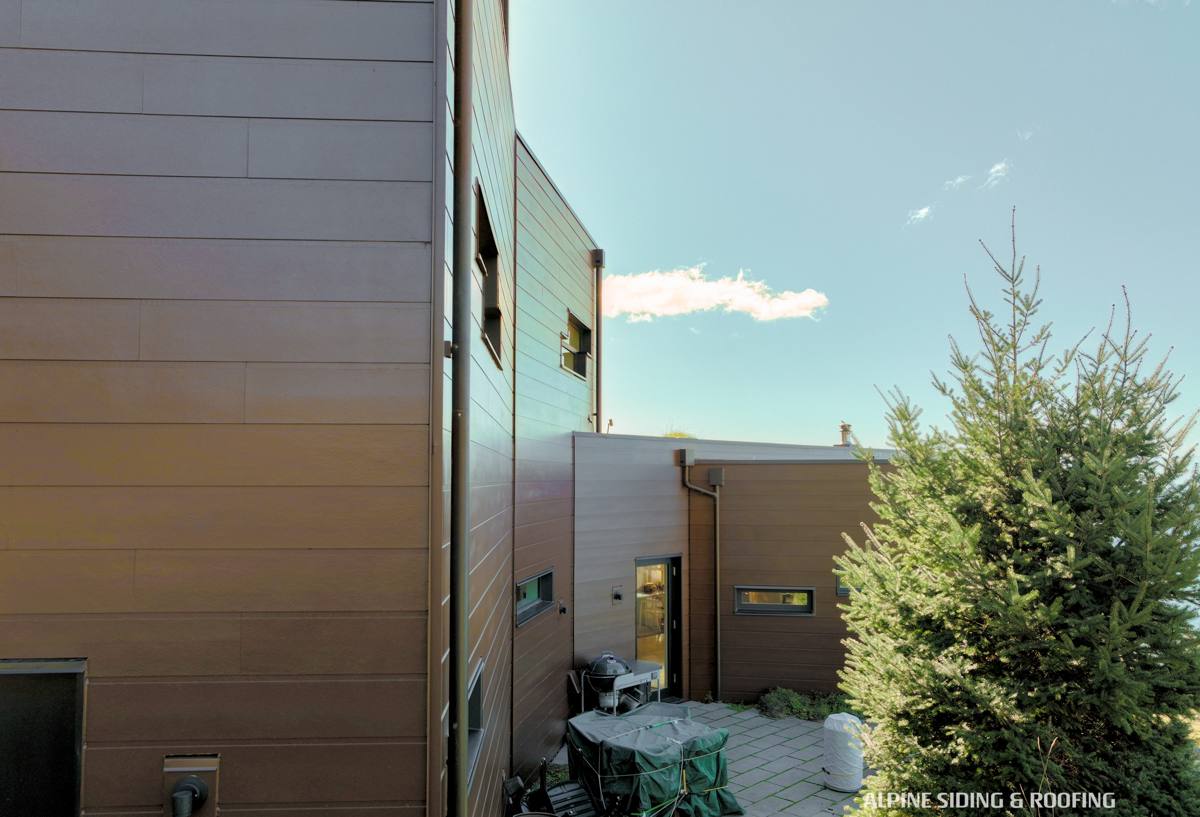
Where the Damage Shows Up First
Before we ever get called out, most Cap Sante siding problems have been developing quietly for a while. The pattern is consistent enough that we know where to look first:
- North- and west-facing walls that stay shaded and damp longer after a storm
- Roof-to-wall intersections and chimney tie-ins, where flashing gaps let water track behind the siding
- The bottom few feet of wall near grade, where splash-back and poor drainage keep the material wet
- Window and door trim, where failed caulk lets water in at the corners
- Any spot with visible moss or dark green-black staining, which signals the surface is holding moisture longer than it should
On homes with older wood, vinyl, or engineered wood siding, those symptoms often mean swelling, soft or spongy panels, delamination, or paint that's peeling rather than just fading. On Hardie fiber cement, the material itself resists that kind of moisture damage, but the same wet spots are where you'll see caulk failure, fastener rust streaks, or paint wear at seams if the original installation wasn't detailed correctly.
What a Correct Siding Repair Actually Involves
Finding the moisture, not just the stain
A repair that only addresses what's visible on the surface is a repair that comes back. Before we replace a single board, we check what's happening behind it — whether the house wrap is intact, whether insulation or sheathing underneath has taken on water, and how far the damage actually extends past the obviously bad section. Cutting out only the stained piece and leaving damp sheathing behind it is how homeowners end up paying for the same repair twice.
Fixing the water path, not just the symptom
Most siding failures trace back to a water management problem, not a siding problem: missing kick-out flashing where a roofline meets a wall, caulk used in place of proper flashing, or house wrap that wasn't lapped correctly. A repair that replaces the damaged panel but ignores the flashing or drainage plane underneath it is a temporary fix. We correct the water path first, then close it up with new material.
Matching material and finish
If the home already has James Hardie siding, we match the exact profile, exposure, and ColorPlus finish so the repair doesn't read as a patch. Because ColorPlus color is baked on at the factory rather than field-painted, matching an existing wall sometimes means replacing a full course or elevation rather than a single board, so the color and sheen stay consistent instead of showing a visible seam a few years down the road.
Repair vs. Replace: What Actually Drives the Decision
Homeowners often start out assuming a small repair, and sometimes that's exactly right. Other times, the damage that's visible is only a fraction of what's underneath. Here's how we think through it:
| Factor | Leans Toward Repair | Leans Toward Replacement |
|---|---|---|
| Extent of moisture intrusion | Isolated to one or two panels/areas | Found in multiple walls or hidden behind several sections |
| Siding material | Existing Hardie fiber cement in good condition elsewhere | Aging wood, vinyl, or engineered wood nearing end of life |
| Underlying sheathing/framing | Dry, sound wood behind the damaged panels | Soft, rotted, or water-stained sheathing found during tear-out |
| Age of original siding | Installed within the last 10-15 years, still performing | Original siding is decades old or was never rated for this exposure |
| Color/finish matching | Repair area is small or in a less visible location | Faded, discontinued color, or repair would leave a visible patchwork |
We won't push a full replacement when a targeted repair will genuinely hold up — but we also won't patch over damage we know is going to resurface in a wet Anacortes winter. Where the line falls comes down to what we find once the damaged section is opened up.
Why Repairs Get Done in James Hardie Fiber Cement — Not Whatever Was There Before
We install and repair exclusively with James Hardie fiber cement. We don't install LP SmartSide, vinyl, Cemplank, Allura, primed spruce, or cedar, and that standard applies to repair work too. A few reasons that matters specifically for a saltwater-adjacent property like a Cap Sante home:
- Salt and moisture resistance: fiber cement doesn't swell, rot, or delaminate the way wood-based and some engineered products can when they take on repeated moisture, which matters in a location that gets more salt-laden, wind-driven rain than average.
- Non-combustible: Hardie's fiber cement composition doesn't support flame spread the way wood-based sidings can, which is a meaningful difference in a wildfire-aware region.
- Factory-baked color: ColorPlus finish holds up to UV and salt air longer than field-applied paint, which means fewer repaint cycles over the life of the siding.
- Climate-engineered product lines: Hardie's HZ5 line is formulated for wetter, harsher climate zones like ours, rather than a one-size-fits-all product.
- Warranty structure: Hardie's transferable warranty gives homeowners real protection if they sell, which matters on view properties that tend to turn over.
If a Cap Sante home currently has vinyl, LP SmartSide, or aging cedar and the damage is extensive enough that a like-for-like patch doesn't make sense, we'll say so honestly and explain why we'd recommend transitioning that section — or the elevation — to Hardie rather than perpetuating a product we don't stand behind installing.
Our Repair Process on Cap Sante Homes
- On-site inspection: we look at the visible damage plus the areas most likely to be affected around it — flashing, trim, and adjacent panels.
- Diagnosis: where we suspect hidden moisture, we open up a small section to confirm before quoting scope, rather than guessing from the outside.
- Written scope and estimate: a clear explanation of what's being repaired, what's being replaced, and why — no vague line items.
- Repair execution: correct the underlying water management issue first, then install and finish matching Hardie material.
- Cleanup and walkthrough: job site cleared, repair explained, and any maintenance recommendations left with the homeowner.
Why a Crew That Already Works Cap Sante Matters
Siding repair on this part of Anacortes isn't quite the same job as siding repair on a sheltered inland lot. A crew that's already worked the neighborhood knows which elevations on hillside and view lots tend to take the worst of the wind off the channel, how access and staging work on steep or tight lots near the marina, and what City of Anacortes and Skagit County requirements apply to exterior repair work. That local familiarity shows up in small but real ways — the flashing detail that gets added because we've seen it fail nearby before, or the color match that's right because we've matched Hardie ColorPlus on a house two streets over.
It also means less guesswork for you. You're not explaining your neighborhood's exposure to a crew learning it for the first time on your roof.
Signs Your Cap Sante Siding Needs a Closer Look
- Moss, algae, or dark staining that keeps returning after cleaning
- Paint that's peeling, bubbling, or wearing unevenly, especially on north or west walls
- Caulk that's cracked, shrunk, or pulled away from trim and corners
- Soft or spongy spots when you press on the siding near the base of a wall
- Rust streaking below fasteners or trim
- Visible gaps or warping at panel seams and corners
- A musty smell or discoloration on interior walls that back up to exterior siding
None of these guarantee a major problem on their own, but any one of them is worth a look before the next wet season makes it worse.
If you're seeing any of the signs above on a Cap Sante home, or just want an honest read on whether you're looking at a repair or something bigger, we're happy to take a look. The estimate is free, there's no pressure, and you'll get a straight answer about what your siding actually needs.