 Anacortes Siding
 Why Similk Beach Homes Wear Out Windows Faster
Similk Beach sits close enough to the water that homes take a different kind of beating than houses a few miles inland in Anacortes. Wind off Similk Bay and the Swinomish Channel carries salt spray onto siding, trim, and glass. That salt film mixes with the near-constant marine moisture and starts working on aluminum hardware, wood sashes, and any seal that was installed a little loose. Add Skagit County's long gray stretch of driving rain each fall and winter, and you've got a climate that finds every weak point in a window within a few years, not a few decades.
We've replaced enough windows in this pocket of the county to know the pattern: it's rarely the glass that fails first. It's the frame corners, the weep systems, and the sealant lines that were never built for this level of wind-driven water and salt exposure. An energy-efficient window chosen and installed with that in mind will outperform a generic "big box" install by years, sometimes decades.
What Moss Season Does to Window Performance
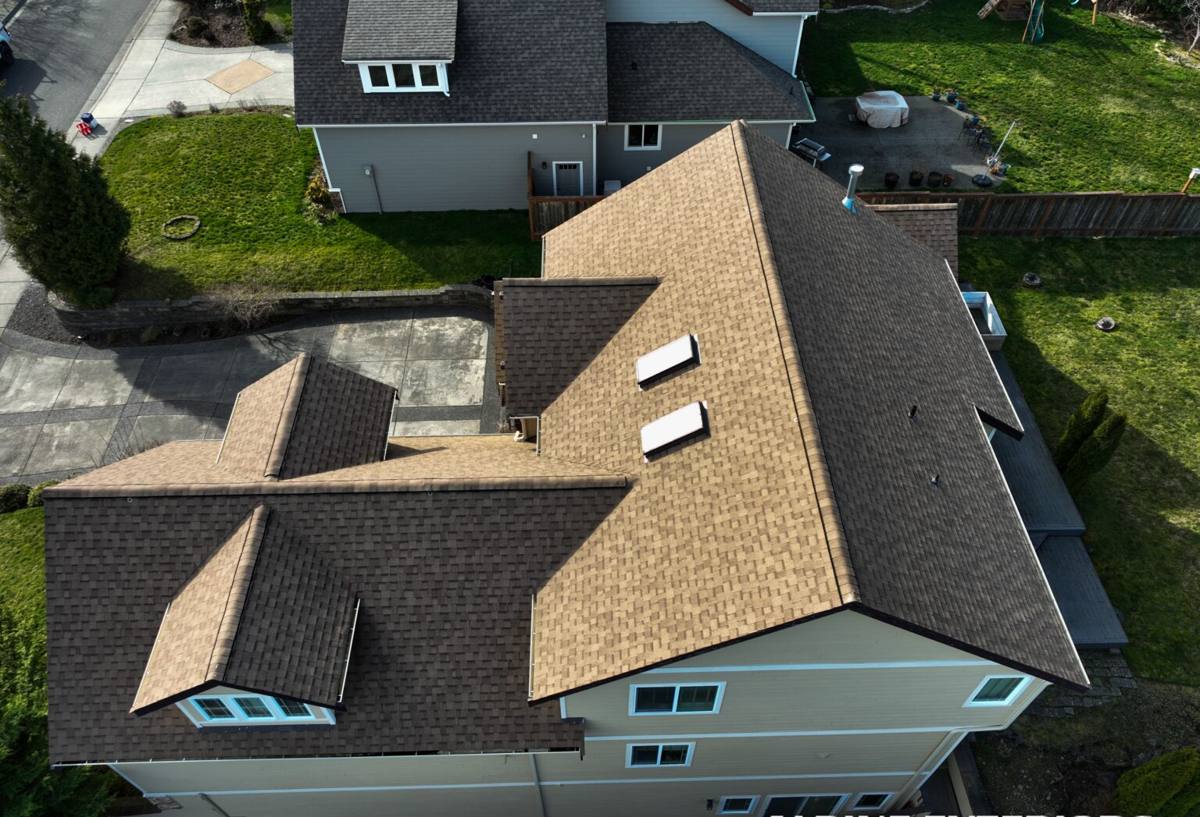
Anacortes and the surrounding Skagit County shoreline get a real moss season — long stretches of damp, low-sun weather where anything that holds moisture stays wet for days at a time. Around windows, that shows up as green growth in exterior corners, on sills, and in gaps where old caulking has shrunk or cracked. It's not just cosmetic. Trapped moisture around a window frame is exactly what accelerates rot in wood-framed units and corrosion in lower-grade hardware, and it's a sign that water is sitting where it shouldn't be instead of draining away.
A correctly installed energy-efficient window is designed to shed that moisture on purpose — sloped sills, working weep holes, and sealant details that don't give moss anything to hold onto in the first place. If you're seeing consistent moss or algae staining directly below your window openings, that's worth a look before it becomes a bigger repair.
Signs Your Current Windows Are Costing You Money
- Cold drafts near the frame even when the window is fully latched
- Visible fog or moisture trapped between panes of a double-pane unit — the seal has failed
- Wood sashes that feel soft, spongy, or show dark staining at the corners
- Condensation forming on the inside of the glass regularly during colder months
- Difficulty opening, closing, or latching windows that used to operate smoothly
- Visible salt residue or pitting on aluminum frames or hardware
- Noticeably higher heating bills compared to similar-sized homes nearby
Any one of these on its own isn't necessarily an emergency. Several of them together, especially on the side of the house that faces the water or prevailing wind, usually means the windows are past the point where caulk and weatherstripping will fix the problem.
What "Energy-Efficient" Actually Means for a Coastal Window
The label gets used loosely, so it's worth being specific. Every legitimate replacement window carries an NFRC (National Fenestration Rating Council) label with a few numbers that actually matter:
U-Factor
This measures how well the window keeps heat inside your home. Lower is better. For our climate — mild but persistently damp and windy — a solid U-factor keeps your heating system from working overtime every time the wind picks up off the water.
Solar Heat Gain Coefficient (SHGC)
This measures how much solar heat passes through the glass. Anacortes doesn't get brutal summer sun, so we're usually less focused on blocking heat gain and more focused on the U-factor and air leakage numbers — but orientation still matters, especially on south- and west-facing walls.
Air Leakage Rating
This is arguably the most important number for a Similk Beach home. A low air leakage rating means the window resists wind-driven infiltration — the exact stress this location puts on a building envelope more than most.
Frame Material: What Holds Up Near the Water
| Frame Material | Coastal Performance | Maintenance | Typical Trade-Off |
|---|---|---|---|
| Vinyl | Good — won't rust or rot, handles salt air well | Low — occasional rinse to clear salt film | Limited color/finish options on some lines |
| Fiberglass | Very good — dimensionally stable, resists moisture and salt exposure | Low | Higher upfront cost than vinyl |
| Wood (unclad) | Poor in direct salt exposure without diligent upkeep | High — regular painting/sealing required | Best interior look, but a real commitment near the water |
| Wood-clad (vinyl or aluminum exterior) | Good — exterior shell protects the wood core | Moderate | Cladding seams need to be sealed correctly at install |
| Aluminum | Fair — prone to pitting and corrosion over time in salt air unless marine-grade | Moderate to high | Thermally less efficient unless thermally broken |
For most Similk Beach homes, we steer clients toward vinyl or fiberglass for anything on the water-facing side of the house. That's not a knock on wood — it's a genuine appearance option many homeowners still choose for interior sightlines — but it's an honest maintenance conversation we have up front, not after the fact.
Why the Installation Matters More Than the Window Brand
We say this to every homeowner because it's true and it's the part that gets skipped most often: a premium window installed poorly will underperform a mid-grade window installed correctly. In a location that takes wind-driven rain the way Similk Beach does, the flashing and sealing details around the rough opening are doing as much work as the glass itself.
What a correct installation includes
- Removing old windows without damaging the surrounding sheathing or siding
- Inspecting the rough opening for hidden rot or moisture damage before anything new goes in
- Installing house wrap and flashing tape in the correct shingle-lap order so water is directed out and down, never trapped behind the wall
- Setting the window plumb, level, and square — not just "close enough"
- Using low-expansion foam or backer rod and sealant designed for exterior movement, not general-purpose caulk
- Sealing and trimming the exterior in a way that sheds water away from the frame
- Testing operation and locking hardware before we consider the job done
Skip any one of these steps and you can end up with a window that has a great efficiency rating on paper but leaks or drafts within a couple of winters. That's the gap between a window that's installed and a window that's installed right.
Our Process for a Similk Beach Window Job
We keep this straightforward because window replacement shouldn't feel complicated for the homeowner, even when the work itself is detailed.
- On-site assessment — we look at every opening, not just the ones you've flagged, since salt-air damage doesn't always announce itself where you'd expect.
- Honest recommendation — full replacement where needed, repair where that's genuinely the better call. We don't upsell openings that don't need it.
- Straightforward quote — materials, labor, and timeline explained in plain terms, with the trade-offs between frame options laid out clearly.
- Scheduled install — timed around the weather where we can, since our crew doesn't cut corners on flashing just to beat incoming rain.
- Walkthrough — we go over the finished openings with you before we consider the job complete.
Cost Factors Worth Understanding
Every home and opening is different, so we don't quote window jobs off a flat per-window rate — but the variables that actually move the price are consistent.
| Factor | Why It Affects Cost |
|---|---|
| Frame material | Vinyl generally costs less upfront than fiberglass or wood-clad options |
| Opening condition | Rot or hidden moisture damage found during removal adds repair scope |
| Window size and style | Larger units, custom shapes, or non-standard configurations cost more than standard sliders or double-hungs |
| Glass package | Upgraded low-E coatings or gas fills add cost but improve U-factor and comfort |
| Number of openings | Whole-house replacements typically bring a better per-window rate than one-off jobs |
| Access and height | Second-story or hard-to-reach openings take more labor time |
Choosing a Contractor for This Kind of Work
Salt air and driving rain punish shortcuts faster than a drier inland climate would, so the contractor you hire matters as much as the window you pick. A few things worth checking before you sign anything:
- Do they carry current Washington contractor licensing and insurance, and will they show it without hesitation?
- Do they explain flashing and sealing details, or just talk about the window brand?
- Do they inspect the rough opening for hidden damage before quoting a final price, or quote sight-unseen?
- Do they have experience with homes specifically in coastal Skagit County conditions, not just general Pacific Northwest work?
- Will they put the scope of work, materials, and warranty terms in writing?
A crew that already works in the Similk Beach area has usually already worked through the site-specific issues — wind exposure, drainage patterns, salt buildup — that a contractor coming from further inland may not think to check for.
Living With Your New Windows: Simple Upkeep
Energy-efficient windows are low-maintenance compared to older single-pane or worn-out units, but "low-maintenance" isn't "no-maintenance" this close to the water.
A rinse of the exterior frames and glass a couple of times a year clears accumulated salt film before it has a chance to sit and do damage, especially on window faces exposed to prevailing wind. During moss season, keep an eye on sills and lower corners — a soft brush and mild cleaner is usually enough to keep growth from taking hold. Check that weep holes along the bottom of the frame stay clear of debris so water keeps draining the way it's designed to. None of this takes long, and it's the kind of small habit that keeps a well-installed window performing for its full expected lifespan.
If your windows are drafty, fogged, or just past their prime, we're happy to take a look and give you a straight answer about what's actually needed — no pressure, no upsell. Reach out below for a free estimate on windows for your Similk Beach home.