 Anacortes Siding
 Skyline Roofs Work Harder Than Most
Skyline sits close to the water on Fidalgo Island, and that location comes with a specific set of roofing problems most inland Skagit County homes never have to deal with. Salt-laden air off the water speeds up corrosion on any exposed metal — nail heads, flashing, vent stacks — long before it would fail in a drier climate. Wind-driven rain off the water doesn't just fall straight down; it gets pushed sideways under shingle edges and into laps that were never designed to handle horizontal water. And the mild, wet Pacific Northwest winters mean moss and lichen have months on end to get established, especially on shaded, north-facing slopes under mature fir and cedar cover.
None of that means a Skyline roof needs to fail early. It means the repair work has to account for what's actually attacking the roof, not just patch the spot where water showed up inside the house.
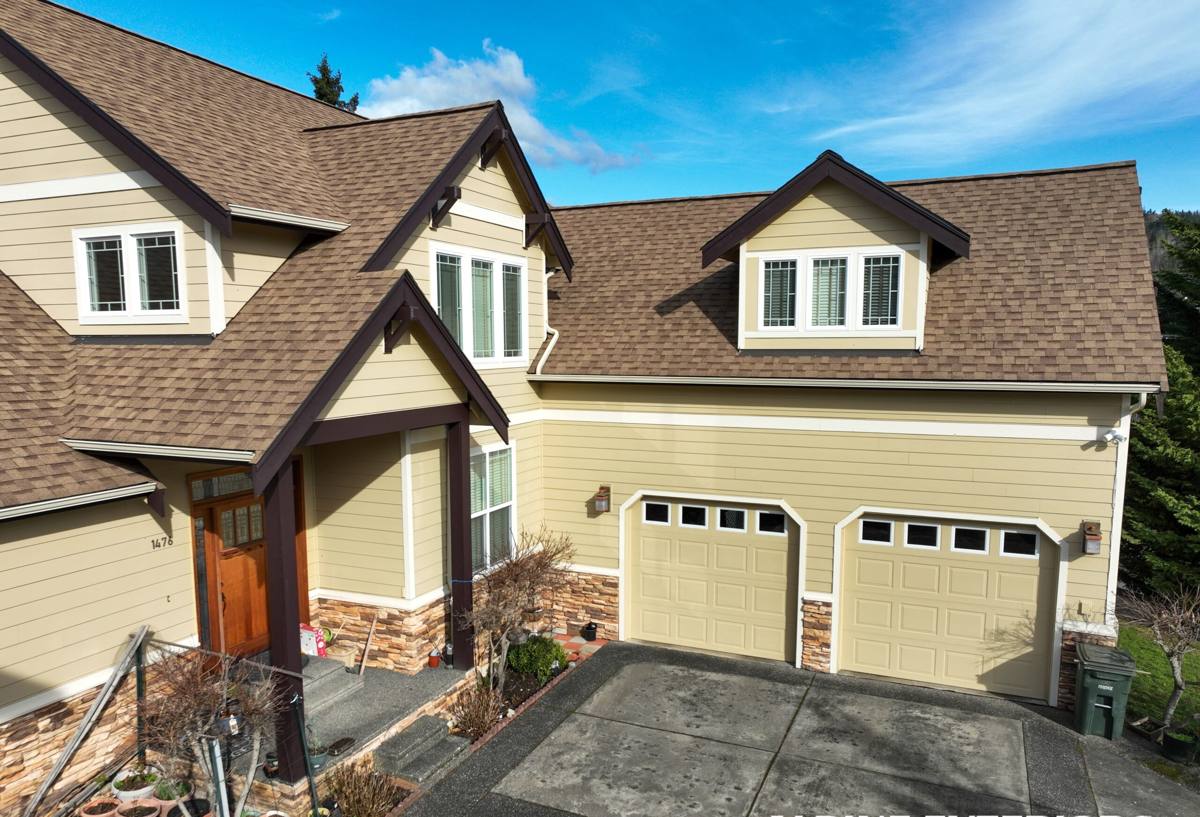
The Problems We See Most in This Neighborhood
After years of repair calls in this part of Anacortes, a handful of issues show up again and again:
- Moss and lichen lifting shingle tabs — moss doesn't just look bad, it holds water against the shingle surface and works its way under the edges, breaking the seal
- Flashing failures around chimneys, skylights, and roof-to-wall transitions, where old caulk has dried out and cracked instead of the metal doing the actual work
- Wind-lifted or cracked shingles from storm gusts coming off the water, especially on more exposed slopes
- Clogged valleys and gutters from needle and leaf drop off surrounding conifers, causing water to back up under the roofing instead of draining off
- Soft or delaminating decking found once we open up an area that's been leaking quietly for a season or two before anyone noticed a stain
Most of these start small. A few lifted shingles or one bad flashing joint is a repair. Left alone through a wet Skagit County winter, the same problem can turn into a decking replacement.
What an Honest Roof Repair Actually Looks Like
Finding the Real Source
Water shows up inside a house at the low point it can reach — not necessarily where it got in. A stain on a bedroom ceiling might trace back to a flashing gap three feet upslope. Any repair that starts and ends at the visible stain, without tracing the path, is likely to fail again the next storm. We check the attic and roof deck from the inside where we can, not just the shingles from the outside.
Removing Damage, Not Covering It
A proper repair means pulling back the damaged material until we're down to sound decking and dry framing. If the sheathing has gone soft from months of hidden moisture, that section gets replaced — patching over rotten wood just gives the next leak an easier path in.
Flashing Done Right
Caulk is a sealant, not a repair material. It's meant to back up properly installed metal flashing, not replace it. Where flashing has failed, we install new metal correctly lapped and tied into the roofing system, rather than smearing sealant over the gap and calling it done.
Matching What's Already There
Wherever possible we match the existing shingle profile and color so the repair blends in rather than standing out as a patch. When an exact match isn't available — which happens on older roofs — we'll tell you honestly what your options are before starting the work.
Repair or Replace? How We Help You Decide
Not every roof problem needs a full tear-off, and not every leak is worth chasing with another patch. The right call depends on a few honest factors:
| Factor | Leans Toward Repair | Leans Toward Replacement |
|---|---|---|
| Roof age | Under roughly two-thirds of expected lifespan | Near or past the end of its rated life |
| Extent of damage | Isolated to one section or detail | Spread across multiple slopes or recurring in different spots |
| Decking condition | Sound and dry once opened up | Soft, delaminated, or rotted in several areas |
| Repair history | First or second repair on this roof | Several past repairs in different locations |
| Material availability | Matching shingles still obtainable | Product discontinued, mismatch would be obvious |
We'll walk you through where your roof falls on that list before we recommend anything, and we'll say so plainly if a repair is the more sensible option — a roof doesn't need to be replaced just because it has a problem.
Our Repair Process
- Initial call — you describe what you're seeing (a stain, missing shingles, a draft, visible moss), and we get a rough sense of scope before we come out
- On-site inspection — we get up on the roof and, where accessible, check the attic from the inside to trace the actual leak path
- Written scope — a clear explanation of what's failing, what it will take to fix it correctly, and a price before any work starts
- The repair itself — removal of damaged material, decking repair if needed, correct flashing and underlayment, and shingles matched as closely as possible
- Cleanup — a magnetic sweep for stray nails and full debris removal before we leave
We don't upsell a full re-roof on a repair call unless the roof genuinely needs it, and we'll show you why if we do recommend it.
Materials We Use and Why
For most repairs, we use architectural composition shingles rated for higher wind exposure rather than basic three-tab product, since Skyline's waterfront exposure sees stronger gusts than more sheltered parts of Anacortes. Flashing gets installed in corrosion-resistant metal — aluminum or galvanized steel, depending on what's already on the roof — rather than relying on sealant to do a metal component's job.
In valleys, eaves, and other water-prone details, we use a self-adhering ice-and-water membrane underneath the visible roofing. It costs a little more up front than felt paper alone, but it's the layer that actually stops water that gets past the shingles in a driving rain, which is a real and regular event on this part of the island.
For roofs with a heavy, repeat moss problem, we'll sometimes discuss zinc or copper control strips as part of a repair. They're not a fix for an active leak, but they reduce how fast moss re-establishes on a shaded slope, which means fewer repeat service calls down the road.
Keeping a Skyline Roof From Needing Repairs Again
A lot of what shortens a roof's life out here is preventable with basic upkeep. This is the same checklist we'd hand a homeowner after finishing a repair:
- Clear moss and debris from the roof surface at least once a year, more often on shaded north-facing slopes
- Clean gutters and valleys before the fall rains start, and again mid-winter if you're under conifers
- Trim back tree limbs that overhang the roof — they drop needles that clog drainage and hold moisture against the surface
- Have flashing around chimneys, skylights, and vents checked every couple of years, since it fails quietly and rarely shows a visible sign until there's already a leak
- Address small issues — a handful of lifted shingles, a soft spot in a gutter line — the same season you notice them, before winter storms turn them into interior damage
None of this requires a professional every time, but an annual look from someone who knows what to check catches problems while they're still small and inexpensive.
Why It Matters to Hire a Crew That Already Works in Skyline
Roofing crews that mostly work inland don't see the same failure patterns Skyline homes deal with. A crew that's already familiar with this stretch of Anacortes knows which details tend to fail first on waterfront-exposed roofs, understands City of Anacortes permitting requirements when a repair crosses into replacement territory, and can usually get on-site faster because we're not driving in from across the county.
That local familiarity also means fewer surprises. We've seen how moss builds up differently on a shaded lot versus an open one, how far wind-driven rain actually travels up under an eave in this specific location, and what a typical roof of a given age and construction type in this neighborhood is likely to need. That's the kind of context that comes from repeat work in the same area, not from a one-time job list.
Get a Straight Answer About Your Roof
If you're dealing with a leak, missing shingles, or a moss problem that's gotten out of hand, we're happy to take a look and give you a clear, honest assessment — repair or replacement, whichever your roof actually needs. Reach out for a free, no-pressure estimate using the form below.