 Anacortes Siding
 Why West Anacortes Roofs Wear Differently
West Anacortes sits close enough to the water that homes here take on a steady diet of salt-laden air, wind-driven rain, and shade from mature evergreens that keeps roof surfaces damp long after a storm has passed. That combination is harder on an asphalt shingle roof than the mild, drier conditions many national roofing guides assume. A shingle system that would hold up fine further inland can start showing granule loss, soft edges, or moss colonies years ahead of schedule if it wasn't built with this specific exposure in mind.
Asphalt shingles remain a smart choice for most West Anacortes homes when the installation accounts for the marine environment. This page walks through what that actually means in practice: the materials, the details under the shingles that homeowners never see, and the maintenance habits that keep a roof performing for its full service life in a Skagit County climate.
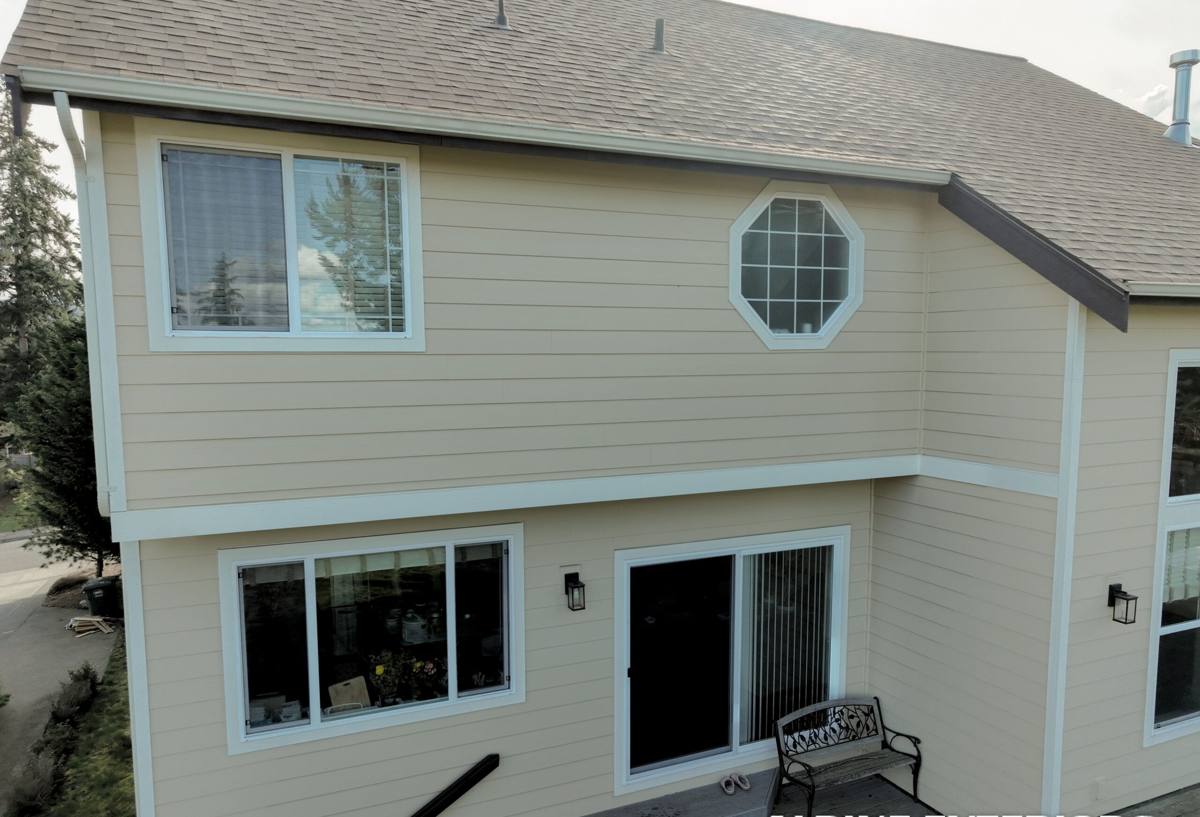
What Salt Air, Rain, and Moss Actually Do to a Shingle Roof
Salt Air
Airborne salt accelerates corrosion on any exposed metal component of a roof system — nails, flashing, vent housings, and gutter hardware. On a roof built with standard-grade fasteners or thin flashing, corrosion can loosen shingle attachment points or create tiny gaps where water works its way in long before the shingles themselves are worn out.
Driving Rain
Rain that comes in sideways off the water doesn't just fall on a roof, it pushes underneath shingle edges, around vent penetrations, and into any valley or transition that isn't properly lapped and sealed. A roof designed for straight-down rainfall can leak in these conditions even when every shingle is intact, because the water is finding the weak point in the underlayment and flashing, not the shingle field.
Moss and Algae
Shaded, moisture-retentive roof sections in and around West Anacortes grow moss faster than sun-exposed slopes. Moss holds water against the shingle surface, works its way under tabs as it grows, and can lift shingles enough to let wind and rain underneath. Left unaddressed for a few seasons, moss growth alone can cut years off a roof's usable life even though the shingles look "fine" from the ground.
What a Correctly Installed Roof Looks Like in This Climate
A roof that's going to hold up here needs a few things built in from the start, not added later as repairs:
- A full synthetic or self-adhered underlayment as the actual waterproofing layer, with the shingles acting as the wear surface on top of it, not the sole barrier against water.
- Ice-and-water shield or equivalent self-sealing membrane at eaves, valleys, and any low-slope transition where wind-driven rain is most likely to be pushed under the shingle edge.
- Corrosion-resistant fasteners and flashing — stainless or heavy-gauge coated materials rather than the minimum-grade hardware that's fine in a dry inland climate but corrodes faster near salt air.
- Properly lapped step and counter-flashing at every wall, chimney, and dormer intersection, since these transition points are where driving rain finds its way in.
- Balanced intake and exhaust ventilation so moisture from inside the home doesn't condense on the underside of the roof deck and add to the moisture load already coming from outside.
None of this is unusual or exotic — it's standard good roofing practice. The difference in a marine climate like this is that skipping any one of these details shows up as a problem much sooner than it would somewhere drier and calmer.
Choosing the Right Shingle for West Anacortes Conditions
Not every asphalt shingle product is a good match for a shaded, salt-exposed roof. The table below breaks down the common tiers we work with and how they perform under local conditions.
| Shingle Tier | Typical Lifespan | How It Handles Moss & Moisture | Best Fit |
|---|---|---|---|
| 3-tab (economy) | 15-20 years | Thinner profile sheds water less effectively; more prone to lifting under wind-driven rain | Budget-limited projects, sun-exposed roofs with good ventilation |
| Architectural (dimensional) | 25-30 years | Heavier mat and thicker tabs resist wind uplift better; standard granule blend still allows moss growth in shaded sections | Most West Anacortes homes; good balance of durability and cost |
| Algae-resistant architectural | 25-30 years | Copper-infused granules slow algae and moss growth on shaded slopes | Homes with tree cover, north-facing slopes, or a history of moss buildup |
| Premium/impact-rated | 30-50 years (varies by warranty) | Thickest mat, best wind rating, still benefits from algae-resistant granules on shaded areas | Homeowners planning to stay long-term or wanting maximum wind performance near the water |
For most West Anacortes properties, an algae-resistant architectural shingle is the practical sweet spot: it costs more than a basic 3-tab up front but meaningfully slows the moss and algae cycle that drives premature wear in shaded, damp conditions.
Our Installation Process
1. Roof and Deck Assessment
Before any tear-off, we check the condition of the roof deck itself. Salt air and long-term moisture exposure can soften plywood or oriented strand board around valleys, penetrations, and eaves. Any soft or damaged decking gets replaced before new material goes down — installing new shingles over a compromised deck just hides the problem.
2. Tear-Off and Disposal
Old shingles, underlayment, and any deteriorated flashing come off completely. This gives us a clean look at the deck and lets us catch hidden moisture damage that a re-roof over existing layers would miss.
3. Underlayment and Water-Barrier Installation
We install synthetic underlayment across the full roof, with self-adhered ice-and-water membrane at eaves, valleys, and any wall or dormer transition where wind-driven rain is most likely to push past the shingle line.
4. Flashing and Ventilation Details
New step flashing, counter-flashing, and vent boots go in at every penetration and wall intersection. We also confirm intake and exhaust ventilation is balanced, adding or correcting vents where the existing setup is undersized or blocked.
5. Shingle Installation
Shingles are installed to manufacturer nailing specifications, with attention to proper offset and exposure so the finished roof performs at its rated wind resistance — a detail that matters more here than in calmer, drier climates.
6. Final Walk-Through
We review the finished roof with the homeowner, cover basic maintenance expectations, and confirm all warranty paperwork is in order.
Ventilation and Moisture Control: The Part Homeowners Don't See
A shingle roof's biggest enemy in this climate often isn't the weather hitting it from outside — it's moisture trying to escape from inside the house. Bathroom and kitchen humidity, laundry vents, and everyday cooking all push moist air upward. If the attic or roof cavity doesn't have a clear path for that air to escape, it condenses on the underside of the deck, which encourages rot and can shorten the life of the shingles from below, independent of anything happening on the surface.
Balanced ventilation means enough intake (typically at the eaves or soffits) and enough exhaust (at the ridge or through roof vents) that air actually moves through the space rather than sitting stagnant. In a home with heavy tree cover or limited airflow to begin with, getting this balance right during a re-roof is one of the most important things we check, and one of the easiest things to get wrong if it's overlooked.
Moss, Algae, and Long-Term Roof Maintenance
Even a well-installed roof needs some routine attention in a climate that grows moss this readily. A simple annual maintenance routine goes a long way:
- Remove debris (needles, leaves, small branches) from valleys and around vents at least once a year, more often under heavy tree cover.
- Keep gutters clear so water doesn't back up under the lowest course of shingles.
- Have moss physically removed rather than left to grow — scraping or brushing it off (never pressure-washing shingles) prevents it from lifting tabs.
- Trim overhanging branches to reduce shade and let roof sections dry out between rain events.
- Watch for granules collecting in gutters or downspouts, which can signal accelerated shingle wear.
- Schedule a professional inspection every few years, especially after any significant windstorm.
Repair or Replace: Signs to Watch For
Not every issue means a full replacement. Isolated flashing failures, a handful of wind-lifted shingles, or a single damaged section can often be repaired if the rest of the roof is sound. Full replacement usually makes more sense when the underlayment has failed broadly, when the roof deck shows widespread moisture damage, or when the shingles are near the end of their rated life and repairs would just be chasing new leaks every season. A straightforward inspection is the fastest way to know which category a given roof falls into.
Why Local Experience in West Anacortes Matters
A roofing crew that regularly works this specific stretch of Skagit County already knows which details matter most: where wind-driven rain tends to find weak points, which slopes hold moss longest, and how to size ventilation for homes with heavy tree cover near the water. That's a different set of judgment calls than roofing a dry, inland neighborhood, and it shows up in how long a roof actually performs, not just how it looks the day it's finished.
If you're dealing with moss buildup, aging shingles, or you're planning ahead for a roof that can handle West Anacortes conditions for the long haul, we're happy to take a look and walk you through your options. Reach out for a free, no-pressure estimate using the form below.