 Anacortes Siding
 Windows on the Headland Take a Different Kind of Beating
Cap Sante sits up on exposed high ground overlooking the water, and that position is a mixed blessing. The views are hard to beat, but the same openness that gives you a view of Rosario Strait and the marina also means your home catches wind, salt spray, and driving rain that a house tucked back in a sheltered Anacortes neighborhood simply doesn't see as often. Add in the long, damp Skagit County moss season, and window assemblies here work harder than almost anywhere else in the county.
Salt-laden air corrodes hardware faster than inland air does — hinges, locks, and even some fastener types will show pitting and stiffness years before they would in a drier, less exposed location. Wind-driven rain doesn't just fall straight down; it gets pushed sideways and upward into gaps that would never leak in calmer weather. And moss, moisture, and organic growth on nearby trim and siding hold water against the window opening far longer than direct sun and dry air would allow elsewhere in Washington.
None of that means windows can't hold up on Cap Sante for decades. It means the installation has to account for those conditions from the start — the right materials, the right flashing details, and a crew that has actually done this work in this specific microclimate.
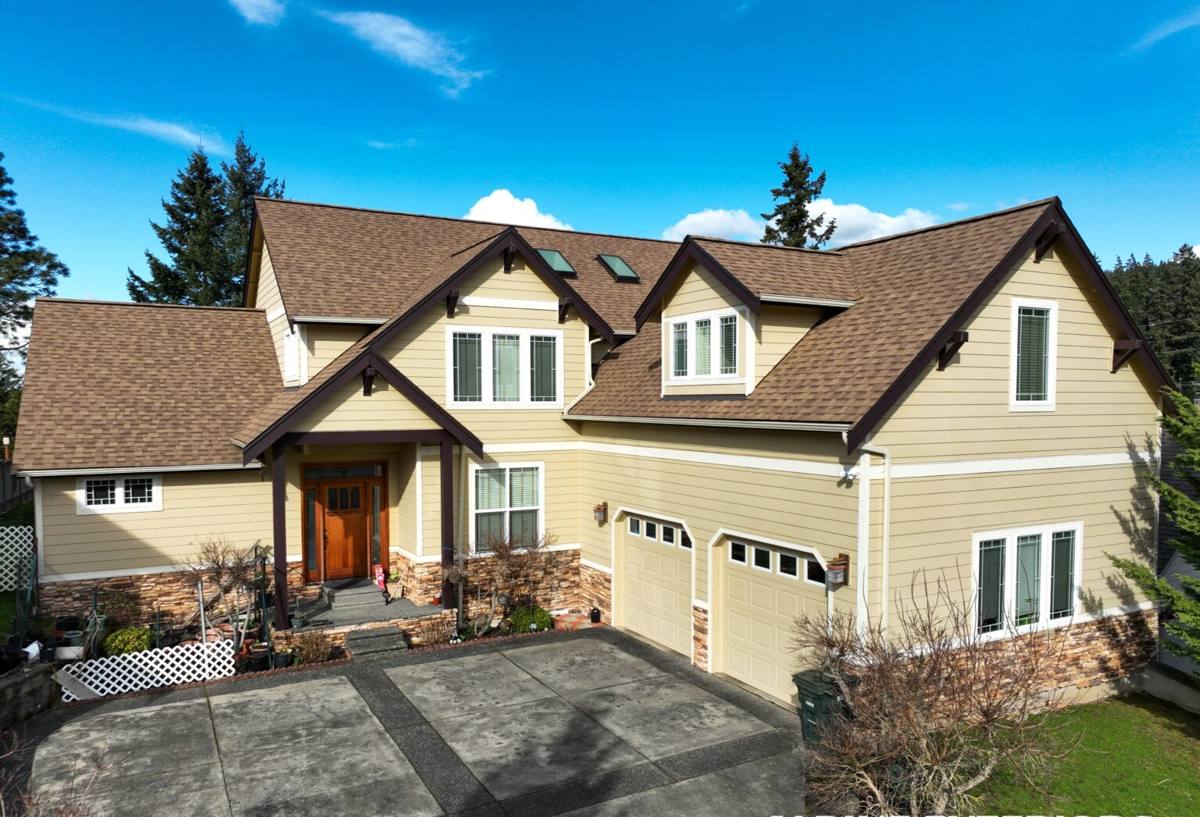
Signs a Cap Sante Window Is Losing the Fight
Most window failures near the water don't show up as a dramatic leak. They show up as small, easy-to-dismiss symptoms that get worse over a few wet seasons.
- Fogging or moisture trapped between panes of a double- or triple-glazed unit — a sign the seal has failed
- Soft, discolored, or spongy trim and sill wood around the frame
- Windows that stick, won't latch fully, or have become noticeably harder to open
- Visible corrosion or white staining on hardware, especially locks and cranks
- Drafts you can feel with a hand near the frame on a windy day, even with the window latched
- Paint or finish that's bubbling, peeling, or chalking faster on the window trim than on the rest of the siding
- Moss or dark streaking building up in the corners of the frame or on the sill
Any one of these on its own might just mean a caulking touch-up. Several together, especially on a wall that faces the water or prevailing wind, usually mean water has been getting behind the window casing for a while and the frame or sheathing underneath is starting to pay for it.
What a Correct Installation Actually Involves
Setting a window into an opening is the easy part. Getting the water management right around it is where most installation problems actually start — and where most of them get missed. On an exposed Cap Sante wall, we treat every one of these steps as non-negotiable, not optional upgrades.
Opening Prep and Inspection
Before a new window goes in, we open up the rough opening and check the condition of the framing and sheathing underneath. If there's rot or water staining from a prior leak, that gets addressed first — installing a new window into a compromised opening just hides the problem for a while.
Flashing, Not Just Caulk
Caulk is a backup, not a primary defense. A correct install uses a sill pan to catch and redirect any water that gets past the window, along with properly lapped flashing tape at the sides and head so water sheds down and out rather than working its way back into the wall. On a wall that takes wind-driven rain regularly, this detail matters more than the window brand.
Air Sealing and Insulation
The gap between the window frame and the rough opening gets sealed and insulated correctly — not overpacked with expanding foam, which can bow a frame out of square, and not left with gaps that let wind whistle through on a gusty day off the water.
Weatherproof Exterior Detailing
Exterior trim, casing, and sealant joints are finished so water is directed away from every seam. In a salt-air environment we also pay attention to fastener and hardware material, since the wrong metal will corrode and stain the finish well before the window itself is due for replacement.
Choosing a Window Built for This Location
Every major frame material can perform well — and every one has trade-offs worth knowing before you commit, especially this close to the water.
| Frame Material | Strengths on Cap Sante | Trade-Offs to Know |
|---|---|---|
| Vinyl | Won't rust or corrode in salt air; low maintenance; good value | Can expand/contract with temperature swings; quality varies widely between manufacturers |
| Fiberglass | Very stable dimensionally; strong resistance to moisture and corrosion; holds paint well | Higher upfront cost than vinyl |
| Wood-Clad | Classic look, especially on older or craftsman-style homes | Exposed wood components need diligent maintenance in a wet, salty, moss-prone climate |
| Aluminum | Strong and slim sightlines | Conducts cold and can corrode faster near saltwater without a quality finish |
For most homes on the headland, we steer people toward vinyl or fiberglass with a glazing package rated for higher wind and moisture exposure, simply because they hold up with the least ongoing maintenance. That said, the right choice also depends on your home's style, your budget, and how much upkeep you're willing to commit to — we'll walk through the honest trade-offs for your specific house rather than push one product line.
Glass and Hardware Worth Asking About
- Low-E glass coatings to help with year-round comfort and reduce condensation risk on cold, wet days
- Corrosion-resistant hardware (locks, hinges, cranks) rated for coastal or marine-adjacent use
- Warm-edge spacer systems, which resist seal failure better than older aluminum spacers over time
- Multi-point locking hardware for a tighter, more even seal against wind pressure
New Construction vs. Replacing Existing Windows
The approach changes depending on whether you're framing a new opening or replacing an existing window, and it's worth understanding the difference before you get a quote.
New-construction windows have a nailing flange and are installed before the exterior siding and trim go on, which gives us full access to flash the opening from scratch. This is the stronger, more thorough method whenever it's available — new builds, additions, or any project where the siding is already coming off.
Replacement (retrofit) windows are built to fit into an existing frame without disturbing the surrounding siding and trim. This is faster and less invasive, and it's the right call for most straightforward window swaps on a home that isn't otherwise under renovation. The trade-off is that we're working with whatever flashing and sheathing condition already exists behind the old window — which is exactly why the opening inspection step matters so much on a retrofit. If we find water damage once the old window is out, we'll tell you before we proceed, not after.
Our Process, Start to Finish
- On-site assessment — we look at existing windows, exposure direction, and any visible water or rot issues before quoting anything
- Product selection — we go over frame material, glazing, and hardware options suited to your home's exposure and your budget
- Written estimate — a clear scope and price, no pressure to decide on the spot
- Opening prep — removal of the old window and inspection of the framing and sheathing underneath
- Repair if needed — any rot or damage gets addressed before the new window goes in, with the cost discussed with you first
- Installation with proper flashing — sill pan, flashing tape, air sealing, and exterior detailing done to hold up against wind-driven rain
- Final check and cleanup — operation, seal, and finish are checked before we consider the job done
What Drives the Cost
Window installation pricing varies by home and by scope, but a few factors consistently move the number more than people expect.
| Factor | Why It Matters |
|---|---|
| Frame material and glazing package | Fiberglass and upgraded glass cost more upfront than standard vinyl but often cost less over the life of the window |
| Retrofit vs. new construction | New-construction installs involve more labor around siding and flashing but give a more thorough water-management result |
| Condition of the existing opening | Hidden rot or water damage found during removal adds repair scope that can't be priced sight-unseen |
| Window size and configuration | Large picture windows, bays, or custom shapes cost more than standard operable units |
| Number of windows and access | Multi-window jobs and second-story or hard-to-access units affect labor time and equipment needs |
We'd rather walk your specific home and give you real numbers than throw out a broad range that doesn't mean much once we see the actual openings.
Why Local Experience on Cap Sante Actually Matters
A window installer who mostly works inland doesn't necessarily think about wind-driven rain, salt corrosion, or moss buildup as default conditions to plan around — because on most jobs, they aren't. On Cap Sante, they are. A crew that regularly works this part of Anacortes knows which walls take the worst of the weather, which hardware and fastener choices hold up near the water, and where past installs in the area have tended to fail so those mistakes don't get repeated.
That local pattern recognition is hard to fake and hard to learn from a manual. It comes from actually being on these roofs and in these walls, in this specific stretch of Skagit County, season after season.
Keeping New Windows Performing Long-Term
A correct installation is most of the battle, but a little ongoing attention extends the life of any window on an exposed site like this.
- Rinse salt residue off frames and glass periodically, especially after storms with onshore wind
- Keep gutters and nearby drainage clear so water isn't sheeting down across window heads
- Check and touch up exterior caulking at trim joints every year or two, since sealant is a wear item
- Clear moss and organic buildup from sills and corners before it holds moisture against the frame
- Operate hardware (locks, cranks) periodically so corrosion doesn't set into moving parts unnoticed
If you're noticing drafts, fogged glass, or trim trouble around your windows — or you're planning ahead for a remodel — we're glad to come take a look. A free, no-pressure estimate is a low-effort way to find out where you actually stand and what your real options are. Reach out through the form below and we'll get a visit on the schedule.