 Anacortes Siding
 Windows Built for a Waterfront Neighborhood
Flounder Bay sits close enough to the water that its homes take weather differently than houses a few miles inland in Anacortes. The combination of salt-laden air, wind off the bay, and long stretches of wet weather works on window frames, seals, and glazing in ways that show up as failed seals, soft trim, and drafts years before a homeowner expects to think about replacement. If you live in this part of Skagit County, your windows are doing more work than the manufacturer's spec sheet assumes.
This page covers window replacement specifically for Flounder Bay homes — what the local climate demands, what a correct installation actually involves, and how we run the job from estimate to cleanup. It's written for homeowners deciding whether it's time, and what "done right" should look like here.
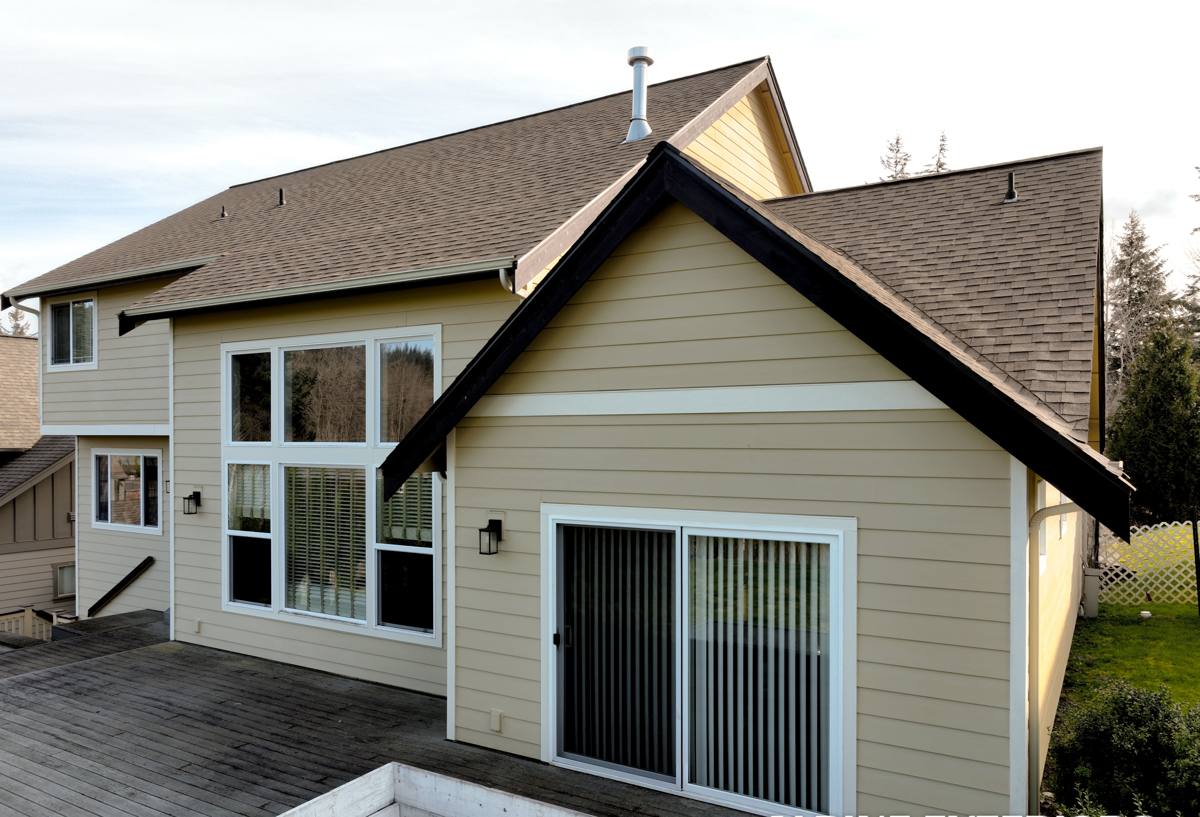
What Salt Air and Driving Rain Do to Windows Over Time
Coastal exposure doesn't destroy windows overnight — it works slowly, and that's exactly why it gets missed until the damage is significant.
Salt Air
Airborne salt is corrosive to exposed metal hardware — hinges, cranks, balances, and screws — long before most homeowners notice a problem with the glass itself. On older aluminum-frame windows, salt exposure accelerates pitting and oxidation. Even vinyl and wood windows aren't immune: salt residue holds moisture against surfaces and finishes, which shortens the life of exterior caulking and paint.
Driving Rain
Wind-driven rain doesn't fall straight down — it gets pushed sideways into window assemblies, testing flashing and seals in a way that calm-weather rain never does. A window that's watertight in a light shower can still leak in a wind-driven storm if the flashing detail or sill pan wasn't installed correctly the first time. This is one of the most common causes of hidden rot we find behind old window trim in this area.
Moss Season
Anacortes gets a long stretch of cool, wet months where moss and algae take hold on anything that stays damp — including window sills, trim, and the wood or fiber-cement siding around openings. Moss holds moisture against the surface it grows on. Around a window, that means prolonged dampness right at the seams and caulk lines that are supposed to keep water out, which speeds up rot in wood trim and breakdown in old sealants.
Signs a Flounder Bay Home Needs Window Replacement
- Fogging or a permanent haze between panes (failed seal on double-pane glass)
- Visible corrosion or pitting on hinges, cranks, or metal frame components
- Soft, spongy, or discolored wood trim or sill around the window
- Persistent moss or black staining at the corners or bottom of the frame
- Drafts or a noticeable temperature difference near the window in windy weather
- Windows that stick, won't latch fully, or have visibly warped frames
- Condensation forming on the inside of the glass during cold, wet weeks
- Rising heating bills without another clear explanation
Any one of these on its own might just need a repair. Several at once, especially on the sides of the house that face the water or take the prevailing wind, usually means the window assembly has reached the end of its useful life.
What a Correct Window Replacement Involves Here
Window replacement in a coastal-exposure area like Flounder Bay isn't just "pull the old one, drop in the new one." The details that matter most are the ones you can't see once the job is finished.
Removal and Inspection
We remove the old window carefully and inspect the rough opening before anything new goes in. This is where hidden rot from years of wind-driven rain often turns up — sills, king studs, and header framing that look fine from inside the house but have been slowly compromised from the outside. Any damaged framing gets addressed before the new window goes in, not covered over.
Flashing and Water Management
This is the step that determines whether a window stays watertight through the next wind-driven storm. A proper sill pan, correctly lapped flashing tape, and integration with the house's weather-resistive barrier matter more to long-term performance than the window brand itself. Skipping or rushing this step is the single most common reason a "new" window still leaks a few years later.
Frame Material Selection
For a salt-air, high-moisture environment, frame material is a real decision, not an afterthought.
| Frame Material | How It Handles This Climate | Trade-Offs to Know |
|---|---|---|
| Vinyl | Doesn't corrode or rot; handles moisture and salt exposure well | Limited color/finish flexibility; quality varies widely by manufacturer |
| Fiberglass | Very stable in temperature and moisture swings; strong corrosion resistance | Higher upfront cost than vinyl |
| Wood (clad exterior) | Warm interior look; exterior cladding protects from direct weather | Any breach in the cladding exposes wood to rot; needs vigilant caulk maintenance |
| Aluminum (uncoated or older stock) | Strong and lightweight | Prone to pitting and corrosion in salt air over time without a protective finish |
We don't push one material on every job. We tell homeowners honestly what a given frame material will and won't handle well this close to the water, and let them weigh cost against long-term maintenance.
Sealing and Insulation
Proper low-expansion foam or backer rod and sealant around the frame perimeter closes off the air and moisture gaps that cause drafts and, eventually, hidden rot. Interior and exterior caulking use products rated for the temperature swings and UV exposure this area sees.
Our Process for Flounder Bay Jobs
- On-site assessment. We look at each window individually — sun exposure, wind exposure, current condition of trim and framing — rather than quoting a blanket per-window price sight unseen.
- Honest scope and estimate. If we find rot or flashing problems during the assessment, we tell you before work starts, not as a surprise change order mid-project.
- Material selection. We walk through frame and glass options against your budget and how exposed that side of the house is to wind and rain.
- Installation. Removal, framing repair as needed, flashing, window setting, insulation, and sealing — done in sequence, not rushed.
- Final check and cleanup. We test operation, check seals, and clean up debris before we consider the job finished.
Why Local Experience with Flounder Bay Conditions Matters
A crew that mostly works inland jobs can still do competent work, but they may not default to the flashing details and material choices that hold up specifically where wind-driven rain and salt air are a daily reality rather than an occasional storm. Working regularly in Anacortes and along the Skagit County coastline means we've seen which shortcuts fail first in this environment — and which details are worth the extra time even when they're not visible in the finished product.
We also know what moss season does to a house over the following winter if window trim and seals aren't in good shape going into it. That's part of why we look at trim condition and drainage around a window opening, not just the glass and sash, when we assess a replacement job.
Timing the Job Around Anacortes Weather
Window replacement can be done in most seasons, but there are practical advantages to timing it around drier stretches of weather when possible. An open rough opening is vulnerable to weather intrusion during the window between removal and final sealing. We plan installation days around forecasts and work efficiently to minimize how long any opening is exposed, but if you have flexibility, the drier months make for a smoother, lower-risk installation.
What This Typically Costs
Every home and window count is different, so we don't publish flat per-window pricing — a straightforward swap in good framing costs a lot less than a window that turns up rotted framing once the old unit comes out. In general, expect the total to depend on:
- Number of windows and their sizes
- Frame material chosen (vinyl, fiberglass, or clad wood)
- Condition of the existing rough opening and trim
- Whether flashing or sheathing repair is needed
- Access — ground floor versus upper-story or hard-to-reach windows
We give a firm, itemized estimate after the on-site assessment, not a phone quote — that's the only way to price the job honestly given how much hidden condition affects the real scope.
Get a Straight Answer on Your Windows
If your Flounder Bay home has windows that fog, stick, draft, or show signs of moss and moisture damage around the frame, it's worth having someone look before another wet season adds to the problem. We offer free, no-pressure estimates — use the form below to set up a time and we'll walk the exterior with you and give you a straight read on what your windows actually need.