 Anacortes Siding
 Roofing in La Conner's Marine Climate
La Conner sits close enough to the water that every roof in the area is doing double duty: shedding heavy winter rain and standing up to the salt-laden air that blows in off the Swinomish Channel and Skagit Bay. That combination is harder on a roof than most homeowners realize. Salt air accelerates the breakdown of metal fasteners and flashing, driving rain finds any weak seam or aging shingle edge, and the region's mild, damp winters create ideal conditions for moss and algae to take hold and spread across a roof deck for months at a time. A roof built for a drier or inland climate simply doesn't hold up the same way out here.
Asphalt shingle roofing remains one of the most practical choices for this environment when it's installed correctly, with the right materials and detailing for a coastal Skagit County property. The key phrase is "installed correctly" — a lot of the roofing problems we see in La Conner trace back to a roof that was built for a different climate, or installed a little too fast, and never got the flashing, ventilation, or underlayment details that this location actually demands.
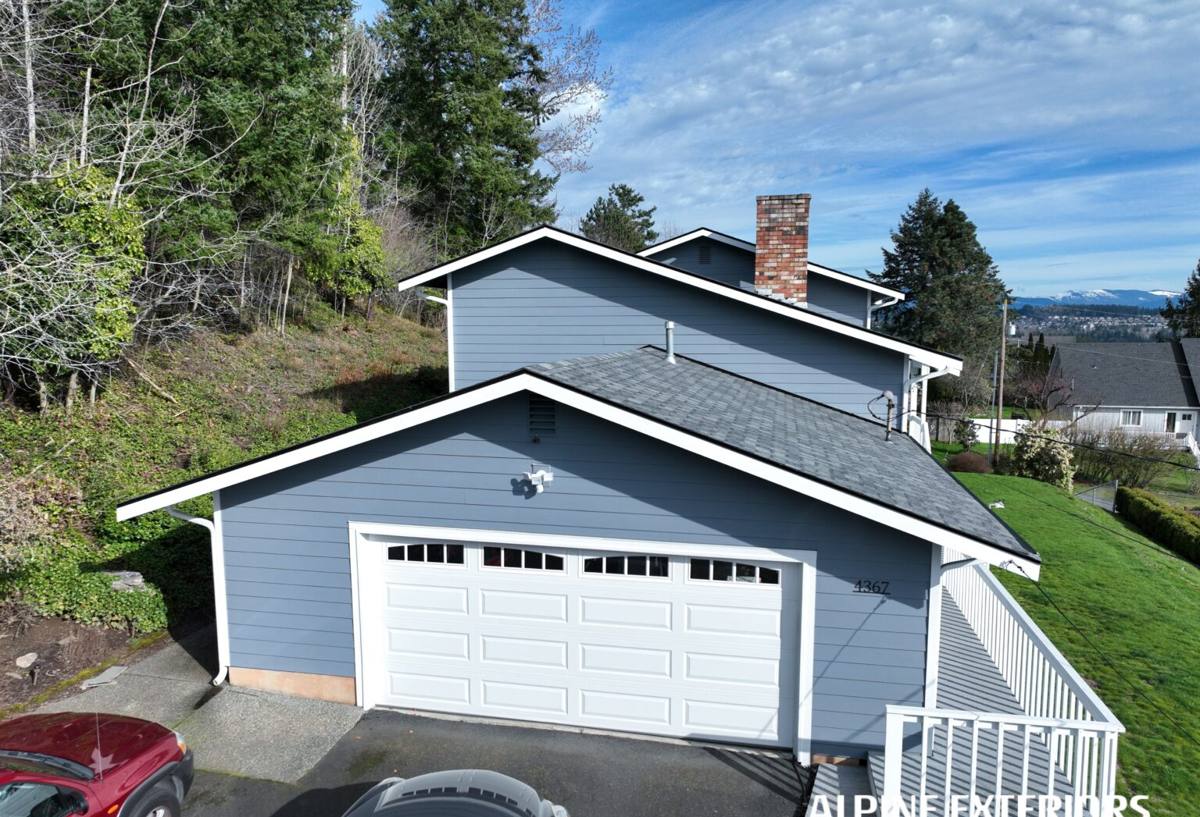
What a Correct Asphalt Shingle Roof Needs Here
A roof that's going to perform well in La Conner needs a few things working together, not just good shingles nailed down in straight rows. We look at the whole system:
- Corrosion-resistant fasteners and flashing metals suited to salt-air exposure
- A fully sealed, self-adhering underlayment at eaves, valleys, and penetrations, not just felt paper
- Balanced intake and exhaust ventilation so moisture doesn't get trapped under the deck
- Properly lapped and step-flashed details at walls, chimneys, and skylights
- Shingles rated for wind exposure appropriate to an open, waterfront-adjacent setting
Skip any one of these and the roof may look fine for a year or two, then start showing problems — soft spots at valleys, granule loss near the coast-facing slope, or moss creeping in under tab edges where wind-driven rain has been working its way past a marginal seal.
Flashing and Fasteners Matter More Here Than Inland
Standard galvanized fasteners and flashing can pit and corrode faster in a marine air environment than they would twenty or thirty miles inland. We spec corrosion-resistant materials for La Conner roofs as a matter of standard practice, not as an upgrade — it's cheap insurance against a callback five years down the road for a rust-streaked flashing joint or a popped fastener.
Signs a La Conner Roof Needs Attention
Because the damage from salt air and moisture tends to be gradual, homeowners often don't notice a problem until it's already inside the attic. Watch for:
- Moss or dark algae streaking, especially on north-facing or shaded slopes
- Granules collecting in gutters or at downspout outlets
- Curling, cupping, or lifted shingle edges, particularly along the roof's windward side
- Soft or spongy spots when walking the roof for inspection
- Daylight or water staining visible from inside the attic at valleys or chimney flashing
- Rust streaking below metal flashing or fasteners
Any one of these on its own might be minor. Several together usually mean the roof's underlayment or flashing has started to fail, and it's worth having someone look before the next round of winter storms.
Moss and Algae: The La Conner Maintenance Reality
Moss isn't just cosmetic. In this climate, moss holds moisture directly against the shingle surface for weeks at a time, which speeds up granule loss and can work its way under tab edges, lifting them just enough for wind-driven rain to get underneath. Left unaddressed through a few wet seasons, moss growth is one of the most common reasons an asphalt shingle roof in this area needs replacement years earlier than its rated lifespan.
We install shingles with algae-resistant granules where it makes sense for the home, and we talk homeowners through a realistic maintenance rhythm — periodic soft washing (never pressure washing, which strips granules), keeping gutters and valleys clear of needles and debris, and trimming back overhanging branches that keep a roof section shaded and damp longer than it needs to be. None of this is complicated, but it has to actually happen on a schedule, and it matters more here than it would somewhere drier.
Our Asphalt Shingle Roofing Process
Whether the job is a full replacement or a targeted repair, we follow the same basic sequence on every La Conner roof:
- Inspection and assessment — we walk the roof, check the attic for moisture or ventilation issues, and look at flashing, valleys, and penetrations before quoting anything.
- Tear-off and deck check — old material comes off down to the deck so we can see the actual condition of the sheathing, not guess at it from the surface.
- Deck repair — any soft, delaminated, or water-damaged sheathing gets replaced before new material goes down. This is non-negotiable; a new roof over a bad deck is a wasted roof.
- Underlayment and flashing — self-adhering waterproof underlayment at eaves and valleys, new flashing at every wall, chimney, and penetration, sized and lapped for this climate.
- Ventilation check — intake and exhaust venting confirmed or corrected so the attic can actually dry out between wet spells.
- Shingle installation — installed to manufacturer spec for nailing pattern and exposure, with attention to wind-exposed edges and rakes.
- Final walkthrough — cleanup, magnetic sweep for stray fasteners, and a review of the finished roof with the homeowner.
Shingle Options and What Drives Cost
Most La Conner homeowners choose between a standard three-tab shingle, a laminated architectural shingle, or a heavier-impact-rated architectural product. The right choice depends on budget, how long the home will likely be owned, and how exposed the roof is to wind and salt air.
| Factor | What It Affects | Local Consideration |
|---|---|---|
| Shingle type (3-tab vs. architectural) | Upfront cost, wind rating, appearance | Architectural shingles generally hold up better to the wind exposure common near the water |
| Algae-resistant granules | Long-term appearance, moss/algae resistance | Worth the modest upcharge given the region's moss season |
| Roof pitch and complexity | Labor time, flashing detail work | Steeper or cut-up roofs take longer and need more flashing |
| Deck condition | Repair costs found during tear-off | Coastal moisture exposure makes deck damage more common on older roofs |
| Ventilation upgrades | Attic moisture control, shingle lifespan | Often underbuilt on older La Conner homes; usually worth correcting during a re-roof |
We give homeowners an honest range up front and explain exactly what's driving the number, rather than a vague quote that leaves surprises for tear-off day.
Why We're Selective About Certain Products
We don't install every shingle product on the market. Some lower-tier lines have thinner mat construction or less consistent sealant performance, which shows up as a maintenance burden years earlier — especially in a climate that's already asking more of the roof than average. Our standard is to install products with a track record of holding up to sustained moisture exposure and wind, backed by a warranty structure we're comfortable standing behind, rather than the cheapest option available.
Ventilation: The Detail Most Roofs Get Wrong
A shingle roof is only as good as the airflow underneath it. Without balanced intake at the eaves and exhaust at the ridge, moist air gets trapped in the attic, condenses on the underside of the deck, and slowly rots sheathing from the inside — a problem that has nothing to do with the shingles themselves but will void a shingle warranty and shorten the life of the whole roof. On older La Conner homes we frequently find ventilation that was adequate when the house was built decades ago but was never updated when insulation was added or additions changed the roofline. A re-roof is the natural time to fix that.
Why Hiring a Crew That Already Works in La Conner Matters
A roofing crew that works regularly around La Conner and the broader Skagit County waterfront already knows which details can't be skipped here — the flashing metals that hold up, the underlayment that actually stays sealed through a wet winter, the ventilation corrections that older homes in this area typically need. That's different from a crew used to drier, inland conditions treating this roof like any other. It shows up in fewer callbacks, fewer surprise leaks after the first hard storm, and a roof that's still doing its job well past the point a corner-cut version would have started failing.
It also matters for something more practical: local knowledge of permitting, typical home construction in the area, and realistic scheduling around the weather windows that actually allow for a dry tear-off and installation. Roofing in this climate is as much about timing the work correctly as it is about the materials themselves.
A Straightforward Homeowner Checklist
- Have the roof inspected if it's more than 12-15 years old, or sooner if you see moss buildup
- Check attic ventilation, not just the shingles, before assuming a leak is a roofing problem
- Keep gutters and valleys clear of debris year-round, not just in fall
- Avoid pressure washing moss off shingles — it strips granules and shortens shingle life
- Ask any contractor what flashing metal and underlayment they use, and why, before signing anything
- Get a written scope that separates tear-off, deck repair, underlayment, flashing, and shingle install
If your roof is showing moss, granule loss, or you just want an honest read on how much life it has left, we're glad to take a look. A free, no-pressure estimate is easy to schedule using the form below.